Carol J. Greenhouse - Böcker
Visar alla böcker från författaren Carol J. Greenhouse. Handla med fri frakt och snabb leverans.
11 produkter
11 produkter
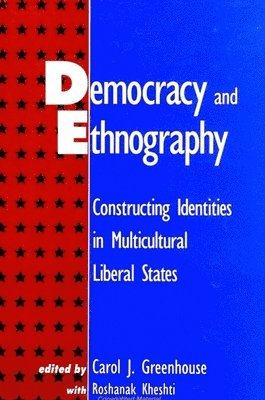
Democracy and Ethnography
Constructing Identities in Multicultural Liberal States
Häftad, Engelska, 1998
402 kr
Tillfälligt slut
Examines the contemporary connections between liberal democracy and ethnography through the development of national case studies on the United States and Spain.These ethnographic essays by scholars in anthropology, law, political science, folklore, public administration, medicine, and linguistics show contemporary connections between liberal democracy and ethnography. Each perspective explores a modern democratic site-courts, classrooms, legislatures, the media, academic professions, and bureaucratic routines. Together, they expose a contradiction-that official constructions of identity treat "differences" as both natural characteristics of individuals and the collective basis of interest groups. This contradiction hampers liberal states' efforts to acknowledge and accommodate the cultural diversity of citizens. They also show that official categories do not monopolize the available terms of understanding and identification, given the richness and flexibility of people's self-identifications outside official spheres. This recognition implies an ethnographic project at the heart of democratic change.The book develops two national case studies, the United States and Spain. Both countries have been invoked as models of multiculturalism, but their constitutional discourse and politics take very different approaches to issues of identity. Similarly, ethnographic disciplines have been involved in the officialization of difference in both countries, in different ways. Taken together, these differences and their common roots in the twinned histories of modern liberal democracy and the social sciences, provide ethnographic, reflexive, and comparative themes as well as broader theoretical and practical implications.
672 kr
Skickas inom 10-15 vardagar
Anthropologist Carol J. Greenhouse offers an ethnographic study of attitudes toward conflict and law in a predominantly white, middle-class, suburban, principally Southern Baptist community.
1 427 kr
Skickas inom 10-15 vardagar
Many commentators on the contemporary United States believe that current rates of litigation are a sign of decay in the nation's social fabric. Law and Community in Three American Towns explores how ordinary people in three towns—located in New England, the Midwest, and the South—view the law, courts, litigants, and social order.Carol J. Greenhouse, Barbara Yngvesson, and David M. Engel analyze attitudes toward law and law users as a way of commentating on major American myths and ongoing changes in American society. They show that residents of "Riverside," "Sander County," and "Hopewell" interpret litigation as a sign of social decline, but they also value law as a symbol of their local way of life. The book focuses on this ambivalence and relates it to the deeply-felt tensions express between "community" and "rights" as rival bases of society.The authors, two anthropologists and a lawyer, each with an understanding of a particular region, were surprised to discover that such different locales produced parallel findings. They undertook a comparative project to find out why ambivalence toward the law and law use should be such a common refrain. The answer, they believe, turns out to be less a matter of local traditions than of the ways that people perceive the patterns of their lives as being vulnerable to external forces of change.
1 551 kr
Skickas inom 10-15 vardagar
Focusing on the problem of time—the paradox of time's apparent universality and cultural relativity—Carol J. Greenhouse develops an original ethnographic account of our present moment, the much-heralded postmodern condition, which is at the same time a reflexive analysis of ethnography itself. She argues that time is about agency and accountability, and that representations of time are used by institutions of law, politics, and scholarship to selectively refashion popular ideas of agency into paradigms of institutional legitimacy. A Moment's Notice suggests that the problem of time in theory is the corollary of problems of power in practice.Greenhouse develops her theory in examinations of three moments of cultural and political crisis: the resistance of the Aztecs against Cortes, the consolidation of China's First Empire, and the recent partisan political contests over Supreme Court nominees in the United States. In each of these cases, temporal innovation is integral to political improvisation, as traditions of sovereignty confront new cultural challenges. These cases return the discussion to current issues of inequality, postmodernity, cultural pluralism, and ethnography.
313 kr
Skickas inom 10-15 vardagar
Many commentators on the contemporary United States believe that current rates of litigation are a sign of decay in the nation's social fabric. Law and Community in Three American Towns explores how ordinary people in three towns—located in New England, the Midwest, and the South—view the law, courts, litigants, and social order.Carol J. Greenhouse, Barbara Yngvesson, and David M. Engel analyze attitudes toward law and law users as a way of commentating on major American myths and ongoing changes in American society. They show that residents of "Riverside," "Sander County," and "Hopewell" interpret litigation as a sign of social decline, but they also value law as a symbol of their local way of life. The book focuses on this ambivalence and relates it to the deeply-felt tensions express between "community" and "rights" as rival bases of society.The authors, two anthropologists and a lawyer, each with an understanding of a particular region, were surprised to discover that such different locales produced parallel findings. They undertook a comparative project to find out why ambivalence toward the law and law use should be such a common refrain. The answer, they believe, turns out to be less a matter of local traditions than of the ways that people perceive the patterns of their lives as being vulnerable to external forces of change.
513 kr
Skickas inom 10-15 vardagar
Focusing on the problem of time—the paradox of time's apparent universality and cultural relativity—Carol J. Greenhouse develops an original ethnographic account of our present moment, the much-heralded postmodern condition, which is at the same time a reflexive analysis of ethnography itself. She argues that time is about agency and accountability, and that representations of time are used by institutions of law, politics, and scholarship to selectively refashion popular ideas of agency into paradigms of institutional legitimacy. A Moment's Notice suggests that the problem of time in theory is the corollary of problems of power in practice.Greenhouse develops her theory in examinations of three moments of cultural and political crisis: the resistance of the Aztecs against Cortes, the consolidation of China's First Empire, and the recent partisan political contests over Supreme Court nominees in the United States. In each of these cases, temporal innovation is integral to political improvisation, as traditions of sovereignty confront new cultural challenges. These cases return the discussion to current issues of inequality, postmodernity, cultural pluralism, and ethnography.
326 kr
Skickas inom 10-15 vardagar
Anthropologist Carol J. Greenhouse offers an ethnographic study of attitudes toward conflict and law in a predominantly white, middle-class, suburban, principally Southern Baptist community.
806 kr
Skickas inom 10-15 vardagar
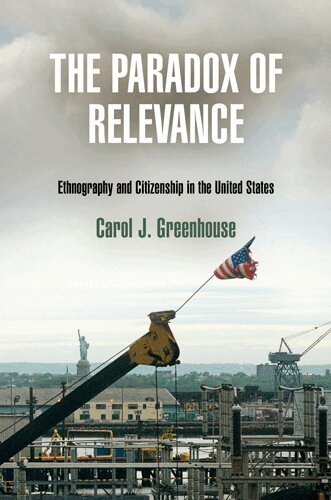
Selected by Choice magazine as an Outstanding Academic TitleBetween 1990 and 1996, the U.S. Congress passed market-based reforms in the areas of civil rights, welfare, and immigration in a series of major legislative initiatives. These were announced as curbs on excessive rights and as correctives to a culture of dependency among the urban poor-stock images of racial and cultural minorities that circulated well beyond Congress. But those images did not circulate unchallenged, even after congressional opposition failed. In The Paradox of Relevance, Carol J. Greenhouse provides a political and literary history of the anthropology of U.S. cities in the 1990s, where-below the radar-New Deal liberalism, with its iconic bond between society and security, continued to thrive.The Paradox of Relevance opens in the midst of anthropology's so-called postmodern crisis and the appeal to relevance as a basis for reconciliation and renewal. The search for relevance leads outward to the major federal legislation of the 1990s and the galvanic political tensions between rights- and market-based reforms. Anthropologists' efforts to inform those debates through "relevant" ethnography were highly patterned, revealing the imprint of political tensions in shaping their works' central questions and themes, as well as their organization, narrative techniques, and descriptive practices. In that sense, federal discourse dominates the works' demonstrations of ethnography's relevance; however, the authors simultaneously resist that dominance through innovations in their own literariness-in particular, drawing on diasporic fiction and sociolegal studies where these articulate more agentive meanings of identity and difference. The paradox of relevance emerges with the realization that in the context of the times, affirming the relevance of ethnography as value-neutral science required the textual practices of advocacy and art.
779 kr
Skickas inom 7-10 vardagar
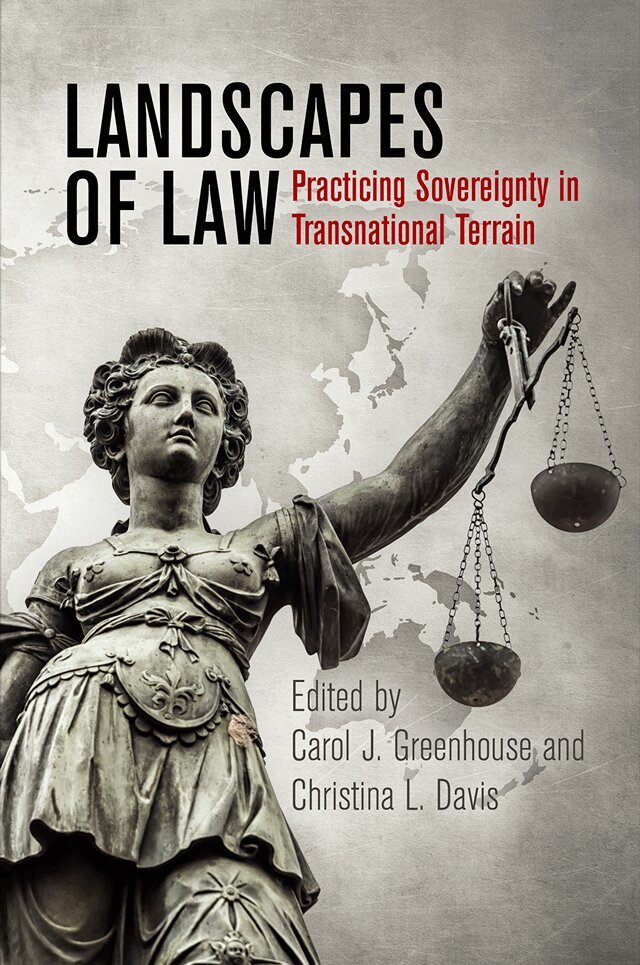
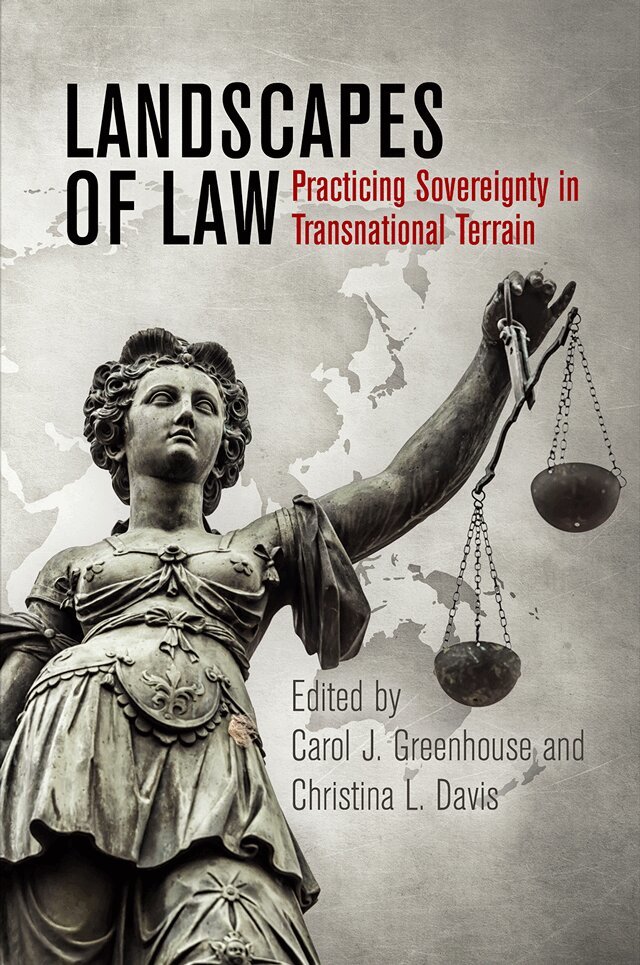
International scholars offer ethnographic analyses of the relations between transnationalism, law, and cultureThe recent surge of right-wing populism in Europe and the United States is widely perceived as evidence of ongoing challenges to the policies and institutions of globalization. But as editors Carol J. Greenhouse and Christina L. Davis observe in their introduction to Landscapes of Law, the appeal to national culture is not restricted to the ethno-nationalisms of the developing world outside of industrial democracies nor to insurgent groups within them. The essays they have collected in this volume reveal how claims of national culture emerge in the pursuit of transnationalism and, under some circumstances, become embedded within international law. The premise that there is inherent tension between nationalism and globalism is misleading. Whether asserted explicitly as state sovereignty or implicitly as cultural community, claims of national culture mediate how governments assert their interests and values when engaging with transnational law. Landscapes of Law demonstrates how nationalism operates in the contested zone between borderless capital and bordered states.Drawing from the fields of anthropology, international relations, law, political science, and sociology, the book's international contributors examine the ways in which claims of national differences are produced within transnational institutions. Insights from case studies across a wide range of topics reveal how such claims may be worked into policy prescriptions and legal arrangements or provide ad hoc bargaining chips. Together, they show that expressions of national culture outside of state boundaries consolidate claims of sovereignty. The contributors offer innovative frameworks for analyzing the relationships among transnationalism, law, and cultural claims at various levels and scales. They demonstrate how overlapping communities use law to define borders and shape relationships among actors rather than to generate a single social ordering.Landscapes of Law traces the theoretical implications generated by an understanding of transnational law that challenges the conventional separation of individual, community, society, national, and international spaces.Contributors: Katayoun Alidadi, Tugba Basaran, Rachel Brewster, Sandra Brunnegger, Christina L. Davis, Sara Dezalay, Marie-Claire Foblets, Henry Gao, Carol J. Greenhouse, David Leheny, Mark Fathi Massoud, Teresa RodrÍguez-de-las-Heras Ballell, Gregory Shaffer, Mariana Valverde.
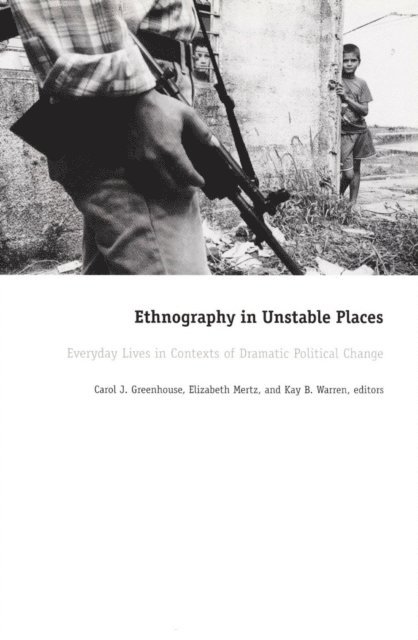
Ethnography in Unstable Places
Everyday Lives in Contexts of Dramatic Political Change
Häftad, Engelska, 2002
414 kr
Skickas inom 7-10 vardagar
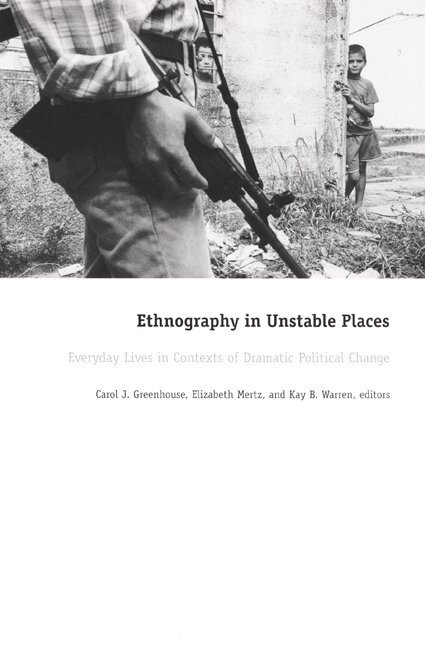
Ethnography in Unstable Places is a collection of ethnographic accounts of everyday situations in places undergoing dramatic political transformation. Offering vivid case studies that range from the Middle East and Africa to Europe, Russia, and Southeast Asia, the contributing anthropologists narrate particular circumstances of social and political transformation-in contexts of colonialism, war and its aftermath, social movements, and post–Cold War climates-from the standpoints of ordinary people caught up in and having to cope with the collapse or reconfiguration of the states in which they live.Using grounded ethnographic detail to explore the challenges to the anthropological imagination that are posed by modern uncertainties, the contributors confront the ambiguities and paradoxes that exist across the spectrum of human cultures and geographies. The collection is framed by introductory and concluding chapters that highlight different dimensions of the book’s interrelated themes-agency and ethnographic reflexivity, identity and ethics, and the inseparability of political economy and interpretivism. Ethnography in Unstable Places will interest students and specialists in social anthropology, sociology, political science, international relations, and cultural studies.Contributors. Eve Darian-Smith, Howard J. De Nike, Elizabeth Faier, James M. Freeman, Robert T. Gordon, Carol J. Greenhouse, Nguyen Dinh Huu, Carroll McC. Lewin, Elizabeth Mertz, Philip C. Parnell, Nancy Ries, Judy Rosenthal, Kay B. Warren, Stacia E. Zabusky
332 kr
Skickas inom 7-10 vardagar
International scholars offer ethnographic analyses of the relations between transnationalism, law, and cultureThe recent surge of right-wing populism in Europe and the United States is widely perceived as evidence of ongoing challenges to the policies and institutions of globalization. But as editors Carol J. Greenhouse and Christina L. Davis observe in their introduction to Landscapes of Law, the appeal to national culture is not restricted to the ethno-nationalisms of the developing world outside of industrial democracies nor to insurgent groups within them. The essays they have collected in this volume reveal how claims of national culture emerge in the pursuit of transnationalism and, under some circumstances, become embedded within international law. The premise that there is inherent tension between nationalism and globalism is misleading. Whether asserted explicitly as state sovereignty or implicitly as cultural community, claims of national culture mediate how governments assert their interests and values when engaging with transnational law. Landscapes of Law demonstrates how nationalism operates in the contested zone between borderless capital and bordered states.Drawing from the fields of anthropology, international relations, law, political science, and sociology, the book's international contributors examine the ways in which claims of national differences are produced within transnational institutions. Insights from case studies across a wide range of topics reveal how such claims may be worked into policy prescriptions and legal arrangements or provide ad hoc bargaining chips. Together, they show that expressions of national culture outside of state boundaries consolidate claims of sovereignty. The contributors offer innovative frameworks for analyzing the relationships among transnationalism, law, and cultural claims at various levels and scales. They demonstrate how overlapping communities use law to define borders and shape relationships among actors rather than to generate a single social ordering.Landscapes of Law traces the theoretical implications generated by an understanding of transnational law that challenges the conventional separation of individual, community, society, national, and international spaces.Contributors: Katayoun Alidadi, Tugba Basaran, Rachel Brewster, Sandra Brunnegger, Christina L. Davis, Sara Dezalay, Marie-Claire Foblets, Henry Gao, Carol J. Greenhouse, David Leheny, Mark Fathi Massoud, Teresa RodrÍguez-de-las-Heras Ballell, Gregory Shaffer, Mariana Valverde.