Carol J. Singley – författare
Visar alla böcker från författaren Carol J. Singley. Handla med fri frakt och snabb leverans.
12 produkter
12 produkter
E-bok
Engelska, 2011395 kr
Läs direkt efter köp
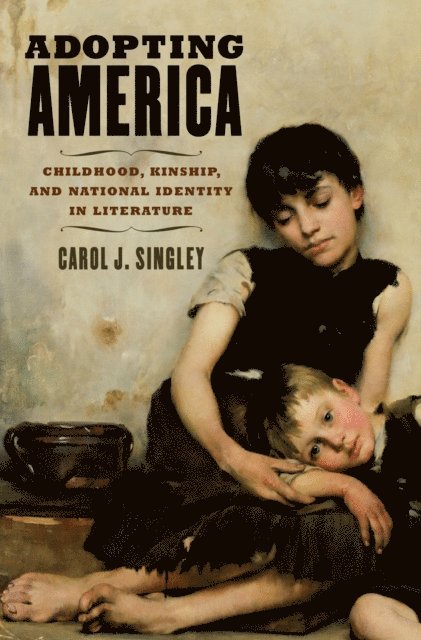
American literature abounds with orphans who experience adoption or placements that resemble adoption. These stories do more than recount adventures of children living away from home. They tell an American story of family and national identity. In narratives from the seventeenth to the early twentieth century, adoption functions as narrative event and trope that describes the American migratory experience, the impact of Calvinist faith, and the growth of democratic individualism.The roots of literary adoption appear in the discourse of Puritan settlers, who ambivalently took leave of their birth parent country and portrayed themselves as abandoned children. Believing they were chosen children of God, they also prayed for spiritual adoption and emulated God''s grace by extending adoption to others. Nineteenth-century adoption literature develops from this notion of adoption as salvation and from simultaneous attachments to the Old World and the New. In domestic fiction of the mid-nineteenth century, adoption also reflects a focus on nurture in childrearing, increased mobility in the nation, and middle-class concerns over immigration and urbanization, assuaged when the orphan finds a proper, loving home. Adoption signals fresh starts and the opportunity for success without genealogical constraints, especially for white males, but inflected by gender and racial biases, it often entails dependency for girls and children of color.A complex signifier of difference, adoption gives voice to sometimes contradictory calls to origins and fresh beginning; to feelings of worthiness and unworthiness. In writings from Cotton Mather to Edith Wharton, it both replicates and offers an alternative to the genealogical norm, evoking ambivalence as it shapes national mythologies.
Inbunden, Engelska, 2003
2 159 kr
Skickas inom 5-8 vardagar
A Historical Guide to Edith Wharton provides scholarly and general readers with historical contexts that illuminate Wharton's life and writing in new, exciting ways. The essays in this volume expand our sense of Wharton as a novelist of manners and reflect the latest developments in new historicism and cultural studies. Like many other literary women, Edith Wharton overcame prejudice to enter the world of letters. Wharton stood at the historical crossroads between the literary models of sentimental lady writer and modern professional author, and her work navigates accordingly between Victorian and modern sensibilities. Writing at a time of great social and economic change, Wharton records the changes brought about by Darwinism, urbanization, capitalism, feminism, world war, and eugenics, converying these cultural transformations with unforgettable detail and realism. This compelling collection of original essays illuminates Edith Wharton's vivid and incisive fiction against the backdrop of old New York, bringing one of our most important American novelists to life within the context of the society she so memorably chronicled and confronted.
Häftad, Engelska, 2003
456 kr
Skickas inom 5-8 vardagar
Edith Wharton, arguably the most important American female novelist, stands at a particular historical crossroads between sentimental lady writer and modern professional author. Her ability to cope with this collision of Victorian and modern sensibilities makes her work especially interesting. Wharton also writes of American subjects at a time of great social and economic change-Darwinism, urbanization, capitalism, feminism, world war, and eugenics. She not only chronicles these changes in memorable detail, she sets them in perspective through her prodigious knowledge of history, philosophy, and religion. A Historical Guide to Edith Wharton provides scholarly and general readers with historical contexts that illuminate Wharton's life and writing in new, exciting ways. Essays in the volume expand our sense of Wharton as a novelist of manners and demonstrate her engagement with issues of her day.
E-bok
PDF, Engelska, 2003339 kr
Läs direkt efter köp
Edith Wharton, arguably the most important American female novelist, stands at a particular historical crossroads between sentimental lady writer and modern professional author. Her ability to cope with this collision of Victorian and modern sensibilities makes her work especially interesting. Wharton also writes of American subjects at a time of great social and economic change-Darwinism, urbanization, capitalism, feminism, world war, and eugenics. She not only chronicles these changes in memorable detail, she sets them in perspective through her prodigious knowledge of history, philosophy, and religion. A Historical Guide to Edith Wharton provides scholarly and general readers with historical contexts that illuminate Wharton''s life and writing in new, exciting ways. Essays in the volume expand our sense of Wharton as a novelist of manners and demonstrate her engagement with issues of her day.
E-bok
PDF, Engelska, 2012395 kr
Läs direkt efter köp
American literature abounds with orphans who experience adoption or placements that resemble adoption. These stories do more than recount adventures of children living away from home. They tell an American story of family and national identity. In narratives from the seventeenth to the early twentieth century, adoption functions as narrative event and trope that describes the American migratory experience, the impact of Calvinist faith, and the growth of democratic individualism.The roots of literary adoption appear in the discourse of Puritan settlers, who ambivalently took leave of their birth parent country and portrayed themselves as abandoned children. Believing they were chosen children of God, they also prayed for spiritual adoption and emulated God''s grace by extending adoption to others. Nineteenth-century adoption literature develops from this notion of adoption as salvation and from simultaneous attachments to the Old World and the New. In domestic fiction of the mid-nineteenth century, adoption also reflects a focus on nurture in childrearing, increased mobility in the nation, and middle-class concerns over immigration and urbanization, assuaged when the orphan finds a proper, loving home. Adoption signals fresh starts and the opportunity for success without genealogical constraints, especially for white males, but inflected by gender and racial biases, it often entails dependency for girls and children of color.A complex signifier of difference, adoption gives voice to sometimes contradictory calls to origins and fresh beginning; to feelings of worthiness and unworthiness. In writings from Cotton Mather to Edith Wharton, it both replicates and offers an alternative to the genealogical norm, evoking ambivalence as it shapes national mythologies.
Inbunden, Engelska, 2011
1 597 kr
Skickas inom 5-8 vardagar
American literature abounds with orphans who experience adoption or placements that resemble adoption. These stories do more than recount adventures of children living away from home. They tell an American story of family and national identity. In narratives from the seventeenth to the early twentieth century, adoption functions as narrative event and trope that describes the American migratory experience, the impact of Calvinist faith, and the growth of democratic individualism. The roots of literary adoption appear in the discourse of Puritan settlers, who ambivalently took leave of their birth parent country and portrayed themselves as abandoned children. Believing they were chosen children of God, they also prayed for spiritual adoption and emulated God's grace by extending adoption to others. Nineteenth-century adoption literature develops from this notion of adoption as salvation and from simultaneous attachments to the Old World and the New. In domestic fiction of the mid-nineteenth century, adoption also reflects a focus on nurture in childrearing, increased mobility in the nation, and middle-class concerns over immigration and urbanization, assuaged when the orphan finds a proper, loving home. Adoption signals fresh starts and the opportunity for success without genealogical constraints, especially for white males, but inflected by gender and racial biases, it often entails dependency for girls and children of color. A complex signifier of difference, adoption gives voice to sometimes contradictory calls to origins and fresh beginning; to feelings of worthiness and unworthiness. In writings from Cotton Mather to Edith Wharton, it both replicates and offers an alternative to the genealogical norm, evoking ambivalence as it shapes national mythologies.
E-bok
PDF, Engelska, 2003703 kr
Läs direkt efter köp
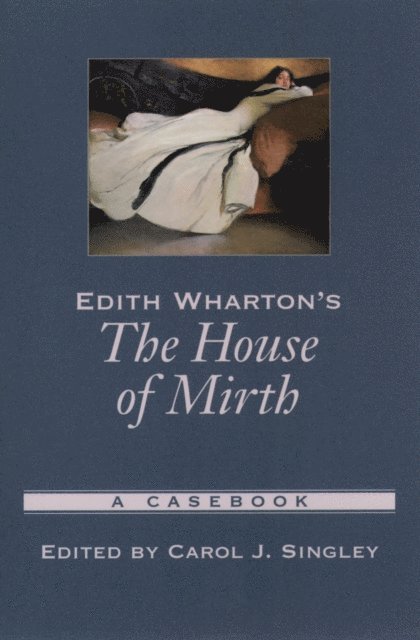
Edith Wharton is recognized as one of the twentieth century''s most important American writers. The House of Mirth not only initiated three decades of Wharton''s popular and critical acclaim, it helped move women''s literature into a new place of achievement and prominence. The House of Mirth is perhaps Wharton''s best-known and most frequently read novel, and scholars and teachers consider it an essential introduction to Wharton and her work. This casebook collects critical essays addressing a broad spectrum of topics and utilizing a range of critical and theoretical approaches. It also includes Wharton''s introduction to the 1936 edition of the novel and her discussion of the composition of the novel from her autobiography. Also available: A Historical Guide to Edith Wharton, edited by Carol J. Singley, ISBN 0-19-513591-1.
Häftad, Engelska, 2013
465 kr
Skickas inom 5-8 vardagar
American literature abounds with orphans who experience adoption or placements that resemble adoption. These stories do more than recount adventures of children living away from home. They tell an American story of family and national identity. In narratives from the seventeenth to the early twentieth century, adoption functions as narrative event and trope that describes the American migratory experience, the impact of Calvinist faith, and the growth of democratic individualism.The roots of literary adoption appear in the discourse of Puritan settlers, who ambivalently took leave of their birth parent country and portrayed themselves as abandoned children. Believing they were chosen children of God, they also prayed for spiritual adoption and emulated God's grace by extending adoption to others. Nineteenth-century adoption literature develops from this notion of adoption as salvation and from simultaneous attachments to the Old World and the New. In domestic fiction of the mid-nineteenth century, adoption also reflects a focus on nurture in childrearing, increased mobility in the nation, and middle-class concerns over immigration and urbanization, assuaged when the orphan finds a proper, loving home. Adoption signals fresh starts and the opportunity for success without genealogical constraints, especially for white males, but inflected by gender and racial biases, it often entails dependency for girls and children of color.A complex signifier of difference, adoption gives voice to sometimes contradictory calls to origins and fresh beginning; to feelings of worthiness and unworthiness. In writings from Cotton Mather to Edith Wharton, it both replicates and offers an alternative to the genealogical norm, evoking ambivalence as it shapes national mythologies.
Del 92 - Cambridge Studies in American Literature and Culture
Edith Wharton
Matters of Mind and Spirit
Inbunden, Engelska, 1995
1 426 kr
Skickas inom 7-10 vardagar
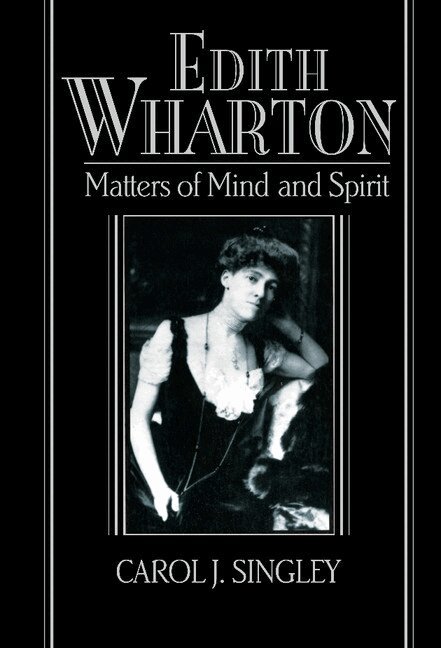
Edith Wharton: Matters of Mind and Spirit, first published in 1995, makes the case for Wharton as a novelist of morals rather than of manners; a novelist who sought answers to profound spiritual and metaphysical questions. Focusing on Wharton's treatment of Anglicanism, Calvinism, Transcendentalism, and Catholicism, Carol Singley analyzes the short stories and seven novels in the light of religious and philosophical developments in Wharton's life and fiction. Singley situates Wharton in the context of turn-of-the-century science, historicism, and aestheticism, reading her religious and philosophical outlook as an evolving response to the cultural crisis of belief. She invokes the dynamics of class and gender as central to Wharton's quest, describing how the author accepted and yet transformed both the classical and Christian traditions that she inherited. By locating Wharton in the library rather than the drawing room, Matters of Mind and Spirit gives this writer her literary and intellectual due, and offers fresh ways of interpreting her life and fiction.
Del 92 - Cambridge Studies in American Literature and Culture
Edith Wharton
Matters of Mind and Spirit
Häftad, Engelska, 1998
516 kr
Skickas inom 7-10 vardagar
Edith Wharton: Matters of Mind and Spirit, first published in 1995, makes the case for Wharton as a novelist of morals rather than of manners; a novelist who sought answers to profound spiritual and metaphysical questions. Focusing on Wharton's treatment of Anglicanism, Calvinism, Transcendentalism, and Catholicism, Carol Singley analyzes the short stories and seven novels in the light of religious and philosophical developments in Wharton's life and fiction. Singley situates Wharton in the context of turn-of-the-century science, historicism, and aestheticism, reading her religious and philosophical outlook as an evolving response to the cultural crisis of belief. She invokes the dynamics of class and gender as central to Wharton's quest, describing how the author accepted and yet transformed both the classical and Christian traditions that she inherited. By locating Wharton in the library rather than the drawing room, Matters of Mind and Spirit gives this writer her literary and intellectual due, and offers fresh ways of interpreting her life and fiction.
Inbunden, Engelska, 1993
1 198 kr
Tillfälligt slut
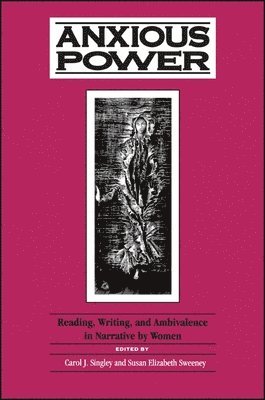
This book explains the conflicting feelings of anxiety and empowerment that women, historically excluded from masculine discourse, feel when they read and write, and it analyzes narrative strategies that reveal this ambivalence.Anxious Power draws upon feminist literary theory, narrative theory, and reader-response criticism to define women's ambivalence toward language. It is the first collection to address issues of ambivalence in narrative by women, to trace those issues from the medieval period to the present, and to outline a theoretical framework for understanding them.The contributors address a broad spectrum of female literary voices ranging from familiar British and American writers (Jane Austen, Charlotte Bronte, and Willa Cather), and those less well known (Jane Barker, Caroline Lee Henz, Susan Warner, Sarah Grand, and Fanny Howe), to European, Canadian, African-American, South and Latin American, and Asian American writers (Christine de Pizan, Marie-Catherine d'Aulnoy, Margaret Atwood, Harriet Jacobs, Toni Morrison, Clarice Lispector, Sandra Cisneros, and Maxine Hong Kingston).Anxious Power considers forms of women's narrative ranging from fairy tales through romances, novels, and autobiographies, to feminist metafiction.
Häftad, Engelska, 1993
471 kr
Tillfälligt slut
This book explains the conflicting feelings of anxiety and empowerment that women, historically excluded from masculine discourse, feel when they read and write, and it analyzes narrative strategies that reveal this ambivalence.Anxious Power draws upon feminist literary theory, narrative theory, and reader-response criticism to define women's ambivalence toward language. It is the first collection to address issues of ambivalence in narrative by women, to trace those issues from the medieval period to the present, and to outline a theoretical framework for understanding them.The contributors address a broad spectrum of female literary voices ranging from familiar British and American writers (Jane Austen, Charlotte Bronte, and Willa Cather), and those less well known (Jane Barker, Caroline Lee Henz, Susan Warner, Sarah Grand, and Fanny Howe), to European, Canadian, African-American, South and Latin American, and Asian American writers (Christine de Pizan, Marie-Catherine d'Aulnoy, Margaret Atwood, Harriet Jacobs, Toni Morrison, Clarice Lispector, Sandra Cisneros, and Maxine Hong Kingston).Anxious Power considers forms of women's narrative ranging from fairy tales through romances, novels, and autobiographies, to feminist metafiction.