• Fri frakt över 249 kr
  • •
  • Snabba leveranser
  • •
  • Billiga böcker
Kundservice

Du är på sajten för privatpersoner.

Företag, bibliotek eller offentlig verksamhet?

Du handlar på classic.bokus.com, där alla dina funktioner finns intakta.
Till classic.bokus.com
Bokus logotyp. Gå till startsidan.
  • Erbjudanden
  • Nyheter
  • Student
  • Topplistor
  • Barn & ungdom
  • Bokus Play
  • E-böcker
  • Pocketböcker
  • Spel & pussel

10% rabatt på allt med kod NYSTART10 →

Sidfot

Mina sidor

    Hjälp

    • Kundservice
    • Vanliga frågor och svar
    • Frakt och leverans
    • Retur vid ångerrätt
    • Reklamera vara
    • Betalning
    • Köpvillkor
    • Allmänna villkor
    • Information om webbplatsens tillgänglighet

    Om Bokus

    • Om oss
    • Pressrum
    • För studenter
    • För företag
    • För bibliotek och offentlig verksamhet
    • För leverantörer
    • Hållbarhet

    Populärt

    • Aktuella erbjudanden
    • Presentkort
    • Studentlitteratur
    • Nya böcker
    • Topplistor
    • Signerade böcker
    • Engelska böcker

    Inspiration

    • Boktips
    • BookTok
    • Populära bokserier
    • Barnbokskaraktärer
    • Populära författare
    Logotyp för Bokus
    Följ oss på Facebook (extern länk)Följ oss på Instagram (extern länk)Följ oss på YouTube (extern länk)Följ oss på TikTok (extern länk)
    bokus @ CookiesAnpassa cookiesIntegritetspolicyKöpvillkor
    Till Citymail hemsida (extern länk)Till Budbee hemsida (extern länk)Till Postnord hemsida (extern länk)Till Schenker hemsida (extern länk)Till Early Bird hemsida (extern länk)Till Walleys hemsida (extern länk)
    1. Skönlitteratur
    2. Litteraturvetenskap
    3. Litteraturvetenskap

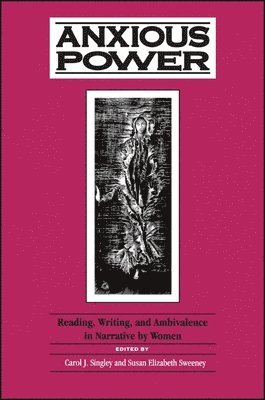
    Anxious Power

    Reading, Writing, and Ambivalence in Narrative by Women

    AvCarol J. Singley,Susan Elizabeth Sweeney

    Häftad, Engelska, 1993

    Del i serien SUNY series in Feminist Criticism and Theory

    487 kr

    Tillfälligt slut

    Beskrivning

    This book explains the conflicting feelings of anxiety and empowerment that women, historically excluded from masculine discourse, feel when they read and write, and it analyzes narrative strategies that reveal this ambivalence.Anxious Power draws upon feminist literary theory, narrative theory, and reader-response criticism to define women's ambivalence toward language. It is the first collection to address issues of ambivalence in narrative by women, to trace those issues from the medieval period to the present, and to outline a theoretical framework for understanding them.The contributors address a broad spectrum of female literary voices ranging from familiar British and American writers (Jane Austen, Charlotte Bronte, and Willa Cather), and those less well known (Jane Barker, Caroline Lee Henz, Susan Warner, Sarah Grand, and Fanny Howe), to European, Canadian, African-American, South and Latin American, and Asian American writers (Christine de Pizan, Marie-Catherine d'Aulnoy, Margaret Atwood, Harriet Jacobs, Toni Morrison, Clarice Lispector, Sandra Cisneros, and Maxine Hong Kingston).Anxious Power considers forms of women's narrative ranging from fairy tales through romances, novels, and autobiographies, to feminist metafiction.

    Produktinformation

    • Utgivningsdatum:1993-07-01
    • Mått:152 x 229 x 25 mm
    • Vikt:572 g
    • Format:Häftad
    • Språk:Engelska
    • Serie:SUNY series in Feminist Criticism and Theory
    • Antal sidor:400
    • Förlag:State University of New York Press
    • ISBN:9780791413906

    Utforska kategorier

    • Litteraturvetenskap inom Skönlitteratur

    Mer om författaren

    Carol J. Singley is Assistant Professor of Literature and American Studies at The American University. Susan Elizabeth Sweeney is Associate Professor of English at the College of the Holy Cross.

    Innehållsförteckning

    • PrefaceAcknowledgments IntroductionCarol J. Singley and Susan Elizabeth Sweeney EXPERIENCING ANXIOUS POWER Female Language, Body, and SelfCarol J. Singley EXPRESSING ANXIOUS POWER Formal Strategies in a Female Narrative Tradition: The Case of Swann: A MysterySusan Elizabeth Sweeney PART I: ANXIETIES OF AUTHORSHIP Christine Antygrafe: Authorial Ambivalence in the Works of Christine de PizanChristine Moneera Laennec Our Bodies / Our Texts?: Renaissance Women and the Trials of AuthorshipWendy Wall A Politics of Disguise: Marie-Catherine d'Aulnoy's "Belle-Etoile" and the Narrative Structure of AmbivalencePatricia Hannon Galesia, Jane Barker, and a Coming to AuthorshipKathryn R. King PART II: "MY BOOK MY PEN AND MY—LOVER": READING, WRITING, AND ROMANCE The World as Battleground in Jane Austen's PersuasionJulia Giordano "This Altogether Precious tho Wholy Worthless Book": The Diary of Mary Guion, 1800-1852Martha Tomhave Blauvelt Power and Resistance in Harriet Jacobs' Incidents in the Life of a Slave GirlDebra Humphreys Mirroring the Mother-Text: Histories of Seduction in the American Domestic NovelElizabeth L. Barnes Charlotte Bronte and Desire (to Write): Pleasure and ProhibitionPatricia E. Johnson Sarah Grand's The Beth Book: The New Woman and the Ideology of the Romance EndingTerri Doughty Forbidden Reading and Ghostly Writing in Edith Wharton's "Pomegranate Seed"Carol J. Singley and Susan Elizabeth Sweeney PART III: DEVELOPING NARRATIVES OF DIFFERENCES Willa Cather and the Fiction of Female DevelopmentJudith Fetterley "How Do We [Not] Become These People Who Victimize Us?": Anxious Authorship in the Early Fiction of Joyce Carol OatesBrenda O. Daly Receiving the Other: The Feminine Economy of Clarice Lispector's The Hour of the StarDeborah J. Archer "What There Was before Language": Preliteracy in Toni Morrison's Song of SolomonDeborah L. Clarke Literary Tricksterism: Maxine Hong Kingston's The Woman Warrior: Memoirs of a Girlhood Among GhostsBonnie TuSmith Different Voices: The Re-Bildung of the Barrio in Sandra Cisneros' The House on Mango StreetLeslie S. Gutierrez-Jones PART IV: READING AND WRITING EMPOWERMENT Ambiguous Benefits: Reading and Writing in Feminist MetafictionGayle Greene Letters from Nowhere: Fanny Howe's Forty Whacks and Feminine IdentityJohnny Payne Scripted, Conscripted, and Circumscribed: Body Language in Margaret Atwood's The Handmaid's TaleSheila C. Conboy Discourse as Power: Renouncing DenialDiane P. Freedman Notes on Contributors Index