Carol Jacobs - Böcker
Visar alla böcker från författaren Carol Jacobs. Handla med fri frakt och snabb leverans.
7 produkter
7 produkter
388 kr
Skickas inom 7-10 vardagar
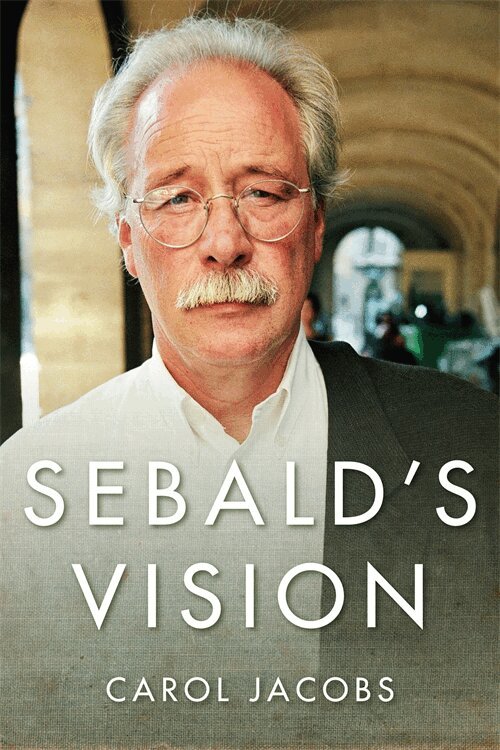
W. G. Sebald's writing has been widely recognized for its intense, nuanced engagement with the Holocaust, the Allied bombing of Germany in WWII, and other episodes of violence throughout history. Through his inventive use of narrative form and juxtaposition of image and text, Sebald's work has offered readers new ways to think about remembering and representing trauma. In Sebald's Vision, Carol Jacobs examines the author's prose, novels, and poems, illuminating the ethical and aesthetic questions that shaped his remarkable oeuvre. Through the trope of "vision," Jacobs explores aspects of Sebald's writing and the way the author's indirect depiction of events highlights the ethical imperative of representing history while at the same time calling into question the possibility of such representation. Jacobs's lucid readings of Sebald's work also consider his famous juxtaposition of images and use of citations to explain his interest in the vagaries of perception.Isolating different ideas of vision in some of his most noted works, including Rings of Saturn, Austerlitz, and After Nature, as well as in Sebald's interviews, poetry, art criticism, and his lecture Air War and Literature, Jacobs introduces new perspectives for understanding the distinctiveness of Sebald's work and its profound moral implications.
204 kr
Skickas inom 5-8 vardagar
454 kr
Skickas inom 7-10 vardagar
If Walter Benjamin (with an irony that belies his seemingly tragic life) is now recognized as one of the century's most important writers, reading him is no easy matter. Benjamin opens one of his most notable essays, "The Task of the Translator", with the words "No poem is intended for the reader, no image for the beholder, no symphony for the listener". How does one read an author who tells us that writing does not communicate very much to the reader? How does one learn to regard what comes to us from Benjamin as something other than direct expression? Carol Jacobs' In the Language of Walter Benjamin is an attempt to come to terms with this predicament. It does so by teasing out such guidelines for criticism as Benjamin seems to offer in The Origin of German Tragic Drama. Jacobs reminds us of Benjamin's distinction between truth and knowledge. She above all insists on his method of philosophical contemplation as performance, on a performance that demands precise immersion in the minute details of subject matter.
1 805 kr
Skickas inom 10-15 vardagar
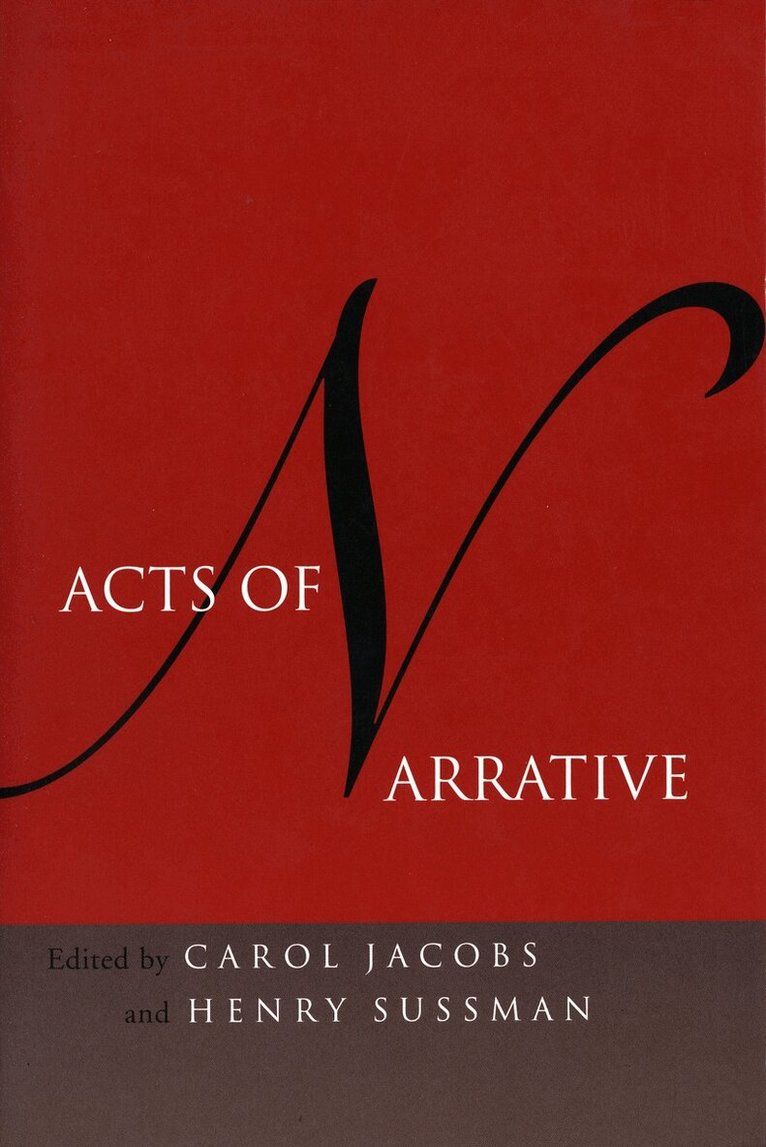
This outstanding collection brings together essays that reflect on the nature of narrative, literary criticism, and history from a variety of theoretical and disciplinary perspectives, ranging from deconstruction, psychoanalysis, and trauma theory, to narratology, technology, economics, and aesthetics. Acts of Narrative includes responses from renowned scholars across a wide range of disciplines: philosopher Jacques Derrida; the literary critic J. Hillis Miller; W. J. T. Mitchell, well-known for his reflections on the visual world; and Cathy Caruth, one of the founders of the field of trauma theory. These essays are brilliant in their readings of other texts, but are also striking in the manner in which each becomes itself a narrative performance. Moreover, what starts out as an exercise in theorizing and reading moves, more often than not, into a meditation on social and political issues crucial for our own sense of ourselves.
446 kr
Skickas inom 7-10 vardagar
This outstanding collection brings together essays that reflect on the nature of narrative, literary criticism, and history from a variety of theoretical and disciplinary perspectives, ranging from deconstruction, psychoanalysis, and trauma theory, to narratology, technology, economics, and aesthetics. Acts of Narrative includes responses from renowned scholars across a wide range of disciplines: philosopher Jacques Derrida; the literary critic J. Hillis Miller; W. J. T. Mitchell, well-known for his reflections on the visual world; and Cathy Caruth, one of the founders of the field of trauma theory. These essays are brilliant in their readings of other texts, but are also striking in the manner in which each becomes itself a narrative performance. Moreover, what starts out as an exercise in theorizing and reading moves, more often than not, into a meditation on social and political issues crucial for our own sense of ourselves.
1 296 kr
Skickas inom 10-15 vardagar
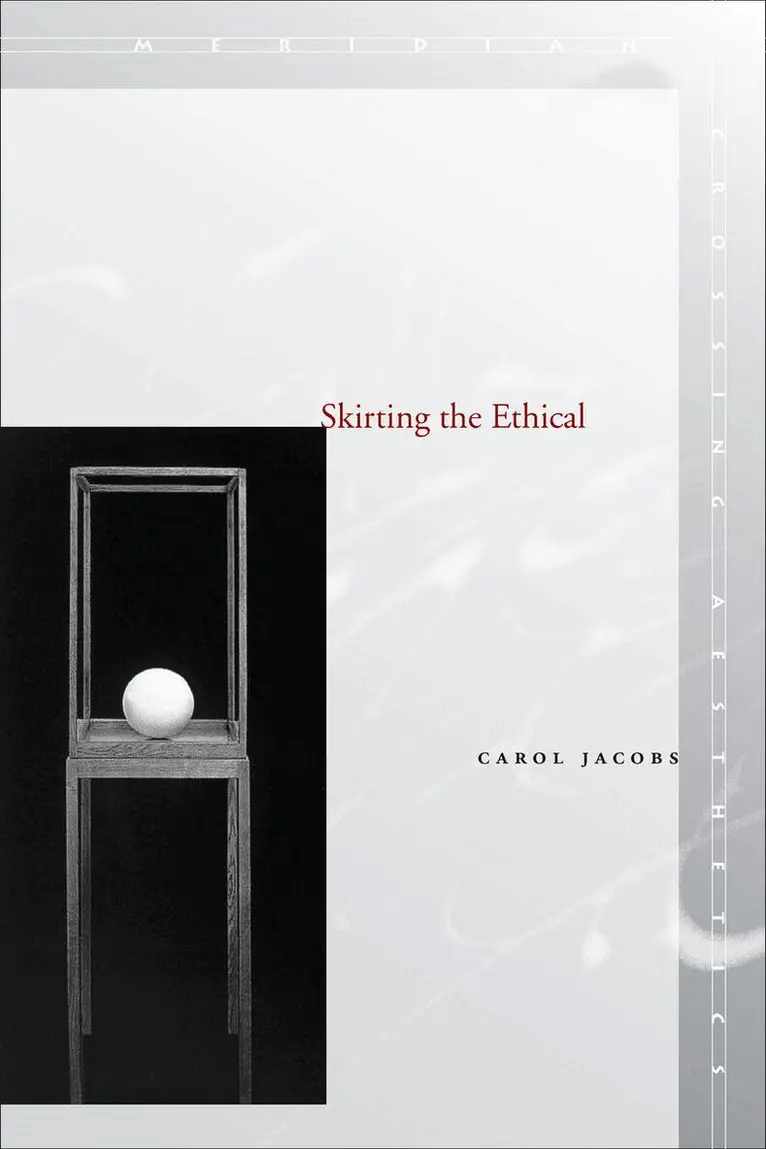
Skirting the Ethical offers highly original readings of six works, each noted for its politico-ethical stance. The first four (Sophocles' Antigone, Plato's Symposium and Republic and Hamann's "Aesthetica in nuce") have a recognized and honored place in the canon. The last two, Sebald's The Emigrants and Jane Campion's film The Piano, are exemplary for our contemporary scene. Nevertheless, the straightforward assumptions about justice, divine and state power, the good, and identity politics that every reader or viewer inevitably comes upon are disrupted when one takes into account the role of language: both the way in which language is talked about and the way in which it performs. What emerges is a non-prescriptive ethics of another order that offers a resistance to power and simplistic conceptualizations of truth, an emancipation from the "must-be" that implies an ever-to-be-renewed renegotiation—a responsability that has much to do with the act of critique or interpretation.
310 kr
Skickas inom 7-10 vardagar
Skirting the Ethical offers highly original readings of six works, each noted for its politico-ethical stance. The first four (Sophocles' Antigone, Plato's Symposium and Republic and Hamann's "Aesthetica in nuce") have a recognized and honored place in the canon. The last two, Sebald's The Emigrants and Jane Campion's film The Piano, are exemplary for our contemporary scene. Nevertheless, the straightforward assumptions about justice, divine and state power, the good, and identity politics that every reader or viewer inevitably comes upon are disrupted when one takes into account the role of language: both the way in which language is talked about and the way in which it performs. What emerges is a non-prescriptive ethics of another order that offers a resistance to power and simplistic conceptualizations of truth, an emancipation from the "must-be" that implies an ever-to-be-renewed renegotiation—a responsability that has much to do with the act of critique or interpretation.