Carol Peters – författare
Visar alla böcker från författaren Carol Peters. Handla med fri frakt och snabb leverans.
14 produkter
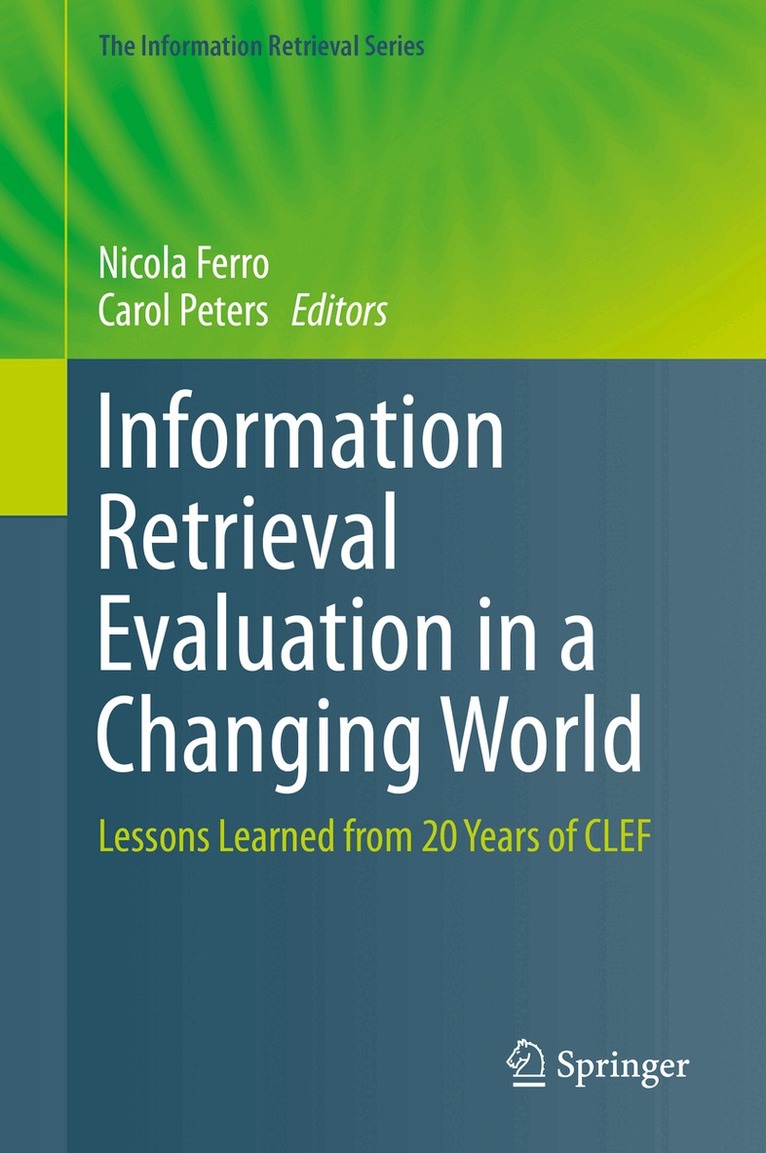
Information Retrieval Evaluation in a Changing World
Lessons Learned from 20 Years of CLEF
Inbunden, 2019
1799 kr
Lägg i varukorg
This volume celebrates the twentieth anniversary of CLEF - the Cross-Language Evaluation Forum for the first ten years, and the Conference and Labs of the Evaluation Forum since – and traces its evolution over these first two decades. CLEF’s main mission is to promote research, innovation and …
Information Retrieval Evaluation in a Changing World
Lessons Learned from 20 Years of CLEF
E-bok, 2019
1670 kr
Lägg i varukorg
This volume celebrates the twentieth anniversary of CLEF - the Cross-Language Evaluation Forum for the first ten years, and the Conference and Labs of the Evaluation Forum since – and traces its evolution over these first two decades. CLEF’s main mission is to promote research, innovation and …
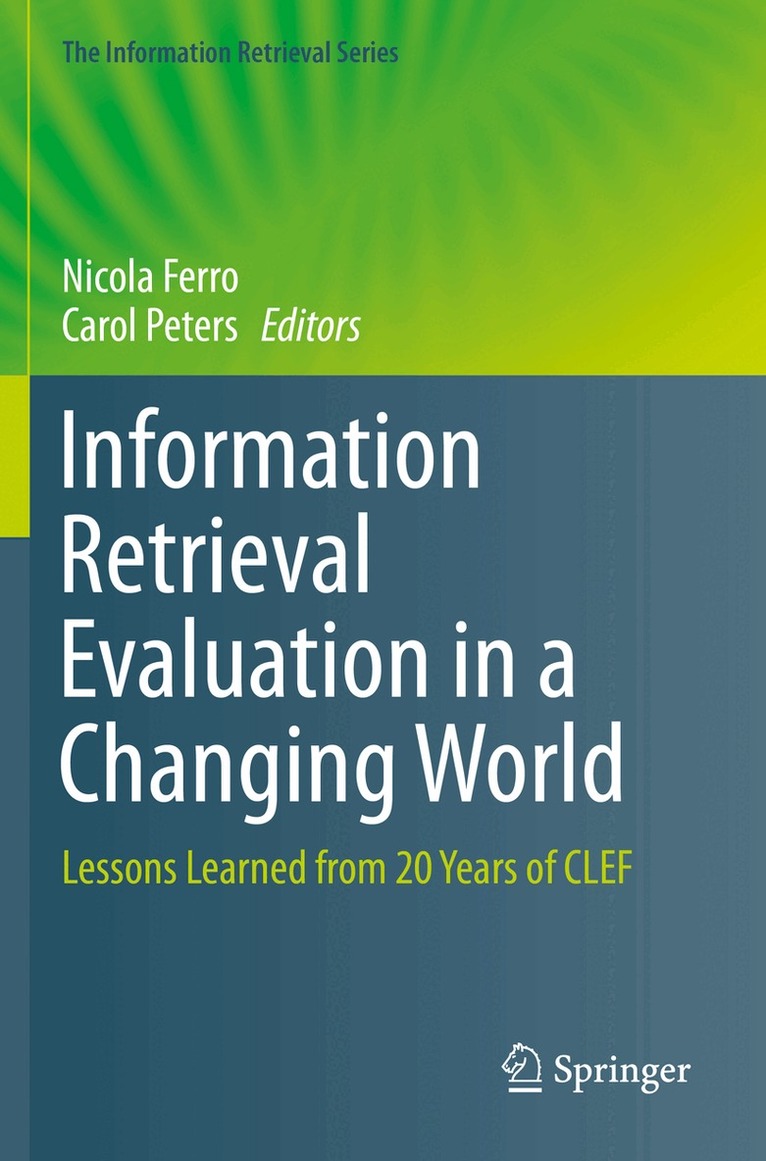
Information Retrieval Evaluation in a Changing World
Lessons Learned from 20 Years of CLEF
Häftad, 2020
1295 kr
Lägg i varukorg
This volume celebrates the twentieth anniversary of CLEF - the Cross-Language Evaluation Forum for the first ten years, and the Conference and Labs of the Evaluation Forum since – and traces its evolution over these first two decades. CLEF’s main mission is to promote research, innovation and …
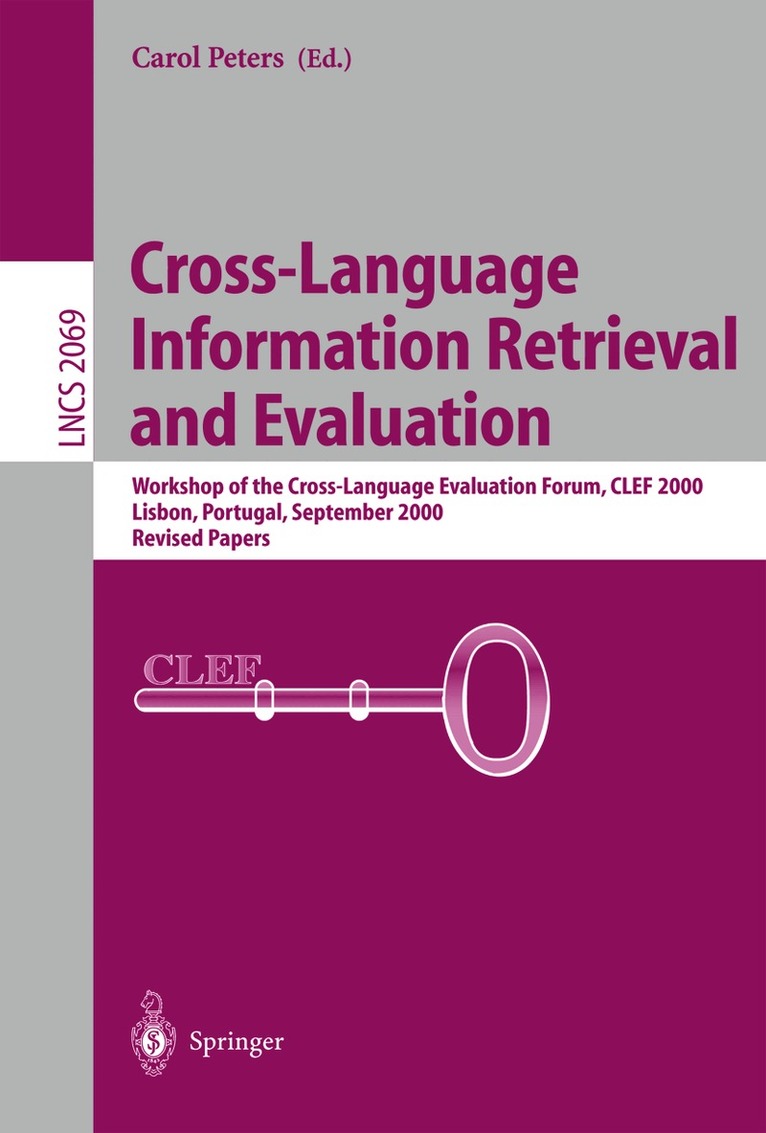
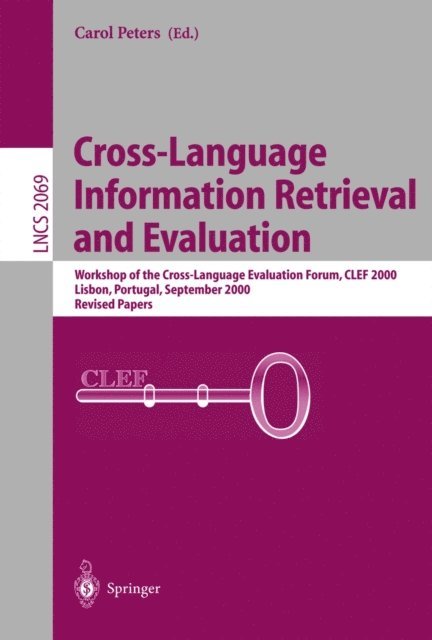
Cross-Language Information Retrieval and Evaluation
Workshop of Cross-Language Evaluation Forum, CLEF 2000, Lisbon, Portugal, September 21-22, 2000, Revised Papers
Av Carol Peters
Häftad, 2001
568 kr
Lägg i varukorg
The first evaluation campaign of the Cross-Language Evaluation Forum (CLEF) for European languages was held from January to September 2000. The campaign cul- nated in a two-day workshop in Lisbon, Portugal, 21 22 September, immediately following the fourth European Conference on Digital Libraries …
Cross-Language Information Retrieval and Evaluation
Workshop of Cross-Language Evaluation Forum, CLEF 2000, Lisbon, Portugal, September 21-22, 2000, Revised Papers
Av Carol Peters
E-bok, 2003
755 kr
Lägg i varukorg
The first evaluation campaign of the Cross-Language Evaluation Forum (CLEF) for European languages was held from January to September 2000. The campaign cul- nated in a two-day workshop in Lisbon, Portugal, 21 22 September, immediately following the fourth European Conference on Digital Libraries …
Multilingual Information Access Evaluation II - Multimedia Experiments
10th Workshop of the Cross-Language Evaluation Forum, CLEF 2009, Corfu, Greece, September 30 - October 2, 2009, Revised Selected Papers, Part II
Av Carol Peters, Barbara Caputo m. fl.
Häftad, 2010
1129 kr
Lägg i varukorg
The tenth campaign of the Cross Language Evaluation Forum (CLEF) for European languages was held from January to September 2009. There were eight main eval- tion tracks in CLEF 2009 plus a pilot task. The aim, as usual, was to test the perfo- ance of a wide range of multilingual information access …
Multilingual Information Access Evaluation II - Multimedia Experiments
10th Workshop of the Cross-Language Evaluation Forum, CLEF 2009, Corfu, Greece, September 30 - October 2, 2009, Revised Selected Papers, Part II
Av Theodora Tsikrika, Henning Muller m. fl.
E-bok, 2010
1459 kr
Lägg i varukorg
The tenth campaign of the Cross Language Evaluation Forum (CLEF) for European languages was held from January to September 2009. There were eight main eval- tion tracks in CLEF 2009 plus a pilot task. The aim, as usual, was to test the perfo- ance of a wide range of multilingual information access …
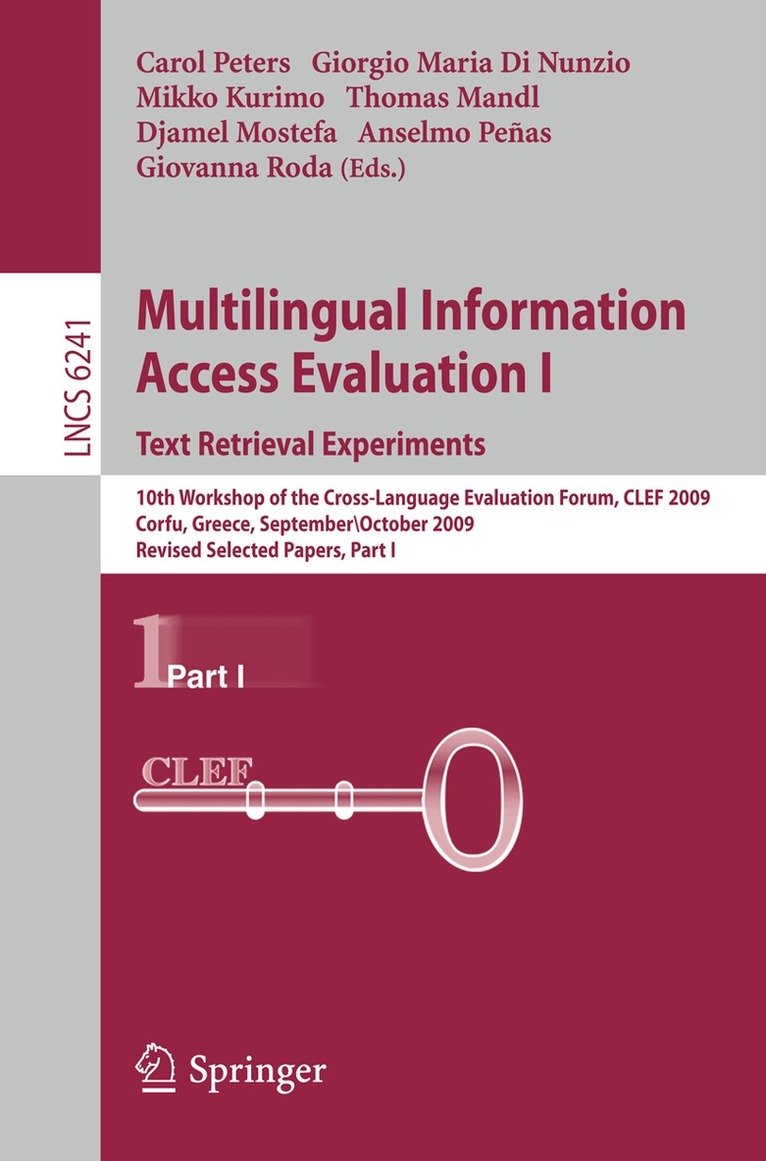
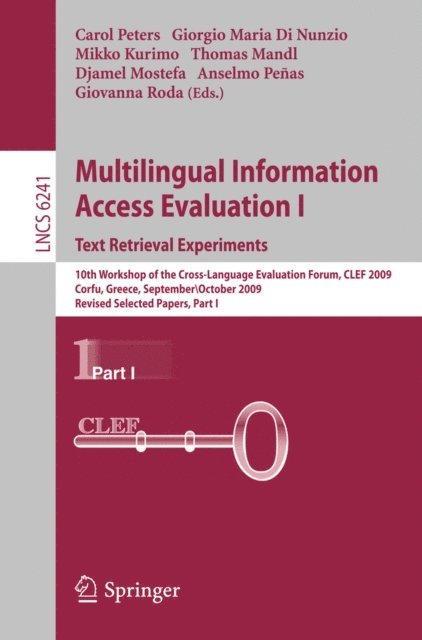
Multilingual Information Access Evaluation I - Text Retrieval Experiments
10th Workshop of the Cross-Language Evaluation Forum, CLEF 2009, Corfu, Greece, September 30 - October 2, 2009, Revised Selected Papers, Part I
Av Carol Peters, Giorgio Maria Di Nunzio m. fl.
Häftad, 2010
568 kr
Lägg i varukorg
The tenth campaign of the Cross Language Evaluation Forum (CLEF) for European languages was held from January to September 2009. There were eight main eval- tion tracks in CLEF 2009 plus a pilot task. The aim, as usual, was to test the perfo- ance of a wide range of multilingual information access …
Multilingual Information Access Evaluation I - Text Retrieval Experiments
10th Workshop of the Cross-Language Evaluation Forum, CLEF 2009, Corfu, Greece, September 30 - October 2, 2009, Revised Selected Papers, Part I
Av Giovanna Roda, Anselmo Penas m. fl.
E-bok, 2010
739 kr
Lägg i varukorg
The tenth campaign of the Cross Language Evaluation Forum (CLEF) for European languages was held from January to September 2009. There were eight main eval- tion tracks in CLEF 2009 plus a pilot task. The aim, as usual, was to test the perfo- ance of a wide range of multilingual information access …
Multilingual and Multimodal Information Access Evaluation
International Conference of the Cross-Language Evaluation Forum, CLEF 2010, Padua, Italy, September 20-23, 2010, Proceedings
Av Maristella Agosti, Nicola Ferro m. fl.
Häftad, 2010
568 kr
Lägg i varukorg
In its ?rst ten years of activities (2000-2009), the Cross-Language Evaluation Forum (CLEF) played a leading role in stimulating investigation and research in a wide range of key areas in the information retrieval domain, such as cro- language question answering, image and geographic information …
Multilingual and Multimodal Information Access Evaluation
International Conference of the Cross-Language Evaluation Forum, CLEF 2010, Padua, Italy, September 20-23, 2010, Proceedings
Av Alan Smeaton, Maarten de Rijke m. fl.
E-bok, 2010
739 kr
Lägg i varukorg
In its ?rst ten years of activities (2000-2009), the Cross-Language Evaluation Forum (CLEF) played a leading role in stimulating investigation and research in a wide range of key areas in the information retrieval domain, such as cro- language question answering, image and geographic information …
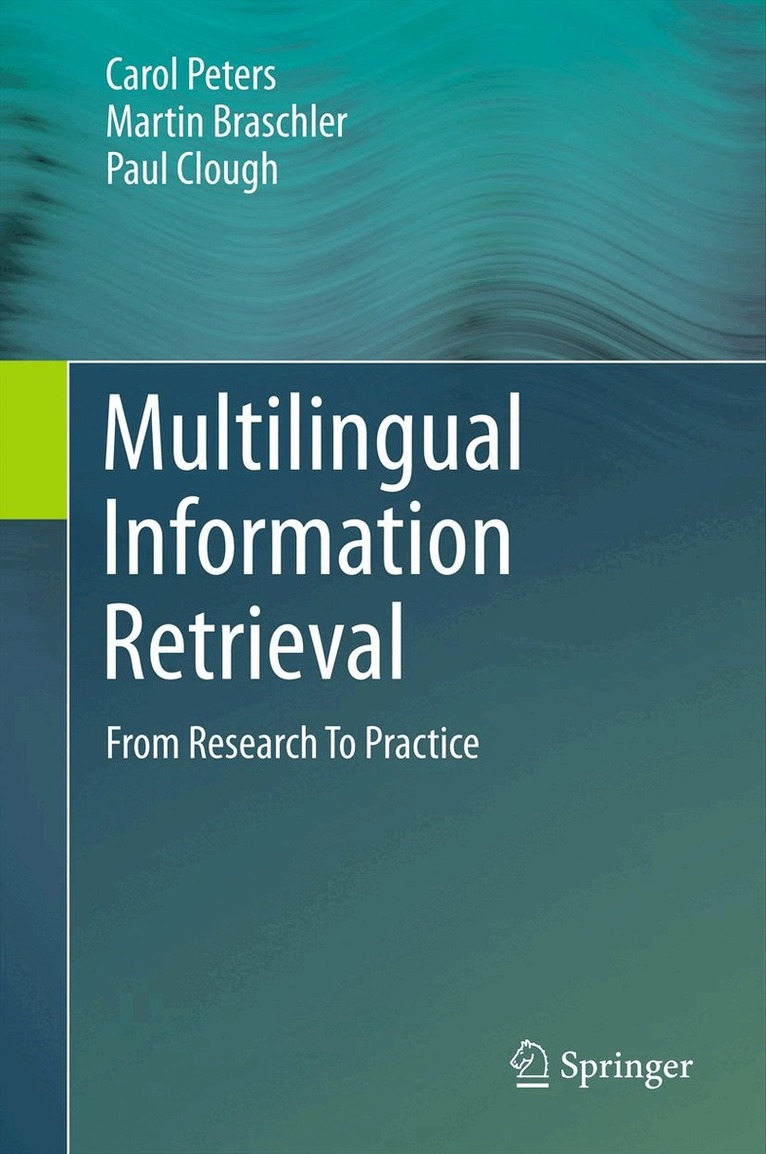
Multilingual Information Retrieval
From Research To Practice
Av Carol Peters, Martin Braschler m. fl.
Inbunden, 2012
568 kr
Lägg i varukorg
We are living in a multilingual world and the diversity in languages which are used to interact with information access systems has generated a wide variety of challenges to be addressed by computer and information scientists. The growing amount of non-English information accessible globally and …
Multilingual Information Retrieval
From Research To Practice
Av Paul Clough, Martin Braschler m. fl.
E-bok, 2012
755 kr
Lägg i varukorg
We are living in a multilingual world and the diversity in languages which are used to interact with information access systems has generated a wide variety of challenges to be addressed by computer and information scientists. The growing amount of non-English information accessible globally and …
Multilingual Information Retrieval
From Research To Practice
Av Carol Peters, Martin Braschler m. fl.
Häftad, 2014
568 kr
Lägg i varukorg
We are living in a multilingual world and the diversity in languages which are used to interact with information access systems has generated a wide variety of challenges to be addressed by computer and information scientists. The growing amount of non-English information accessible globally and …