Carol Sweetenham – författare
Visar alla böcker från författaren Carol Sweetenham. Handla med fri frakt och snabb leverans.
18 produkter
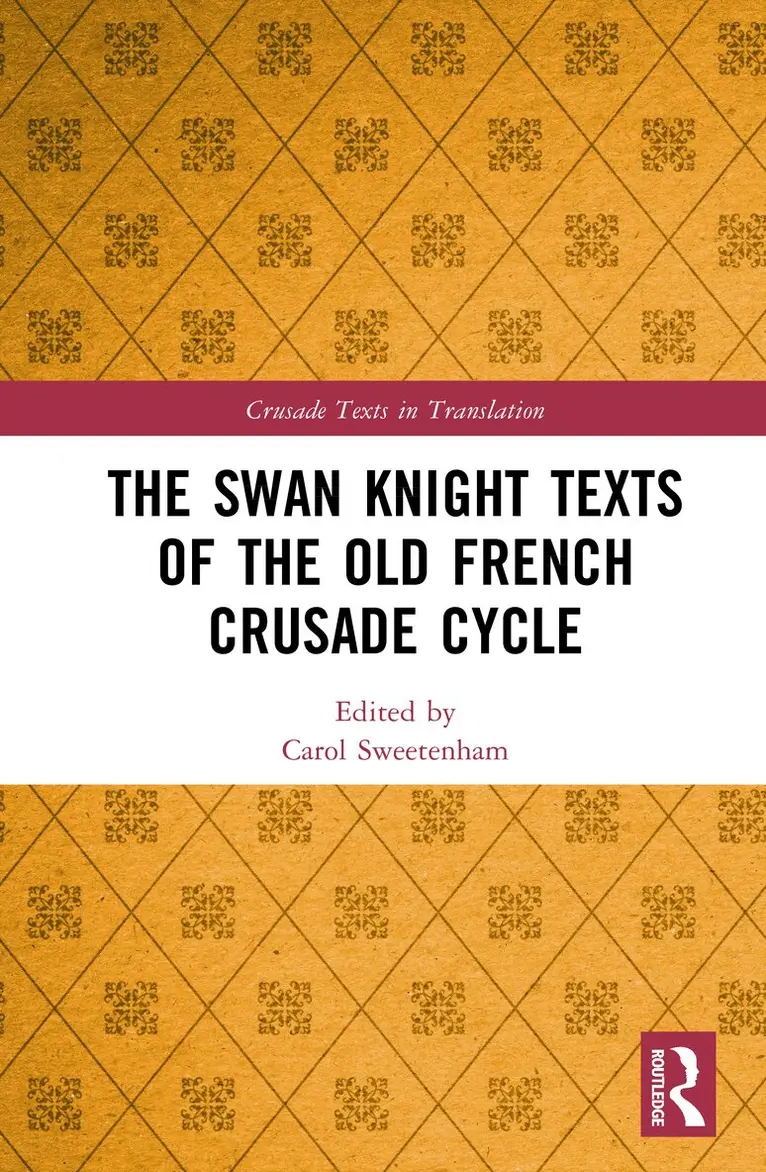
Swan Knight Texts of the Old French Crusade Cycle
Inbunden, 2025
2879 kr
Lägg i varukorg
The Swan Knight texts provide an imaginary tale of the ancestry of Godfrey of Bouillon, first ruler of Jerusalem in the kingdom of Outremer. They form the opening section of the Old French Crusade Cycle, leading up to the fictionalised account of the crusade in the Chanson d’Antioche, Chanson des …
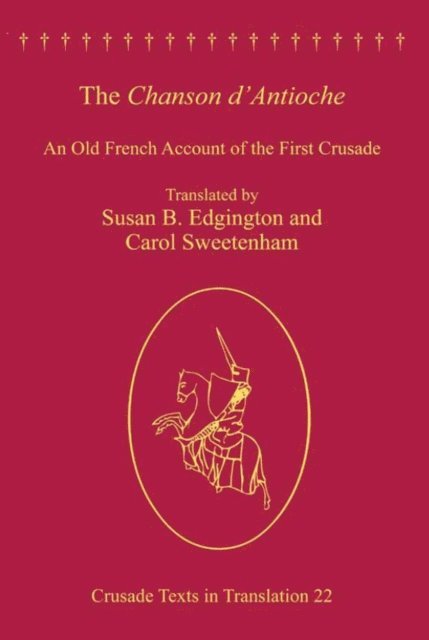
Chanson d'Antioche
An Old French Account of the First Crusade
Häftad, 2020
809 kr
Lägg i varukorg
The Old-French Chanson d'Antioche has long intrigued historians and literary scholars. Unusually among epic poems, it follows closely a well documented historical event - the First Crusade - and appears to include substantial and genuine historical content. At one time it was believed to be based …
Swan Knight Texts of the Old French Crusade Cycle
E-bok, 2025
956 kr
Lägg i varukorg
The Swan Knight texts provide an imaginary tale of the ancestry of Godfrey of Bouillon, first ruler of Jerusalem in the kingdom of Outremer. They form the opening section of the Old French Crusade Cycle, leading up to the fictionalised account of the crusade in the Chanson d’Antioche , Chanson des …
Swan Knight Texts of the Old French Crusade Cycle
E-bok, 2025
956 kr
Lägg i varukorg
The Swan Knight texts provide an imaginary tale of the ancestry of Godfrey of Bouillon, first ruler of Jerusalem in the kingdom of Outremer. They form the opening section of the Old French Crusade Cycle, leading up to the fictionalised account of the crusade in the Chanson d’Antioche , Chanson des …
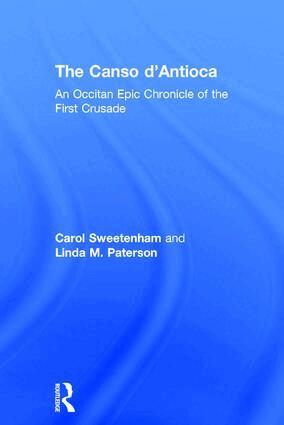
Canso d'Antioca
An Occitan Epic Chronicle of the First Crusade
Av Carol Sweetenham, Linda M. Paterson
Inbunden, 2003
2879 kr
Lägg i varukorg
The Canso d'Antioca is a fascinating text which deserves more attention than it has received. It is a fragment of a much larger epic describing the events of the First Crusade, related to the Old French Chanson d'Antioca but with many unique features. As such it presents a double interest to …
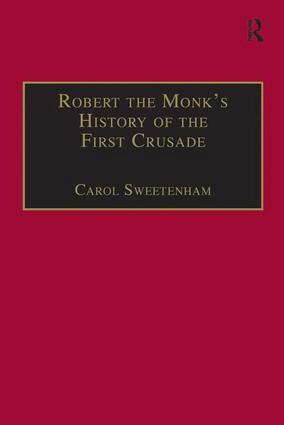
Robert the Monk's History of the First Crusade
Historia Iherosolimitana
Inbunden, 2005
2504 kr
Lägg i varukorg
This is the first English translation of Robert the Monk's Historia Iherosolimitana, a Latin prose chronicle describing the First Crusade. In addition to providing new and unique information on the Crusade (Robert claims to have been an eyewitness of the Council of Clermont in 1095), its particular …
Chanson d'Antioche
An Old French Account of the First Crusade
Inbunden, 2011
2879 kr
Lägg i varukorg
The Old-French Chanson d'Antioche has long intrigued historians and literary scholars. Unusually among epic poems, it follows closely a well documented historical event - the First Crusade - and appears to include substantial and genuine historical content. At one time it was believed to be based …
Robert the Monk's History of the First Crusade
Historia Iherosolimitana
Häftad, 2006
689 kr
Lägg i varukorg
This is the first English translation of Robert the Monk's Historia Iherosolimitana, a Latin prose chronicle describing the First Crusade. In addition to providing new and unique information on the Crusade (Robert claims to have been an eyewitness of the Council of Clermont in 1095), its particular …
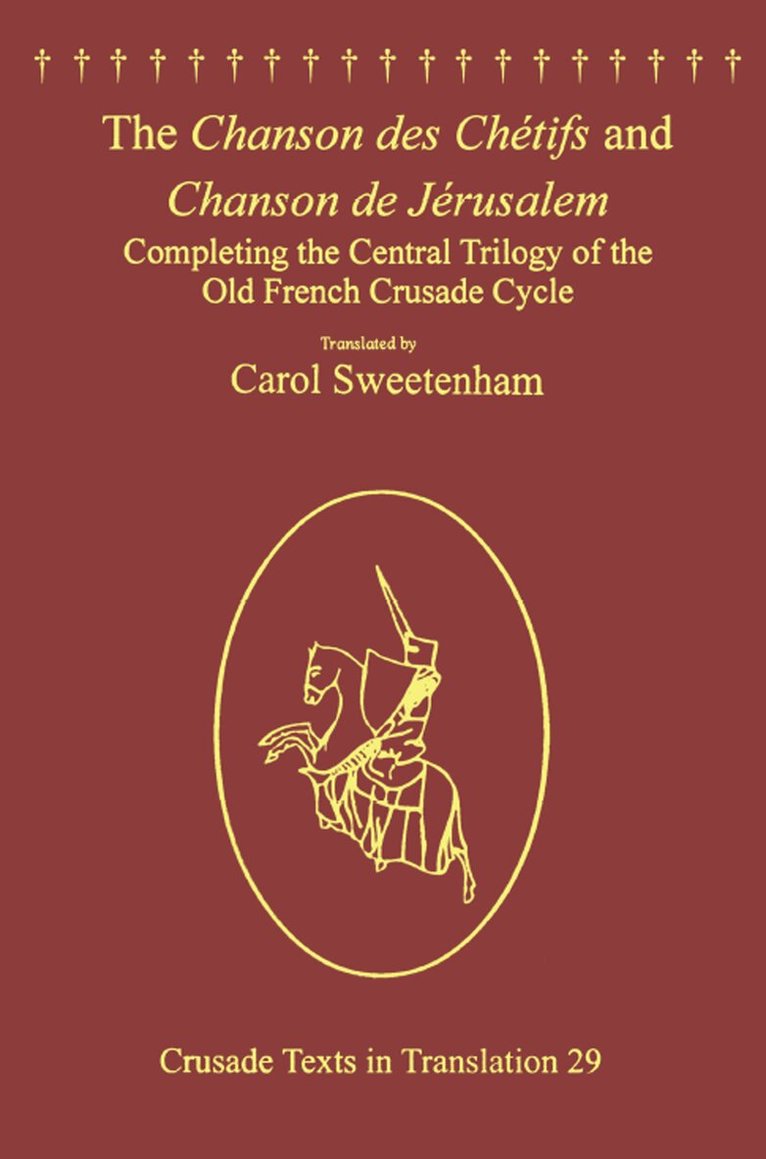
Chanson des Chétifs and Chanson de Jérusalem
Completing the Central Trilogy of the Old French Crusade Cycle
Häftad, 2018
809 kr
Lägg i varukorg
The First Crusade was arguably one of the most significant events of the Middle Ages. It was the only event to generate its own epic cycle, the Old French Crusade Cycle. The central trilogy at the heart of the Cycle describes the Crusade from its beginnings to the climactic battle of Ascalon, …
Chanson des Chetifs and Chanson de Jerusalem
Completing the Central Trilogy of the Old French Crusade Cycle
E-bok, 2020
956 kr
Lägg i varukorg
The First Crusade was arguably one of the most significant events of the Middle Ages. It was the only event to generate its own epic cycle, the Old French Crusade Cycle. The central trilogy at the heart of the Cycle describes the Crusade from its beginnings to the climactic battle of Ascalon, …
Chanson des Chetifs and Chanson de Jerusalem
Completing the Central Trilogy of the Old French Crusade Cycle
E-bok, 2020
935 kr
Lägg i varukorg
The First Crusade was arguably one of the most significant events of the Middle Ages. It was the only event to generate its own epic cycle, the Old French Crusade Cycle. The central trilogy at the heart of the Cycle describes the Crusade from its beginnings to the climactic battle of Ascalon, …
Chanson d'Antioche
An Old French Account of the First Crusade
E-bok, 2016
956 kr
Lägg i varukorg
The Old-French Chanson d''Antioche has long intrigued historians and literary scholars. Unusually among epic poems, it follows closely a well documented historical event - the First Crusade - and appears to include substantial and genuine historical content. At one time it was believed to be based …
Chanson d'Antioche
An Old French Account of the First Crusade
E-bok, 2016
956 kr
Lägg i varukorg
The Old-French Chanson d''Antioche has long intrigued historians and literary scholars. Unusually among epic poems, it follows closely a well documented historical event - the First Crusade - and appears to include substantial and genuine historical content. At one time it was believed to be based …
Canso d'Antioca
An Occitan Epic Chronicle of the First Crusade
Av Linda M. Paterson, Carol Sweetenham
E-bok, 2017
956 kr
Lägg i varukorg
The Canso d''Antioca is a fascinating text which deserves more attention than it has received. It is a fragment of a much larger epic describing the events of the First Crusade, related to the Old French Chanson d''Antioca but with many unique features. As such it presents a double interest to …
Canso d'Antioca
An Occitan Epic Chronicle of the First Crusade
Av Linda M. Paterson, Carol Sweetenham
E-bok, 2017
956 kr
Lägg i varukorg
The Canso d''Antioca is a fascinating text which deserves more attention than it has received. It is a fragment of a much larger epic describing the events of the First Crusade, related to the Old French Chanson d''Antioca but with many unique features. As such it presents a double interest to …
Robert the Monk's History of the First Crusade
Historia Iherosolimitana
E-bok, 2017
837 kr
Lägg i varukorg
This is the first English translation of Robert the Monk''s Historia Iherosolimitana, a Latin prose chronicle describing the First Crusade. In addition to providing new and unique information on the Crusade (Robert claims to have been an eyewitness of the Council of Clermont in 1095), its …
Robert the Monk's History of the First Crusade
Historia Iherosolimitana
E-bok, 2017
837 kr
Lägg i varukorg
This is the first English translation of Robert the Monk''s Historia Iherosolimitana, a Latin prose chronicle describing the First Crusade. In addition to providing new and unique information on the Crusade (Robert claims to have been an eyewitness of the Council of Clermont in 1095), its …
Chanson des Chétifs and Chanson de Jérusalem
Completing the Central Trilogy of the Old French Crusade Cycle
Inbunden, 2016
3102 kr
Lägg i varukorg
The First Crusade was arguably one of the most significant events of the Middle Ages. It was the only event to generate its own epic cycle, the Old French Crusade Cycle. The central trilogy at the heart of the Cycle describes the Crusade from its beginnings to the climactic battle of Ascalon, …