Carole Fink - Böcker
Visar alla böcker från författaren Carole Fink. Handla med fri frakt och snabb leverans.
11 produkter
11 produkter
Defending the Rights of Others
The Great Powers, the Jews, and International Minority Protection, 1878-1938
Häftad, Engelska, 2006
441 kr
Skickas inom 7-10 vardagar
When the Cold War ended between 1989 and 1991, statesmen and scholars reached back to the period after World War I when the victors devised minority treaties for the new and expanded states of Eastern Europe. This book is a study of the entire period between 1878 and 1938, when the great powers established a system of external supervision to reduce the threats in Europe's most volatile regions of irredentism, persecution and uncontrolled waves of westward migration. It is a study of the strengths and weaknesses of an early state of international human rights diplomacy as practised by rival and often uninformed Western political leaders, by ardent but divided Jewish advocates, and also by aggressive state minority champions, in the tumultuous age of nationalism and imperialism, bolshevism and fascism between Bismarck and Hitler.
441 kr
Skickas inom 7-10 vardagar
Studies of the Cold War transcend a narrow focus on four decades of superpower rivalry, recognizing that leaders and governments outside of Washington and Moscow also exerted political, economic, and moral influence well beyond their own borders. One striking example was the Ostpolitik of Chancellor Willy Brandt, which not only redefined Germany's relation with its Nazi past but also altered the global environment of the Cold War. This book examines the years 1969-1974, when Brandt broke the Cold War stalemate in Europe by assuming responsibility for the crimes of the Third Reich and by formally renouncing several major West German claims, while also launching an assertive policy toward his Communist neighbors and conducting a deft balancing act between East and West. Not everyone then, or now, applauds the ethos and practice of Ostpolitik, but no one can deny its impact on German, European, and world history.
956 kr
Skickas inom 7-10 vardagar
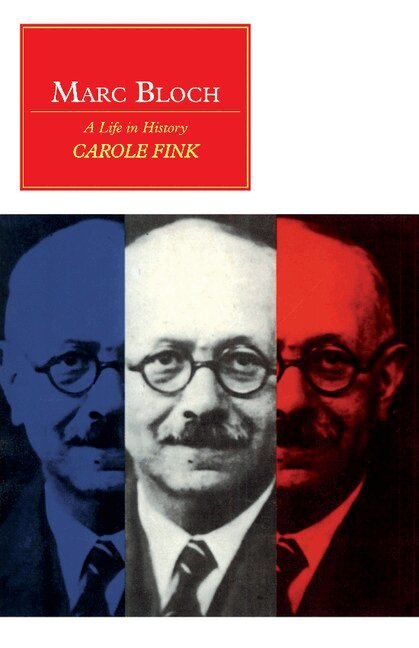
This is the first biography of Marc Bloch (1886-1944), historian, soldier in both world wars, and leader of the Resistance, who was captured, tortured, and died a heroic death. Based largely on Bloch's private letters, diaries and papers, as well as on other unpublished documents, it traces the remarkable life of this French-Jewish patriot under the Third Republic. As an historian, Bloch is perhaps best known for The Historian's Craft, an inspiring set of meditations on his life's work, and as co-founder of the now legendary journal Annales, which gave rise to a major school of historical writing. Profoundly influenced by the dark events that shaped his era - world wars, anti-semitism, and totalitarianism - Bloch has become something of an intellectual hero of our century, his life an epitome of the endeavour to uphold, in the face of such events, the spirit of unfettered critical enquiry.
344 kr
Skickas inom 7-10 vardagar
This 1991 book was the first biography of Marc Bloch (1886-1944), historian, soldier in both world wars, and leader of the Resistance, who was captured, tortured, and died a heroic death. Based largely on Bloch's private letters, diaries and papers, as well as on other unpublished documents, it traces the remarkable life of this French-Jewish patriot under the Third Republic. As an historian, Bloch is perhaps best known for The Historian's Craft, an inspiring set of meditations on his life's work, and as co-founder of the now legendary journal Annales, which gave rise to a major school of historical writing. Profoundly influenced by the dark events that shaped his era - world wars, anti-semitism, and totalitarianism - Bloch has become something of an intellectual hero of our century, his life an epitome of the endeavour to uphold, in the face of such events, the spirit of unfettered critical enquiry.
1 228 kr
Skickas inom 7-10 vardagar
One of the largest twentieth-century summit meetings, the Genoa Conference of 1922, was a notable failure, due to the gulf between the Allies and Germany, between the West and Soviet Russia, and among the World War I victors and their small allies. This book, a unique international collaboration, presents various perspectives on the Genoa Conference: its leadership, goals, and outcome. The authors present new findings on such questions as the sensational Rapallo Treaty between Germany and Russia; the strategy of the small neutral powers; and the policy of the United States toward European debts. Readers will find contrasting as well as complementary views in this volume.
699 kr
Skickas inom 7-10 vardagar
One of the largest twentieth-century summit meetings, the Genoa Conference of 1922, was a notable failure, due to the gulf between the Allies and Germany, between the West and Soviet Russia, and among the World War I victors and their small allies. This book, a unique international collaboration, presents various perspectives on the Genoa Conference: its leadership, goals, and outcome. The authors present new findings on such questions as the sensational Rapallo Treaty between Germany and Russia; the strategy of the small neutral powers; and the policy of the United States toward European debts. Readers will find contrasting as well as complementary views in this volume.
645 kr
Skickas inom 7-10 vardagar
1968: The World Transformed presents a global perspective on the tumultuous events of the most crucial year in the era of the Cold War. By interpreting 1968 as a transnational phenomenon, authors from Europe and the United States explain why the crises of 1968 erupted almost simultaneously throughout the world. Together, the eighteen chapters provide an interdisciplinary and comparative approach to the rise and fall of protest movements worldwide. The book represents an effort to integrate international relations, the role of media, and the cross-cultural exchange of people and ideas into the history of that year. 1968 emerges as a global phenomenon because of the linkages between domestic and international affairs, the powerful influence of the media, the networks of communication among activists, and the shared opposition to the domestic and international status quo in the name of freedom and self-determination.
Defending the Rights of Others
The Great Powers, the Jews, and International Minority Protection, 1878-1938
Inbunden, Engelska, 2004
1 431 kr
Skickas inom 7-10 vardagar
When the Cold War ended between 1989 and 1991, statesmen and scholars reached back to the period after World War I when the victors devised minority treaties for the new and expanded states of Eastern Europe. This book is a study of the entire period between 1878 and 1938, when the great powers established a system of external supervision to reduce the threats in Europe's most volatile regions of irredentism, persecution and uncontrolled waves of westward migration. It is a study of the strengths and weaknesses of an early state of international human rights diplomacy as practised by rival and often uninformed Western political leaders, by ardent but divided Jewish advocates, and also by aggressive state minority champions, in the tumultuous age of nationalism and imperialism, bolshevism and fascism between Bismarck and Hitler.
1 282 kr
Skickas inom 7-10 vardagar
Studies of the Cold War transcend a narrow focus on four decades of superpower rivalry, recognizing that leaders and governments outside of Washington and Moscow also exerted political, economic, and moral influence well beyond their own borders. One striking example was the Ostpolitik of Chancellor Willy Brandt, which not only redefined Germany's relation with its Nazi past but also altered the global environment of the Cold War. This book examines the years 1969-1974, when Brandt broke the Cold War stalemate in Europe by assuming responsibility for the crimes of the Third Reich and by formally renouncing several major West German claims, while also launching an assertive policy toward his Communist neighbors and conducting a deft balancing act between East and West. Not everyone then, or now, applauds the ethos and practice of Ostpolitik, but no one can deny its impact on German, European, and world history.
West Germany and Israel
Foreign Relations, Domestic Politics, and the Cold War, 1965-1974
Inbunden, Engelska, 2019
1 200 kr
Skickas inom 7-10 vardagar
By the late 1960s, West Germany and Israel were moving in almost opposite diplomatic directions in a political environment dominated by the Cold War. The Federal Republic launched ambitious policies to reconcile with its Iron Curtain neighbors, expand its influence in the Arab world, and promote West European interests vis-...-vis the United States. By contrast, Israel, unable to obtain peace with the Arabs after its 1967 military victory and threatened by Palestinian terrorism, became increasingly dependent upon the United States, estranged from the USSR and Western Europe, and isolated from the Third World. Nonetheless, the two countries remained connected by shared security concerns, personal bonds, and recurrent evocations of the German-Jewish past. Drawing upon newly-available sources covering the first decade of the countries' formal diplomatic ties, Carole Fink reveals the underlying issues that shaped these two countries' fraught relationship and sets their foreign and domestic policies in a global context.
West Germany and Israel
Foreign Relations, Domestic Politics, and the Cold War, 1965-1974
Häftad, Engelska, 2019
370 kr
Skickas inom 7-10 vardagar
By the late 1960s, West Germany and Israel were moving in almost opposite diplomatic directions in a political environment dominated by the Cold War. The Federal Republic launched ambitious policies to reconcile with its Iron Curtain neighbors, expand its influence in the Arab world, and promote West European interests vis-...-vis the United States. By contrast, Israel, unable to obtain peace with the Arabs after its 1967 military victory and threatened by Palestinian terrorism, became increasingly dependent upon the United States, estranged from the USSR and Western Europe, and isolated from the Third World. Nonetheless, the two countries remained connected by shared security concerns, personal bonds, and recurrent evocations of the German-Jewish past. Drawing upon newly-available sources covering the first decade of the countries' formal diplomatic ties, Carole Fink reveals the underlying issues that shaped these two countries' fraught relationship and sets their foreign and domestic policies in a global context.