Carole Rawcliffe - Böcker
Visar alla böcker från författaren Carole Rawcliffe. Handla med fri frakt och snabb leverans.
10 produkter
10 produkter
Del 11 - Cambridge Studies in Medieval Life and Thought: Third Series
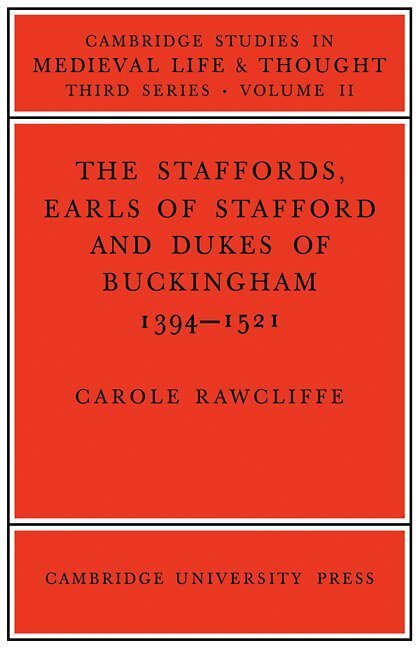
The Staffords, Earls of Stafford and Dukes of Buckingham
1394-1521
Häftad, Engelska, 2008
496 kr
Skickas inom 7-10 vardagar
As one of the richest and most powerful land-owning families in later medieval England, the Staffords played their leading part in the politics of their time. This book traces the often complex relations between the three Stafford Dukes of Buckingham and the Crown. In doing so it casts light upon the attitude of successive English kings towards the nobility as a whole, and reassessed the political and military strength of the ruling class. The Staffords derived most of their influence from the ownership of land. Because of the survival of a widely scattered but unique family archive, Dr Rawcliffe has been able to study in unusually close detail the management of their estates and the deployment of their finances, as well as the reorganization of their household, which changed over the fifteenth and early sixteenth centuries from a large peripatetic body to a smaller resident establishment where the third Duke of Buckingham could indulge his taste for cultural pursuits.
757 kr
Skickas inom 7-10 vardagar
This 4 volume set contains the biographies of 3,175 individuals who sat in the House of Commons in the late 14th and early 15th centuries, providing not only a picture of political affiliations, aim and motives in seeking Membership, but also a study of other preocupations: the contrast between the code of chivalrous conduct and the reality of military service; the competitive pursuit of wealthy heiresses; the sometimes ambivalent relations between thelaity and the Church; and their fluctuating success and failures in the scramble for patronage and preferment from the Crown and baronetage alike.Among those included are poets (Geoffrey Chaucer made an appearance in 1386), pirates (such as the notorious William Long and John Hawley), lollards (including Sir John Oldcastle, who met a traitor's death), henchmen of the king (most notably the infamous Bussy, Bagot and Green) and the most outstanding parliamentarians of the Middle Ages, among them Sir John Tiptoft, perhaps the youngest Speaker ever to be elected, the charismatic Thomas Chaucer (the poet's son), and the intrepid Sir Arnold Savage, whose verbal exchanges withHenry IV throw fresh light on the relationship between King and Commons in the 15th century.Surveys of each of the 135 constituencies represented in Parliament in this period supply a detailed explanation of local politics, while information about the economic and constitutional background of each city and borough provides the context in which the MPs' biographies are set. The Introductory Survey in Volume I, the culmination of a lifetime's dedication to the subject by the distinguished historian J. S. Roskell, provides the most thorough examination yet undertaken of the work of the medieval House of Commons. Appendices supply tables on specific topics discussed in theIntroductory Survey and touched on in the biographies.
649 kr
Skickas inom 10-15 vardagar
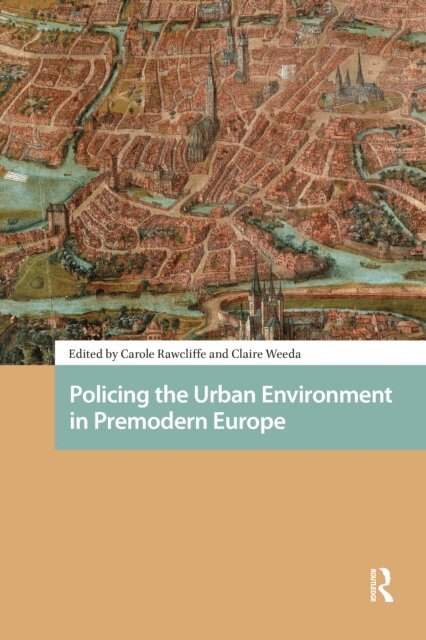
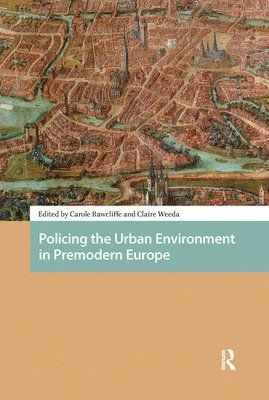
Tapping into a combination of court documents, urban statutes, material artefacts, health guides and treatises, Policing the Urban Environment in Premodern Europe offers a unique perspective on how premodern public authorities tried to create a clean, healthy environment. Overturning many preconceptions about medieval dirt and squalor, it presents the most outstanding recent scholarship on how public health norms were enforced in the judicial, religious and socio-cultural sphere before the advent of modern medicine and the nation-state, crossing geographical and linguistic boundaries and engaging with factors such as spiritual purity, civic pride and good neighbourliness.
445 kr
Skickas inom 7-10 vardagar
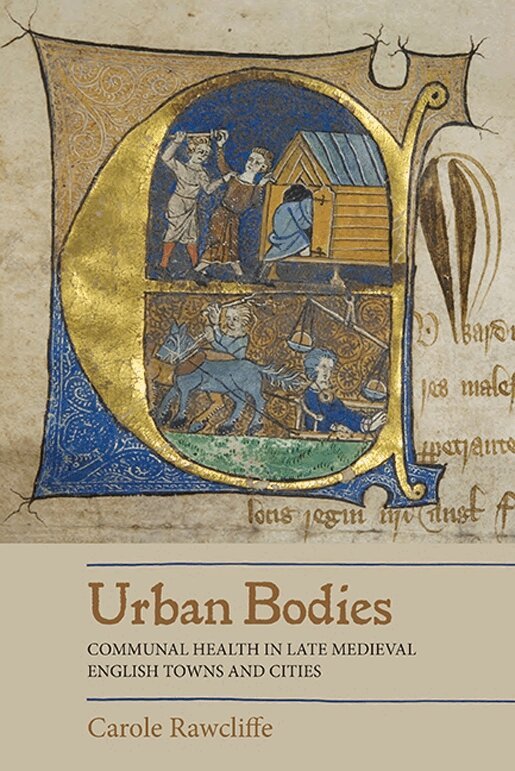
The idea of English medieval towns and cities as filthy, muddy and insanitary is here overturned in a pioneering new study.Carole Rawcliffe continues with her mission to clean up the Middle Ages. In earlier work she has already given us scholarly yet sympathetic portrayals of English medicine, hospitals, and welfare for lepers. Now she widens her scope to public health. Her argument is clear, simple and convincing. Through the efforts of crown and civic authorities, mercantile élites and popular" interests, English towns and cities aspired to a far healthier, less polluted environment than previously supposed. All major sources of possible infection were regulated, from sounds and smells to corrupt matter - and to immorality. Once again Professor Rawcliffe has overturned a well-established orthodoxyin the history of pre-modern health and healing. Her book is a magnificent achievement." Peregrine Horden, Royal Holloway University of London.This first full-length study of public health in pre-Reformation England challenges a number of entrenched assumptions about the insanitary nature of urban life during "the golden age of bacteria". Adopting an interdisciplinary approach that draws on material remains as well as archives, it examines themedical, cultural and religious contexts in which ideas about the welfare of the communal body developed. Far from demonstrating indifference, ignorance or mute acceptance in the face of repeated onslaughts of epidemic disease, the rulers and residents of English towns devised sophisticated and coherent strategies for the creation of a more salubrious environment; among the plethora of initiatives whose origins often predated the Black Death can also be found measures for the improvement of the water supply, for better food standards and for the care of the sick, both rich and poor.CAROLE RAWCLIFFE is Professor of Medieval History, University of East Anglia.
445 kr
Skickas inom 7-10 vardagar
A major reassessment, based on hitherto unpublished manuscript material, of a disease whose history has attracted more myths and misunderstandings than any other.One of the most important publications for many years in the fields of medical, religious and social history. Rawcliffe's book completely overhauls our understanding of leprosy and contributes immensely to our knowledge of theEnglish middle ages. This is a fascinating study that will be a seminal work in the history of leprosy for many years to come. EHR Set firmly in the medical, religious and cultural milieu of the European MiddleAges, this book is the first serious, comprehensive study of a disease surrounded by misconceptions and prejudices. Even specialists will be surprised to learn that most of our stereotyped ideas about the segregation of medieval lepers originated in the nineteenth century; that leprosy excited a vast range of responses, from admiration to revulsion; that in the later Middle Ages it was diagnosed readily even by laity; that a wide range of treatment was available; that medieval leper hospitals were no more austere than the monasteries on which they were modelled; that the decline of leprosy was not monocausal but implied a complex web of factors - medical, environmental, social andlegal. Written with consummate skill, subtlety and rigour, this book will change forever the image of the medieval leper.CAROLE RAWCLIFFE is Professor of Medieval History at the University of East Anglia.
1 617 kr
Skickas inom 7-10 vardagar
The idea of English medieval towns and cities as filthy, muddy and insanitary is here overturned in a pioneering new study.Carole Rawcliffe continues with her mission to clean up the Middle Ages. In earlier work she has already given us scholarly yet sympathetic portrayals of English medicine, hospitals, and welfare for lepers. Now she widens her scope to public health. Her argument is clear, simple and convincing. Through the efforts of crown and civic authorities, mercantile élites and popular" interests, English towns and cities aspired to a far healthier, less polluted environment than previously supposed. All major sources of possible infection were regulated, from sounds and smells to corrupt matter - and to immorality. Once again Professor Rawcliffe has overturned a well-established orthodoxyin the history of pre-modern health and healing. Her book is a magnificent achievement." Peregrine Horden, Royal Holloway University of London.This first full-length study of public health in pre-Reformation England challenges a number of entrenched assumptions about the insanitary nature of urban life during "the golden age of bacteria". Adopting an interdisciplinary approach that draws on material remains as well as archives, it examines themedical, cultural and religious contexts in which ideas about the welfare of the communal body developed. Far from demonstrating indifference, ignorance or mute acceptance in the face of repeated onslaughts of epidemic disease, the rulers and residents of English towns devised sophisticated and coherent strategies for the creation of a more salubrious environment; among the plethora of initiatives whose origins often predated the Black Death can also be found measures for the improvement of the water supply, for better food standards and for the care of the sick, both rich and poor.CAROLE RAWCLIFFE is Professor of Medieval History, University of East Anglia.
1 070 kr
Skickas inom 7-10 vardagar
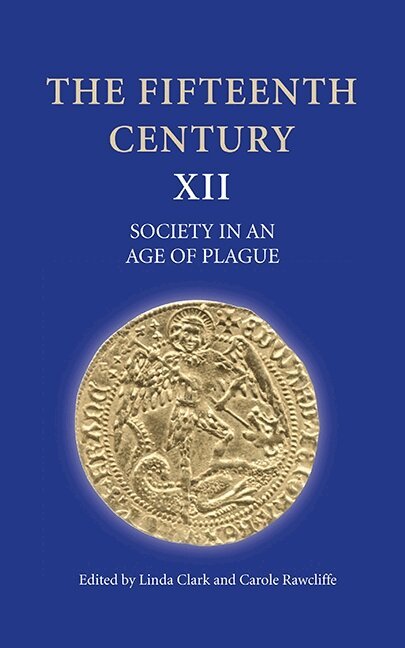
Essays address plague and disease in the fifteenth century, as manifested throughout Europe.Described as "a golden age of pathogens", the long fifteenth century was notable for a series of international, national and regional epidemics that had a profound effect upon the fabric of society. The impact of pestilence upon the literary, religious, social and political life of men, women and children throughout Europe and beyond continues to excite lively debate among historians, as the ten papers presented in this volume confirm. They deal with theresponse of urban communities in England, France and Italy to matters of public health, governance and welfare, as well as addressing the reactions of the medical profession to successive outbreaks of disease, and of individuals to the omnipresence of death, while two, very different, essays examine the important, if sometimes controversial, contribution now being made by microbiologists to our understanding of the Black Death.Contributors: J.L. Bolton, Elma Brenner, Samuel Cohn, John Henderson, Neil Murphy, Elizabeth Rutledge, Samantha Sagui, Karen Smyth, Jane Stevens Crawshaw, Sheila Sweetinburgh.
1 808 kr
Skickas inom 10-15 vardagar
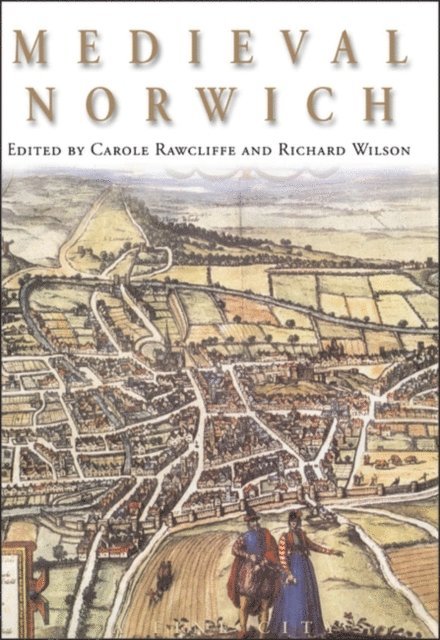
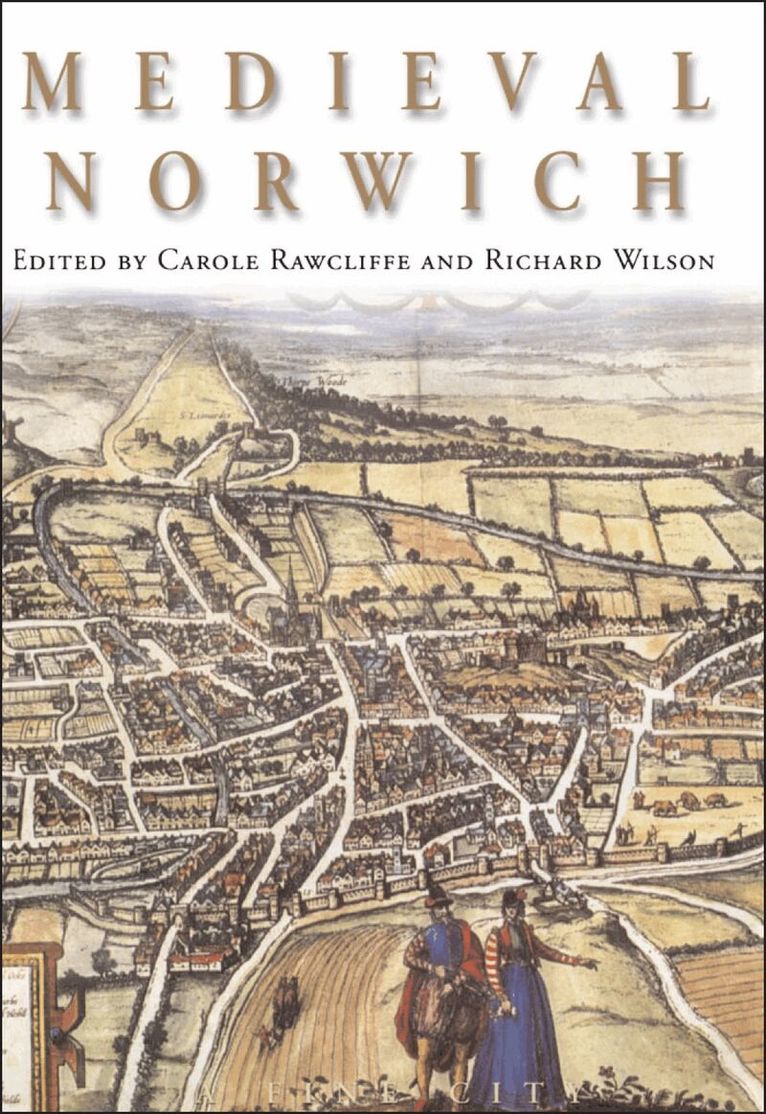
Throughout the middle ages, Norwich was one of the most populous and celebrated cities in England. Dominated by its castle and cathedral priory, it was the centre of government power in East Anglia, as well as an important trading entrepot. With records dating back to Anglo-Saxon times, and many buildings surviving from the middle ages, the history of medieval Norwich is an exceptionally rich one. Medieval Norwich is an account of the growth of the city, with its walls, streams, markets, hospitals and churches, and the lives of its citizens. It traces activities and beliefs, as well as the tensions lying not far beneath the surface that eventually erupted in Kett's Rebellion of 1549.
194 kr
Skickas inom 5-8 vardagar
The material contained here derives from a wide variety of printed and manuscript sources, chosen to give some idea of the rich diversity of evidence available to the historian of English medicine and its place in society during the fourteenth, fifteenth, and early sixteenth centuries. Latin and French have been translated into modern English, while vernacular texts have been slightly modified, and obsolete or difficult words explained. Middle English has otherwise been retained to give the past an authentic voice and to emphasize the similarities as well as the differences between the experience of modern readers and that of the inhabitants of late medieval England
Del 1 - Premodern Crime and Punishment
Policing the Urban Environment in Premodern Europe
Inbunden, Engelska, 2019
2 012 kr
Skickas inom 10-15 vardagar
This book addresses the ways in which authorities across Western Europe attempted to control urban space for the common good and how the wider population responded to these initiatives.