Carolina López-Ruiz - Böcker
Visar alla böcker från författaren Carolina López-Ruiz. Handla med fri frakt och snabb leverans.
12 produkter
12 produkter
2 599 kr
Skickas inom 5-8 vardagar
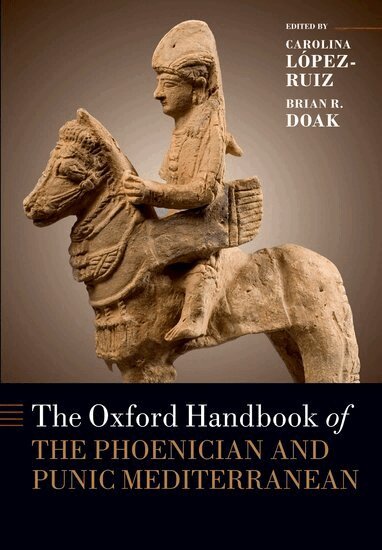
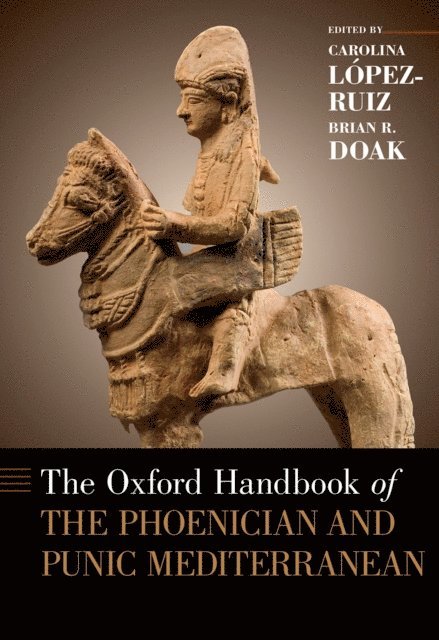
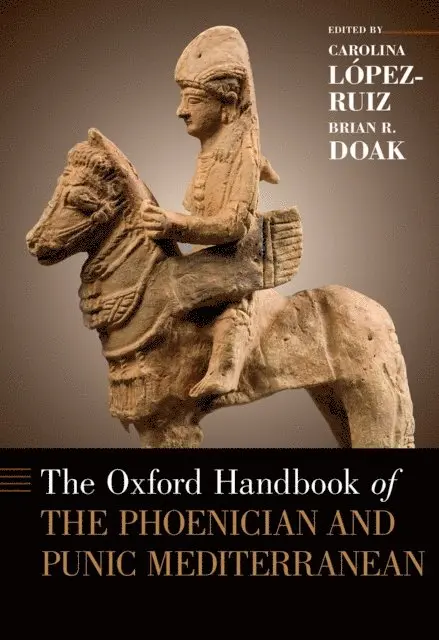
The Phoenicians created the Mediterranean world as we know it-yet they remain a shadowy and poorly understood group. The academic study of the Phoenicians has come to an important crossroads; the field has grown in sheer content, sophistication of analysis, and diversity of interpretation, and we now need a current overview of where the study of these ancient seafarers and craftsman stands and where it is going. Moreover, the field of Phoenician studies is particularly fragmented and scattered. While there is growing interest in all things Phoenician and Punic, the latest advances are mostly published in specialized journals and conference volumes in a plethora of languages. This Handbook is the first of its type to appear in over two decades, and the first ever to appear in English. In these chapters, written by a wide range of prominent and promising scholars from across Europe, North America, Australia, and the Mediterranean world, readers will find summary studies on key historical moments (such as the history of Carthage), areas of culture (organized around language, religion, and material culture), regional studies and areas of contact (spanning from the Levant and the Aegean to Iberia and North Africa), and the reception of the Phoenicians as an idea, entangled with the formation of other cultural identities, both ancient and modern.
677 kr
Skickas inom 7-10 vardagar
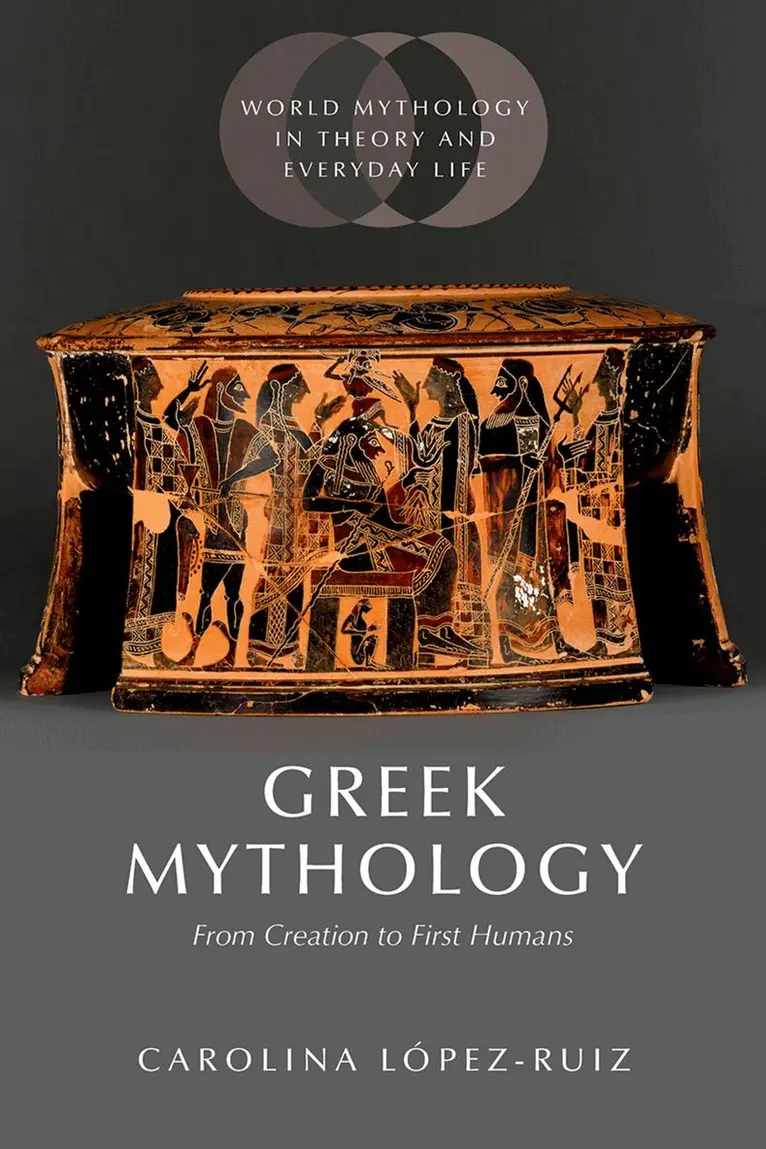
This volume provides an introduction to ancient Greek mythology through the theme of cosmogonies and theogonies —myths of origins that told the creation of the world and the birth and succession of the gods. Greek Mythology additionally features important foundational myths related to the early stages of humankind, such as the sequence of the Five Races, the first sacrifice, the creation of woman, and the Flood, all part of the core Greek myths about the beginnings of the world. The centerpiece of the volume is Hesiod's Theogony as well as parts of Works and Days which are, along with the Iliad and Odyssey, the earliest Greek literary texts preserved. The volume includes freshly translated excerpts from these canonical sources along with discussions of alternative cosmogonies and theogonies in the Greek tradition, in a rare feature for myth overviews. Beyond providing an overview of the central stories, Greek Mythology reveals myriad aspects of the myths, such as their literary form and performative contexts, their relationship to Near Eastern myths, their religious relevance and ritual function, and their reception, both in later antiquity and in modern times.
189 kr
Skickas inom 5-8 vardagar
This volume provides an introduction to ancient Greek mythology through the theme of cosmogonies and theogonies —myths of origins that told the creation of the world and the birth and succession of the gods. Greek Mythology additionally features important foundational myths related to the early stages of humankind, such as the sequence of the Five Races, the first sacrifice, the creation of woman, and the Flood, all part of the core Greek myths about the beginnings of the world. The centerpiece of the volume is Hesiod's Theogony as well as parts of Works and Days which are, along with the Iliad and Odyssey, the earliest Greek literary texts preserved. The volume includes freshly translated excerpts from these canonical sources along with discussions of alternative cosmogonies and theogonies in the Greek tradition, in a rare feature for myth overviews. Beyond providing an overview of the central stories, Greek Mythology reveals myriad aspects of the myths, such as their literary form and performative contexts, their relationship to Near Eastern myths, their religious relevance and ritual function, and their reception, both in later antiquity and in modern times.
531 kr
Skickas inom 7-10 vardagar
The Phoenicians created the Mediterranean world as we know it--yet they remain a shadowy and poorly understood group. The academic study of the Phoenicians has come to an important crossroads; the field has grown in sheer content, sophistication of analysis, and diversity of interpretation, and we now need a current overview of where the study of these ancient seafarers and craftsman stands, and where it is going. Moreover, the field of Phoenician studies is particularly fragmented and scattered. While there is growing interest in all things Phoenician and Punic, the latest advances are mostly published in specialized journals and conference volumes in a plethora of languages.This Handbook is the first of its type to appear in over two decades, and the first ever to appear in English. In these chapters, written by a wide range of prominent and promising scholars from across Europe, North America, Australia, and the Mediterranean world, readers will find summary studies on key historical moments (such as the history of Carthage); areas of culture (organized around language, religion, and material culture); regional studies and areas of contact (spanning from the Levant and the Aegean to Iberia and North Africa); and the reception of the Phoenicians as an idea, entangled with the formation of other cultural identities, both ancient and modern.
2 438 kr
Skickas inom 5-8 vardagar
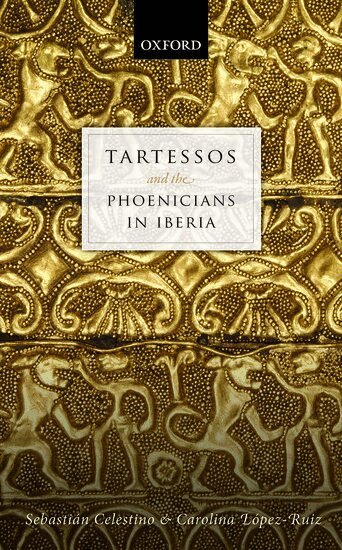
This is the first book in English about the earliest historical civilization in the western Mediterranean, known as "Tartessos."Endowed with extraordinary wealth in metals and strategically positioned between the Atlantic and Mediterranean trading routes at the time of Greek and Phoenician colonial expansion, Tartessos flourished in the eight-seventh centuries BCE. Tartessos became a literate, sophisticated, urban culture in southwestern Iberia (today's Spain and Portugal), enriched by commercial contacts with the Aegean and the Levant since at least the ninth century. In its material culture (architecture, grave goods, sanctuaries, plastic arts), we see how native elements combined with imported "orientalizing" innovations introduced by the Phoenicians. Historians of the rank of Herodotos and Livy, geographers such as Strabo and Pliny, Greek and Punic periploi and perhaps even Phoenician and Hebrew texts, testify to the power, wealth, and prominence of this westernmost Mediterranean civilization. Archaeologists, in turn, have demonstrated the existence of a fascinating complex society with both strong local roots and international flare. Yet for still-mysterious reasons, Tartessos did not attain a "Classical" period like its peer emerging cultures did at the same time (Etruscans, Romans, Greeks). This book combines the expertise of its two authors in archaeology, philology, and cultural history to present a comprehensive, coherent, theoretically up-to-date, and informative overview of the discovery, sources, and debates surrounding this puzzling culture of ancient Iberia and its complex hybrid identity vis-à-vis the western Phoenicians. This book will be of great interest to students of the classics, archaeology and ancient history, Phoenician-Punic studies, colonization and cultural contact.
500 kr
Skickas inom 10-15 vardagar
Ancient Greece has for too long been studied in isolation from its Near Eastern neighbors. And the ancient Near East itself has for too long been seen as an undifferentiated cultural monolith. Classics and Near Eastern Studies, in our modern universities, continue to be separated by various disciplinary, linguistic, and ideological walls. Yet there is a growing trend to dismantle these divides and look at the Greek world within its fullest geographical and cultural contexts.This book aims to bring the comparative study of Greek and Near Eastern cosmogonies to a new level. It analyzes themes such as succession myths, expressions of poetic inspiration, and claims to cosmic knowledge, as well as the role of itinerant specialists in the transmission of theogonies. Rather than compiling literary parallels from different periods and languages and treating the Near East as a monolithic matrix, the author focuses on the motifs specific to the North-West Semitic tradition with which the Greeks had direct contact in the Archaic period. Focusing on Hesiod’s Theogony, the Orphic texts, and their Ugaritic, Phoenician, and Hebrew counterparts, Carolina López-Ruiz avoids traditional diffusionist assumptions and proposes instead that dynamic cultural interaction led to the oral and intimate transmission of stories and beliefs.
209 kr
Skickas inom 7-10 vardagar
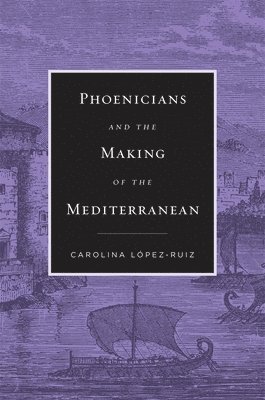
“An important new book…offers a powerful call for historians of the ancient Mediterranean to consider their implicit biases in writing ancient history and it provides an example of how more inclusive histories may be written.”—Denise Demetriou, New England Classical Journal“With a light touch and a masterful command of the literature, López-Ruiz replaces old ideas with a subtle and more accurate account of the extensive cross-cultural exchange patterns and economy driven by the Phoenician trade networks that ‘re-wired’ the Mediterranean world. A must read.”—J. G. Manning, author of The Open Sea“[A] substantial and important contribution…to the ancient history of the Mediterranean. López-Ruiz’s work does justice to the Phoenicians’ role in shaping Mediterranean culture by providing rational and factual argumentation and by setting the record straight.”—Hélène Sader, Bryn Mawr Classical ReviewImagine you are a traveler sailing to the major cities around the Mediterranean in 750 BC. You would notice a remarkable similarity in the dress, alphabet, consumer goods, and gods from Gibraltar to Tyre. This was not the Greek world—it was the Phoenician. Propelled by technological advancements of a kind unseen since the Neolithic revolution, Phoenicians knit together diverse Mediterranean societies, fostering a literate and sophisticated urban elite sharing common cultural, economic, and aesthetic modes. Following the trail of the Phoenicians from the Levant to the Atlantic coast of Iberia, Carolina López-Ruiz offers the first comprehensive study of the cultural exchange that transformed the Mediterranean in the eighth and seventh centuries BC. Greeks, Etruscans, Sardinians, Iberians, and others adopted a Levantine-inflected way of life, as they aspired to emulate Near Eastern civilizations. López-Ruiz explores these many inheritances, from sphinxes and hieratic statues to ivories, metalwork, volute capitals, inscriptions, and Ashtart iconography.Meticulously documented and boldly argued, Phoenicians and the Making of the Mediterranean revises the Hellenocentric model of the ancient world and restores from obscurity the true role of Near Eastern societies in the history of early civilizations.
379 kr
Skickas inom 7-10 vardagar
The first comprehensive history of the cultural impact of the Phoenicians, who knit together the ancient Mediterranean world long before the rise of the Greeks.Imagine you are a traveler sailing to the major cities around the Mediterranean in 750 BC. You would notice a remarkable similarity in the dress, alphabet, consumer goods, and gods from Gibraltar to Tyre. This was not the Greek world—it was the Phoenician. Based in Tyre, Sidon, Byblos, and other cities along the coast of present-day Lebanon, the Phoenicians spread out across the Mediterranean building posts, towns, and ports. Propelled by technological advancements of a kind unseen since the Neolithic revolution, Phoenicians knit together diverse Mediterranean societies, fostering a literate and sophisticated urban elite sharing common cultural, economic, and aesthetic modes.The Phoenician imprint on the Mediterranean lasted nearly a thousand years, beginning in the Early Iron Age. Following the trail of the Phoenicians from the Levant to the Atlantic coast of Iberia, Carolina López-Ruiz offers the first comprehensive study of the cultural exchange that transformed the Mediterranean in the eighth and seventh centuries BC. Greeks, Etruscans, Sardinians, Iberians, and others adopted a Levantine-inflected way of life, as they aspired to emulate Near Eastern civilizations. López-Ruiz explores these many inheritances, from sphinxes and hieratic statues to ivories, metalwork, volute capitals, inscriptions, and Ashtart iconography.Meticulously documented and boldly argued, Phoenicians and the Making of the Mediterranean revises the Hellenocentric model of the ancient world and restores from obscurity the true role of Near Eastern societies in the history of early civilizations.
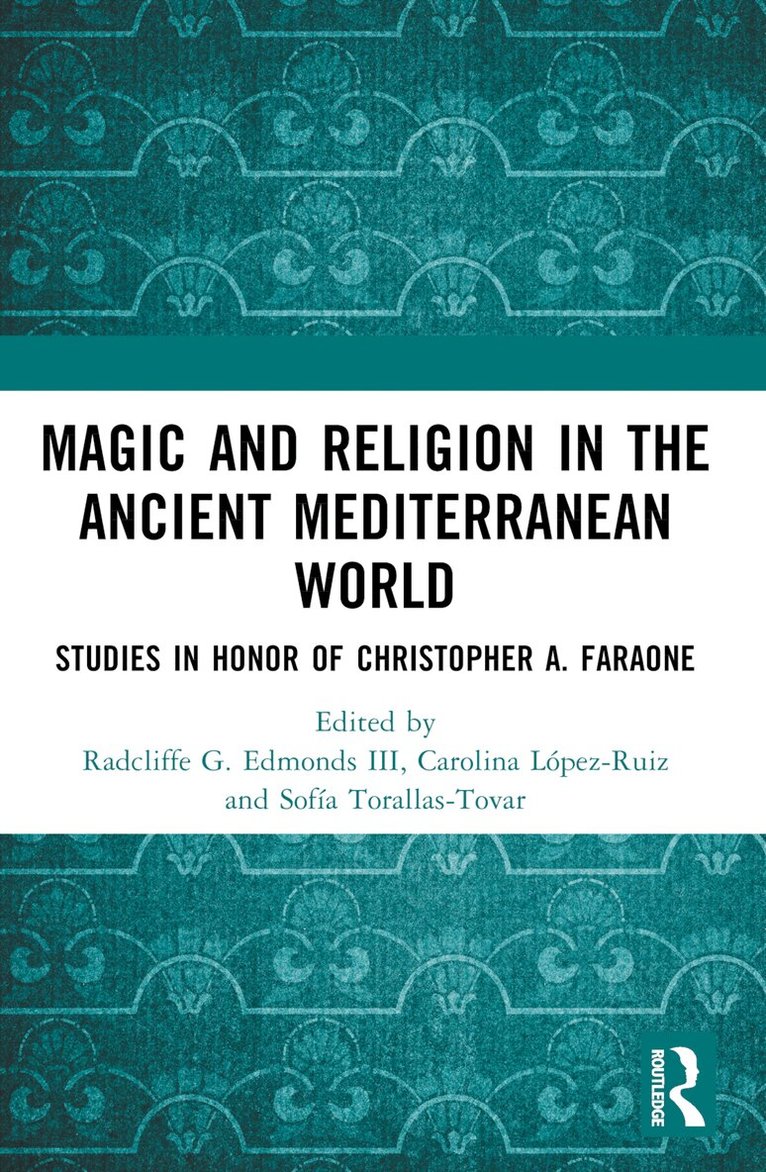
Magic and Religion in the Ancient Mediterranean World
Studies in Honor of Christopher A. Faraone
Inbunden, Engelska, 2023
2 167 kr
Skickas inom 10-15 vardagar
This volume explores aspects of ancient magic and religion in the ancient Mediterranean, specifically ways in which religious and mythical ideas, including the knowledge and practice of magic, were transmitted and adapted through time and across Greco-Roman, Near Eastern, and Egyptian cultures.Offering an original and innovative combination of case studies on the material aspects and cross-cultural transfers of magic and religion, this book brings together a range of contributions that cross and connect sub-fields with a pan-Mediterranean, comparative scope. Section I investigates the material aspects of magical practices, including first editions and original studies on papyri, gems, lamellae containing binding curses and protective texts, and other textual media in ancient book culture. Several chapters feature the Greco-Egyptian Magical Papyri, the compilation of magical recipes in the formularies, and the role of physical book-forms in the transmission of magical knowledge. Section II explores magic and religion as nodes of cultural exchange in the ancient Mediterranean. Case studies range from Egypt to Anatolia and from Syria-Phoenicia to Sicily, with Greco-Roman religion and myth integrated in a diverse and interconnected Mediterranean landscape. Readers encounter studies featuring charismatic figures of Magi and itinerant begging priests, the multiple understandings of deities such as Hekate, Herakles, or Aphrodite, or the perceived exotic origin of cult statues, mummies, amulets, and cursing formulae, which bring to light the rich intercultural networks of the ancient Mediterranean, and the crucial role of magic and religion in the process of cross-cultural adaptation and innovation.Magic and Religion in the Ancient Mediterranean World appeals to both specialized and non-specialized audiences, with expert contributions written in an accessible way. This is a fascinating resource for students and scholars working on magic, religion, and mythology in the ancient Mediterranean.
Magic and Religion in the Ancient Mediterranean World
Studies in Honor of Christopher A. Faraone
Häftad, Engelska, 2025
547 kr
Skickas inom 10-15 vardagar
This volume explores aspects of ancient magic and religion in the ancient Mediterranean, specifically ways in which religious and mythical ideas, including the knowledge and practice of magic, were transmitted and adapted through time and across Greco-Roman, Near Eastern, and Egyptian cultures.Offering an original and innovative combination of case studies on the material aspects and cross-cultural transfers of magic and religion, this book brings together a range of contributions that cross and connect sub-fields with a pan-Mediterranean, comparative scope. Section I investigates the material aspects of magical practices, including first editions and original studies on papyri, gems, lamellae containing binding curses and protective texts, and other textual media in ancient book culture. Several chapters feature the Greco-Egyptian Magical Papyri, the compilation of magical recipes in the formularies, and the role of physical book-forms in the transmission of magical knowledge. Section II explores magic and religion as nodes of cultural exchange in the ancient Mediterranean. Case studies range from Egypt to Anatolia and from Syria-Phoenicia to Sicily, with Greco-Roman religion and myth integrated in a diverse and interconnected Mediterranean landscape. Readers encounter studies featuring charismatic figures of Magi and itinerant begging priests, the multiple understandings of deities such as Hekate, Herakles, or Aphrodite, or the perceived exotic origin of cult statues, mummies, amulets, and cursing formulae, which bring to light the rich intercultural networks of the ancient Mediterranean, and the crucial role of magic and religion in the process of cross-cultural adaptation and innovation.Magic and Religion in the Ancient Mediterranean World appeals to both specialized and non-specialized audiences, with expert contributions written in an accessible way. This is a fascinating resource for students and scholars working on magic, religion, and mythology in the ancient Mediterranean.
1 215 kr
Skickas inom 7-10 vardagar
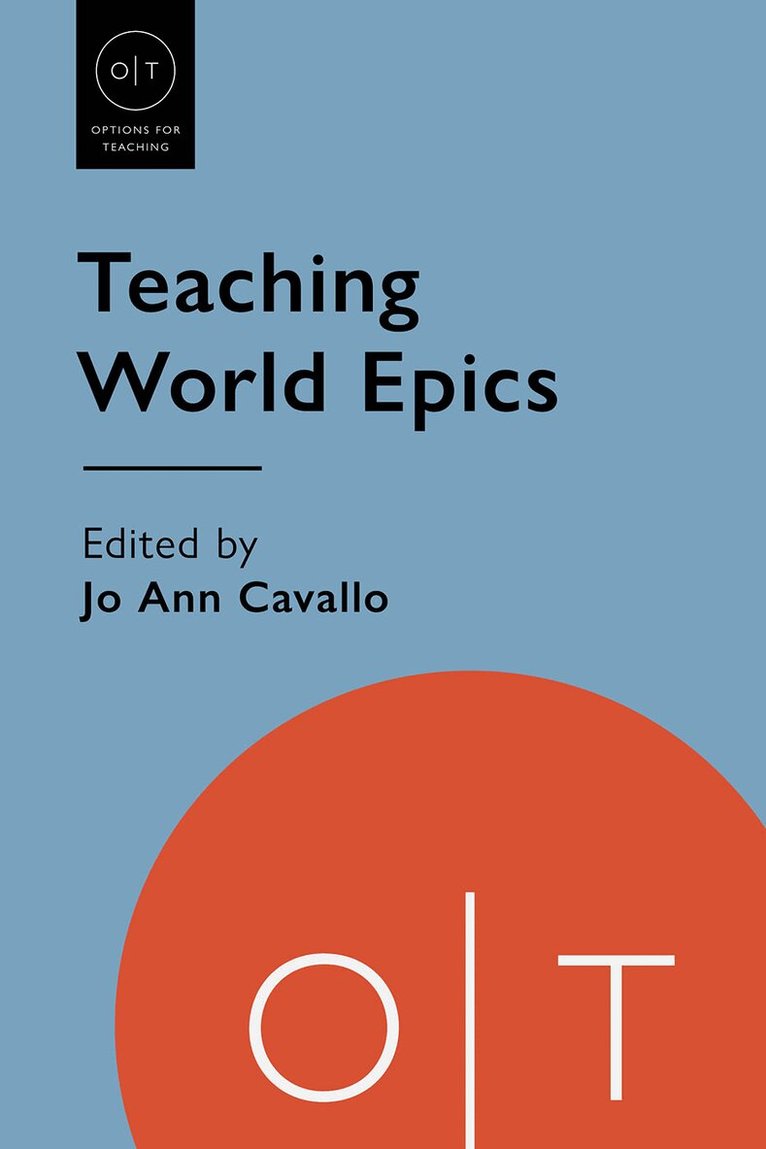
Essays for teaching ancient and recent epic narratives from around the world.Cultures across the globe have embraced epics: stories of memorable deeds by heroic characters whose actions have significant consequences for their lives and their communities. Incorporating narrative elements also found in sacred history, chronicle, saga, legend, romance, myth, folklore, and the novel, epics throughout history have both animated the imagination and encouraged reflection on what it means to be human. Teaching World Epics addresses ancient and more recent epic works from Africa, Europe, Mesoamerica, and East, Central, and South Asia that are available in English translations.Useful to instructors of literature, peace and conflict studies, transnational studies, women's studies, and religious studies, the essays in this volume focus on epics in sociopolitical and cultural contexts, on the adaptation and reception of epic works, and on themes that are especially relevant today, such as gender dynamics and politics, national identity, colonialism and imperialism, violence, and war.This volume includes discussion of Ludovico Ariosto's Orlando Furioso, Giulia Bigolina's Urania, The Book of Dede Korkut, Luis Vaz de Camões's Os Lusiadas, David of Sassoun, The Epic of Askia Mohammed, The Epic of Gilgamesh, the epic of Sun-Jata, Alonso de Ercilla y Zúñiga's La Araucana, Homer's Iliad and Odyssey, Kalevala, Kebra Nagast, Kudrun, The Legend of Poṉṉivaḷa Nadu, the Mahabharata, Manas, John Milton's Paradise Lost, Mwindo, the Nibelungenlied, Poema de mio Cid, Popol Wuj, the Ramayana, the Shahnameh, Sirat Bani Hilal, Edmund Spenser's The Faerie Queene, Statius's Thebaid, The Tale of the Heike, Three Kingdoms, Gaspar Pérez de Villagrá's Historia de la Nueva México, and Virgil's Aeneid.
491 kr
Skickas inom 7-10 vardagar
Essays for teaching ancient and recent epic narratives from around the world.Cultures across the globe have embraced epics: stories of memorable deeds by heroic characters whose actions have significant consequences for their lives and their communities. Incorporating narrative elements also found in sacred history, chronicle, saga, legend, romance, myth, folklore, and the novel, epics throughout history have both animated the imagination and encouraged reflection on what it means to be human. Teaching World Epics addresses ancient and more recent epic works from Africa, Europe, Mesoamerica, and East, Central, and South Asia that are available in English translations.Useful to instructors of literature, peace and conflict studies, transnational studies, women's studies, and religious studies, the essays in this volume focus on epics in sociopolitical and cultural contexts, on the adaptation and reception of epic works, and on themes that are especially relevant today, such as gender dynamics and politics, national identity, colonialism and imperialism, violence, and war.This volume includes discussion of Ludovico Ariosto's Orlando Furioso, Giulia Bigolina's Urania, The Book of Dede Korkut, Luis Vaz de Camões's Os Lusiadas, David of Sassoun, The Epic of Askia Mohammed, The Epic of Gilgamesh, the epic of Sun-Jata, Alonso de Ercilla y Zúñiga's La Araucana, Homer's Iliad and Odyssey, Kalevala, Kebra Nagast, Kudrun, The Legend of Poṉṉivaḷa Nadu, the Mahabharata, Manas, John Milton's Paradise Lost, Mwindo, the Nibelungenlied, Poema de mio Cid, Popol Wuj, the Ramayana, the Shahnameh, Sirat Bani Hilal, Edmund Spenser's The Faerie Queene, Statius's Thebaid, The Tale of the Heike, Three Kingdoms, Gaspar Pérez de Villagrá's Historia de la Nueva México, and Virgil's Aeneid.