Brenda E. F. Beck - Böcker
Visar alla böcker från författaren Brenda E. F. Beck. Handla med fri frakt och snabb leverans.
3 produkter
3 produkter
261 kr
Skickas inom 7-10 vardagar
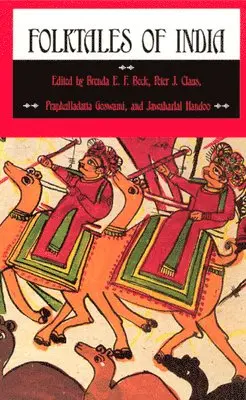
Bringing together nearly one hundred tales translated from fourteen languages, Folktales of India opens the vast narrative world of Indian folklore to readers of English. Beck includes oral tales collected from tribal areas, peasant groups, urban areas, and remote villages in north and south India, and the distinctive boundary regions of Kashmir, Assam, and Manipur. The tales in this collection emphasize universal human characteristics—truthfulness, modesty, loyalty, courage, generosity, and honesty. Each story is meant to be savored individually with special attention given to the great range of motifs presented and the many distinct narrative styles used. Folktales of India offers a superb anthology of India's bountiful narrative tradition."This collection does an excellent job of representing India. . . . It is the type of book that can be enjoyed by all readers who love a well-told tale as well as by scholars of traditional narrative and scholars of India in general."—Hugh M. Flick, Jr., Asian Folklore Studies"The stories collected here are representative, rich in structural subtlety, and endowed with fresh earthy humor."—Kunal Chakraborti, Contributions to Indian Sociology
1 218 kr
Skickas inom 7-10 vardagar
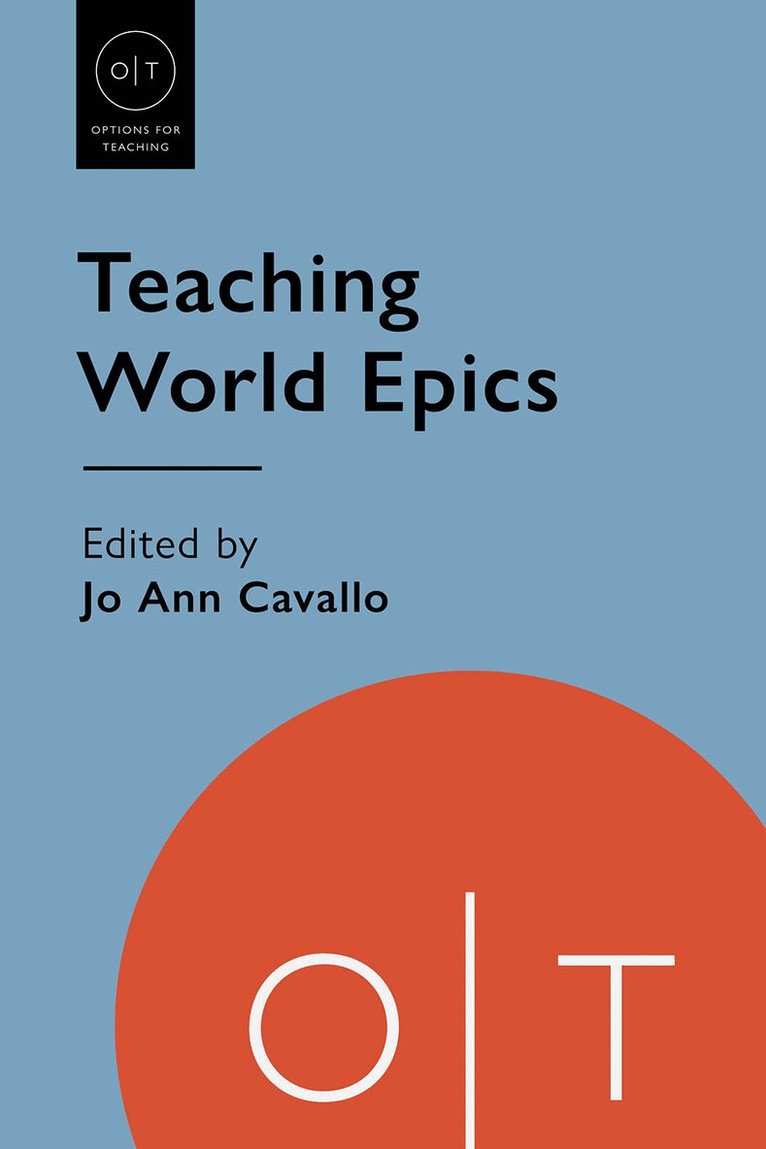
Essays for teaching ancient and recent epic narratives from around the world.Cultures across the globe have embraced epics: stories of memorable deeds by heroic characters whose actions have significant consequences for their lives and their communities. Incorporating narrative elements also found in sacred history, chronicle, saga, legend, romance, myth, folklore, and the novel, epics throughout history have both animated the imagination and encouraged reflection on what it means to be human. Teaching World Epics addresses ancient and more recent epic works from Africa, Europe, Mesoamerica, and East, Central, and South Asia that are available in English translations.Useful to instructors of literature, peace and conflict studies, transnational studies, women's studies, and religious studies, the essays in this volume focus on epics in sociopolitical and cultural contexts, on the adaptation and reception of epic works, and on themes that are especially relevant today, such as gender dynamics and politics, national identity, colonialism and imperialism, violence, and war.This volume includes discussion of Ludovico Ariosto's Orlando Furioso, Giulia Bigolina's Urania, The Book of Dede Korkut, Luis Vaz de Camões's Os Lusiadas, David of Sassoun, The Epic of Askia Mohammed, The Epic of Gilgamesh, the epic of Sun-Jata, Alonso de Ercilla y Zúñiga's La Araucana, Homer's Iliad and Odyssey, Kalevala, Kebra Nagast, Kudrun, The Legend of Poṉṉivaḷa Nadu, the Mahabharata, Manas, John Milton's Paradise Lost, Mwindo, the Nibelungenlied, Poema de mio Cid, Popol Wuj, the Ramayana, the Shahnameh, Sirat Bani Hilal, Edmund Spenser's The Faerie Queene, Statius's Thebaid, The Tale of the Heike, Three Kingdoms, Gaspar Pérez de Villagrá's Historia de la Nueva México, and Virgil's Aeneid.
492 kr
Skickas inom 7-10 vardagar
Essays for teaching ancient and recent epic narratives from around the world.Cultures across the globe have embraced epics: stories of memorable deeds by heroic characters whose actions have significant consequences for their lives and their communities. Incorporating narrative elements also found in sacred history, chronicle, saga, legend, romance, myth, folklore, and the novel, epics throughout history have both animated the imagination and encouraged reflection on what it means to be human. Teaching World Epics addresses ancient and more recent epic works from Africa, Europe, Mesoamerica, and East, Central, and South Asia that are available in English translations.Useful to instructors of literature, peace and conflict studies, transnational studies, women's studies, and religious studies, the essays in this volume focus on epics in sociopolitical and cultural contexts, on the adaptation and reception of epic works, and on themes that are especially relevant today, such as gender dynamics and politics, national identity, colonialism and imperialism, violence, and war.This volume includes discussion of Ludovico Ariosto's Orlando Furioso, Giulia Bigolina's Urania, The Book of Dede Korkut, Luis Vaz de Camões's Os Lusiadas, David of Sassoun, The Epic of Askia Mohammed, The Epic of Gilgamesh, the epic of Sun-Jata, Alonso de Ercilla y Zúñiga's La Araucana, Homer's Iliad and Odyssey, Kalevala, Kebra Nagast, Kudrun, The Legend of Poṉṉivaḷa Nadu, the Mahabharata, Manas, John Milton's Paradise Lost, Mwindo, the Nibelungenlied, Poema de mio Cid, Popol Wuj, the Ramayana, the Shahnameh, Sirat Bani Hilal, Edmund Spenser's The Faerie Queene, Statius's Thebaid, The Tale of the Heike, Three Kingdoms, Gaspar Pérez de Villagrá's Historia de la Nueva México, and Virgil's Aeneid.