Caroline A. Jones - Böcker
Visar alla böcker från författaren Caroline A. Jones. Handla med fri frakt och snabb leverans.
5 produkter
5 produkter
295 kr
Skickas inom 7-10 vardagar
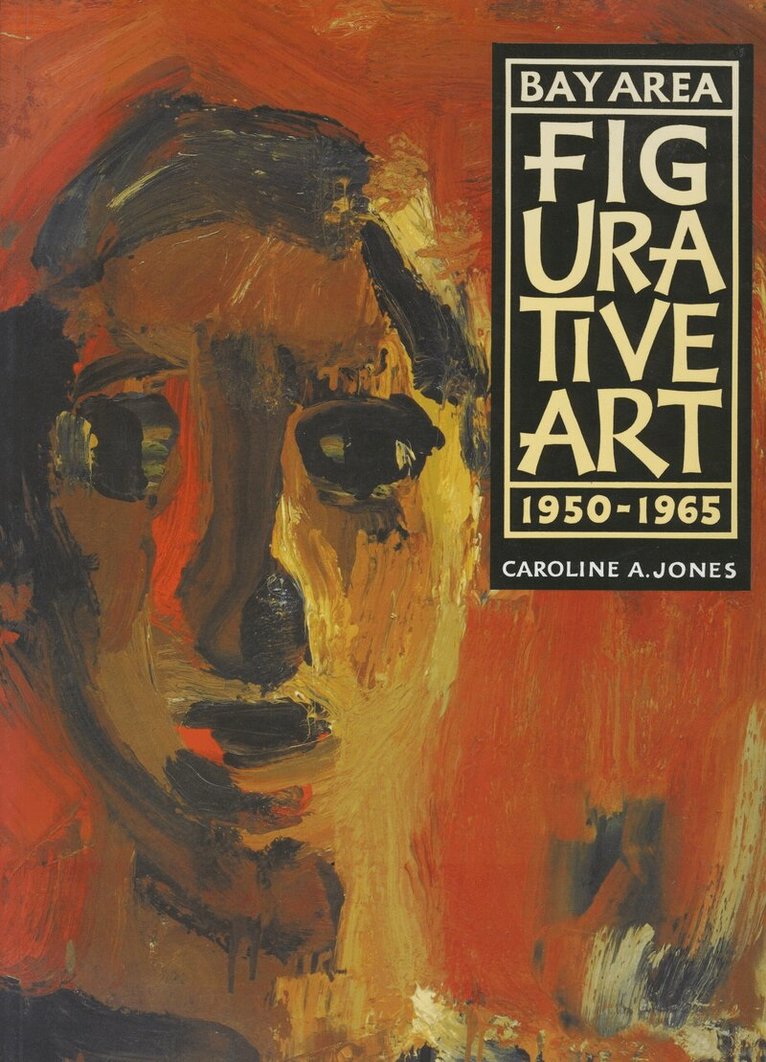
During the 1950s a few painters in the San Francisco Bay Area began to stage personal, dramatic defections from the prevailing style of Abstract Expressionism, creating what would come to be known as Bay Area Figurative Art. In 1949 David Park destroyed many of his nonobjective canvases and began a new style of consciously naive figuration. Soon Elmer Bischoff and Richard Diebenkorn joined Park and other painters such as Nathan Oliveira, Theophilus Brown, James Weeks, and Paul Wonner in the move away from abstraction and toward figurative subject matter. When artists such as Bruce McGaw, Manuel Neri, and Joan Brown emerged as a second generation of figurative artists, the momentum grew for a powerful new development in American painting. The achievement of Bay Area Figurative painters and sculptors has become directly relevant to current debates regarding abstraction and representation, as well as to discourses on modernism and postmodernism. Indeed, the historical phenomenon of the movement is an important case study in the evolution of modernism in America, serving as an early example of rupture in the formalist 'mainstream.'"Bay Area Figurative Art 1950-1965" was written to accompany an exhibition of the same name at the San Francisco Museum of Modern Art. Based on extensive archival research and interviews, it is the first study of the movement as a whole and is the broadest and most accurate account of the careers and interactions of ten Bay Area artists who worked in this new style.
Global Work of Art
World's Fairs, Biennials, and the Aesthetics of Experience
Inbunden, Engelska, 2017
584 kr
Skickas inom 7-10 vardagar
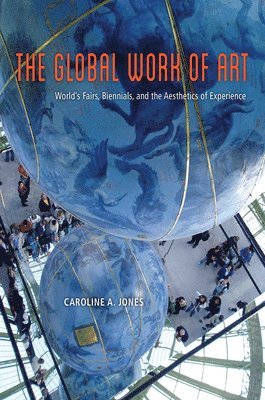
Global biennials have proliferated in the contemporary art world, but artists' engagement with large-scale international exhibitions has a much longer history that has influenced the present in important ways. Going back to the earliest world's fairs in the nineteenth century, this book argues that "globalism" was incubated in a century of international art contests, and today constitutes an important tactic for practicing artists. As world's fairs brought millions of attendees into contact with foreign cultures, products, and processes, artworks became juxtaposed in a "theater of nations," which challenged artists and critics to think outside their local academies for the first time. From Gustave Courbet's rebel pavilion near the official art exhibit at the 1855 French World's Fair to curator Beryl Madra's choice of London-based Cypriot Hussein Chalayan for the off-site Turkish pavilion at the 2006 Venice Biennale, artists have used these exhibitions to reflect on contemporary art, speak to their own governments back home, and challenge the wider geopolitical realm changing art and art history along the way. Ultimately, Caroline A.Jones argues, the modern appetite for experience and event structures, which were cultivated around the art at these earlier expositions, have now come to constitute contemporary art itself, producing encounters that transform the public and force us to reflect critically on the global condition.
320 kr
Skickas inom 7-10 vardagar
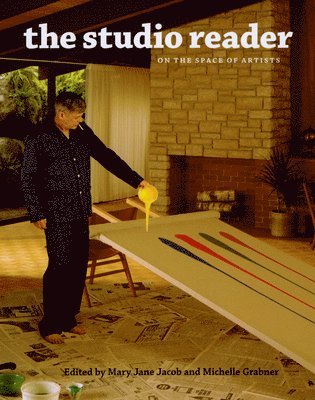
The image of a tortured genius working in near isolation has long dominated our conceptions of the artist's studio. Examples are abound: think Jackson Pollock dripping resin on a cicada carcass in his shed in the Hamptons. But times have changed; ever since Andy Warhol declared his art space a 'factory', artists have begun to envision themselves as the leaders of production teams, and their sense of what it means to be in the studio has altered just as dramatically as their practices. "The Studio Reader" pulls back the curtain from the art world to reveal the real activities behind artistic production. What does it mean to be in the studio? What is the space of the studio in the artist's practice? How do studios help artists envision their agency and, beyond that, their own lives? This forward-thinking anthology features an all-star array of contributors, ranging from Svetlana Alpers, Bruce Nauman, and Robert Storr to Daniel Buren, Carolee Schneemann, and Buzz Spector, each of whom locates the studio both spatially and conceptually - at the center of an art world that careens across institutions, markets, and disciplines.A companion for anyone engaged with the spectacular sites of art at its making, "The Studio Reader" reconsiders this crucial space as an actual way of being that illuminates our understanding of both artists and the world they inhabit.
465 kr
Tillfälligt slut
840 kr
Skickas inom 10-15 vardagar
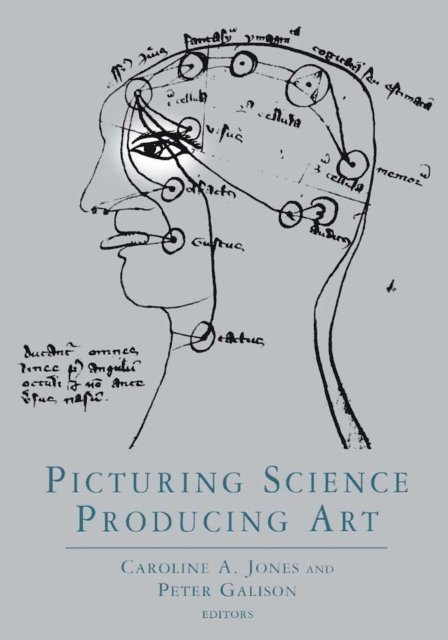
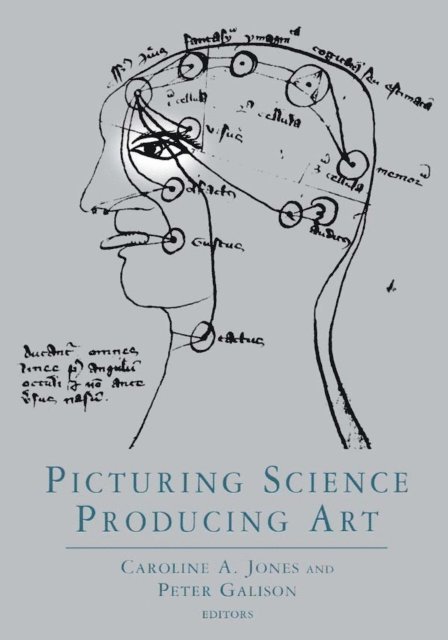
Between the disciplines of art history and the history of science lies a growing field of inquiry into what science and art share as both image-making and knowledge-producing activities. The contributors of Picturing Science, Producing Art occupy this intermediate zone to analyze both scientific and aesthetic representations, utilizing disciplinary perspectives that range from art history to sociology, history and philosophy of science to gender studies, cultural history to the philosophy of mind. Organized in five sites--Styles, The Body, Seeing Wonders, Objectivity/Subjectivity, and Cultures of Vision--their topics extend from Cinquecento theories of female reproduction to the technologies of cloning, from medieval depictions of the stigmata to electrical metaphors for sex, from astronomical drawings to radioencephalography, from Phoenician griffons carved in ivory to factories cast in concrete. The internationally renowned contributors go beyond both science wars and culture wars by exploring substantive links between systems of visual representation and knowledge in science and art. Contributors include Svetlana Alpers, Jonathan Crary, Arnold Davidson, Carlo Ginzburg, Donna Haraway, Bruno Latour, and Simon Schaffer.