Caroline Vout – författare
Visar alla böcker från författaren Caroline Vout. Handla med fri frakt och snabb leverans.
11 produkter
11 produkter
307 kr
Skickas inom 5-8 vardagar
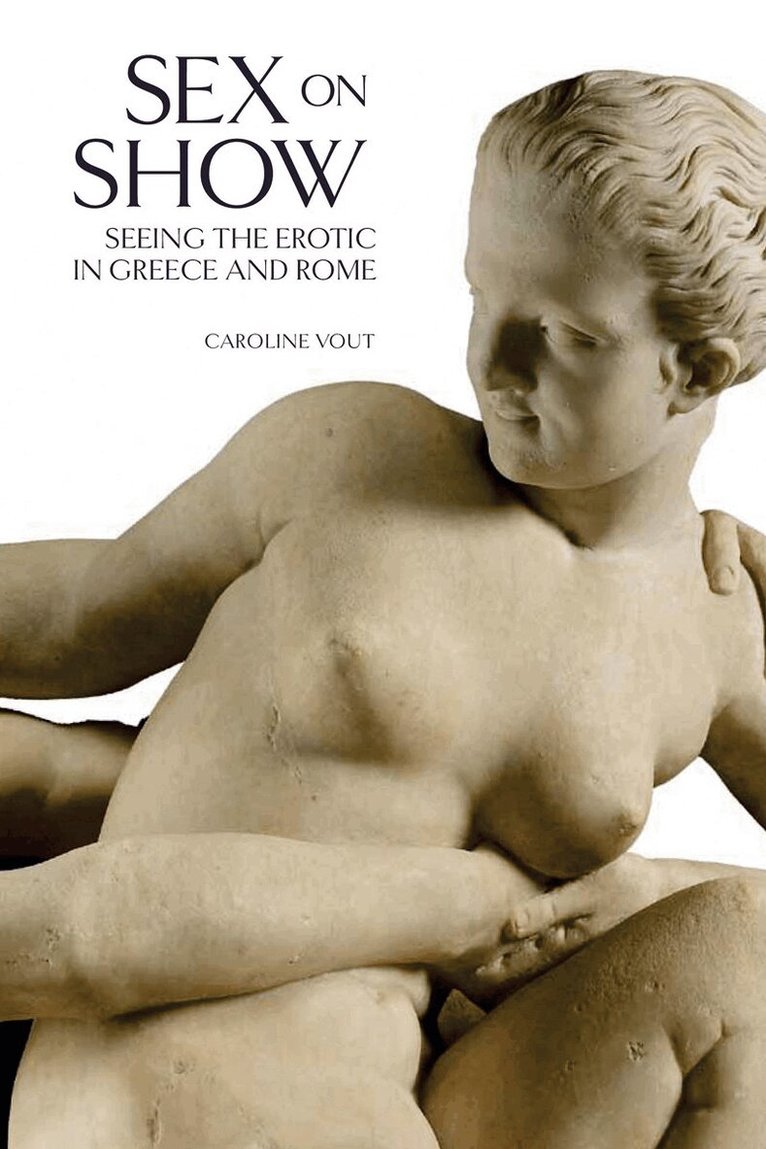
The Greeks and Romans were not shy about sex. Drinking cups, oil-lamps and walls were decorated with scenes of seduction and sexual intercourse which make the modern viewer blush; models of penises were worn around the neck or hung from doorways. In classical Greece, statues of erect penises served as boundary-stones and signposts. In Rome, marble satyrs and nymphs grappled in gardens. How are we to make sense of this abundance of sexual imagery? Were these images seductive, shocking, humorous? Were they about sex or love? And what and how do we learn from them? Sex on Show answers these questions by embracing ancient attitudes to religion, politics, sex and gender to examine how the ancient saw themselves and their world. Covering the sixth century BC to the fourth century AD, as well as some Neoclassical art from the eighteenth and nineteenth centuries, Sex on Show uses detailed visual analysis to bring new insights to Greek and Roman culture and to the meaning of erotic imagery, past and present. This is not simply a book about sexual practice or social history. It is a visual history – about what it meant and still means to stare sex in the face.
575 kr
Skickas inom 7-10 vardagar
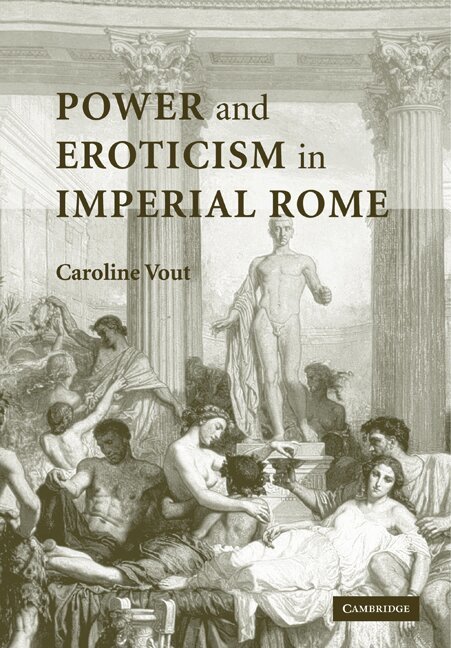
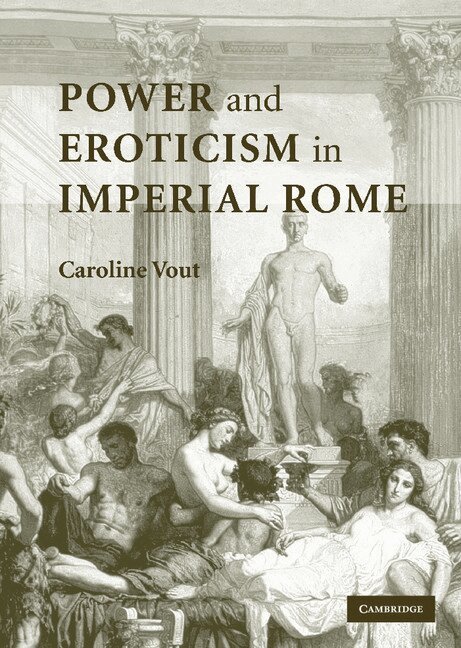
The relationships between Roman emperors and their objects of desire, male and female, are well attested. The salacious nature of this evidence means that it is often omitted from mainstream historical inquiry. Yet that is to underestimate the importance of 'gossip' and the act of thinking about an emperor's private life. In this book Dr Vout takes the reader from Rome, and Martial's and Statius' poems about Domitian's favourite eunuch, to Antioch and dialogues in praise of Lucius Verus' mistress, to the widespread visual commemoration and cult of Hadrian's young male lover, Antinous. She explores not the relationships themselves but rather the implications of their description. Such description provides a template with which to examine the relationship between emperor and subject, gods and mortals, East and West, centre and periphery. It thus contributes to the fields of imperial representation, court society and the imperial cult.
1 285 kr
Skickas inom 7-10 vardagar
The relationships between Roman emperors and their objects of desire, male and female, are well attested. The salacious nature of this evidence means that it is often omitted from mainstream historical inquiry. Yet that is to underestimate the importance of 'gossip' and the act of thinking about an emperor's private life. In this book Dr Vout takes the reader from Rome, and Martial's and Statius' poems about Domitian's favourite eunuch, to Antioch and dialogues in praise of Lucius Verus' mistress, to the widespread visual commemoration and cult of Hadrian's young male lover, Antinous. She explores not the relationships themselves but rather the implications of their description. Such description provides a template with which to examine the relationship between emperor and subject, gods and mortals, East and West, centre and periphery. It thus contributes to the fields of imperial representation, court society and the imperial cult.
417 kr
Skickas inom 5-8 vardagar
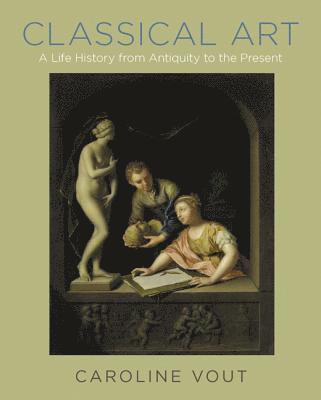
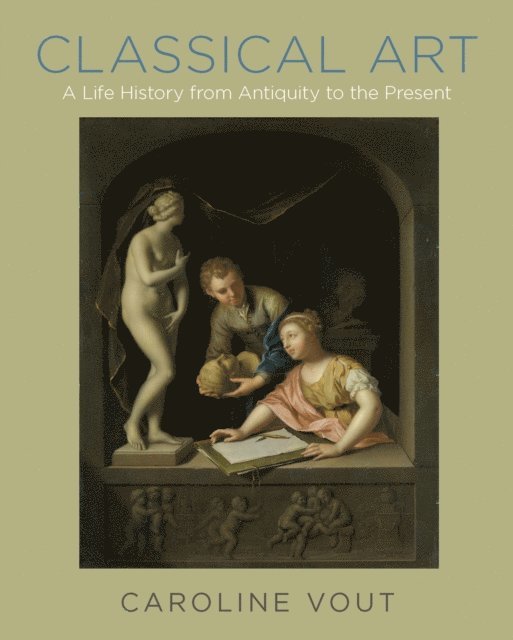
How did the statues of ancient Greece wind up dictating art history in the West? How did the material culture of the Greeks and Romans come to be seen as "classical" and as "art"? What does "classical art" mean across time and place? In this ambitious, richly illustrated book, art historian and classicist Caroline Vout provides an original history of how classical art has been continuously redefined over the millennia as it has found itself in new contexts and cultures. All of this raises the question of classical art's future.What we call classical art did not simply appear in ancient Rome, or in the Renaissance, or in the eighteenth-century Academy. Endlessly repackaged and revered or rebuked, Greek and Roman artifacts have gathered an amazing array of values, both positive and negative, in each new historical period, even as these objects themselves have reshaped their surroundings. Vout shows how this process began in antiquity, as Greeks of the Hellenistic period transformed the art of fifth-century Greece, and continued through the Roman empire, Constantinople, European court societies, the neoclassical English country house, and the nineteenth century, up to the modern museum.A unique exploration of how each period of Western culture has transformed Greek and Roman antiquities and in turn been transformed by them, this book revolutionizes our understanding of what classical art has meant and continues to mean.
753 kr
Skickas inom 7-10 vardagar
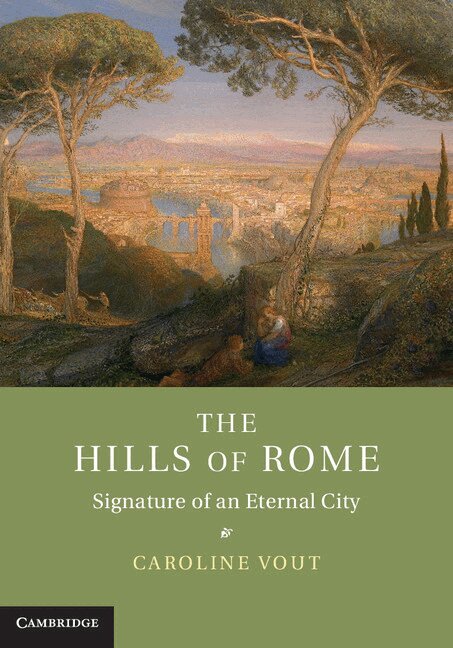
Rome is 'the city of seven hills'. This book examines the need for the 'seven hills' cliché, its origins, development, impact and borrowing. It explores how the cliché relates to Rome's real volcanic terrain and how it is fundamental to how we define this. Its chronological remit is capacious: Varro, Virgil and Claudian at one end, on, through the work of Renaissance antiquarians, to embrace frescoes and nineteenth-century engravings. These artists and authors celebrated the hills and the views from these hills, in an attempt to capture Rome holistically. By studying their efforts, this book confronts the problems of encapsulating Rome and 'cityness' more broadly and indeed the artificiality of any representation, whether a painting, poem or map. In this sense, it is not a history of the city at any one moment in time, but a history of how the city has been, and has to be, perceived.
1 371 kr
Skickas inom 7-10 vardagar
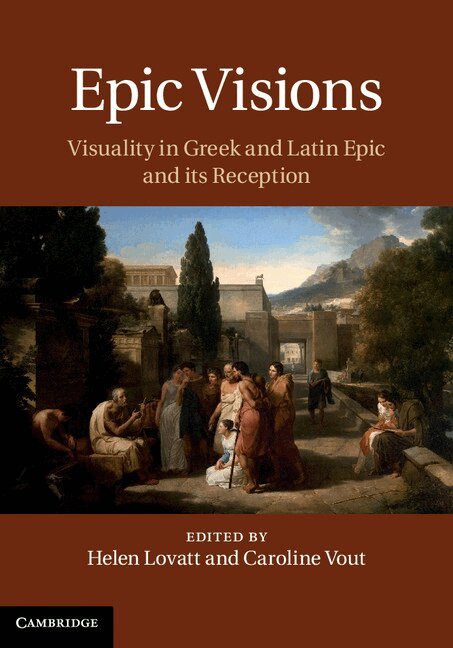
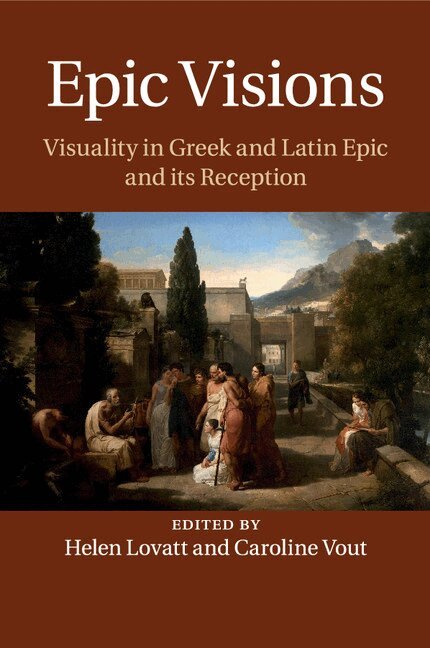
This wide-ranging, interdisciplinary collection explores different ways of visualising Greek and Roman epic from Homer to Statius, in both ancient and modern culture. The book presents new perspectives on Homer, Virgil, Ovid, Lucan, Valerius Flaccus and Statius, and covers the re-working of epic matter in tragedy, opera, film, late antique speeches of praise, story-boarding, sculpture and wall-painting. The chapters use a variety of methods to address the relationship between narrative and visuality, exploring how and why epic has inspired artists, authors and directors, and offering fresh visual interpretations of epic texts. Themes and issues discussed include: intermediality, ekphrasis and panegyric, illusion and deception, imagery and deferral, alienation and involvement, the multiplicity of possible visual responses to texts, three-dimensionality, miniaturisation, epic as cultural capital, and the specificity of genres, both literary and visual.
358 kr
Skickas inom 7-10 vardagar
Rome is 'the city of seven hills'. This book examines the need for the 'seven hills' cliché, its origins, development, impact and borrowing. It explores how the cliché relates to Rome's real volcanic terrain and how it is fundamental to how we define this. Its chronological remit is capacious: Varro, Virgil and Claudian at one end, on, through the work of Renaissance antiquarians, to embrace frescoes and nineteenth-century engravings. These artists and authors celebrated the hills and the views from these hills, in an attempt to capture Rome holistically. By studying their efforts, this book confronts the problems of encapsulating Rome and 'cityness' more broadly and indeed the artificiality of any representation, whether a painting, poem or map. In this sense, it is not a history of the city at any one moment in time, but a history of how the city has been, and has to be, perceived.
466 kr
Skickas inom 7-10 vardagar
This wide-ranging, interdisciplinary collection explores different ways of visualising Greek and Roman epic from Homer to Statius, in both ancient and modern culture. The book presents new perspectives on Homer, Virgil, Ovid, Lucan, Valerius Flaccus and Statius, and covers the re-working of epic matter in tragedy, opera, film, late antique speeches of praise, story-boarding, sculpture and wall-painting. The chapters use a variety of methods to address the relationship between narrative and visuality, exploring how and why epic has inspired artists, authors and directors, and offering fresh visual interpretations of epic texts. Themes and issues discussed include: intermediality, ekphrasis and panegyric, illusion and deception, imagery and deferral, alienation and involvement, the multiplicity of possible visual responses to texts, three-dimensionality, miniaturisation, epic as cultural capital, and the specificity of genres, both literary and visual.
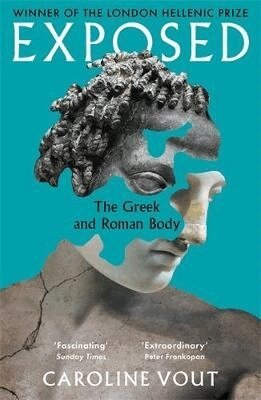
Exposed
The Greek and Roman Body - Shortlisted for the Anglo-Hellenic Runciman Award
Häftad, Engelska, 2026
142 kr
Kommande
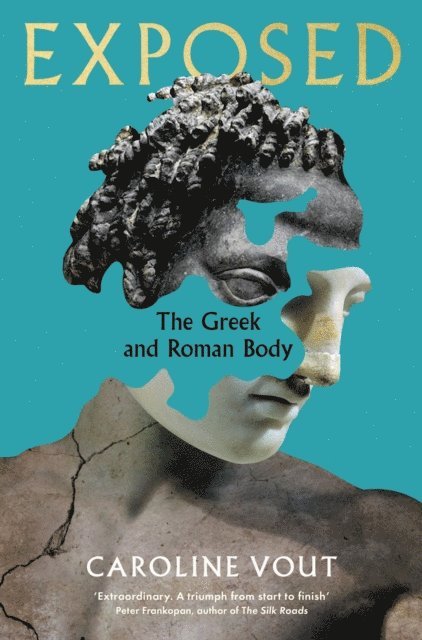
WINNER OF THE LONDON HELLENIC PRIZESHORTLISTED FOR THE ANGLO-HELLENIC RUNICMAN AWARD A SUNDAY TIMES AND SPECTATOR BOOK OF THE YEAR'Essential and hugely enjoyable' Katy Hessel'A triumph ... an extraordinary book that stopped me in my tracks' Peter FrankopanCast in buff bronze and carved in white marble, it's easy to see the Greek and Roman body as flawless. But this is a lie. Reaching beyond the galleries and behind the myths, classicist Caroline Vout exposes Greek and Roman bodies for what they truly were: anxious, ailing, imperfect and diverse - and responsible for a legacy as lasting as their statutes. Beautifully illustrated, and delving into questions of life, death, morality and personhood, Exposed reveals the classical body in all its flesh-and-blood glory.
423 kr
Kommande
This new monograph, dedicated to the work of Oxford-based artist, Tom de Freston, features paintings and works on paper from his technically ambitious and visually arresting Poiesis series (2023–25).The works gathered under Poiesis have emerged from an intensely personal passage of time. After a pregnancy loss in 2020 and six subsequent miscarriages, de Freston and his wife, the writer Kiran Millwood Hargrave, welcomed their daughter in 2023. de Freston’s works hold the doubleness of these experiences: devastation and tenderness, fear and hope, the body as site of both loss and miraculous return. de Freston’s artworks, at once mythic and raw, are elegies and odes to the grief of losing a child, the resilience of love and the wonder of parenthood.de Freston stages the figures that inhabit Poiesis within unstable, porous spaces: grids suggesting architecture or containment, landscapes opening onto darkness, interiors charged with memory. The central figure in many of the paintings is a pregnant woman, often faceless and turned away from the viewer, with arms reaching forward – action accompanied by afterimage. Washes of colour in an ethereal, dreamlike palette – characterised by watery-white blues, vibrant purples, soft yellows and thinned-blood pink – bloom and bleed into one another, suggesting emotional overflow, while scraped, layered textures further the processes of abstraction and emergence.For more than sixteen years, de Freston has painted his wife. Millwood Hargrave appears as Ophelia, Lady Macbeth, Eurydice; figures drawn from literature and myth yet always tethered to lived experience. These paintings are inseparable from the couple’s long-standing collaborations in numerous artistic forms. Many of the Poiesis works echo uncannily with lines from Millwood Hargrave’s Eurydice poems from 2014–16, composed through their collaborative multimedia work Orpheus and Eurydice. Following the publication of Strange Bodies (Granta, 2023), in which he grappled with these experiences in dialogue with other artistic figures, most notably Titian, whose Poesie paintings form a central inspiration, de Freston’s work now exists in a genuinely hybrid form.This monograph, the second published by Anomie Publishing, London, on de Freston’s work (I Saw This, 2023), presents newly commissioned texts by Professor Caroline Vout and gallerist Varvara Roza, the instigators of his recent exhibitions at the Museum of Classical Archaeology at the University of Cambridge (2026) and Varvara Roza Galleries (2025) respectively. The publication has been designed by Joe Gilmore and its introductory texts are accompanied by an extended essay by art historian and writer, Matthew Holman, and an enlightening and intimate interview between de Freston and Millwood Hargrave.Published by Anomie Publishing, London, in association with the Museum of Classical Archaeology at the University of Cambridge and Varvara Roza Galleries, London.
353 kr
Skickas inom 5-8 vardagar
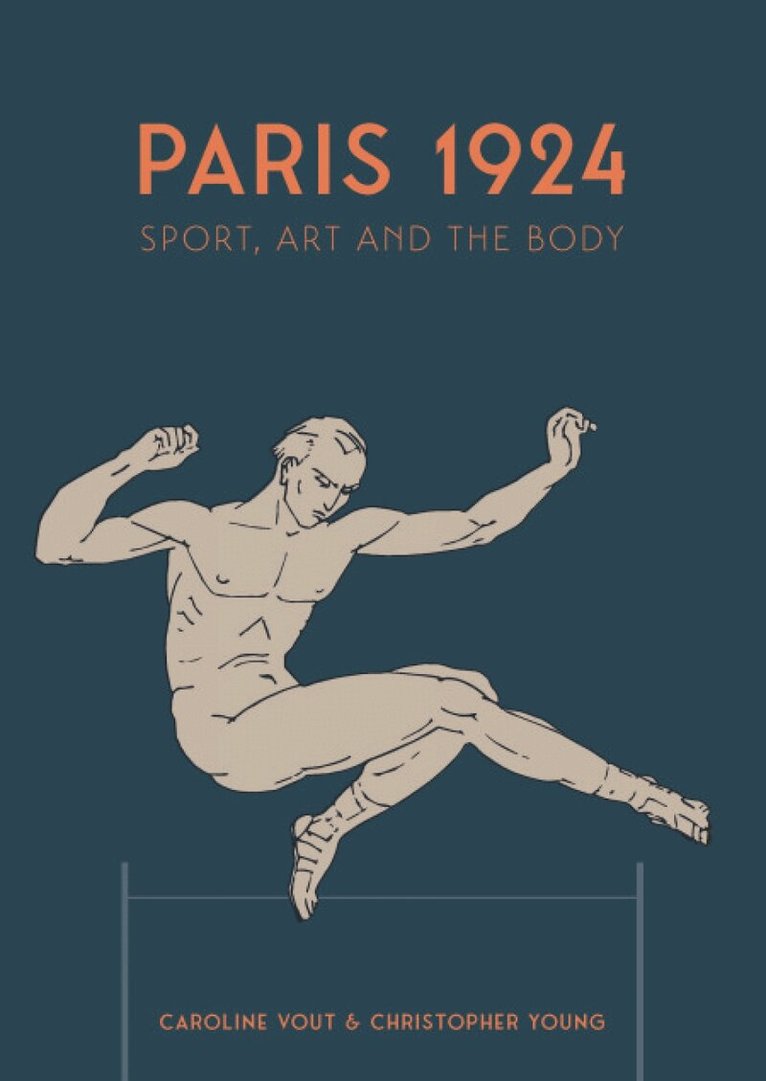
Sheds new light on the Paris Olympics of 1924, often considered the first international games. From their origins in ancient Greece to their modern transformation into a visually powerful event on the world stage, the Olympics have retained their unique place in sport and culture. The summer of 2024 will see the Olympics return to Paris after a century; the 1924 Olympics, arguably the first truly international games, were the first to transmit live radio broadcasts and the first to have an Olympic village. Published to coincide with the Paris Olympics of 2024, Paris 1924 accompanies a major exhibition at the Fitzwilliam Museum. This book explores the Olympic games from a visual perspective, investigating the tensions between their classical beginnings and their representation in 1924 and across the modern era. How were the 1924 Olympics shaped by the visual culture of the period? And how, in turn, were the arts shaped by them? From plaster casts of fifth-century BCE athletic statues to Hollywood cinema, and from classic portraits of the protagonists to more abstract art, Paris 1924 brings together painting, sculpture, film, photography, posters, letters, medals, and other memorabilia to tell a story of sporting endeavor that equally mirrored and shaped its times. Issues of gender, race, and class, as well as an exploration of celebrity and spectatorship, show that the debate around sport was as complex and momentous in the past as it is today. The book includes essays by specialists from the fields of classics, art history, French history, sports history, and medicine, each of whom will focus on key themes in the exhibition and key protagonists in the Olympic story. The subject matter will appeal to fans of both art and sports and tap into the enthusiasm for all things Olympic in 2024.