Caroline Winterer - Böcker
Visar alla böcker från författaren Caroline Winterer. Handla med fri frakt och snabb leverans.
8 produkter
8 produkter
398 kr
Skickas inom 7-10 vardagar
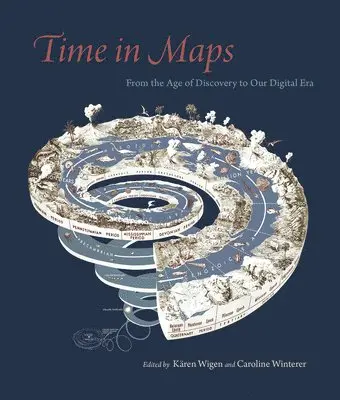
The new field of spatial history has been driven by digital mapping tools, which can readily show change over time in space. But long before this software was developed, mapmakers around the world represented time in sophisticated and nuanced ways in static maps that offer lessons for us today. In this collection, historians Karen Wigen and Caroline Winterer bring together leading scholars to consider how mapmakers depicted time. The essays show that time has often been a major component of what we usually consider to be a spatial medium. Focusing on 500 years of mapmaking in Europe, the United States, and Asia, these essays take us from the Aztecs documenting the founding of Tenochtitlan, to early modern Japanese reconstructing nostalgic landscapes before Western encroachments, to nineteenth-century Americans grappling with the new concept of deep time. The book also features a defense of traditional paper maps by digital mapmaker William Rankin. With more than one hundred color maps and illustrations, Time in Maps will draw the attention of anyone interested in cartographic history.
271 kr
Tillfälligt slut
292 kr
Skickas inom 7-10 vardagar
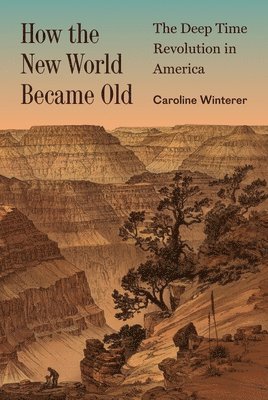
How the idea of deep time transformed how Americans see their country and themselvesDuring the nineteenth century, Americans were shocked to learn that the land beneath their feet had once been stalked by terrifying beasts. T. rex and Brontosaurus ruled the continent. North America was home to saber-toothed cats and woolly mammoths, great herds of camels and hippos, and sultry tropical forests now fossilized into massive coal seams. How the New World Became Old tells the extraordinary story of how Americans discovered that the New World was not just old—it was a place rooted in deep time.In this panoramic book, Caroline Winterer traces the history of an idea that today lies at the heart of the nation’s identity as a place of primordial natural beauty. Europeans called America the New World, and literal readings of the Bible suggested that Earth was only six thousand years old. Winterer takes readers from glacier-capped peaks in Yosemite to Alabama slave plantations and canal works in upstate New York, describing how naturalists, explorers, engineers, and ordinary Americans unearthed a past they never suspected, a history more ancient than anyone ever could have imagined.Drawing on archival evidence ranging from unpublished field notes and letters to early stratigraphic diagrams, How the New World Became Old reveals how the deep time revolution ushered in profound changes in science, literature, art, and religion, and how Americans came to realize that the New World might in fact be the oldest world of all.
284 kr
Kommande
How the idea of deep time transformed how Americans see their country and themselvesDuring the nineteenth century, Americans were shocked to learn that the land beneath their feet had once been stalked by terrifying beasts. T. rex and Brontosaurus ruled the continent. North America was home to saber-toothed cats and woolly mammoths, great herds of camels and hippos, and sultry tropical forests now fossilized into massive coal seams. How the New World Became Old tells the extraordinary story of how Americans discovered that the New World was not just old—it was a place rooted in deep time.In this panoramic book, Caroline Winterer traces the history of an idea that today lies at the heart of the nation’s identity as a place of primordial natural beauty. Europeans called America the New World, and literal readings of the Bible suggested that Earth was only six thousand years old. Winterer takes readers from glacier-capped peaks in Yosemite to Alabama slave plantations and canal works in upstate New York, describing how naturalists, explorers, engineers, and ordinary Americans unearthed a past they never suspected, a history more ancient than anyone ever could have imagined.Drawing on archival evidence ranging from unpublished field notes and letters to early stratigraphic diagrams, How the New World Became Old reveals how the deep time revolution ushered in profound changes in science, literature, art, and religion, and how Americans came to realize that the New World might in fact be the oldest world of all.
809 kr
Skickas inom 10-15 vardagar
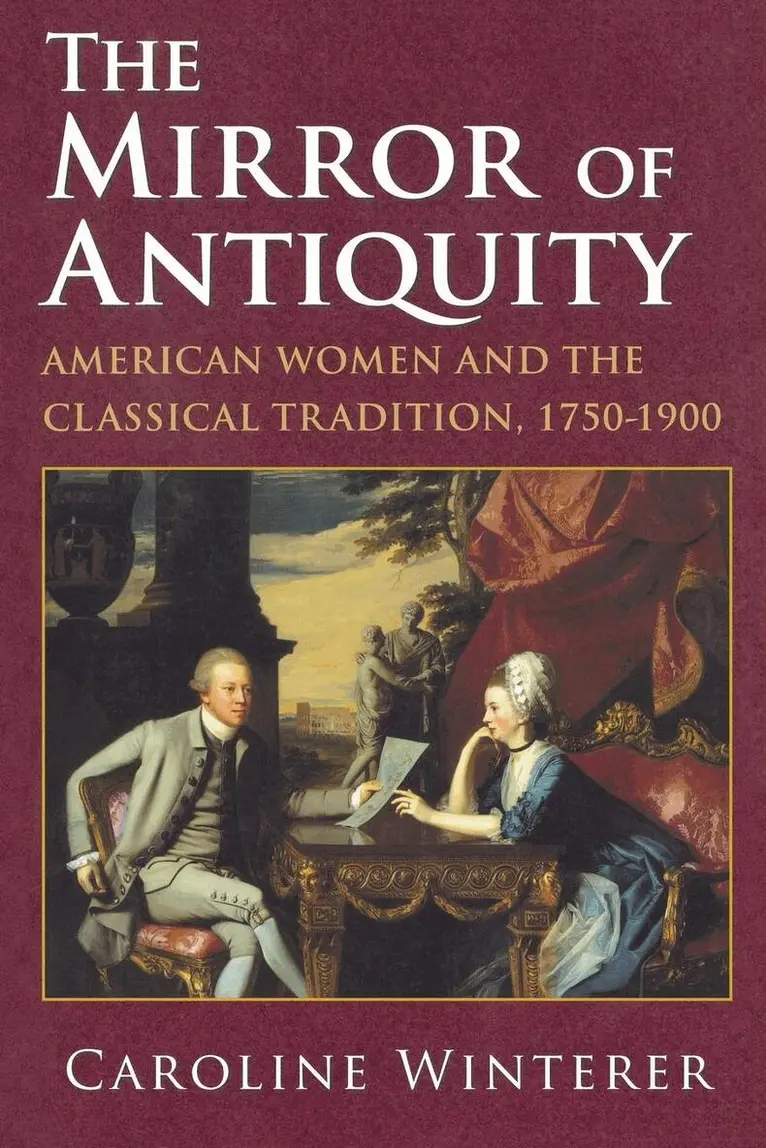
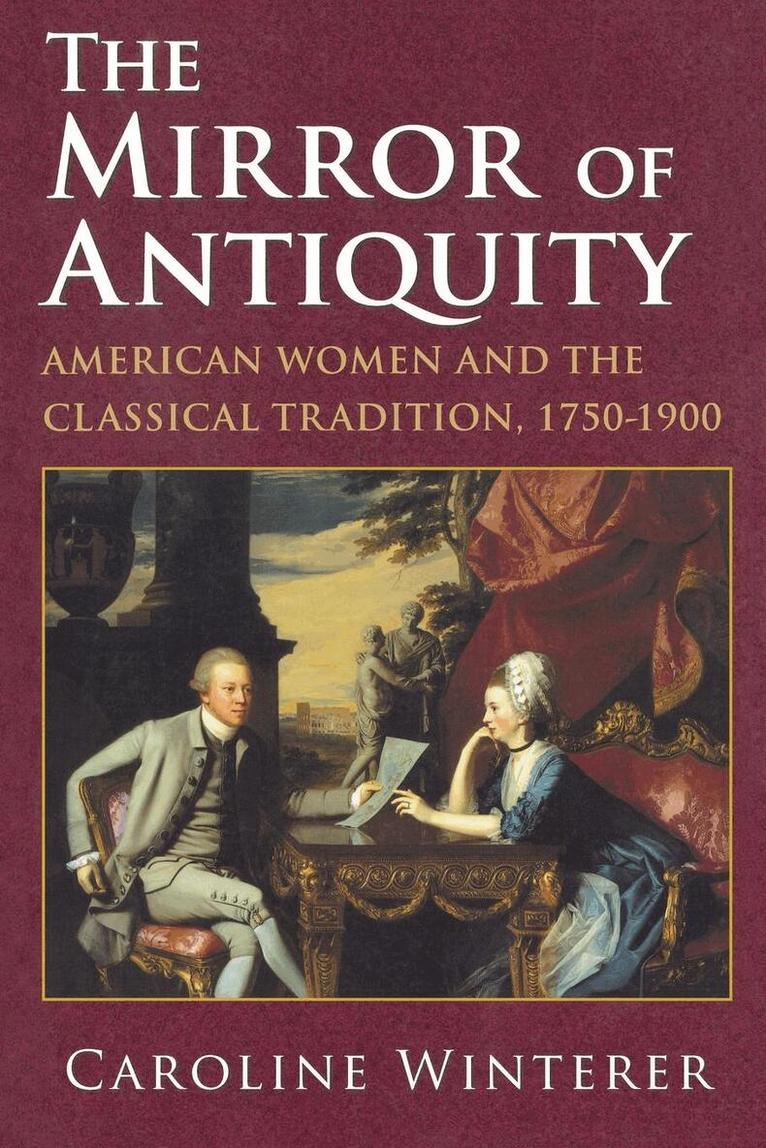
In The Mirror of Antiquity, Caroline Winterer uncovers the lost world of American women's classicism during its glory days from the eighteenth through the nineteenth centuries. Overturning the widely held belief that classical learning and political ideals were relevant only to men, she follows the lives of four generations of American women through their diaries, letters, books, needlework, and drawings, demonstrating how classicism was at the center of their experience as mothers, daughters, and wives. Importantly, she pays equal attention to women from the North and from the South, and to the ways that classicism shaped the lives of black women in slavery and freedom.In a strikingly innovative use of both texts and material culture, Winterer exposes the neoclassical world of furnishings, art, and fashion created in part through networks dominated by elite women. Many of these women were at the center of the national experience. Here readers will find Abigail Adams, teaching her children Latin and signing her letters as Portia, the wife of the Roman senator Brutus; the Massachusetts slave Phillis Wheatley, writing poems in imitation of her favorite books, Alexander Pope's Iliad and Odyssey; Dolley Madison, giving advice on Greek taste and style to the U.S. Capitol's architect, Benjamin Latrobe; and the abolitionist and feminist Lydia Maria Child, who showed Americans that modern slavery had its roots in the slave societies of Greece and Rome. Thoroughly embedded in the major ideas and events of the time—the American Revolution, slavery and abolitionism, the rise of a consumer society—this original book is a major contribution to American cultural and intellectual history.
347 kr
Skickas inom 10-15 vardagar
In The Mirror of Antiquity, Caroline Winterer uncovers the lost world of American women's classicism during its glory days from the eighteenth through the nineteenth centuries. Overturning the widely held belief that classical learning and political ideals were relevant only to men, she follows the lives of four generations of American women through their diaries, letters, books, needlework, and drawings, demonstrating how classicism was at the center of their experience as mothers, daughters, and wives. Importantly, she pays equal attention to women from the North and from the South, and to the ways that classicism shaped the lives of black women in slavery and freedom.In a strikingly innovative use of both texts and material culture, Winterer exposes the neoclassical world of furnishings, art, and fashion created in part through networks dominated by elite women. Many of these women were at the center of the national experience. Here readers will find Abigail Adams, teaching her children Latin and signing her letters as Portia, the wife of the Roman senator Brutus; the Massachusetts slave Phillis Wheatley, writing poems in imitation of her favorite books, Alexander Pope's Iliad and Odyssey; Dolley Madison, giving advice on Greek taste and style to the U.S. Capitol's architect, Benjamin Latrobe; and the abolitionist and feminist Lydia Maria Child, who showed Americans that modern slavery had its roots in the slave societies of Greece and Rome. Thoroughly embedded in the major ideas and events of the time—the American Revolution, slavery and abolitionism, the rise of a consumer society—this original book is a major contribution to American cultural and intellectual history.
Culture of Classicism
Ancient Greece and Rome in American Intellectual Life, 1780-1910
Inbunden, Engelska, 2002
577 kr
Tillfälligt slut
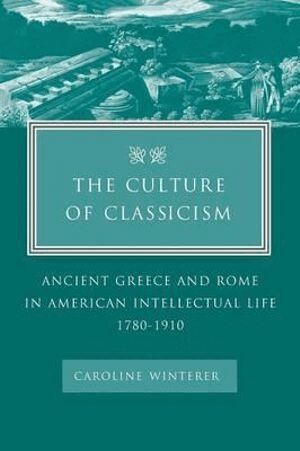
Debates continue to rage over whether American university students should be required to master a common core of knowledge. In The Culture of Classicism: Ancient Greece and Rome in American Intellectual Life, 1780-1910, Caroline Winterer traces the emergence of the classical model that became standard in the American curriculum in the nineteenth century and now lies at the core of contemporary controversies. By closely examining university curricula and the writings of classical scholars, Winterer demonstrates how classics was transformed from a narrow, language-based subject to a broader study of civilization, persuasively arguing that we cannot understand both the rise of the American university and modern notions of selfhood and knowledge without an appreciation for the role of classicism in their creation.
Culture of Classicism
Ancient Greece and Rome in American Intellectual Life, 1780-1910
Häftad, Engelska, 2004
398 kr
Skickas inom 5-8 vardagar
Debates continue to rage over whether American university students should be required to master a common core of knowledge. In The Culture of Classicism: Ancient Greece and Rome in American Intellectual Life, 1780-1910, Caroline Winterer traces the emergence of the classical model that became standard in the American curriculum in the nineteenth century and now lies at the core of contemporary controversies. By closely examining university curricula and the writings of classical scholars, Winterer demonstrates how classics was transformed from a narrow, language-based subject to a broader study of civilization, persuasively arguing that we cannot understand both the rise of the American university and modern notions of selfhood and knowledge without an appreciation for the role of classicism in their creation.