Carolyn Hoyle - Böcker
Visar alla böcker från författaren Carolyn Hoyle. Handla med fri frakt och snabb leverans.
12 produkter
12 produkter
1 417 kr
Skickas inom 7-10 vardagar
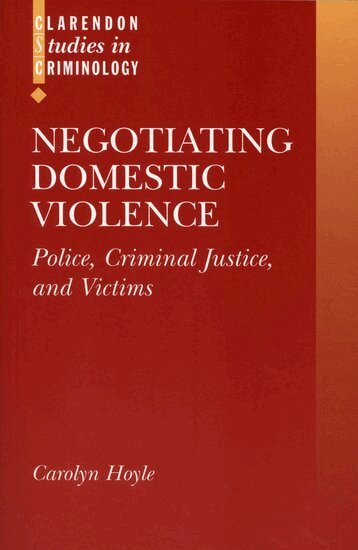
This book examines the factors which shape the criminal justice response to domestic violence in the light of policy changes at the beginning of the 1990s which aimed to increase arrest rates. In particular, the book discusses the needs and expectations of victims and examines how their choices impact on decisions made by police and prosecutors. Many books on the criminal justice response to domestic violence start from the premise that withdrawal of complaints by victims and the subsequent discontinuance of cases, represents some kind of failure on the part of the agencies involved and that victims would benefit from greater determination by police to prosecute offenders wherever possible. Implicit in this approach is the assumption that the criminal justice system as it presently operates is capable of responding effectively to the needs of victims of domestic violence. This book throws doubt on the validity of these assumptions.
639 kr
Skickas inom 5-8 vardagar
This book examines the factors which shape the criminal justice response to domestic violence in the light of policy changes at the beginning of the 1990s which aimed to increase arrest rates. In particular, the book discusses the needs and expectations of victims and examines how their choices impact on decisions made by police and prosecutors. Many books on the criminal justice response to domestic violence start from the premise that withdrawal of complaints by victims and the subsequent discontinuance of cases, represents some kind of failure on the part of the agencies involved and that victims would benefit from greater determination by police to prosecute offenders wherever possible. Implicit in this approach is the assumption that the criminal justice system as it presently operates is capable of responding effectively to the needs of victims of domestic violence. This book throws doubt on the validity of these assumptions.
1 777 kr
Skickas inom 5-8 vardagar
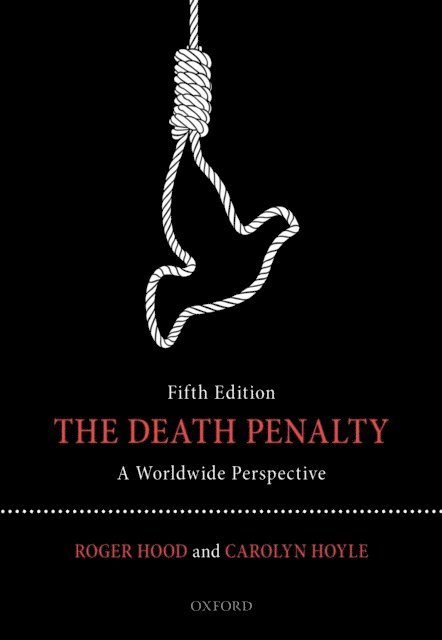
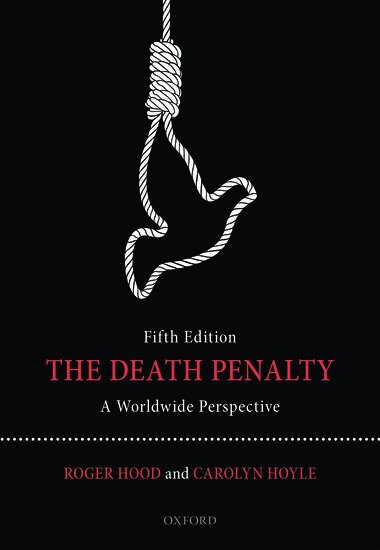
The fifth edition of this highly praised study charts and explains the progress that continues to be made towards the goal of worldwide abolition of the death penalty. The majority of nations have now abolished the death penalty and the number of executions has dropped in almost all countries where abolition has not yet taken place. Emphasising the impact of international human rights principles and evidence of abuse, the authors examine how this has fuelled challenges to the death penalty and they analyse and appraise the likely obstacles, political and cultural, to further abolition. They discuss the cruel realities of the death penalty and the failure of international standards always to ensure fair trials and to avoid arbitrariness, discrimination and conviction of the innocent: all violations of the right to life. They provide further evidence of the lack of a general deterrent effect; shed new light on the influence and limits of public opinion; and argue that substituting for the death penalty life imprisonment without parole raises many similar human rights concerns. This edition provides a strong intellectual and evidential basis for regarding capital punishment as undeniably cruel, inhuman and degrading. Widely relied upon and fully updated to reflect the current state of affairs worldwide, this is an invaluable resource for all those who study the death penalty and work towards its removal as an international goal.
944 kr
Skickas inom 7-10 vardagar
The fifth edition of this highly praised study charts and explains the progress that continues to be made towards the goal of worldwide abolition of the death penalty. The majority of nations have now abolished the death penalty and the number of executions has dropped in almost all countries where abolition has not yet taken place. Emphasising the impact of international human rights principles and evidence of abuse, the authors examine how this has fuelled challenges to the death penalty and they analyse and appraise the likely obstacles, political and cultural, to further abolition. They discuss the cruel realities of the death penalty and the failure of international standards always to ensure fair trials and to avoid arbitrariness, discrimination and conviction of the innocent: all violations of the right to life. They provide further evidence of the lack of a general deterrent effect; shed new light on the influence and limits of public opinion; and argue that substituting for the death penalty life imprisonment without parole raises many similar human rights concerns. This edition provides a strong intellectual and evidential basis for regarding capital punishment as undeniably cruel, inhuman and degrading. Widely relied upon and fully updated to reflect the current state of affairs worldwide, this is an invaluable resource for all those who study the death penalty and work towards its removal as an international goal.
1 216 kr
Skickas inom 5-8 vardagar
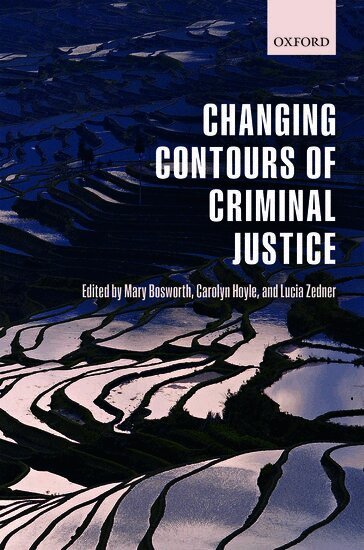
Celebrating the 50th Anniversary of the Oxford Centre for Criminology, this edited collection of essays seeks to explore the changing contours of criminal justice over the past half century and to consider possible shifts over the next few decades.The question of how social science disciplines develop and change does not invite any easy answer, with the task made all the more difficult given the highly politicised nature of some subjects and the volatile, evolving status of its institutions and practices. A case in point is criminal justice: at once fairly parochial, much criminal justice scholarship is now global in its reach and subject areas that are now accepted as central to its study - victims, restorative justice, security, privatization, terrorism, citizenship and migration (to name just a few) - were topics unknown to the discipline half a century ago. Indeed, most criminologists would have once stoutly denied that they had anything to do with it. Likewise, some central topics of past criminological attention, like probation, have largely receded from academic attention and some central criminal justice institutions, like Borstal and corporal punishment, have, at least in Europe, been abolished. Although the rapidity and radical nature of this change make it quite impossible to predict what criminal justice will look like in fifty years' time, reflection on such developments may assist in understanding how it arrived at its current form and hint at what the future holds.The contributors to this volume have been invited to reflect on the impact Oxford criminology has had on the discipline, providing a unique and critical discussion about the current state of criminal justice around the world and the origins and future implications of contemporary practice. All are leading internationally-renowned criminologists whose work has defined and often re-defined our understanding of criminal justice policy and literature.
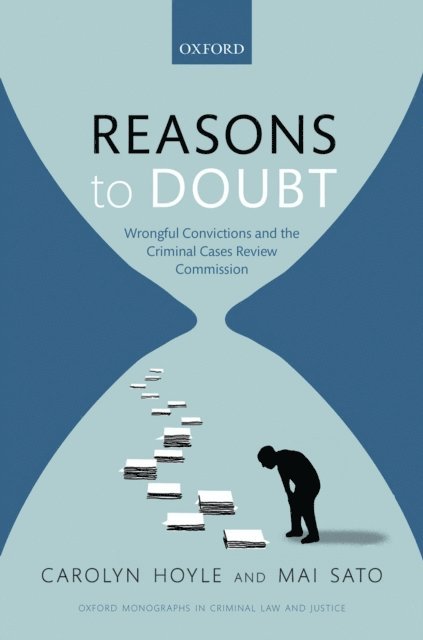
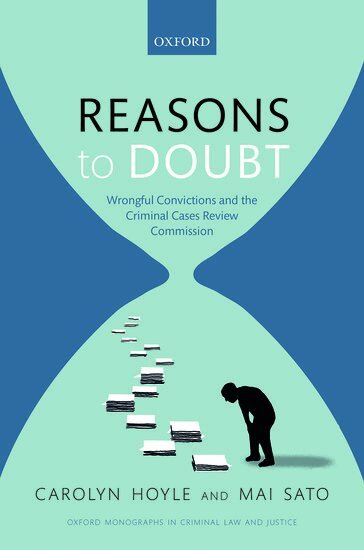
Reasons to Doubt
Wrongful Convictions and the Criminal Cases Review Commission
Inbunden, Engelska, 2019
1 280 kr
Skickas inom 5-8 vardagar
This book reveals what happens to applications for post-conviction review when those in England, Wales, and Northern Ireland who believe they are wrongfully convicted apply to the Criminal Cases Review Commission, the only body that can refer a case back to the Court of Appeal once appellants opportunities for direct appeal are exhausted. While the Court is obliged to hear all such referrals, the Commission can only refer a case where it believes there is a real possibility that the Court will quash the conviction. The first empirical study of all stages of decision-making within the Commission, this book starts from the premise that the test applied by the Commission (the real possibility test) is not inflexible. Though created by statute and refined through case law, it must be determined on a case-by-case basis, drawing too on cultural and structural variables, alongside fresh evidence gathered by the Commission. Through in-depth analysis of case files and interviews, Hoyle and Sato scrutinize the Commissions operational practices, its working rules and assumptions, considering how these influence its understanding of the real possibility test. Situating their rich empirical data within a framework of the Commissions social, organizational, and legal contexts, this book demonstrates that in its open-ended investigations there is considerable scope for discretion; for thorough exploration of all possible avenues or for choosing a more superficial consideration of a case. It emerges that while structured internal guidance, drawing heavily on Court jurisprudence, shapes decision-making, creating consistency in approach, there remains some variability across cases, over time, that can be accounted for by the different professional backgrounds and personalities of Commission staff.
1 553 kr
Skickas inom 5-8 vardagar
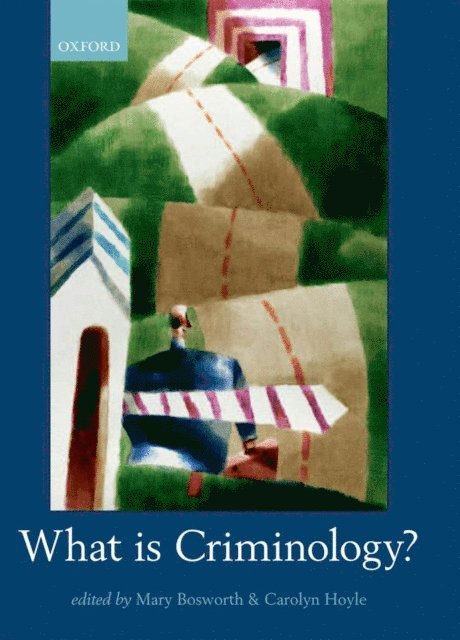
Criminology is a booming discipline, yet one which can appear divided and fractious. In this rich and diverse collection of 34 essays, some of the worlds leading criminologists respond to a series of questions designed to investigate the state, impact and future challenges of the discipline: What is criminology for? What is the impact of criminology? How should criminology be done? What are the key issues and debates in criminology today? What challenges does the discipline of criminology face? How has criminology as a discipline changed over the last few decades?The resulting essays identify a series of intellectual, methodological and ideological borders. Borders, in criminology as elsewhere, are policed, yet they are also frequently transgressed; criminologists can and do move across them to plunder, admire, or learn from other regions. While some boundaries may be more difficult or dangerous to cross than others it is rare to find an entirely secluded locale or community.In traversing ideological, political, geographical and disciplinary borders, criminologists bring training, tools and concepts, as well as key texts to share with foreigners. From such exchanges, over time, borders may break down, shift, or spring up, enriching those who take the journey and those who are visited. It is, in other words, in criminologys capacity for and commitment to reflexivity, on which the strength of the field depends.
728 kr
Skickas inom 7-10 vardagar
Criminology is a booming discipline, yet one which can appear divided and fractious. In this rich and diverse collection of essays, some of the world's leading criminologists respond to a series of questions designed to investigate the state, impact, and future challenges of the discipline: What is criminology for? What is the impact of criminology? How should criminology be done? What are the key issues and debates in criminology today? What challenges does the discipline of criminology face? How has criminology as a discipline changed over the last few decades?The resulting essays identify a series of intellectual, methodological, and ideological borders. Borders, in criminology as elsewhere, are policed, yet they are also frequently transgressed; criminologists can and do move across them to plunder, admire, or learn from other regions. While some boundaries may be more difficult or dangerous to cross than others it is rare to find an entirely secluded locale or community.In traversing ideological, political, geographical, and disciplinary borders, criminologists bring training, tools, and concepts, as well as key texts to share with foreigners. From such exchanges, over time, borders may break down, shift, or spring up, enriching those who take the journey and those who are visited. It is, in other words, in criminology's capacity for and commitment to reflexivity, on which the strength of the field depends.
12 612 kr
Tillfälligt slut
Over the last decade or so, more has been more written and talked about restorative justice than any other criminological topic. In addition to the proliferation of published work, there have been numerous national and international conferences and seminars both within and outside the academy, and the stream of e-conversations taking place via the many and various restorative justice e-mail lists and websites is in constant spate.As research on and around restorative justice flourishes as never before, this new four-volume collection in the Routledge Major Works series, Critical Concepts in Criminology, meets the need for an authoritative reference work to make sense of the subdiscipline’s rich and diverse heritage. It provides a much-needed map to steer students and scholars towards the truly essential foundational and cutting-edge materials and offers an essential grounding in the philosophy and principles of restorative justice in a number of jurisdictions around the world. Furthermore, it furnishes users with a critical awareness of the potential and the pitfalls of restorative justice in responses to crime, conflict, and civil disputes.The first volume in the collection (‘The Rise of Restorative Justice’) brings together the best research that inspired the restorative justice ‘movement’ and gives a flavour of some early practices that, on reflection, can now be considered to be at least partly restorative. The work gathered here considers the competing definitions of restorative justice, distinguishing between those that focus on restorative values and principles, those that emphasize aims and outcomes, and those that are premised on the idea that the term should only be applied to specific processes or programmes. Volume I will also develop in readers a critical approach to the relationship between punishment and restorative justice in the context of debates about whether restorative justice can fairly be characterized as non-punitive in nature.Volume II (‘Restorative Practices on the International Stage’) collects the most important work to describe and critically evaluate the varied practices across the globe which have been labelled ‘restorative justice’. The scholarship gathered here assesses the extent to which the (often competing) visions, discussed in Volume I, have been put into practice and draws on research carried out in North America, Asia, the United Kingdom, Europe, and Africa in various civil and criminal justice settings.Volume III (‘The Promise of Restorative Justice’) assembles the vital research to describe the instrumental achievements of restorative justice and to provide users with critical approaches in assessing ‘effectiveness’. The materials in Volume III also give a thorough appreciation of how successfully restorative justice is able to reconcile the variety of interests that may be implicated in responding to crime, and examines the related issues of accountability, the protection of rights, and proportionality.The final volume in the collection (‘Stumbling Blocks on the Road to a Restorative Jurisprudence’) gathers together key thinking to explore the extent to which there is an emerging consensus on a future jurisprudence of restorative justice. The material here seeks to understand the role of restorative justice in relation to both rehabilitation and retribution and other philosophies of punishment, and to consider how it can be protected by legal standards and ethical safeguards.Restorative Justice is fully indexed and includes a comprehensive introduction, newly written by the editor, a leading scholar in the field, which places the collected material in its historical and intellectual context. An essential reference collection, it is destined to be valued by scholars, students, and practitioners of restorative justice as a vital one-stop research and pedagogic resource.
1 051 kr
Skickas inom 10-15 vardagar
This innovative collection presents original theoretical analyses and previously unpublished empirical research on criminal victimisation. Following an overview of the development and deficiencies of victimology,subsequent chapters present more detailed challenges to stereotypical conceptions of victimisation through their focus on: male victims of domestic violence; victims of male-on-male rape; corporate victims; and the 'victim-offenders' who are the recipients of IRA punishment beatings. The second half of the book considers criminal justice responses to victimisation, focusing in particular on the potential of, and limits to, restorative justice, the social (and gendered) construction of the victim within contested trials and the exclusionary nature of current 'victim-centred' initiatives. This important book will further the debate on how we conceptualise victims as well as their appropriate role within the criminal justice system. New Visions of Crime Victims will be of interest to academics, students, criminal justice practitioners and policy-makers.It has particular implications for scholarship in the fields of victimology, restorative justice and feminist approaches to criminology and criminal justice. The integration of work by established criminologists, such as Carolyn Hoyle, Paul Rock, Andrew Sanders and Richard Young with that of young, previously unpublished scholars, makes for an interesting and stimulating book. As well as being a valuable addition to the literature, it can be used to support undergraduate and postgraduate courses in criminal justice and criminology.
486 kr
Skickas inom 10-15 vardagar
This innovative collection presents original theoretical analyses and previously unpublished empirical research on criminal victimisation. Following an overview of the development and deficiencies of victimology, subsequent chapters present more detailed challenges to stereotypical conceptions of victimisation through their focus on: male victims of domestic violence; victims of male-on-male rape; corporate victims; and the 'victim-offenders' who are the recipients of IRA punishment beatings. The second half of the book considers criminal justice responses to victimisation, focusing in particular on the potential of, and limits to, restorative justice, the social (and gendered) construction of the victim within contested trials and the exclusionary nature of current 'victim-centred' initiatives. This important book will further the debate on how we conceptualise victims as well as their appropriate role within the criminal justice system. New Visions of Crime Victims will be of interest to academics, students, criminal justice practitioners and policy-makers.It has particular implications for scholarship in the fields of victimology, restorative justice and feminist approaches to criminology and criminal justice. The integration of work by established criminologists, such as Carolyn Hoyle, Paul Rock, Andrew Sanders and Richard Young with that of young, previously unpublished scholars, makes for an interesting and stimulating book. As well as being a valuable addition to the literature, it can be used to support undergraduate and postgraduate courses in criminal justice and criminology. From the reviews of the hardback edition: "This is a stimulating and well-presented book." Martin Wright, Restorative Justice Online, November 2003 "The book succeeds in its goal of introducing 'new voices', both in terms of the topics as well as the authors." Roxanne Lieb, Howard Journal of Criminal Justice, July 2003 "...it will be a valuable asset to victimologists and academic libraries because it includes so many challenges to conventional wisdom." Brian Williams, British Society of Criminology Newsletter, March 2003
351 kr
Skickas inom 10-15 vardagar
Debating Law is a new, exciting series that gives scholarly experts the opportunity to offer contrasting perspectives on significant topics of contemporary, general interest. In this first volume of the series Carolyn Hoyle argues that communities and the state should be more restorative in responding to harms caused by crimes, antisocial behaviour and other incivilities. She supports the exclusive use of restorative justice for many non-serious offences, and favours approaches that, by integrating restorative and retributive philosophies, take restorative practices into the 'deep end' of criminal justice. While acknowledging that restorative justice appears to have much to offer in terms of criminal justice reform, Chris Cunneen offers a different account, contending that the theoretical cogency of restorative ideas is limited by their lack of a coherent analysis of social and political power. He goes on to argue that after several decades of experimentation, restorative justice has not produced significant change in the criminal justice system and that the attempt to establish it as a feasible alternative to dominant practices of criminal justice has failed.This lively and valuable debate will be of great interest to everyone interested in the criminal justice system.