Carroll Smith-Rosenberg - Böcker
Visar alla böcker från författaren Carroll Smith-Rosenberg. Handla med fri frakt och snabb leverans.
2 produkter
2 produkter
Del 820 - Galaxy Books
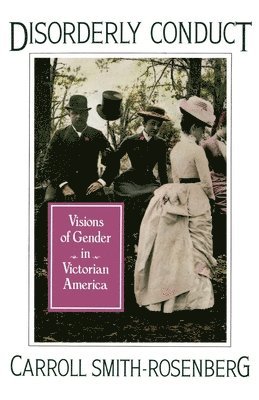
Disorderly Conduct
Visions of Gender in Victorian America
Häftad, Engelska, 1987
254 kr
Skickas inom 5-8 vardagar
This first collection of essays by Carroll Smith-Rosenberg, one of the leading historians of women, is a landmark in women's studies. Focusing on the "disorderly conduct" women and some men used to break away from the Victorian Era's rigid class and sex roles, it examines the dramatic changes in male-female relations, family structure, sex, social custom, and ritual that occurred as colonial America was transformed by rapid industrialization. Included are two nowclassic essays on gender relations in 19th-century America, "The Female World of Love and Ritual: Relations Between Women in Nineteenth-Century America" and "The New Woman as Androgyne: Social Orderand Gender Crisis, 1870-1936," as well as Smith-Rosenberg's more recent work, on abortion, homosexuality, religious fanatics, and revisionist history.Throughout Disorderly Conduct, Smith-Rosenberg startles and convinces, making us re-evaluate a society we thought we understood, a society whose outward behavior and inner emotional life now take on a new meaning.
487 kr
Skickas inom 10-15 vardagar
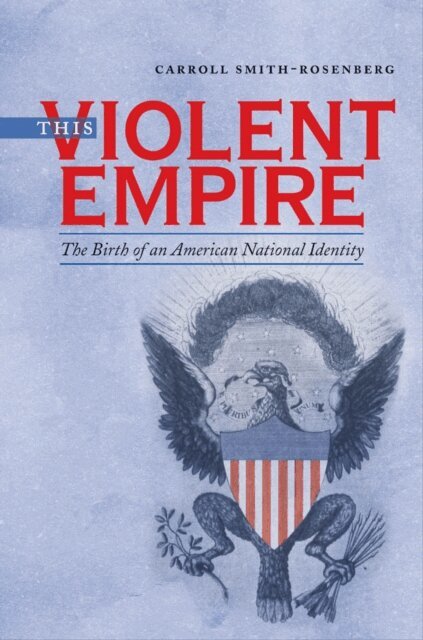
This Violent Empire traces the origins of American violence, racism, and paranoia to the founding moments of the new nation and the initial instability of Americans' national sense of self.Fusing cultural and political analyses to create a new form of political history, Carroll Smith-Rosenberg explores the ways the founding generation, lacking a common history, governmental infrastructures, and shared culture, solidified their national sense of self by imagining a series of ""Others"" (African Americans, Native Americans, women, the propertyless) whose differences from European American male founders overshadowed the differences that divided those founders. These ""Others,"" dangerous and polluting, had to be excluded from the European American body politic. Feared, but also desired, they refused to be marginalized, incurring increasingly enraged enactments of their political and social exclusion that shaped our long history of racism, xenophobia, and sexism. Close readings of political rhetoric during the Constitutional debates reveal the genesis of this long history.