Caryn A. Reeder - Böcker
Visar alla böcker från författaren Caryn A. Reeder. Handla med fri frakt och snabb leverans.
6 produkter
6 produkter
301 kr
Skickas inom 3-6 vardagar
343 kr
Skickas inom 3-6 vardagar
1 245 kr
Skickas inom 7-10 vardagar
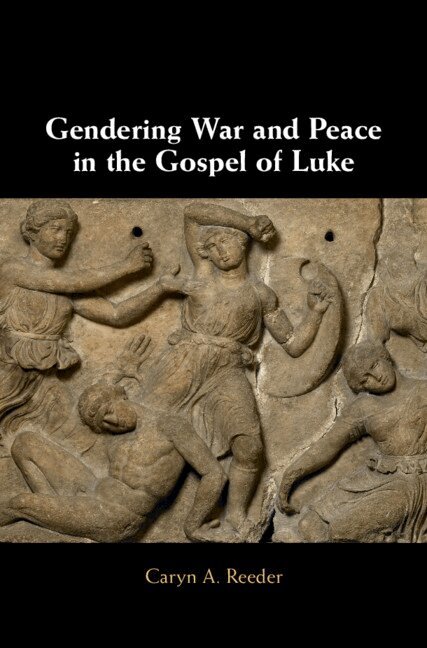
In this book, Caryn A. Reeder examines the gendered language and imagery of war and peace in the Gospel of Luke. Peace is represented with the blessing of fertility, pregnancy, and newborn infants. Pregnant and nursing women, women and children in general, and feminized Jerusalem also represent the horrors of war in the Gospel - abandoned, crushed to the ground, subject to woe and distress, to the point that barren wombs and dry breasts become a blessing. Reeder argues that the representation of peace with pregnant women and newborn infants, the most vulnerable in the population, indicates that victory belongs to God. This message is clarified by the encouragement of surrender and flight from besieged Jerusalem, rather than an active defense. Notably, there are no men to defend Jerusalem in Luke's warnings of war. The Gospel undermines the masculinization of war commonly found in Greco-Roman texts by redirecting the means of making peace from the violence of victory to the unmanly act of surrender.
For Us, But Not to Us
Essays on Creation, Covenant, and Context in Honor of John H. Walton
Häftad, Engelska, 2020
445 kr
Skickas inom 5-8 vardagar
For Us, But Not to Us
Essays on Creation, Covenant, and Context in Honor of John H. Walton
Inbunden, Engelska, 2020
666 kr
Skickas inom 5-8 vardagar
Enslavement and Gender in the New Testament
Jesus, Slavery, and Unconventional Masculinity
Häftad, Engelska, 2026
335 kr
Kommande
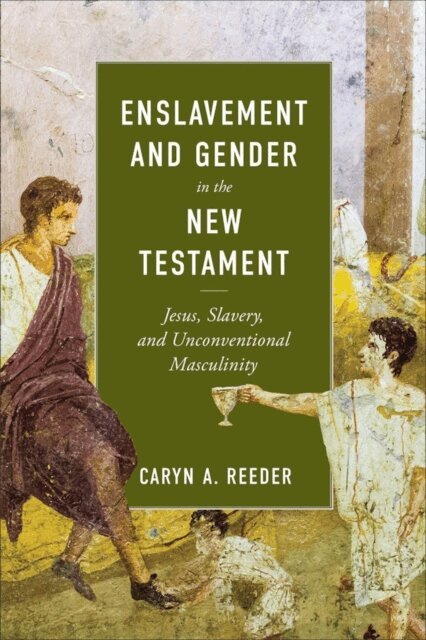
In the first-century Roman Empire, men generally held privileged status. Masculinity was conceived as exercising power over both self and others through self-discipline, violence, and authority in the community and household. This paradigm often proved socially problematic and fostered injustice and abuse of those in socially weaker positions. Masculinity was defined in contrast with femininity, childishness, and (significantly) slavery. Enslavement was masculinity's opposite, entailing a lack of power and autonomy over oneself or others.Against this background, the New Testament uses the metaphor of slavery to describe both Jesus and what he expected of his disciples. In doing so, it redefined masculinity for the Christian. This well-researched book by an expert on gender and the New Testament explores slavery and gender in the Roman Empire and uses that background to interpret key passages that employ enslavement imagery, such as Mark 10:41-45, Luke 22:24-27, Philippians 2:1-11, and 1 Peter 2:18-25. Further, it helps readers understand how enslaved first-century Christians may have interpreted and applied these texts. The book's conclusions address the significance of "unconventional masculinity" for Christology, discipleship, and church leadership.