Casey Rebecca Johnson - Böcker
Visar alla böcker från författaren Casey Rebecca Johnson. Handla med fri frakt och snabb leverans.
4 produkter
4 produkter
1 901 kr
Skickas inom 10-15 vardagar
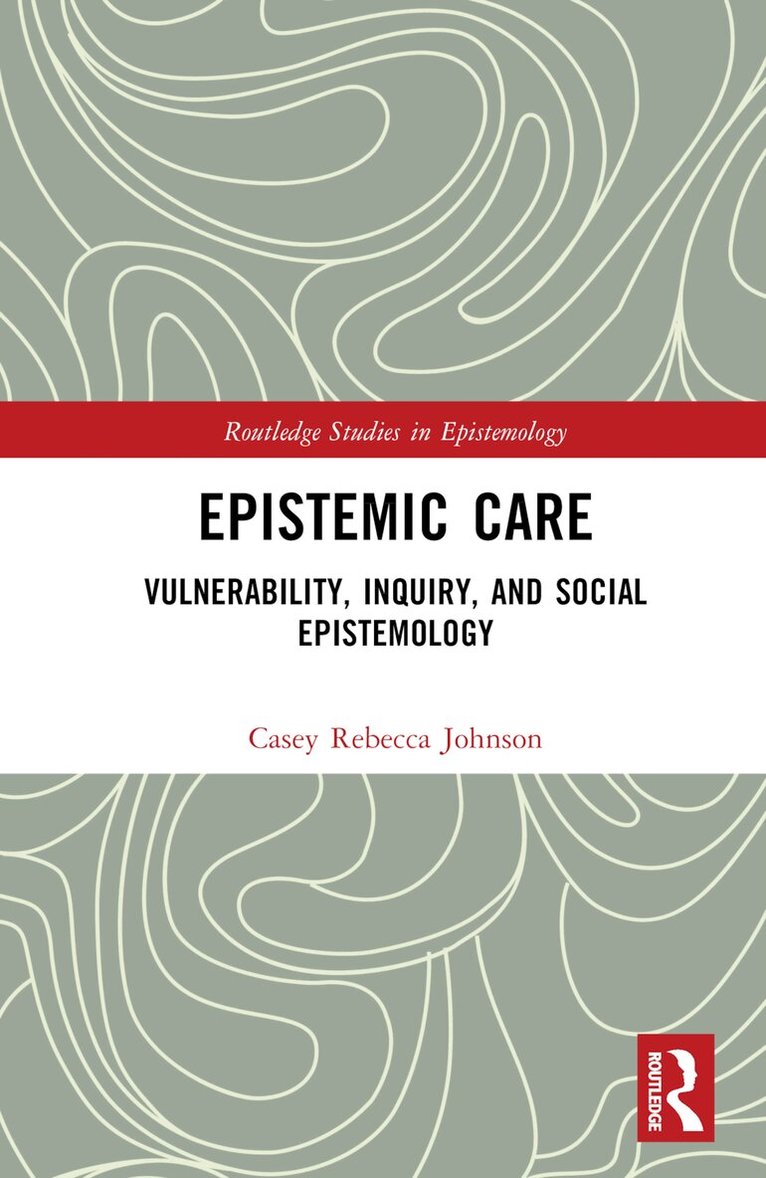
This book uses the framework of care ethics to articulate a novel theory of our epistemic obligations to one another. It presents an original way to understand our epistemic vulnerabilities, our obligations in education, and our care duties toward others with whom we stand in epistemically vulnerable relationships.As embodied and socially interdependent knowers, we have obligations to one another that are generated by our ability to care – that is, to meet each other’s epistemic vulnerabilities. The author begins the book by arguing that the same motivations that moved social epistemologists away from individualistic epistemology should motivate a move to a care-based theory. The following chapters outline our epistemic care duties to vulnerable agents, and offer criteria of epistemic goodness for communities of inquiry. Finally, the author discusses the tension between epistemic care and epistemic paternalism.Epistemic Care will be of interest to scholars and advanced students working in social epistemology, ethics, feminist philosophy, and philosophy of education.
629 kr
Skickas inom 10-15 vardagar
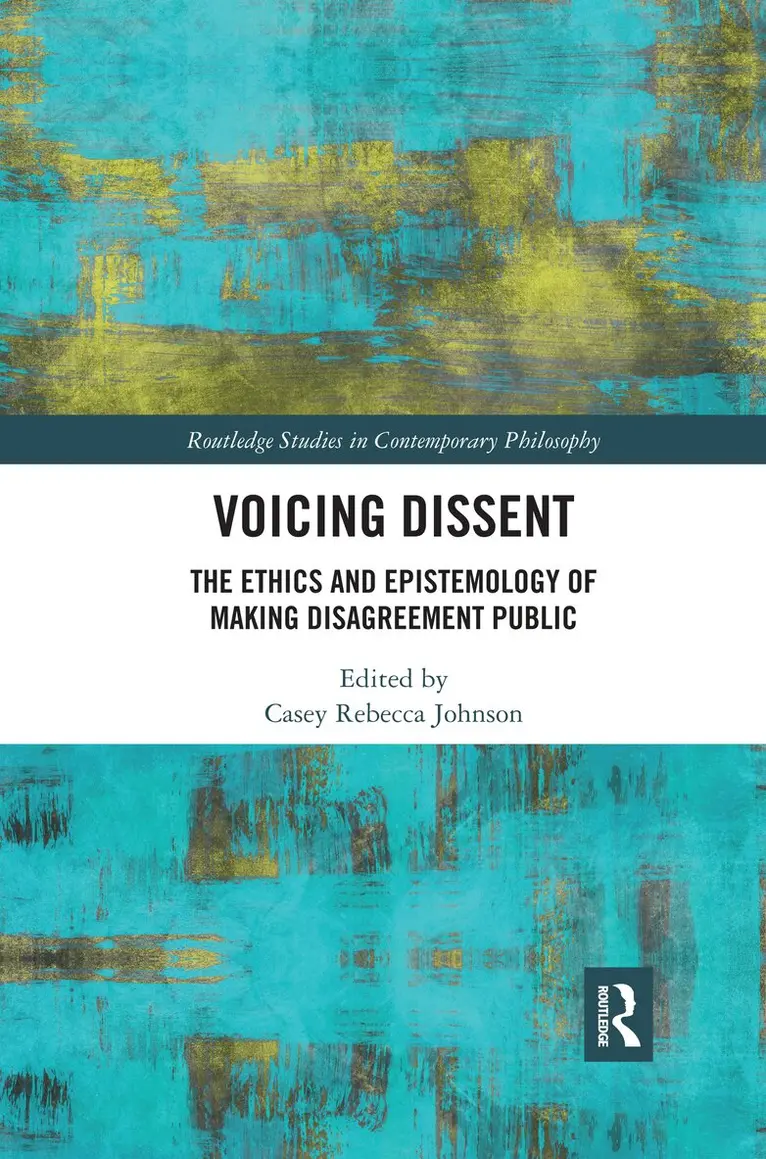
Disagreement is, for better or worse, pervasive in our society. Not only do we form beliefs that differ from those around us, but increasingly we have platforms and opportunities to voice those disagreements and make them public. In light of the public nature of many of our most important disagreements, a key question emerges: How does public disagreement affect what we know?This volume collects original essays from a number of prominent scholars—including Catherine Elgin, Sanford Goldberg, Jennifer Lackey, Michael Patrick Lynch, and Duncan Pritchard, among others—to address this question in its diverse forms. The book is organized by thematic sections, in which individual chapters address the epistemic, ethical, and political dimensions of dissent. The individual contributions address important issues such as the value of disagreement, the nature of conversational disagreement, when dissent is epistemically rational, when one is obligated to voice disagreement or to object, the relation of silence and resistance to dissent, and when political dissent is justified. Voicing Dissent offers a new approach to the study of disagreement that will appeal to social epistemologists and ethicists interested in this growing area of epistemology.
575 kr
Skickas inom 10-15 vardagar
This book uses the framework of care ethics to articulate a novel theory of our epistemic obligations to one another. It presents an original way to understand our epistemic vulnerabilities, our obligations in education, and our care duties toward others with whom we stand in epistemically vulnerable relationships.As embodied and socially interdependent knowers, we have obligations to one another that are generated by our ability to care – that is, to meet each other’s epistemic vulnerabilities. The author begins the book by arguing that the same motivations that moved social epistemologists away from individualistic epistemology should motivate a move to a care-based theory. The following chapters outline our epistemic care duties to vulnerable agents, and offer criteria of epistemic goodness for communities of inquiry. Finally, the author discusses the tension between epistemic care and epistemic paternalism.Epistemic Care will be of interest to scholars and advanced students working in social epistemology, ethics, feminist philosophy, and philosophy of education.
2 104 kr
Skickas inom 10-15 vardagar
Disagreement is, for better or worse, pervasive in our society. Not only do we form beliefs that differ from those around us, but increasingly we have platforms and opportunities to voice those disagreements and make them public. In light of the public nature of many of our most important disagreements, a key question emerges: How does public disagreement affect what we know?This volume collects original essays from a number of prominent scholars—including Catherine Elgin, Sanford Goldberg, Jennifer Lackey, Michael Patrick Lynch, and Duncan Pritchard, among others—to address this question in its diverse forms. The book is organized by thematic sections, in which individual chapters address the epistemic, ethical, and political dimensions of dissent. The individual contributions address important issues such as the value of disagreement, the nature of conversational disagreement, when dissent is epistemically rational, when one is obligated to voice disagreement or to object, the relation of silence and resistance to dissent, and when political dissent is justified. Voicing Dissent offers a new approach to the study of disagreement that will appeal to social epistemologists and ethicists interested in this growing area of epistemology.