Cassidy R. Sugimoto - Böcker
Visar alla böcker från författaren Cassidy R. Sugimoto. Handla med fri frakt och snabb leverans.
7 produkter
7 produkter
781 kr
Skickas inom 5-8 vardagar
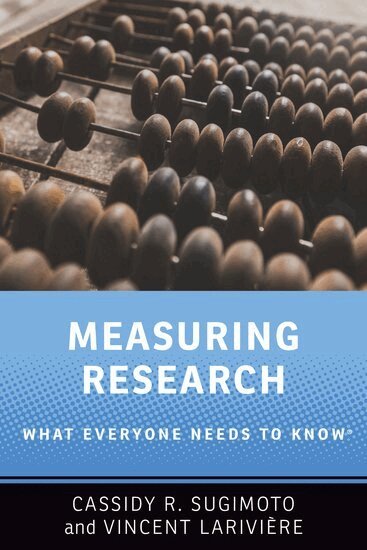
Policy makers, academic administrators, scholars, and members of the public are clamoring for indicators of the value and reach of research. The question of how to quantify the impact and importance of research and scholarly output, from the publication of books and journal articles to the indexing of citations and tweets, is a critical one in predicting innovation, and in deciding what sorts of research is supported and whom is hired to carry it out. There is a wide set of data and tools available for measuring research, but they are often used in crude ways, and each have their own limitations and internal logics. Measuring Research: What Everyone Needs to Know® will provide, for the first time, an accessible account of the methods used to gather and analyze data on research output and impact. Following a brief history of scholarly communication and its measurement -- from traditional peer review to crowdsourced review on the social web -- the book will look at the classification of knowledge and academic disciplines, the differences between citations and references, the role of peer review, national research evaluation exercises, the tools used to measure research, the many different types of measurement indicators, and how to measure interdisciplinarity. The book also addresses emerging issues within scholarly communication, including whether or not measurement promotes a "publish or perish" culture, fraud in research, or "citation cartels." It will also look at the stakeholders behind these analytical tools, the adverse effects of these quantifications, and the future of research measurement.
191 kr
Skickas inom 5-8 vardagar
Policy makers, academic administrators, scholars, and members of the public are clamoring for indicators of the value and reach of research. The question of how to quantify the impact and importance of research and scholarly output, from the publication of books and journal articles to the indexing of citations and tweets, is a critical one in predicting innovation, and in deciding what sorts of research is supported and whom is hired to carry it out. There is a wide set of data and tools available for measuring research, but they are often used in crude ways, and each have their own limitations and internal logics. Measuring Research: What Everyone Needs to Know® will provide, for the first time, an accessible account of the methods used to gather and analyze data on research output and impact. Following a brief history of scholarly communication and its measurement -- from traditional peer review to crowdsourced review on the social web -- the book will look at the classification of knowledge and academic disciplines, the differences between citations and references, the role of peer review, national research evaluation exercises, the tools used to measure research, the many different types of measurement indicators, and how to measure interdisciplinarity. The book also addresses emerging issues within scholarly communication, including whether or not measurement promotes a "publish or perish" culture, fraud in research, or "citation cartels." It will also look at the stakeholders behind these analytical tools, the adverse effects of these quantifications, and the future of research measurement.
Beyond Bibliometrics
Harnessing Multidimensional Indicators of Scholarly Impact
Häftad, Engelska, 2014
1 026 kr
Skickas inom 5-8 vardagar
290 kr
Tillfälligt slut
282 kr
Skickas inom 7-10 vardagar
The first large-scale empirical analysis of the gender gap in science, showing how the structure of scientific labor and rewards—publications, citations, funding—systematically obstructs women’s career advancement.If current trends continue, women and men will be equally represented in the field of biology in 2069. In physics, math, and engineering, women should not expect to reach parity for more than a century. The gender gap in science and technology is narrowing, but at a decidedly unimpressive pace. And even if parity is achievable, what about equity?Equity for Women in Science, the first large-scale empirical analysis of the global gender gap in science, provides strong evidence that the structures of scientific production and reward impede women’s career advancement. To make their case, Cassidy R. Sugimoto and Vincent Larivière have conducted scientometric analyses using millions of published papers across disciplines. The data show that women are systematically denied the chief currencies of scientific credit: publications and citations. The rising tide of collaboration only exacerbates disparities, with women unlikely to land coveted leadership positions or gain access to global networks. The findings are unequivocal: when published, men are positioned as key contributors and women are relegated to low-visibility technical roles. The intersecting disparities in labor, reward, and resources contribute to cumulative disadvantages for the advancement of women in science.Alongside their eye-opening analyses, Sugimoto and Larivière offer solutions. The data themselves point the way, showing where existing institutions fall short. A fair and equitable research ecosystem is possible, but the scientific community must first disrupt its own pervasive patterns of gatekeeping.
1 343 kr
Skickas inom 5-8 vardagar
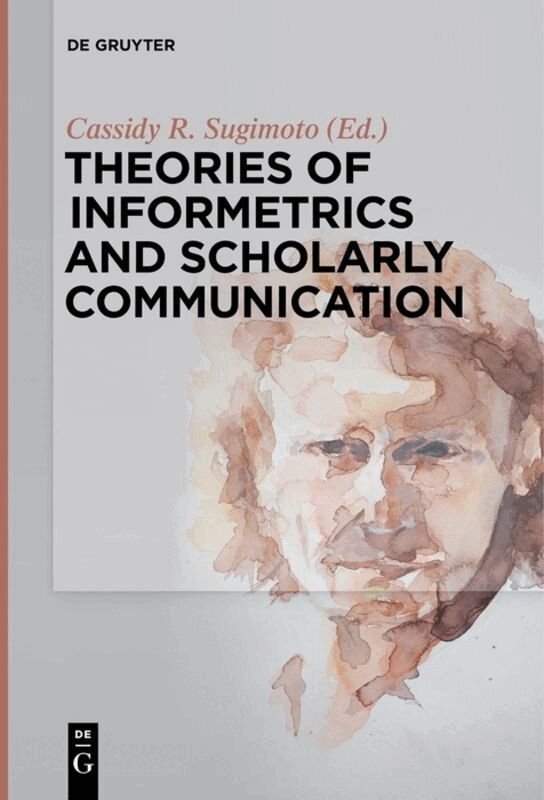
Scientometrics have become an essential element in the practice and evaluation of science and research, including both the evaluation of individuals and national assessment exercises. Yet, researchers and practitioners in this field have lacked clear theories to guide their work. As early as 1981, then doctoral student Blaise Cronin published "The need for a theory of citing" —a call to arms for the fledgling scientometric community to produce foundational theories upon which the work of the field could be based. More than three decades later, the time has come to reach out the field again and ask how they have responded to this call. This book compiles the foundational theories that guide informetrics and scholarly communication research. It is a much needed compilation by leading scholars in the field that gathers together the theories that guide our understanding of authorship, citing, and impact.
329 kr
Skickas inom 5-8 vardagar
Scientometrics have become an essential element in the practice and evaluation of science and research, including both the evaluation of individuals and national assessment exercises. Yet, researchers and practitioners in this field have lacked clear theories to guide their work. As early as 1981, then doctoral student Blaise Cronin published "The need for a theory of citing" —a call to arms for the fledgling scientometric community to produce foundational theories upon which the work of the field could be based. More than three decades later, the time has come to reach out the field again and ask how they have responded to this call. This book compiles the foundational theories that guide informetrics and scholarly communication research. It is a much needed compilation by leading scholars in the field that gathers together the theories that guide our understanding of authorship, citing, and impact.