
Catherine Andreyev – författare
Visar alla böcker från författaren . Handla med fri frakt och snabb leverans.
3 produkter
3 produkter
Häftad, Engelska, 2013
474 kr
Skickas inom 5-8 vardagar
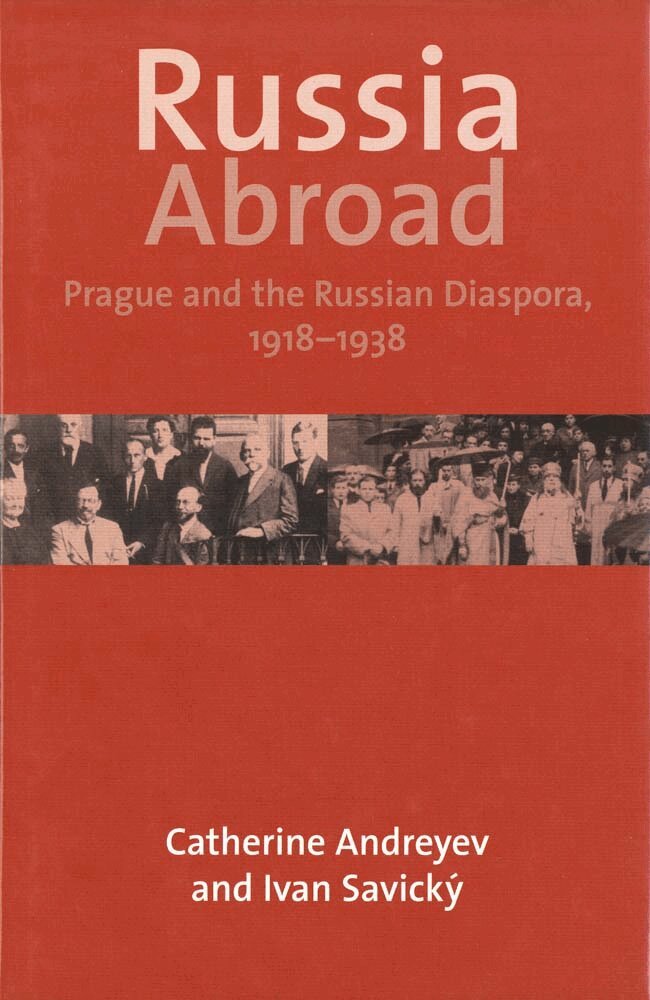
In the wake of the Russian Revolution and the ensuing civil war, approximately 1.5 million Russians fled their country. Many settled in Prague, where they were welcomed and supported by the newly formed Czechoslovak Republic. This book presents the first full account of Prague’s Russian émigré community from 1918 to 1939, when the Nazi invasion scattered the inhabitants yet again. Russia Abroad examines the life of this vibrant community, its activity, achievement, and importance.Catherine Andreyev and Ivan Savicky explore the reasons that Czechoslovakia embraced the Russian immigrants, the evolution of the Russian community, and why the original idea of supporting Russian émigrés and creating an academic center of progressive Russians had to be modified in light of national and international politics. The story they tell not only illuminates aspects of Russian life and culture of the period but also offers insights into later diasporas in the twentieth and twenty-first centuries.
Del 51 - Cambridge Russian, Soviet and Post-Soviet Studies
Vlasov and the Russian Liberation Movement
Soviet Reality and Emigré Theories
Inbunden, Engelska, 1987
1 378 kr
Skickas inom 7-10 vardagar
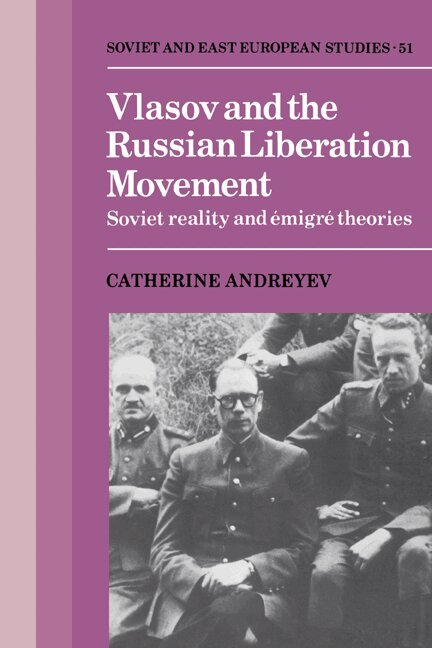
Vlasov and the Russian Liberation Movement deals with the attempt by Soviet citizens to create a Russian anti-Stalinist liberation movement during the Second World War. These Soviet citizens were mainly prisoners-of-war, forced labourers or part of the population of the occupied territories of the USSR. The Liberation Movement was encouraged by German officers who disagreed with Nazi policy towards the USSR, as their experience showed that treating the population as 'subhumans' (Untermensch) merely increased resistance to Nazi occupation. Throughout the development of the Liberation Movement there existed a divergence of aims between the Russian members who wished to form an army and a political movement which would effect change within the USSR, and its German supporters who merely wished to alter the type of propaganda directed towards the population of the USSR. Catherine Andreyev provides an account of the evolution of the Russian Liberation Movement and examines the motivation of the titular leader of the movement, Lieutenant-General Andrey Andreyevich Vlasov. The main focus of the book is the ideology of the Liberation Movement, the importance of which lies in the fact that it represented the first grass-roots opposition movement within the Soviet Union since the end of the Civil War in 1922. The programme of the Movement reflects issues which would have been raised by citizens in the 1930s had they been free to do so. Catherine Andreyev examines influences on the programme, and the ideas expressed are placed within the context of the pre-war Soviet and Russian émigré society.
Del 51 - Cambridge Russian, Soviet and Post-Soviet Studies
Vlasov and the Russian Liberation Movement
Soviet Reality and Emigré Theories
Häftad, Engelska, 1989
502 kr
Skickas inom 7-10 vardagar
Vlasov and the Russian Liberation Movement deals with the attempt by Soviet citizens to create a Russian anti-Stalinist liberation movement during the Second World War. These Soviet citizens were mainly prisoners-of-war, forced labourers or part of the population of the occupied territories of the USSR. The Liberation Movement was encouraged by German officers who disagreed with Nazi policy towards the USSR, as their experience showed that treating the population as 'subhumans' (Untermensch) merely increased resistance to Nazi occupation. Throughout the development of the Liberation Movement there existed a divergence of aims between the Russian members who wished to form an army and a political movement which would effect change within the USSR, and its German supporters who merely wished to alter the type of propaganda directed towards the population of the USSR. Catherine Andreyev provides an account of the evolution of the Russian Liberation Movement and examines the motivation of the titular leader of the movement, Lieutenant-General Andrey Andreyevich Vlasov. The main focus of the book is the ideology of the Liberation Movement, the importance of which lies in the fact that it represented the first grass-roots opposition movement within the Soviet Union since the end of the Civil War in 1922. The programme of the Movement reflects issues which would have been raised by citizens in the 1930s had they been free to do so. Catherine Andreyev examines influences on the programme, and the ideas expressed are placed within the context of the pre-war Soviet and Russian émigré society.