Catherine E. Kelly - Böcker
Visar alla böcker från författaren Catherine E. Kelly. Handla med fri frakt och snabb leverans.
5 produkter
5 produkter
694 kr
Skickas inom 10-15 vardagar
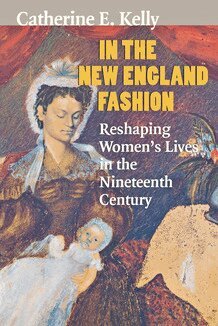
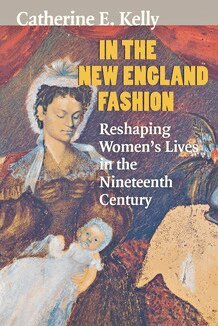
In the first half of the nineteenth century, rural New England society underwent a radical transformation as the traditional household economy gave way to an encroaching market culture. Drawing on a wide array of diaries, letters, and published writings by women in this society, Catherine E. Kelly describes their attempts to make sense of the changes in their world by elaborating values connected to rural life. In her hands, the narratives reveal the dramatic ways female lives were reshaped during the antebellum period and the women's own contribution to those developments. Equally important, she demonstrates how these writings afford a fuller understanding of the capitalist transformation of the countryside and the origins of the Northern middle class.Provincial women exalted rural life for its republican simplicity while condemning that of the city for its aristocratic pretension. The idyllic nature of the former was ascribed to the financial independence that the household economy had long provided those in the farming community. Kelly examines how the juxtaposition of rural virtue to urban vice served as a cautionary defense against the new realities of the capitalist market society. She finds that women responded to the transition to capitalism by upholding a set of values which point toward the creation of a provincial bourgeoisie.
348 kr
Skickas
In the first half of the nineteenth century, rural New England society underwent a radical transformation as the traditional household economy gave way to an encroaching market culture. Drawing on a wide array of diaries, letters, and published writings by women in this society, Catherine E. Kelly describes their attempts to make sense of the changes in their world by elaborating values connected to rural life. In her hands, the narratives reveal the dramatic ways female lives were reshaped during the antebellum period and the women's own contribution to those developments. Equally important, she demonstrates how these writings afford a fuller understanding of the capitalist transformation of the countryside and the origins of the Northern middle class.Provincial women exalted rural life for its republican simplicity while condemning that of the city for its aristocratic pretension. The idyllic nature of the former was ascribed to the financial independence that the household economy had long provided those in the farming community. Kelly examines how the juxtaposition of rural virtue to urban vice served as a cautionary defense against the new realities of the capitalist market society. She finds that women responded to the transition to capitalism by upholding a set of values which point toward the creation of a provincial bourgeoisie.
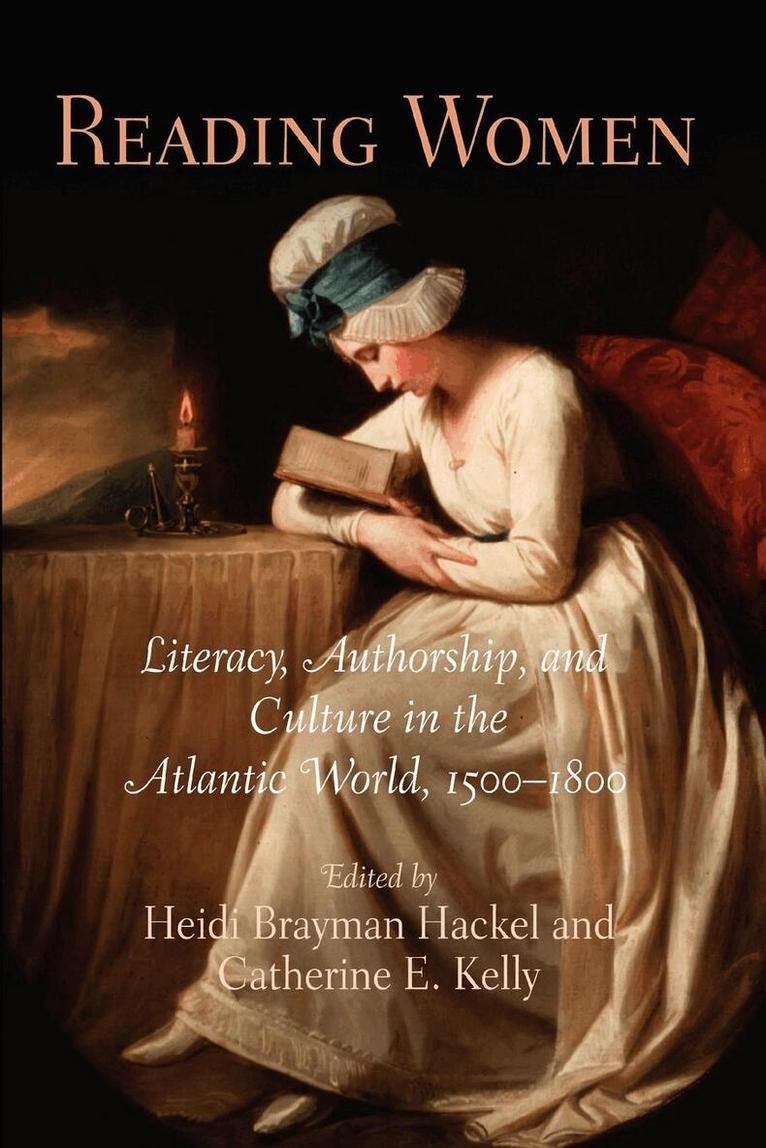
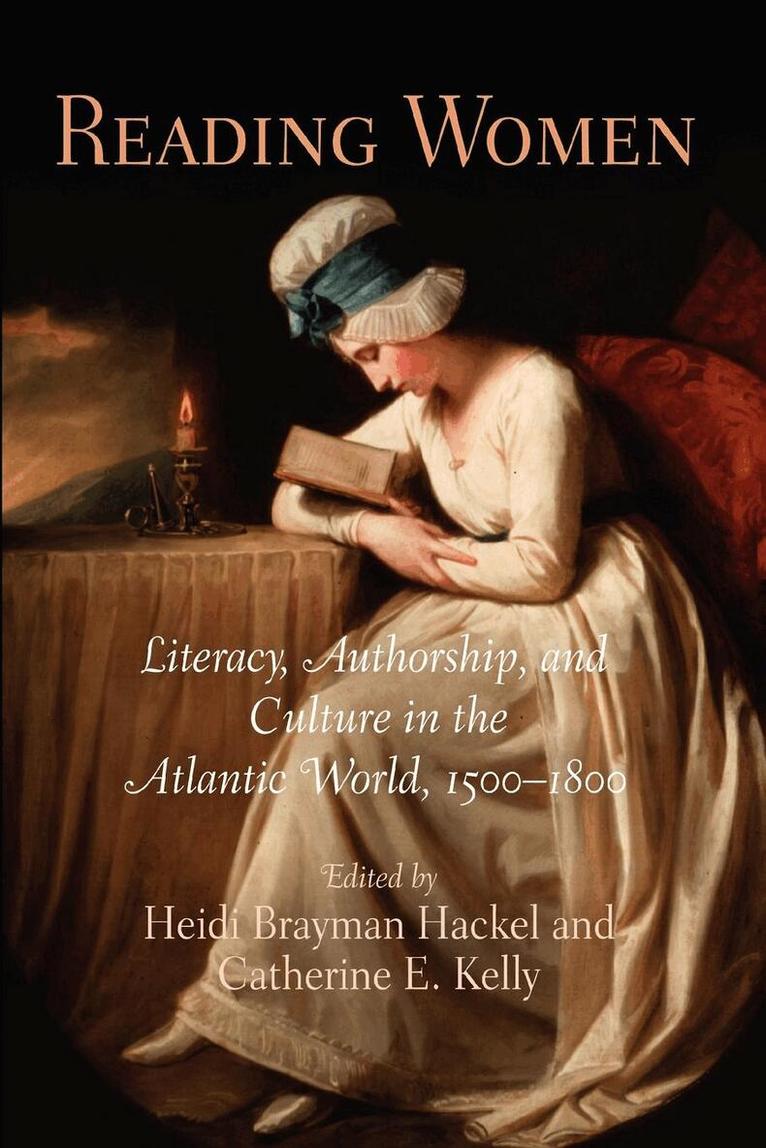
Reading Women
Literacy, Authorship, and Culture in the Atlantic World, 1500-1800
Häftad, Engelska, 2009
361 kr
Skickas inom 10-15 vardagar
In 1500, as many as 99 out of 100 English women may have been illiterate, and girls of all social backgrounds were the objects of purposeful efforts to restrict their access to full literacy. Three centuries later, more than half of all English and Anglo-American women could read, and the female reader was emerging as a cultural ideal and a market force. While scholars have written extensively about women's reading in the nineteenth and twentieth centuries and about women's writing in the early modern period, they have not attended sufficiently to the critical transformation that took place as female readers and their reading assumed significant cultural and economic power.Reading Women brings into conversation the latest scholarship by early modernists and early Americanists on the role of gender in the production and consumption of texts during this expansion of female readership. Drawing together historians and literary scholars, the essays share a concern with local specificity and material culture. Removing women from the historically inaccurate frame of exclusively solitary, silent reading, the authors collectively return their subjects to the activities that so often coincided with reading: shopping, sewing, talking, writing, performing, and collecting. With chapters on samplers, storytelling, testimony, and translation, the volume expands notions of reading and literacy, and it insists upon a rich and varied narrative that crosses disciplinary boundaries and national borders.
529 kr
Skickas inom 10-15 vardagar
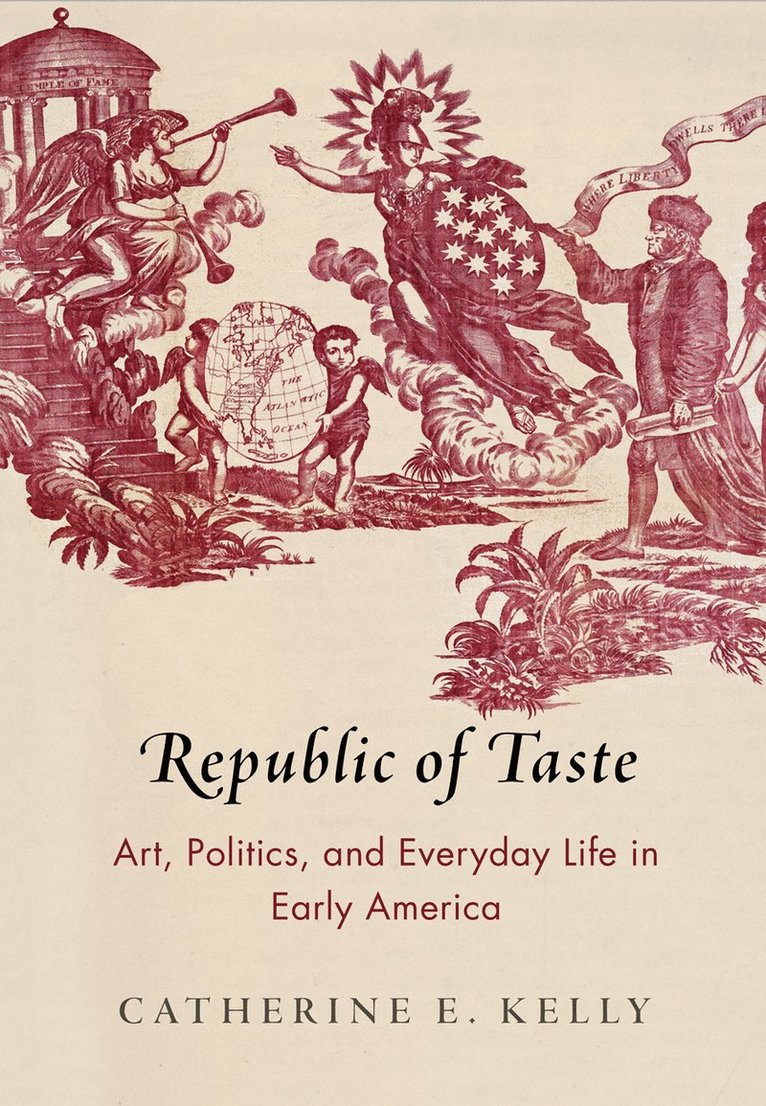
Since the early decades of the eighteenth century, European, and especially British, thinkers were preoccupied with questions of taste. Whether Americans believed that taste was innate-and therefore a marker of breeding and station-or acquired-and thus the product of application and study-all could appreciate that taste was grounded in, demonstrated through, and confirmed by reading, writing, and looking. It was widely believed that shared aesthetic sensibilities connected like-minded individuals and that shared affinities advanced the public good and held great promise for the American republic.Exploring the intersection of the early republic's material, visual, literary, and political cultures, Catherine E. Kelly demonstrates how American thinkers acknowledged the similarities between aesthetics and politics in order to wrestle with questions about power and authority. Judgments about art, architecture, literature, poetry, and the theater became an arena for considering political issues ranging from government structures and legislative representation to qualifications for citizenship and the meaning of liberty itself. Additionally, if taste prompted political debate, it also encouraged affinity grounded in a shared national identity. In the years following independence, ordinary women and men reassured themselves that taste revealed larger truths about an individual's character and potential for republican citizenship.Did an early national vocabulary of taste, then, with its privileged visuality, register beyond the debates over the ratification of the Constitution? Did it truly extend beyond political and politicized discourse to inform the imaginative structures and material forms of everyday life? Republic of Taste affirms that it did, although not in ways that anyone could have predicted at the conclusion of the American Revolution.
712 kr
Skickas inom 7-10 vardagar
Since the early decades of the eighteenth century, European, and especially British, thinkers were preoccupied with questions of taste. Whether Americans believed that taste was innate-and therefore a marker of breeding and station-or acquired-and thus the product of application and study-all could appreciate that taste was grounded in, demonstrated through, and confirmed by reading, writing, and looking. It was widely believed that shared aesthetic sensibilities connected like-minded individuals and that shared affinities advanced the public good and held great promise for the American republic.Exploring the intersection of the early republic's material, visual, literary, and political cultures, Catherine E. Kelly demonstrates how American thinkers acknowledged the similarities between aesthetics and politics in order to wrestle with questions about power and authority. Judgments about art, architecture, literature, poetry, and the theater became an arena for considering political issues ranging from government structures and legislative representation to qualifications for citizenship and the meaning of liberty itself. Additionally, if taste prompted political debate, it also encouraged affinity grounded in a shared national identity. In the years following independence, ordinary women and men reassured themselves that taste revealed larger truths about an individual's character and potential for republican citizenship.Did an early national vocabulary of taste, then, with its privileged visuality, register beyond the debates over the ratification of the Constitution? Did it truly extend beyond political and politicized discourse to inform the imaginative structures and material forms of everyday life? Republic of Taste affirms that it did, although not in ways that anyone could have predicted at the conclusion of the American Revolution.