Catherine Ross - Böcker
Visar alla böcker från författaren Catherine Ross. Handla med fri frakt och snabb leverans.
6 produkter
6 produkter
Del 114 - JB - Anker
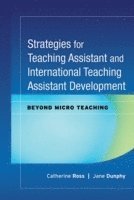
Strategies for Teaching Assistant and International Teaching Assistant Development
Beyond Micro Teaching
Inbunden, Engelska, 2007
423 kr
Skickas inom 7-10 vardagar
Written for anyone who works with graduate students to support their teaching efforts in American research universities, this book draws on the extensive experience of professional educators who represent a variety of programs throughout the United States. They understand the common constraints of many TA development classes, workshops, and programs, as well as the need for motivating and sophisticated techniques that are, at the same time, practical and focused. Their contributions to this book have proven to be effective in developing the sophisticated communication skills required by TAs across the disciplines.
671 kr
Skickas inom 10-15 vardagar
This major study of the father of modern sociology explores the intimate relationship between the events of Max Weber's personal history and the development of his thought. When it was first published in 1970, Paul Roazen described The Iron Cage as "an example of the history of ideas at its very best"; while Robert A. Nisbet said that "we learn more about Weber's life in this volume than from any other in the English language."Weber's life and work developed in reaction to the rigidities of familial and social structures in Imperial Germany. In his youth he was torn by irreconcilable tensions between the Bismarckian authoritarianism of his father and the ethical puritanism of his mother. These tensions led to a psychic crisis when, in his thirties, he expelled his father (who died soon thereafter) from his house. His reaction to the collapse of the European social order before and during World War I was no less personal and profound. It is the triumph of Professor Mitzman's approach that he convincingly demonstrates how the internalizing of these severe experiences led to Weber's pessimistic vision of the future as an "iron cage" and to such seminal ideas as the notion of charisma and the concept of the Protestant ethic and its connection with the spirit of capitalism. The author's thesis also serves as a vehicle for describing the social, political, and personal plight of the European bourgeois intellectual of Weber's generation.In synthesizing Weber's life and thought, Arthur Mitzman has expanded and refined our understanding of this central twentieth-century figure. As Lewis Coser writes in the preface, until now "there has been little attempt to bring together the work and the man, to show the ways in which Weber's cognitive intentions, his choice of problems, were linked with the details of his personal biography. Arthur Mitzman fills this gap brilliantly."
2 150 kr
Skickas inom 10-15 vardagar
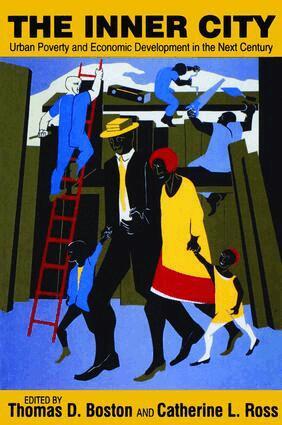
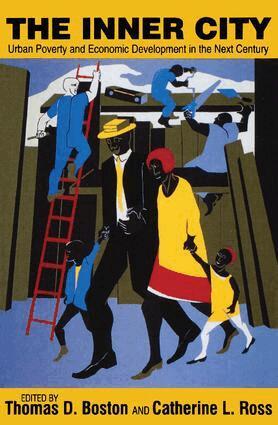
Michael Porter has argued that a sustainable economic base can be created in the inner city only if it has been created elsewhere: through private, for-profit, initiatives and investment based on economic self-interest and genuine competitive advantage-not through artificial inducements, charity, or government. Porter's ideas have prompted endorsement as well as criticism. More importantly, they have inspired a search for new solutions to inner city distress as well as a reassessment of current approaches. The Inner City defines a core debate in the United States over the future of a racially divided urban America. It is of inestimable importance to policy analysts, government officials, African American studies scholars, urban studies specialists, sociologists, and all those concerned with inner city revitalization.
2 088 kr
Skickas inom 10-15 vardagar
This major study of the father of modern sociology explores the intimate relationship between the events of Max Weber's personal history and the development of his thought. When it was first published in 1970, Paul Roazen described The Iron Cage as "an example of the history of ideas at its very best"; while Robert A. Nisbet said that "we learn more about Weber's life in this volume than from any other in the English language."Weber's life and work developed in reaction to the rigidities of familial and social structures in Imperial Germany. In his youth he was torn by irreconcilable tensions between the Bismarckian authoritarianism of his father and the ethical puritanism of his mother. These tensions led to a psychic crisis when, in his thirties, he expelled his father (who died soon thereafter) from his house. His reaction to the collapse of the European social order before and during World War I was no less personal and profound. It is the triumph of Professor Mitzman's approach that he convincingly demonstrates how the internalizing of these severe experiences led to Weber's pessimistic vision of the future as an "iron cage" and to such seminal ideas as the notion of charisma and the concept of the Protestant ethic and its connection with the spirit of capitalism. The author's thesis also serves as a vehicle for describing the social, political, and personal plight of the European bourgeois intellectual of Weber's generation.In synthesizing Weber's life and thought, Arthur Mitzman has expanded and refined our understanding of this central twentieth-century figure. As Lewis Coser writes in the preface, until now "there has been little attempt to bring together the work and the man, to show the ways in which Weber's cognitive intentions, his choice of problems, were linked with the details of his personal biography. Arthur Mitzman fills this gap brilliantly."
691 kr
Skickas inom 10-15 vardagar
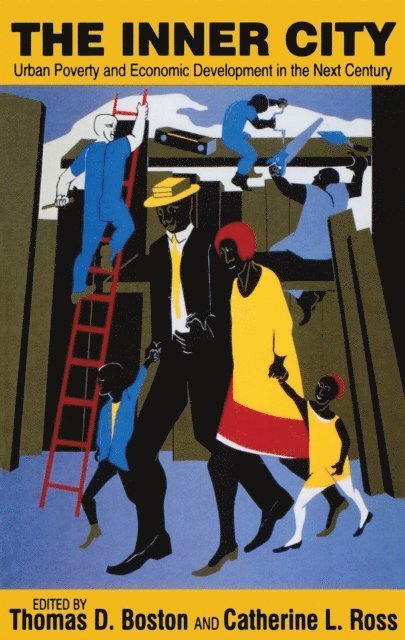
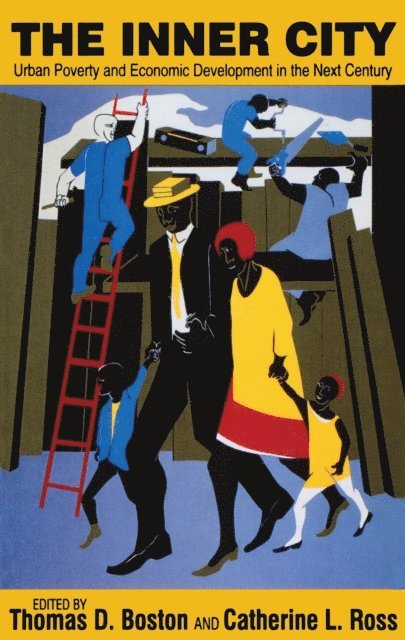
Michael Porter has argued that a sustainable economic base can be created in the inner city only if it has been created elsewhere: through private, for-profit, initiatives and investment based on economic self-interest and genuine competitive advantage-not through artificial inducements, charity, or government. Porter's ideas have prompted endorsement as well as criticism. More importantly, they have inspired a search for new solutions to inner city distress as well as a reassessment of current approaches. The Inner City defines a core debate in the United States over the future of a racially divided urban America. It is of inestimable importance to policy analysts, government officials, African American studies scholars, urban studies specialists, sociologists, and all those concerned with inner city revitalization.
369 kr
Skickas inom 7-10 vardagar
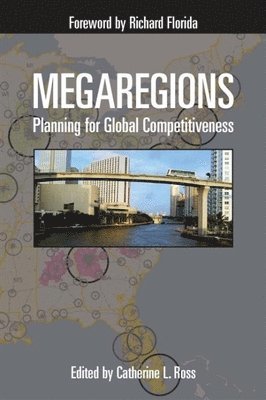
This title discusses planning for a future to respond to global challenges at the megaregional scale. The concept of 'the city' - as well as 'the state' and 'the nation state' - is passe, agree contributors to this insightful book. The new scale for considering economic strength and growth opportunities is 'the megaregion', a network of metropolitan centres and their surrounding areas that are spatially and functionally linked through environmental, economic, and infrastructure interactions. Recently a great deal of attention has been focused on the emergence of the European Union and on European spatial planning, which has boosted the region's competitiveness. "Mega-regions" applies these emerging concepts in an American context. It addresses critical questions for our future: what are the spatial implications of local, regional, national, and global trends within the context of sustainability, economic competitiveness, and social equity; how can we address housing, transportation, and infrastructure needs in growing megaregions; and, how can we develop and implement the policy changes necessary to make viable, livable megaregions.By the year 2050, megaregions will contain two-thirds of the U.S. population. Given the projected growth of the U.S. population and the accompanying geographic changes, this forward-looking book argues that U.S. planners and policymakers must examine and implement the megaregion as a new and appropriate framework. Contributors, all of whom are leaders in their academic and professional specialties, address the most critical issues confronting the U.S. over the next fifty years. At the same time, they examine ways in which the idea of megaregions might help address our concerns about equity, the economy, and the environment. Together, these essays define the theoretical, analytical, and operational underpinnings of a new structure that could respond to the anticipated upheavals in U.S. population and living patterns.