Catherine Rottenberg - Böcker
Visar alla böcker från författaren Catherine Rottenberg. Handla med fri frakt och snabb leverans.
4 produkter
4 produkter
398 kr
Skickas inom 5-8 vardagar
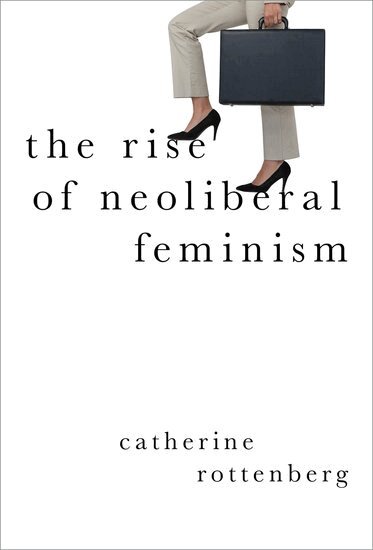
From Hillary Clinton to Ivanka Trump and from Emma Watson all the way to Beyoncé, more and more high-powered women are unabashedly identifying as feminists in the mainstream media. In the past few years feminism has indeed gained increasing visibility and even urgency. Yet, in her analysis of recent bestselling feminist manifestos, well-trafficked mommy blogs, and television series such as The Good Wife, Catherine Rottenberg reveals that a particular variant of feminism-which she calls neoliberal feminism-has come to dominate the cultural landscape, one that is not interested in a mass women's movement or struggles for social justice. Rather, this feminism has introduced the notion of a happy work-family balance into the popular imagination, while transforming balance into a feminist ideal. So-called "aspirational women" are now exhorted to focus on cultivating a felicitous equilibrium between their child-rearing responsibilities and their professional goals, and thus to abandon key goals that have historically informed feminism, including equal rights and liberation. Rottenberg maintains that because neoliberalism reduces everything to market calculations it actually needs feminism in order to "solve" thorny issues related to reproduction and care. She goes on to show how women of color and poor and immigrant women most often serve as the unacknowledged care-workers who enable professional women to strive toward balance, arguing that neoliberal feminism legitimates the exploitation of the vast majority of women while disarticulating any kind of structural critique. It is not surprising, then, that this new feminist discourse has increasingly dovetailedwith conservative forces. In Europe, gender parity has been used by Marine Le Pen and Geert Wilders to further racist, anti-immigrant agendas, while in the United States, women's rights has been invoked to justify interventions in countries with majority Muslim populations. And though campaigns such as the #MeToo and #TimesUp appear to be shifting the discussion, given our frightening neoliberal reality, these movements are currently insufficient. Rottenberg therefore concludes by raising urgent questions about how we can successfully reorient and reclaim feminism as a social justice movement.
203 kr
Skickas
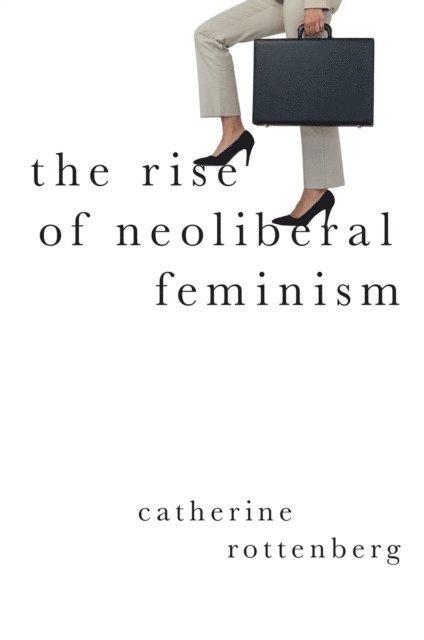
From Hillary Clinton to Ivanka Trump and from Emma Watson all the way to Beyoncé, more and more high-powered women are unabashedly identifying as feminists in the mainstream media. In the past few years feminism has indeed gained increasing visibility and even urgency. Yet, in her analysis of recent bestselling feminist manifestos, well-trafficked mommy blogs, and television series such as The Good Wife, Catherine Rottenberg reveals that a particular variant of feminism--which she calls neoliberal feminism--has come to dominate the cultural landscape, one that is not interested in a mass women's movement or struggles for social justice. Rather, this feminism has introduced the notion of a happy work-family balance into the popular imagination, while transforming balance into a feminist ideal. So-called "aspirational women" are now exhorted to focus on cultivating a felicitous equilibrium between their child-rearing responsibilities and their professional goals, and thus to abandon key goals that have historically informed feminism, including equal rights and liberation. Rottenberg maintains that because neoliberalism reduces everything to market calculations it actually needs feminism in order to "solve" thorny issues related to reproduction and care. She goes on to show how women of color and poor and immigrant women most often serve as the unacknowledged care-workers who enable professional women to strive toward balance, arguing that neoliberal feminism legitimates the exploitation of the vast majority of women while disarticulating any kind of structural critique. It is not surprising, then, that this new feminist discourse has increasingly dovetailed with conservative forces. In Europe, gender parity has been used by Marine Le Pen and Geert Wilders to further racist, anti-immigrant agendas, while in the United States, women's rights has been invoked to justify interventions in countries with majority Muslim populations. And though campaigns such as #MeToo and #TimesUp appear to be shifting the discussion, given our frightening neoliberal reality, these movements are currently insufficient. Rottenberg therefore concludes by raising urgent questions about how we can successfully reorient and reclaim feminism as a social justice movement.
1 215 kr
Tillfälligt slut
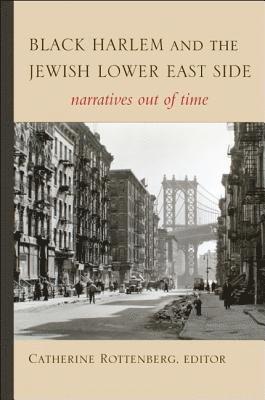
Comprehensive analysis of how Harlem and the Lower East Side have been depicted over the course of the twentieth century in African American and Jewish American literature.Harlem and the Lower East Side are two neighborhoods that evoke not only a rich if contested history, but also a particular "racial" narrative. Indeed, these spaces-one downtown and one uptown on Manhattan Island-have become almost synonymous with the Jewish American and the African American experience in the twentieth century. Chinatown and Little Italy have been replicated across the country, but there is only one Harlem and only one Lower East Side.This edited volume traces and compares the literary representation of these two iconic city spaces over the course of the twentieth century. Bringing together prominent as well emerging scholars, Black Harlem and the Jewish Lower East Side engages in spatially informed readings of twentieth-century Jewish American and African American literature. The book offers new approaches to Jewish American and African American literary criticism while providing the first truly comprehensive overview of how Black Harlem and the Jewish East Side have been represented-and how their representations have dovetailed as well as diverged-throughout the twentieth century in African American and Jewish American literature.
440 kr
Tillfälligt slut
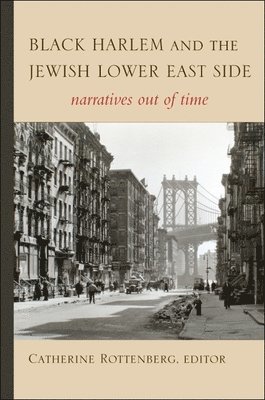
Comprehensive analysis of how Harlem and the Lower East Side have been depicted over the course of the twentieth century in African American and Jewish American literature.Harlem and the Lower East Side are two neighborhoods that evoke not only a rich if contested history, but also a particular "racial" narrative. Indeed, these spaces-one downtown and one uptown on Manhattan Island-have become almost synonymous with the Jewish American and the African American experience in the twentieth century. Chinatown and Little Italy have been replicated across the country, but there is only one Harlem and only one Lower East Side.This edited volume traces and compares the literary representation of these two iconic city spaces over the course of the twentieth century. Bringing together prominent as well emerging scholars, Black Harlem and the Jewish Lower East Side engages in spatially informed readings of twentieth-century Jewish American and African American literature. The book offers new approaches to Jewish American and African American literary criticism while providing the first truly comprehensive overview of how Black Harlem and the Jewish East Side have been represented-and how their representations have dovetailed as well as diverged-throughout the twentieth century in African American and Jewish American literature.