Cathy A. Frierson - Böcker
Visar alla böcker från författaren Cathy A. Frierson. Handla med fri frakt och snabb leverans.
4 produkter
4 produkter
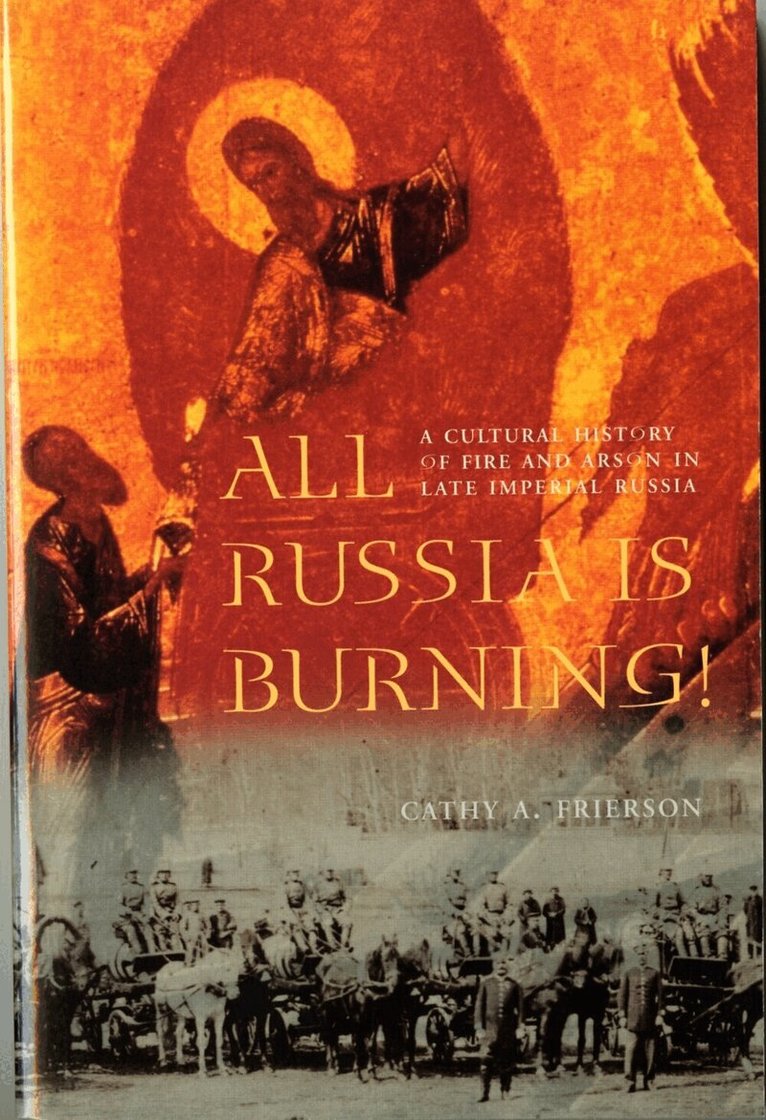
All Russia Is Burning!
A Cultural History of Fire and Arson in Late Imperial Russia
Häftad, Engelska, 2002
445 kr
Skickas inom 7-10 vardagar
Rural fires were an even more persistent scourge than famine in late imperial Russia, as Cathy Frierson shows in this first comprehensive study. Destroying almost three billion rubles’ worth of property in European Russia between 1860 and 1904, accidental and arson fires acted as a brake on Russia’s economic development while subjecting peasants to perennial shocks to their physical and emotional condition. The fire question captured the attention of educated, progressive Russians, who came to perceived it as a key obstacle to Russia’s becoming a modern society in the European model.Using sources ranging from literary representations and newspaper articles to statistical tables and court records, Frierson demonstrates the many meanings fire held for both peasants and the educated elite. To peasants, it was an essential source of light and warmth as well as a destructive force that regularly ignited their cramped villages of wooden, thatch-roofed huts. Absent the rule of law, they often used arson to gain justice or revenge, or to exert social control over those who would violate village norms. Frierson shows that the vast majority of arson cases in European Russia were not peasant-against-gentry acts of protest but peasant-against-peasant acts of "self-help" law or plain spite.Both the state and individual progressives set out to resolve the fire question and to educate, cajole, or coerce the peasantry into the modern world. Fire insurance, building codes, "scientific" village layouts, and volunteer firefighting brigades reduced the average number of buildings consumed in each blaze, but none of these measures succeeded in curbing the number of fires each year.More than anything else, this history of fire and arson in rural European Russia is a history of their cultural meanings in the late imperial campaign for modernity. Frierson shows the special associations of women with fire in rural life and in elite understanding of fire in the Russian countryside. Her study of the fire question demonstrates both peasant agency in fighting fire and educated Russians' hardening conviction that peasants stood in the way of Russia's advent into the company of prosperous, rational, civilized nations.
All Russia Is Burning!
A Cultural History of Fire and Arson in Late Imperial Russia
Inbunden, Engelska, 2015
1 739 kr
Skickas inom 3-6 vardagar
Rural fires were an even more persistent scourge than famine in late imperial Russia, as Cathy Frierson shows in this first comprehensive study. Destroying almost three billion rubles' worth of property in European Russia between 1860 and 1904, accidental and arson fires acted as a brake on Russia's economic development while subjecting peasants to perennial shocks to their physical and emotional condition. The fire question captured the attention of educated, progressive Russians, who came to perceived it as a key obstacle to Russia's becoming a modern society in the European model.Using sources ranging from literary representations and newspaper articles to statistical tables and court records, Frierson demonstrates the many meanings fire held for both peasants and the educated elite. To peasants, it was an essential source of light and warmth as well as a destructive force that regularly ignited their cramped villages of wooden, thatch-roofed huts. Absent the rule of law, they often used arson to gain justice or revenge, or to exert social control over those who would violate village norms. Frierson shows that the vast majority of arson cases in European Russia were not peasant-against-gentry acts of protest but peasant-against-peasant acts of "self-help" law or plain spite.Both the state and individual progressives set out to resolve the fire question and to educate, cajole, or coerce the peasantry into the modern world. Fire insurance, building codes, "scientific" village layouts, and volunteer firefighting brigades reduced the average number of buildings consumed in each blaze, but none of these measures succeeded in curbing the number of fires each year.More than anything else, this history of fire and arson in rural European Russia is a history of their cultural meanings in the late imperial campaign for modernity. Frierson shows the special associations of women with fire in rural life and in elite understanding of fire in the Russian countryside. Her study of the fire question demonstrates both peasant agency in fighting fire and educated Russians' hardening conviction that peasants stood in the way of Russia's advent into the company of prosperous, rational, civilized nations.
1 043 kr
Skickas inom 5-8 vardagar
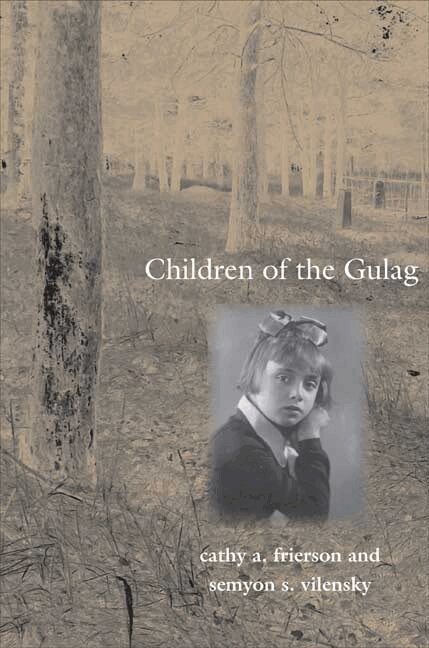
This groundbreaking book offers a comprehensive documentary history of children whose parents were identified as enemies of the Soviet regime from its inception through Joseph Stalin's death. When parents were arrested, executed, or sent to the Gulag, their children also suffered. Millions of children, labeled "socially dangerous," lost parents, homes, and siblings. Co-edited by Cathy A. Frierson, a senior American scholar, and Semyon S. Vilensky, Gulag survivor and compiler of the Russian documents, the book offers documentary and personal perspectives. The editors present top-secret documents in translation from the Russian state archives, memoirs, and interviews with child survivors. The editors' narrative reveals how such prolonged child victimization could occur, who knew about it, and who tried to intervene on the children’s behalf. The editors show how the emotions from childhood trauma persist into the twenty-first century, passing from victims to their children and grandchildren. Interviews with child survivors also display their resilient ability to fashion productive lives despite family destruction and stigma.
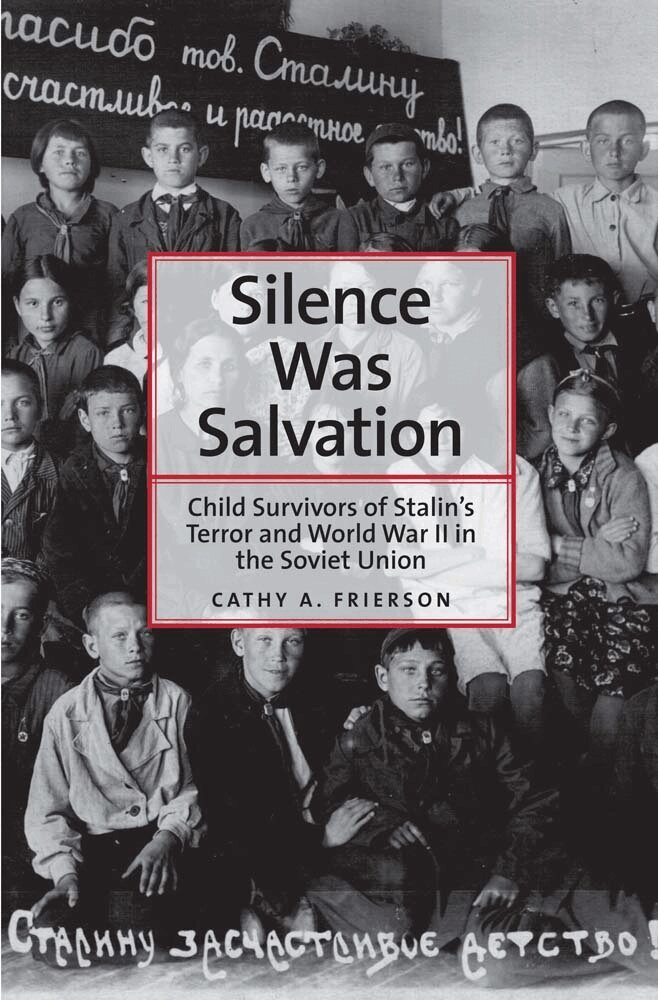
Silence Was Salvation
Child Survivors of Stalin’s Terror and World War II in the Soviet Union
Inbunden, Engelska, 2015
941 kr
Skickas inom 5-8 vardagar
Roughly ten million children were victims of political repression in the Soviet Union during the Stalinist era. As the sons and daughters of Soviet citizens considered by the regime to be dangerous to the political order, these children lost parents, siblings, homes, educational and work opportunities, and, in many cases, their physical health. From 2005 to 2007, Cathy A. Frierson conducted in-depth interviews with grown victims who survived the Terror of the 1930s–1950s, and the suffering and stigmatization that was forced upon them during World War II. In these powerful and moving life histories, the now aged offspring of peasants, workers, scientists, physicians, and political leaders recall the childhood traumas brought about by the arrest of their parents. They speak openly about coping with starvation, disease, forced labor, and anti-Semitism, and about living in exile in remote Soviet villages as children of “enemies of the people.” Finally, they discuss how their opinion of the Soviet government was influenced by their experiences and how it has evolved over time. The result is a unique oral history, illustrated with photographs and maps of each child’s multiple displacements, that will profoundly deepen the reader’s understanding of life in the U.S.S.R. under the rule of Joseph Stalin.