Cathy Shrank - Böcker
Visar alla böcker från författaren Cathy Shrank. Handla med fri frakt och snabb leverans.
8 produkter
8 produkter
2 546 kr
Skickas inom 7-10 vardagar
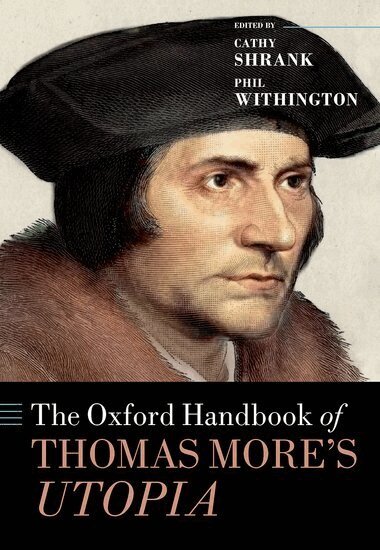
Thomas More's Utopia is one of the most iconic, translated, and influential texts of the European Renaissance. This Handbook of specially commissioned and original essays brings together for the first time three different ways of thinking about the book: in terms of its renaissance contexts, its vernacular translations, and its utopian legacies. It has been developed to allow readers to consider these different facets of Utopia in relation to each other and to provide fresh and original contributions to our understanding of the book's creation, vernacularization, and afterlives. In so doing, it provides an integrated overview of More's text, as well as new contributions to the range of scholarship and debates that Utopia continues to attract. An especially innovative feature is that it allows readers to follow Utopia across time and place, unpacking the often-revolutionary moments that encouraged its translation by new generations of writers as far afield as France, Russia, Japan, and China. The Handbook is organized in four sections: on different aspects of the origins and contexts of Utopia in the 1510s; on histories of its translation into different vernaculars in the early modern and modern eras; and on various manifestations of utopianism up to the present day. The Handbook's Introduction outlines the biography of More, the key strands of interpretation and criticism relating to the text, the structure of the Handbook, and some of its recurring themes and issues. An appendix provides an overview of Utopia for readers new to the text.
1 863 kr
Kommande
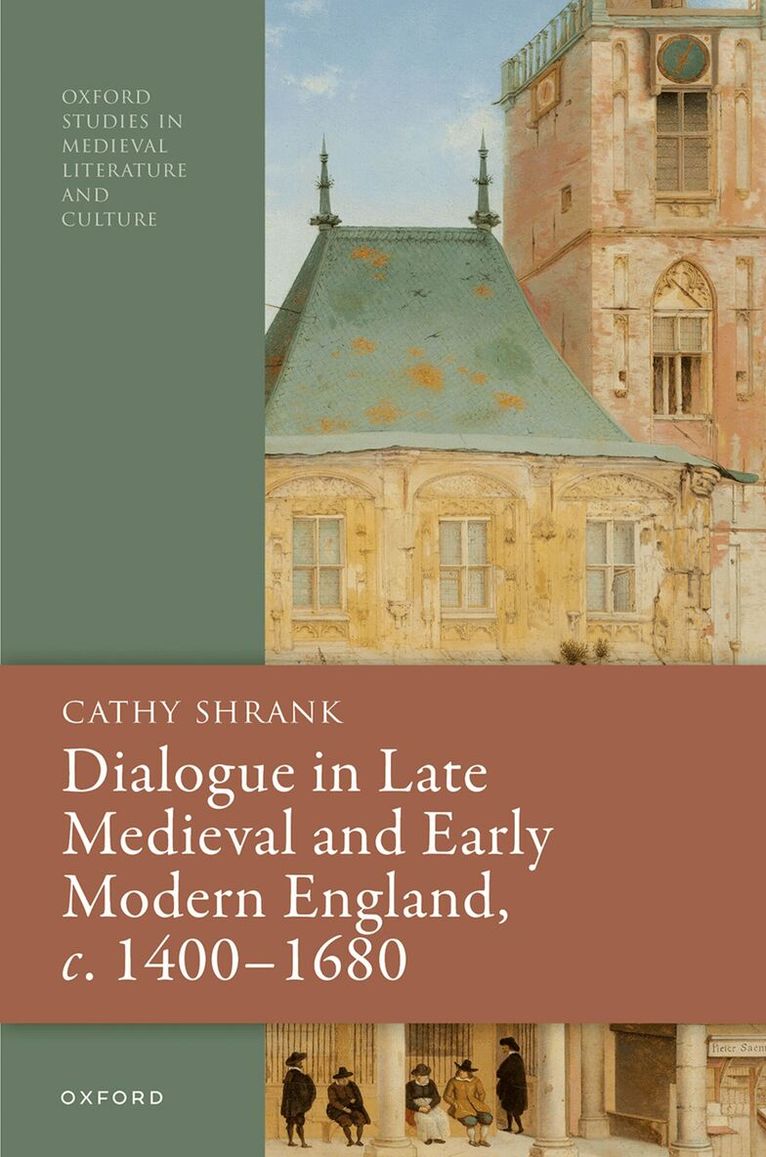
This book is the first major study of dialogue in England from the fifteenth to the late seventeenth century: a 'golden age' of dialogue, and a crucial period for its development. The spread of humanist education placed a premium on classical forms (including dialogue), whilst the discourse of commonweal had natural affinities with a literary model that evoked, at least on paper, a sense of polyvocality and participation. The arrival of the printing press and increasing levels of literacy also impacted on dialogue, altering expectations about the audience addressed and the forms dialogue took. The book thus traces significant evolutions, including the influence of culturally prominent texts, such as Baldassare Castiglione's Courtier and More's Utopia, and the ways in which Reformation and Counter-Reformation and the political turmoil of the mid-seventeenth century fuelled controversial and satirical modes of dialogue. Exploring a wide variety of dialogic types, from instructional manuals and civil conversations to political and religious dialogues, it places English dialogue within its wider European contexts, providing powerful testimony to the sustained influence of non-Anglophone material and the intertwining of European literary and intellectual traditions. It asks why writers of this period turned so recurrently to dialogue. What advantages does the form hold over monologic genres? How do writers exploit its formal conventions? What are the resonances and assumptions that cluster around the form and lend it cultural authority? How does dialogue interact and intersect with other genres (dream poetry, familiar letters, drama, prose fiction)? How do dialogic habits of thinking shape the literature and drama of this period? And, in an age in which silence was seen as a female virtue, what place do women have in this conversational form?An open access title available under the terms of a CC BY-NC-ND 4.0 licence.
2 368 kr
Skickas inom 7-10 vardagar
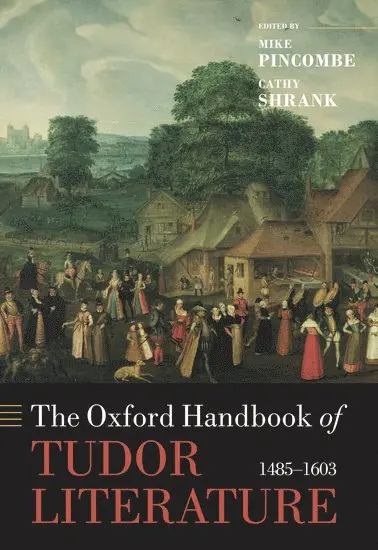
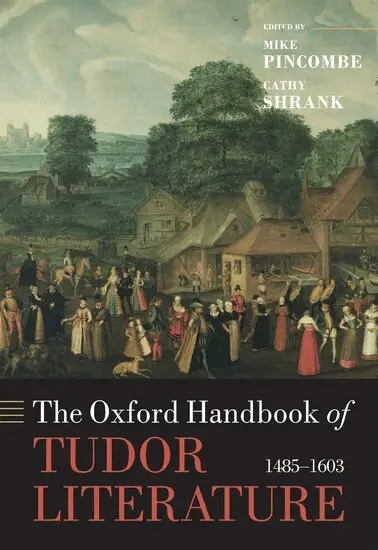
This is the first major collection of essays to look at the literature of the entire Tudor period, from the reign of Henry VII to death of Elizabeth I. It pays particularly attention to the years before 1580. Those decades saw, amongst other things, the establishment of print culture and growth of a reading public; the various phases of the English Reformation and process of political centralization that enabled and accompanied them; the increasing emulation of Continental and classical literatures under the influence of humanism; the self-conscious emergence of English as a literary language and determined creation of a native literary canon; the beginnings of English empire and the consolidation of a sense of nationhood. However, study of Tudor literature prior to 1580 is not only of worth as a context, or foundation, for an Elizabethan 'golden age'. As this much-needed volume will show, it is also of artistic, intellectual, and cultural merit in its own right. Written by experts from Europe, North America, and the United Kingdom, the forty-five chapters in The Oxford Handbook to Tudor Literature recover some of the distinctive voices of sixteenth-century writing, its energy, variety, and inventiveness. As well as essays on well-known writers, such as Philip Sidney or Thomas Wyatt, the volume contains the first extensive treatment in print of some of the Tudor era's most original voices.
909 kr
Skickas inom 5-8 vardagar
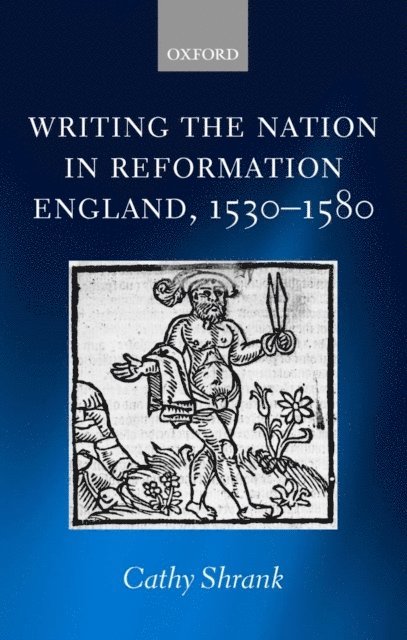
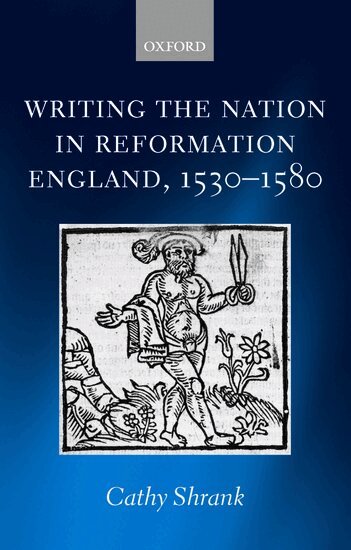
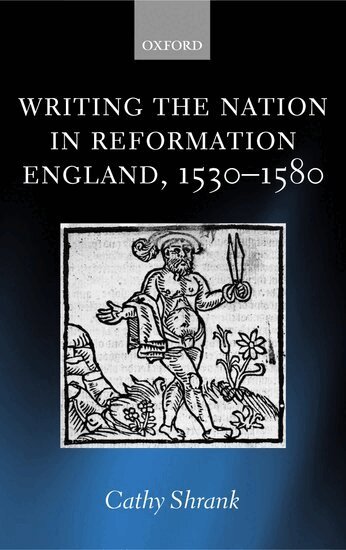
Writing the Nation in Reformation England offers a major re-evaluation of English writing between 1530 and 1580. Studying authors such as Andrew Borde, John Leland, William Thomas, Thomas Smith, and Thomas Wilson, Cathy Shrank highlights the significance of these decades to the formation of English nationhood and examines the impact of the break with Rome on the development of a national language, literary style, and canon. As well as demonstrating the close relationship between literary culture and English identities, it reinvests Tudor writers with a sense of agency. As authors, counsellors, and thinkers they were active citizens participating within, and helping to shape, a national community. In the process, their works were also used to project an image of themselves as authors, playing - and fitted to play - their part in the public domain. In showing how these writers engaged with, and promoted, concepts of national identity, the book makes a significant contribution to our broader understanding of the early modern period, demonstrating that nationhood was not a later Elizabethan phenomenon, and that the Reformation had an immediate impact on English culture, before England emerged as a 'Protestant' nation.
3 123 kr
Skickas inom 5-8 vardagar
Writing the Nation in Reformation England is a major re-evaluation of English writing between 1530 and 1580. Studying authors such as Andrew Borde, John Leland, William Thomas, Thomas Smith, and Thomas Wilson, Cathy Shrank highlights the significance of these decades to the formation of English nationhood and examines the impact of the break with Rome on the development of a national language, literary style, and canon. As well as demonstrating the close relationship between literary culture and English identities, it reinvests Tudor writers with a sense of agency. As authors, counsellors, and thinkers they were active citizens participating within, and helping to shape, a national community. In the process, their works were also used to project an image of themselves as authors, playing - and fitted to play - their part in the public domain. In showing how these writers engaged with, and promoted, concepts of national identity, the book makes a significant contribution to our broader understanding of the early modern period, demonstrating that nationhood was not a later Elizabethan phenomenon, and that the Reformation had an immediate impact of English culture, before England emerged as a 'Protestant' nation.
729 kr
Skickas inom 7-10 vardagar
This is the first major collection of essays to look at the literature of the entire Tudor period, from the reign of Henry VII to the death of Elizabeth I. It pays particular attention to the years before 1580. Those decades saw, amongst other things, the establishment of print culture and growth of a reading public; the various phases of the English Reformation and process of political centralization that enabled and accompanied them; the increasing emulation of Continental and classical literatures under the influence of humanism; the self-conscious emergence of English as a literary language and determined creation of a native literary canon; the beginnings of English empire and the consolidation of a sense of nationhood. However, study of Tudor literature prior to 1580 is not only of worth as a context, or foundation, for an Elizabethan 'golden age'. As this much-needed volume will show, it is also of artistic, intellectual, and cultural merit in its own right. Written by experts from Europe, North America, and the United Kingdom, the forty-five chapters in The Oxford Handbook of Tudor Literature recover some of the distinctive voices of sixteenth-century writing, its energy, variety, and inventiveness. As well as essays on well-known writers, such as Philip Sidney or Thomas Wyatt, the volume contains the first extensive treatment in print of some of the Tudor era's most original voices.
2 714 kr
Skickas inom 10-15 vardagar
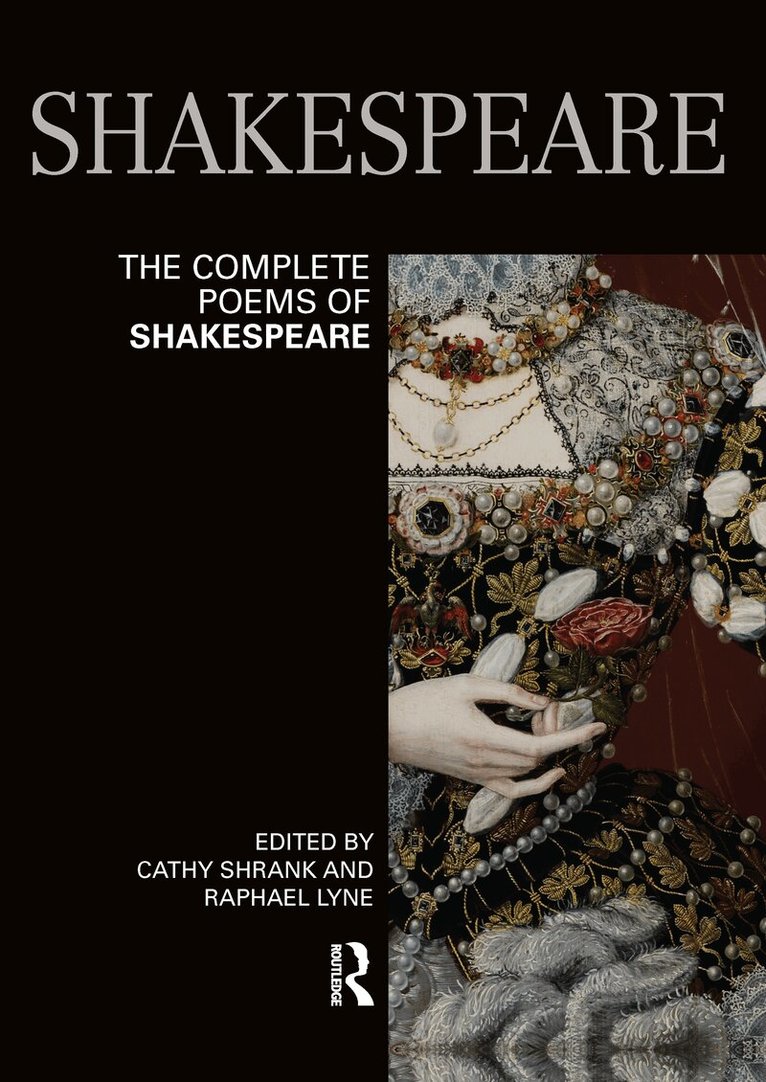
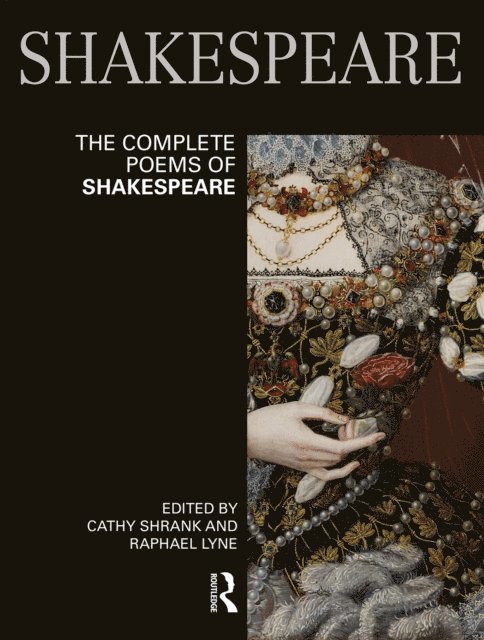
Although best known for his plays, William Shakespeare (1564 – 1616) was also a poet who achieved extraordinary depth and variety in only a few key works. This edition of his poetry provides detailed notes, commentary and appendices resulting in an academically thorough and equally accessible edition to Shakespeare’s poetry.The editors present his non-dramatic poems in the chronological order of their print publication: the narrative poems Venus and Adonis and The Rape of Lucrece; the metaphysical ‘Let the Bird of Loudest Lay’ (often known as The Phoenix and the Turtle); all 154 Sonnets and A Lover’s Complaint. In headnotes and extensive annotations to the texts, Cathy Shrank and Raphael Lyne elucidate historical contexts, publication histories, and above all the literary and linguistic features of poems whose subtleties always reward careful attention.Substantial appendices trace the sources for Shakespeare’s narrative poems and the controversial text The Passionate Pilgrim, as well as providing information about poems posthumously attributed to him, and the English sonnet sequence. Shrank and Lyne guide readers of all levels with a glossary of rhetorical terms, an index of the poems (titles and first lines), and an account of Shakespeare’s rhymes informed by scholarship on Elizabethan pronunciation. With all these scholarly resources supporting a newly edited, modern-spelling text, this edition combines accessibility with layers of rich information to inform the most sophisticated reading.
710 kr
Skickas inom 10-15 vardagar
Although best known for his plays, William Shakespeare (1564 – 1616) was also a poet who achieved extraordinary depth and variety in only a few key works. This edition of his poetry provides detailed notes, commentary and appendices resulting in an academically thorough and equally accessible edition to Shakespeare’s poetry.The editors present his non-dramatic poems in the chronological order of their print publication: the narrative poems Venus and Adonis and The Rape of Lucrece; the metaphysical ‘Let the Bird of Loudest Lay’ (often known as The Phoenix and the Turtle); all 154 Sonnets and A Lover’s Complaint. In headnotes and extensive annotations to the texts, Cathy Shrank and Raphael Lyne elucidate historical contexts, publication histories, and above all the literary and linguistic features of poems whose subtleties always reward careful attention.Substantial appendices trace the sources for Shakespeare’s narrative poems and the controversial text The Passionate Pilgrim, as well as providing information about poems posthumously attributed to him, and the English sonnet sequence. Shrank and Lyne guide readers of all levels with a glossary of rhetorical terms, an index of the poems (titles and first lines), and an account of Shakespeare’s rhymes informed by scholarship on Elizabethan pronunciation. With all these scholarly resources supporting a newly edited, modern-spelling text, this edition combines accessibility with layers of rich information to inform the most sophisticated reading.