Cedric De Leon - Böcker
Visar alla böcker från författaren Cedric De Leon. Handla med fri frakt och snabb leverans.
10 produkter
10 produkter
767 kr
Skickas inom 7-10 vardagar
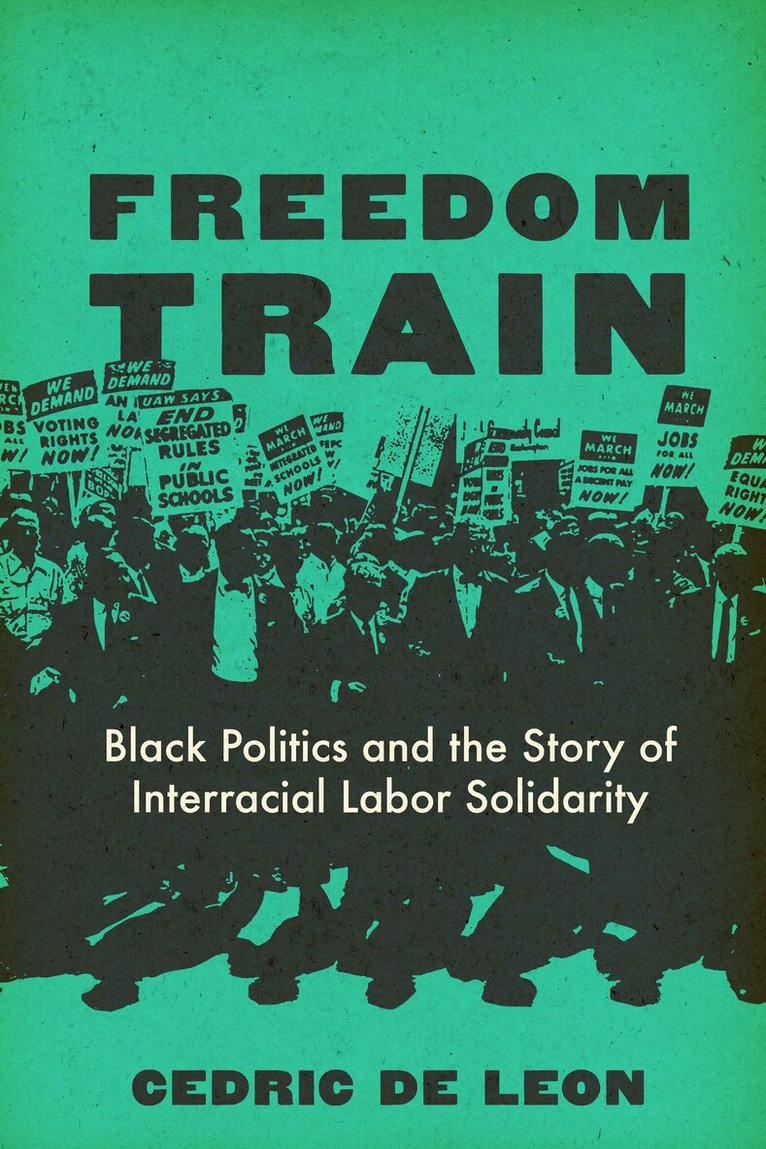
Revealing the central role of Black activists in spurring interracial solidarity in the US labor movement. Most accounts of interracial solidarity focus on white union activists. In Freedom Train, Cedric de Leon, a former organizer and elected leader in the US labor movement, argues that we can't comprehend the history of workers' triumphs in the United States without investigating the role of Black liberation. This book shows that, from the early twentieth century to the years immediately following the March on Washington and beyond, independent Black labor organizations have pushed the white labor movement toward a fierce and effective interracial solidarity. Drawing on the minutes, correspondence, and speeches of Black labor activists and organizations from 1917 to 1968, de Leon reveals that Black people have been the most ardent and consistent proponents of racial inclusion, leadership representation, and programs linking economic and racial justice. He also demonstrates how conflict and consensus among Black labor groups fueled the fight for solidarity, as different factions split and consolidated to form successive and sometimes competing Black labor organizations. Freedom Train centers the contributions of Black people to the multiracial unions we have today and demonstrates that internal conflict can be a source of strategic innovation and social movement success.
247 kr
Skickas inom 7-10 vardagar
Revealing the central role of Black activists in spurring interracial solidarity in the US labor movement. Most accounts of interracial solidarity focus on white union activists. In Freedom Train, Cedric de Leon, a former organizer and elected leader in the US labor movement, argues that we can't comprehend the history of workers' triumphs in the United States without investigating the role of Black liberation. This book shows that, from the early twentieth century to the years immediately following the March on Washington and beyond, independent Black labor organizations have pushed the white labor movement toward a fierce and effective interracial solidarity. Drawing on the minutes, correspondence, and speeches of Black labor activists and organizations from 1917 to 1968, de Leon reveals that Black people have been the most ardent and consistent proponents of racial inclusion, leadership representation, and programs linking economic and racial justice. He also demonstrates how conflict and consensus among Black labor groups fueled the fight for solidarity, as different factions split and consolidated to form successive and sometimes competing Black labor organizations. Freedom Train centers the contributions of Black people to the multiracial unions we have today and demonstrates that internal conflict can be a source of strategic innovation and social movement success.
650 kr
Skickas inom 7-10 vardagar
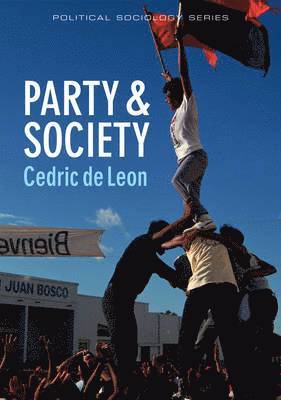
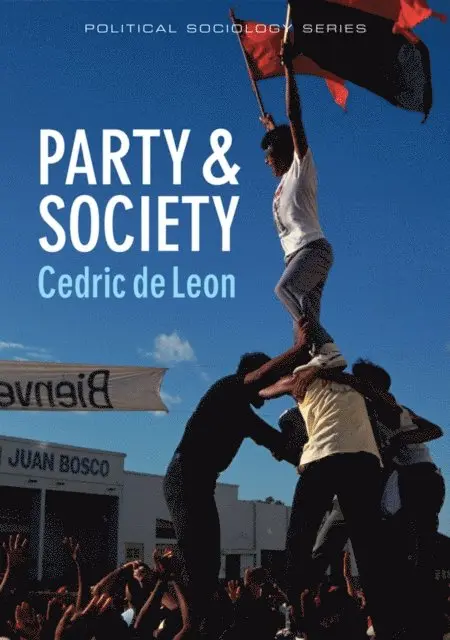
Political parties are central to democratic life, yet there is no standard definition to describe them or the role they occupy. "Voter-centered" theoretical approaches suggest that parties are the mere recipients of voter interests and loyalties. "Party-centered" approaches, by contrast, envision parties that polarize, democratize, or dominate society. In addition to offering isolated and competing notions of democratic politics, such approaches are also silent on the role of the state and are unable to account for organizations like Hamas, Hezbollah, and the African National Congress, which exhibit characteristics of parties, states, and social movements simultaneously.In this timely book, Cedric de Leon examines the ways in which social scientists and other observers have imagined the relationship between parties and society. He introduces and critiques the full range of approaches, using enlivening comparative examples from across the globe. Cutting through a vast body of research, de Leon offers a succinct and lively analysis that outlines the key thinking in the field, placing it in historical and contemporary context. The resulting book will appeal to students of sociology, political science, social psychology, and related fields.
219 kr
Skickas inom 7-10 vardagar
Political parties are central to democratic life, yet there is no standard definition to describe them or the role they occupy. "Voter-centered" theoretical approaches suggest that parties are the mere recipients of voter interests and loyalties. "Party-centered" approaches, by contrast, envision parties that polarize, democratize, or dominate society. In addition to offering isolated and competing notions of democratic politics, such approaches are also silent on the role of the state and are unable to account for organizations like Hamas, Hezbollah, and the African National Congress, which exhibit characteristics of parties, states, and social movements simultaneously.In this timely book, Cedric de Leon examines the ways in which social scientists and other observers have imagined the relationship between parties and society. He introduces and critiques the full range of approaches, using enlivening comparative examples from across the globe. Cutting through a vast body of research, de Leon offers a succinct and lively analysis that outlines the key thinking in the field, placing it in historical and contemporary context. The resulting book will appeal to students of sociology, political science, social psychology, and related fields.
1 574 kr
Skickas inom 10-15 vardagar
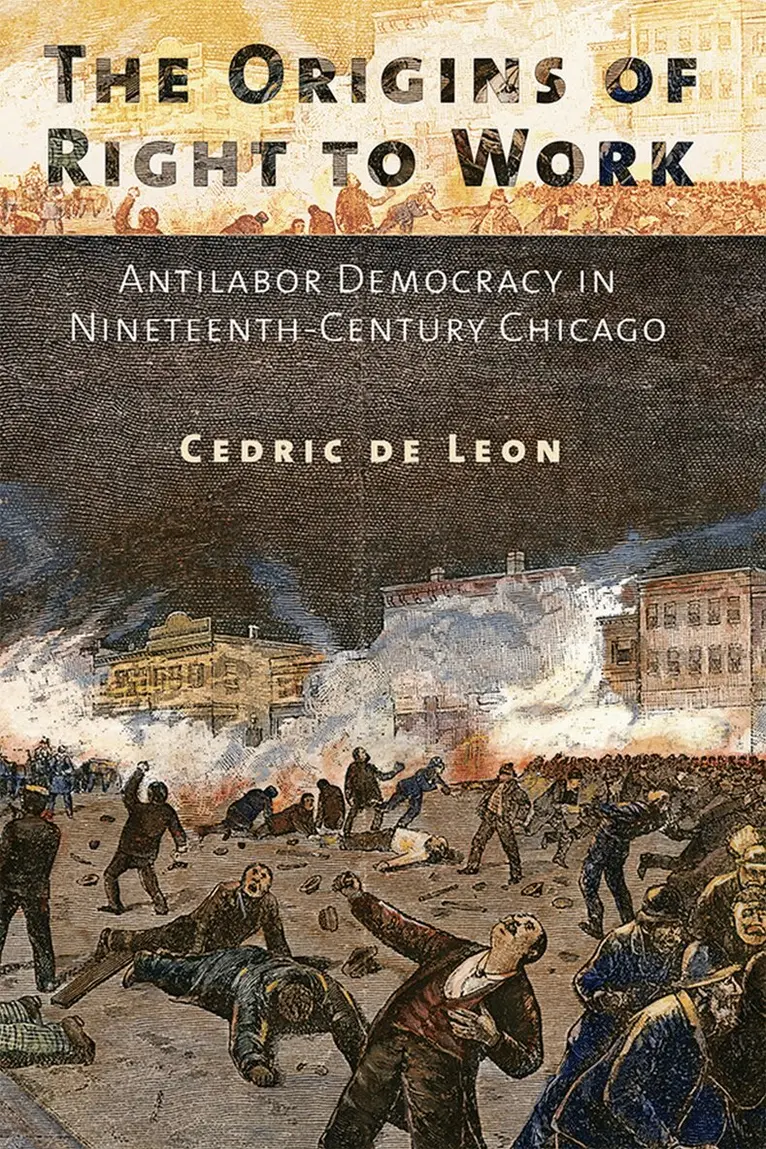
"Right to work" states weaken collective bargaining rights and limit the ability of unions to effectively advocate on behalf of workers. As more and more states consider enacting right-to-work laws, observers trace the contemporary attack on organized labor to the 1980s and the Reagan era. In The Origins of Right to Work, however, Cedric de Leon contends that this antagonism began a century earlier with the northern victory in the U.S. Civil War, when the political establishment revised the English common-law doctrine of conspiracy to equate collective bargaining with the enslavement of free white men. In doing so, de Leon connects past and present, raising critical questions that address pressing social issues. Drawing on the changing relationship between political parties and workers in nineteenth-century Chicago, de Leon concludes that if workers' collective rights are to be preserved in a global economy, workers must chart a course of political independence and overcome long-standing racial and ethnic divisions.
381 kr
Skickas inom 10-15 vardagar
"Right to work" states weaken collective bargaining rights and limit the ability of unions to effectively advocate on behalf of workers. As more and more states consider enacting right-to-work laws, observers trace the contemporary attack on organized labor to the 1980s and the Reagan era. In The Origins of Right to Work, however, Cedric de Leon contends that this antagonism began a century earlier with the northern victory in the U.S. Civil War, when the political establishment revised the English common-law doctrine of conspiracy to equate collective bargaining with the enslavement of free white men. In doing so, de Leon connects past and present, raising critical questions that address pressing social issues. Drawing on the changing relationship between political parties and workers in nineteenth-century Chicago, de Leon concludes that if workers' collective rights are to be preserved in a global economy, workers must chart a course of political independence and overcome long-standing racial and ethnic divisions.
1 173 kr
Skickas inom 7-10 vardagar
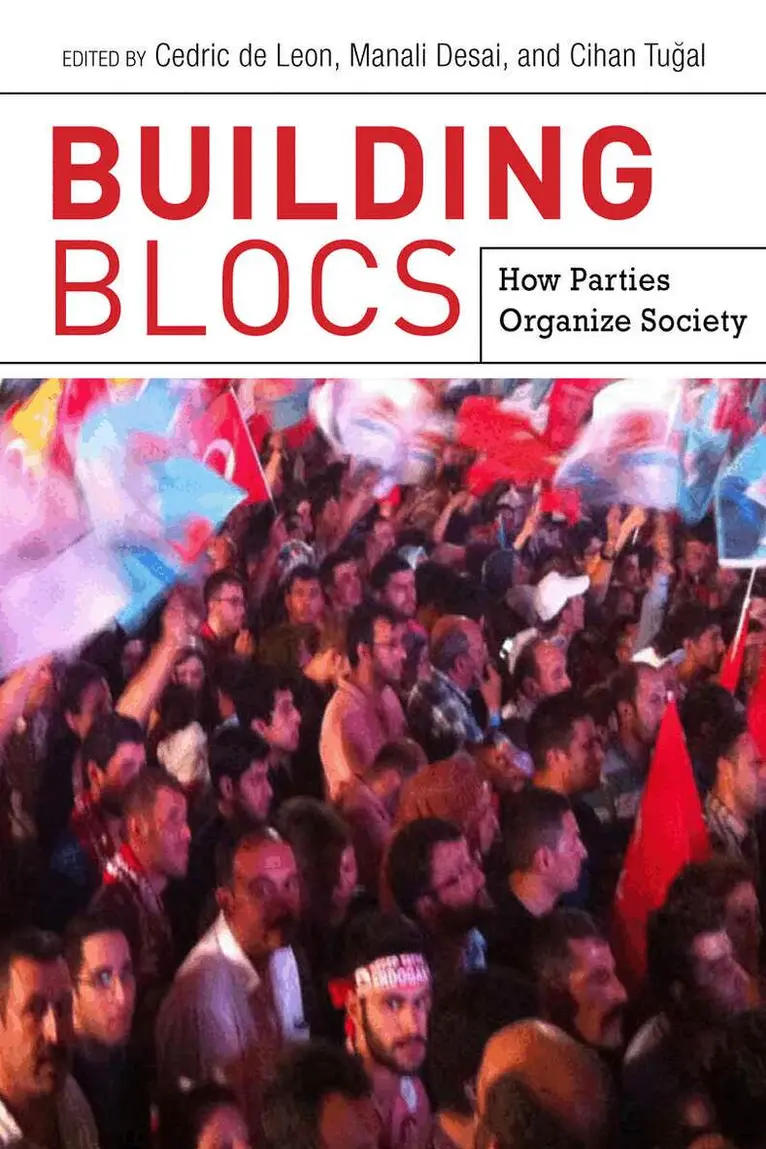
Do political parties merely represent divisions in society? Until now, scholars and other observers have generally agreed that they do. But Building Blocs argues the reverse: that some political parties in fact shape divisions as they struggle to remake the social order. Drawing on the contributors' expertise in Indonesia, India, the United States, Canada, Egypt, and Turkey, this volume demonstrates further that the success and failure of parties to politicize social differences has dramatic consequences for democratic change, economic development, and other large-scale transformations.This politicization of divisions, or "political articulation," is neither the product of a single charismatic leader nor the machinations of state power, but is instead a constant call and response between parties and would-be constituents. When articulation becomes inconsistent, as it has in Indonesia, partisan calls grow faint and the resulting vacuum creates the possibility for other forms of political expression. However, when political parties exercise their power of interpellation efficiently, they are able to silence certain interests such as those of secular constituents in Turkey. Building Blocs exposes political parties as the most influential agencies that structure social cleavages and invites further critical investigation of the related consequences.
285 kr
Skickas inom 7-10 vardagar
Do political parties merely represent divisions in society? Until now, scholars and other observers have generally agreed that they do. But Building Blocs argues the reverse: that some political parties in fact shape divisions as they struggle to remake the social order. Drawing on the contributors' expertise in Indonesia, India, the United States, Canada, Egypt, and Turkey, this volume demonstrates further that the success and failure of parties to politicize social differences has dramatic consequences for democratic change, economic development, and other large-scale transformations.This politicization of divisions, or "political articulation," is neither the product of a single charismatic leader nor the machinations of state power, but is instead a constant call and response between parties and would-be constituents. When articulation becomes inconsistent, as it has in Indonesia, partisan calls grow faint and the resulting vacuum creates the possibility for other forms of political expression. However, when political parties exercise their power of interpellation efficiently, they are able to silence certain interests such as those of secular constituents in Turkey. Building Blocs exposes political parties as the most influential agencies that structure social cleavages and invites further critical investigation of the related consequences.
2 894 kr
Skickas inom 7-10 vardagar
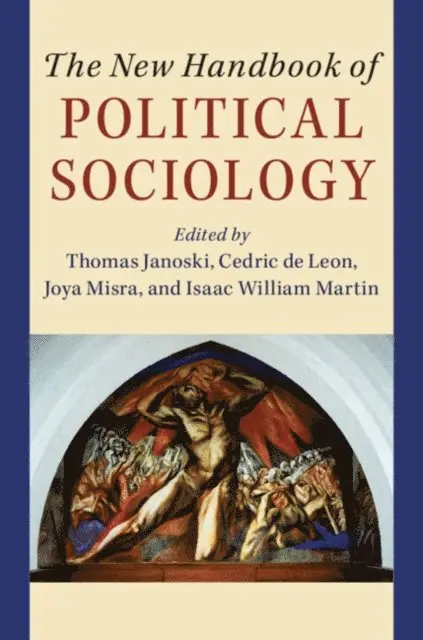
Political sociology is a large and expanding field with many new developments, and The New Handbook of Political Sociology supplies the knowledge necessary to keep up with this exciting field. Written by a distinguished group of leading scholars in sociology, this volume provides a survey of this vibrant and growing field in the new millennium. The Handbook presents the field in six parts: theories of political sociology, the information and knowledge explosion, the state and political parties, civil society and citizenship, the varieties of state policies, and globalization and how it affects politics. Covering all subareas of the field with both theoretical orientations and empirical studies, it directly connects scholars with current research in the field. A total reconceptualization of the first edition, the new handbook features nine additional chapters and highlights the impact of the media and big data.
266 kr
Skickas inom 7-10 vardagar
A timely analysis of the power and limits of political parties—and the lessons of the Civil War and the New Deal in the Age of Trump.American voters have long been familiar with the phenomenon of the presidential frontrunner. In 2008, it was Hillary Clinton. In 1844, it was Martin Van Buren. And in neither election did the prominent Democrat win the party's nomination. Insurgent candidates went on to win the nomination and the presidency, plunging the two-party system into disarray over the years that followed. In this book, Cedric de Leon analyzes two pivotal crises in the American two-party system: the first resulting in the demise of the Whig party and secession of eleven southern states in 1861, and the present crisis splintering the Democratic and Republican parties and leading to the election of Donald Trump. Recasting these stories through the actions of political parties, de Leon draws unsettling parallels in the political maneuvering that ultimately causes once-dominant political parties to lose the people's consent to rule. Crisis! takes us beyond the common explanations of social determinants to illuminate how political parties actively shape national stability and breakdown. The secession crisis and the election of Donald Trump suggest that politicians and voters abandon the political establishment not only because people are suffering, but also because the party system itself is unable to absorb an existential challenge to its power. Just as the U.S. Civil War meant the difference between the survival of a slaveholding republic and the birth of liberal democracy, what political elites and civil society organizations do today can mean the difference between fascism and democracy.