Celia Applegate - Böcker
Visar alla böcker från författaren Celia Applegate. Handla med fri frakt och snabb leverans.
8 produkter
8 produkter
306 kr
Skickas inom 7-10 vardagar
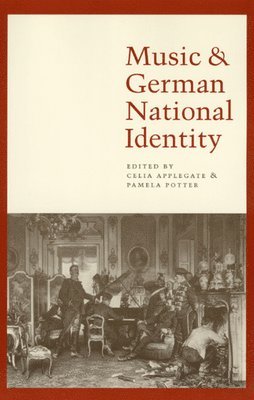
Is it merely a coincidence that the three "Bs" of classical music - Bach, Beethoven, Brahms - are all German composers? Why do concert halls all over the world feature mostly the works of German and Austrian composers as their standard repertoire? Over the past three centuries, supporters of German music ranging from music scholars to politicians have nurtured the notion that the German-speaking world possesses a peculiar strength in the cultivation of music. This book explores the questions of how music came to be associated with German identity, when and how Germans came to be regarded as the "people of music," and how music came to be designated as "the most German art." Drawing on the expertise of leading scholars in German history, musicology, and German literature, the essays assembled here examine philosophy, literature, politics, and social currents, as well as the creation and performance of folk music, art music, church music, jazz, and pop to explore the ways in which music has continued to play a central role in the German national imagination and in shaping German identity.
554 kr
Skickas inom 10-15 vardagar
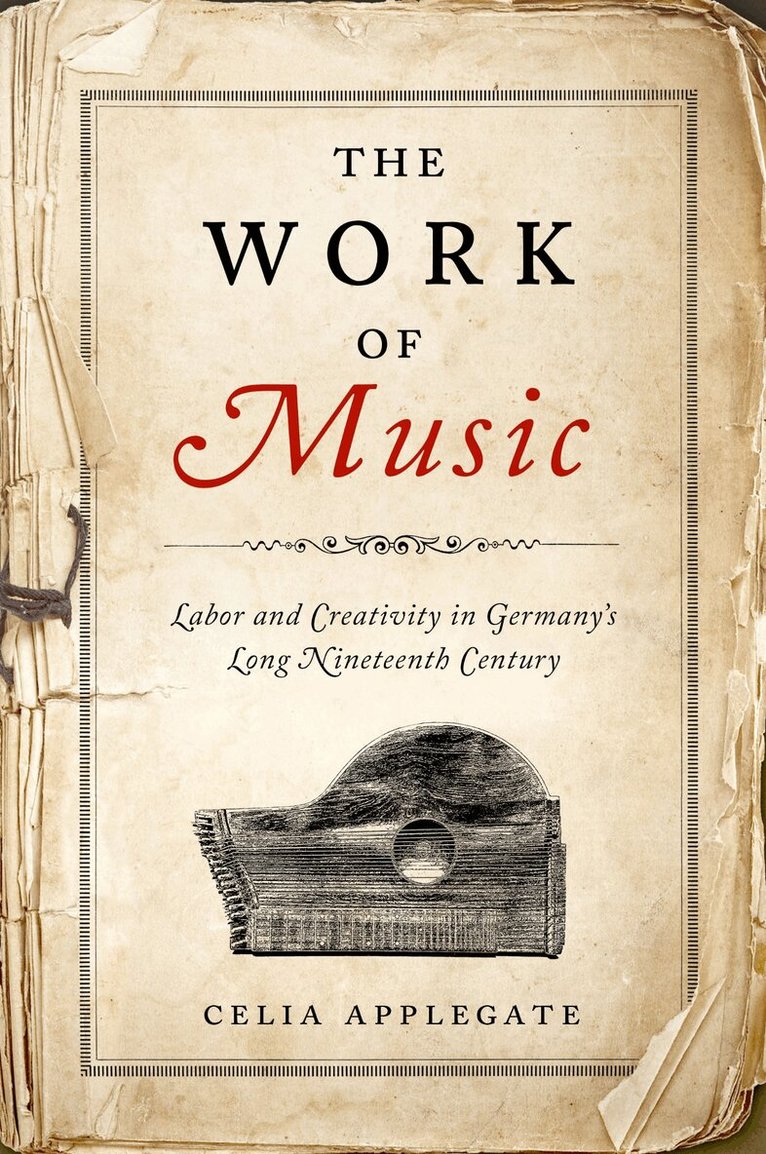
In The Work of Music, Celia Applegate examines the cultural history of Austro-German music through the lens of labor from the 1648 Peace of Westphalia to the Third Reich. She explores the working world of music and musicians, the various jobs they performed, the work music did in society, the observations and commentaries of contemporaries on the shape and function of musical life, and the work of organizing music making, both amateur and professional. At a time when ideas of absolute music and music-as-leisure were both on the rise, writing about music tended to obscure these practical matters. Here, Applegate reflects on how an intensely musical society organized and understood the ubiquitous activity that underpinned it.
684 kr
Skickas inom 3-6 vardagar
At the center of this pioneering work in modern European history is the German word Heimat—the homeland, the local place. Translations barely penetrate the meaning of the word, which has provided the emotional and ideological common ground for a variety of associations and individuals devoted to the cause of local preservation. Celia Applegate examines at both the national and regional levels the cultural meaning of Heimat and why it may be pivotal to the troubled and very timely question of German identity.The ideas and activities clustered around Heimat shed new light particularly on problems of modernization. Instead of viewing the Germans as a dangerously anti-modern people, Applegate argues that they used the cultivation of Heimat to ground an abstract nationalism in their attachment to familiar places and to reconcile the modern industrial and urban world with the rural landscapes and customs they admired. Primarily a characteristic of the middle classes, love of Heimat constituted an alternative vision of German unity to the familiar aggressive, militaristic one. The Heimat vision of Germany emphasized cultural diversity and defined German identity by its internal members rather than its external enemies.Applegate asks that we re-examine the continuities of German history from the perspective of the local places that made up Germany, rather than from that of prominent intellectuals or national policymakers. The local patriotism of Heimat activists emerges as an element of German culture that persisted across the great divides of 1918, 1933, and 1945. She also suggests that this attachment to a particular place is a feature of Europeans in general and is deserving of further attention.This title is part of UC Press's Voices Revived program, which commemorates University of California Press’s mission to seek out and cultivate the brightest minds and give them voice, reach, and impact. Drawing on a backlist dating to 1893, Voices Revived makes high-quality, peer-reviewed scholarship accessible once again using print-on-demand technology. This title was originally published in 1990.
774 kr
Skickas inom 7-10 vardagar
At the center of this pioneering work in modern European history is the German word Heimat—the homeland, the local place. Translations barely penetrate the meaning of the word, which has provided the emotional and ideological common ground for a variety of associations and individuals devoted to the cause of local preservation. Celia Applegate examines at both the national and regional levels the cultural meaning of Heimat and why it may be pivotal to the troubled and very timely question of German identity.The ideas and activities clustered around Heimat shed new light particularly on problems of modernization. Instead of viewing the Germans as a dangerously anti-modern people, Applegate argues that they used the cultivation of Heimat to ground an abstract nationalism in their attachment to familiar places and to reconcile the modern industrial and urban world with the rural landscapes and customs they admired. Primarily a characteristic of the middle classes, love of Heimat constituted an alternative vision of German unity to the familiar aggressive, militaristic one. The Heimat vision of Germany emphasized cultural diversity and defined German identity by its internal members rather than its external enemies.Applegate asks that we re-examine the continuities of German history from the perspective of the local places that made up Germany, rather than from that of prominent intellectuals or national policymakers. The local patriotism of Heimat activists emerges as an element of German culture that persisted across the great divides of 1918, 1933, and 1945. She also suggests that this attachment to a particular place is a feature of Europeans in general and is deserving of further attention.This title is part of UC Press's Voices Revived program, which commemorates University of California Press’s mission to seek out and cultivate the brightest minds and give them voice, reach, and impact. Drawing on a backlist dating to 1893, Voices Revived makes high-quality, peer-reviewed scholarship accessible once again using print-on-demand technology. This title was originally published in 1990.
Bach in Berlin
Nation and Culture in Mendelssohn's Revival of the "St. Matthew Passion"
Inbunden, Engelska, 2005
554 kr
Skickas inom 10-15 vardagar
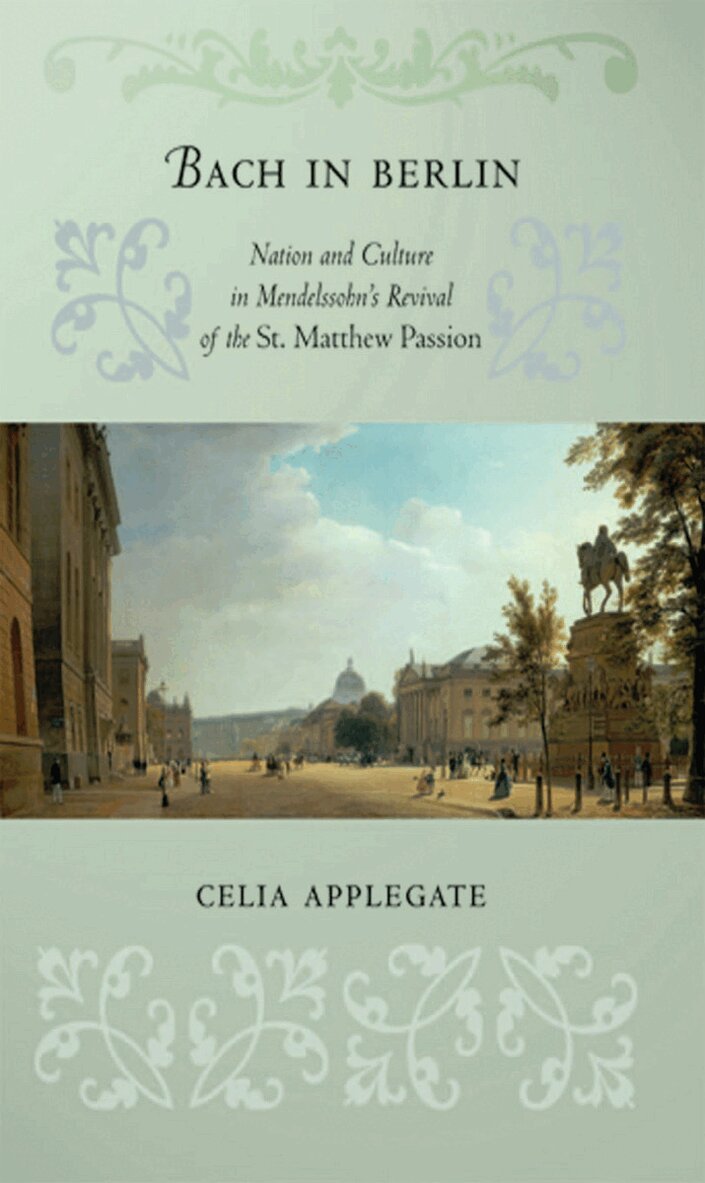
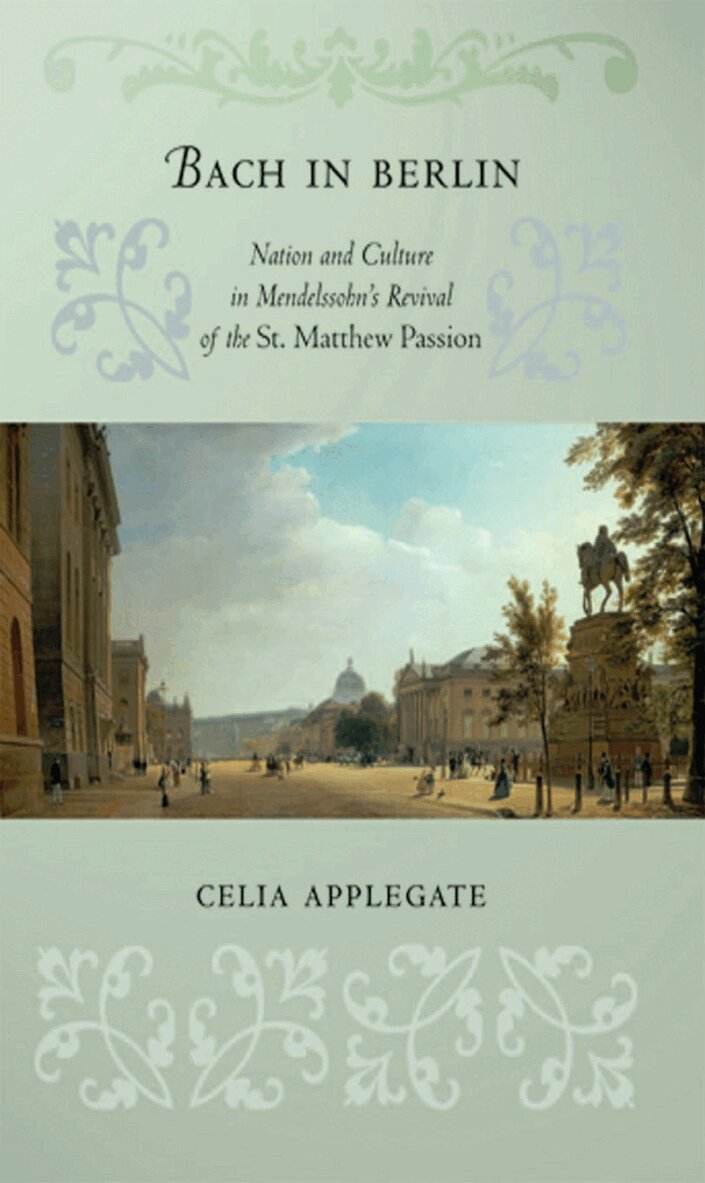
Bach's St. Matthew Passion is universally acknowledged to be one of the world's supreme musical masterpieces, yet in the years after Bach's death it was forgotten by all but a small number of his pupils and admirers. The public rediscovered it in 1829, when Felix Mendelssohn conducted the work before a glittering audience of Berlin artists and intellectuals, Prussian royals, and civic notables. The concert soon became the stuff of legend, sparking a revival of interest in and performance of Bach that has continued to this day. Mendelssohn's performance gave rise to the notion that recovering and performing Bach's music was somehow "national work." In 1865 Wagner would claim that Bach embodied "the history of the German spirit's inmost life." That the man most responsible for the revival of a masterwork of German Protestant culture was himself a converted Jew struck contemporaries as less remarkable than it does us today—a statement that embraces both the great achievements and the disasters of 150 years of German history. In this book, Celia Applegate asks why this particular performance crystallized the hitherto inchoate notion that music was central to Germans' collective identity. She begins with a wonderfully readable reconstruction of the performance itself and then moves back in time to pull apart the various cultural strands that would come together that afternoon in the Singakademie. The author investigates the role played by intellectuals, journalists, and amateur musicians (she is one herself) in developing the notion that Germans were "the people of music." Applegate assesses the impact on music's cultural place of the renewal of German Protestantism, historicism, the mania for collecting and restoring, and romanticism. In her conclusion, she looks at the subsequent careers of her protagonists and the lasting reverberations of the 1829 performance itself.
Bach in Berlin
Nation and Culture in Mendelssohn's Revival of the "St. Matthew Passion"
Häftad, Engelska, 2014
335 kr
Skickas inom 10-15 vardagar
Bach's St. Matthew Passion is universally acknowledged to be one of the world's supreme musical masterpieces, yet in the years after Bach's death it was forgotten by all but a small number of his pupils and admirers. The public rediscovered it in 1829, when Felix Mendelssohn conducted the work before a glittering audience of Berlin artists and intellectuals, Prussian royals, and civic notables. The concert soon became the stuff of legend, sparking a revival of interest in and performance of Bach that has continued to this day. Mendelssohn's performance gave rise to the notion that recovering and performing Bach's music was somehow "national work." In 1865 Wagner would claim that Bach embodied "the history of the German spirit's inmost life." That the man most responsible for the revival of a masterwork of German Protestant culture was himself a converted Jew struck contemporaries as less remarkable than it does us today—a statement that embraces both the great achievements and the disasters of 150 years of German history. In this book, Celia Applegate asks why this particular performance crystallized the hitherto inchoate notion that music was central to Germans' collective identity. She begins with a wonderfully readable reconstruction of the performance itself and then moves back in time to pull apart the various cultural strands that would come together that afternoon in the Singakademie. The author investigates the role played by intellectuals, journalists, and amateur musicians (she is one herself) in developing the notion that Germans were "the people of music." Applegate assesses the impact on music's cultural place of the renewal of German Protestantism, historicism, the mania for collecting and restoring, and romanticism. In her conclusion, she looks at the subsequent careers of her protagonists and the lasting reverberations of the 1829 performance itself.
923 kr
Skickas inom 7-10 vardagar
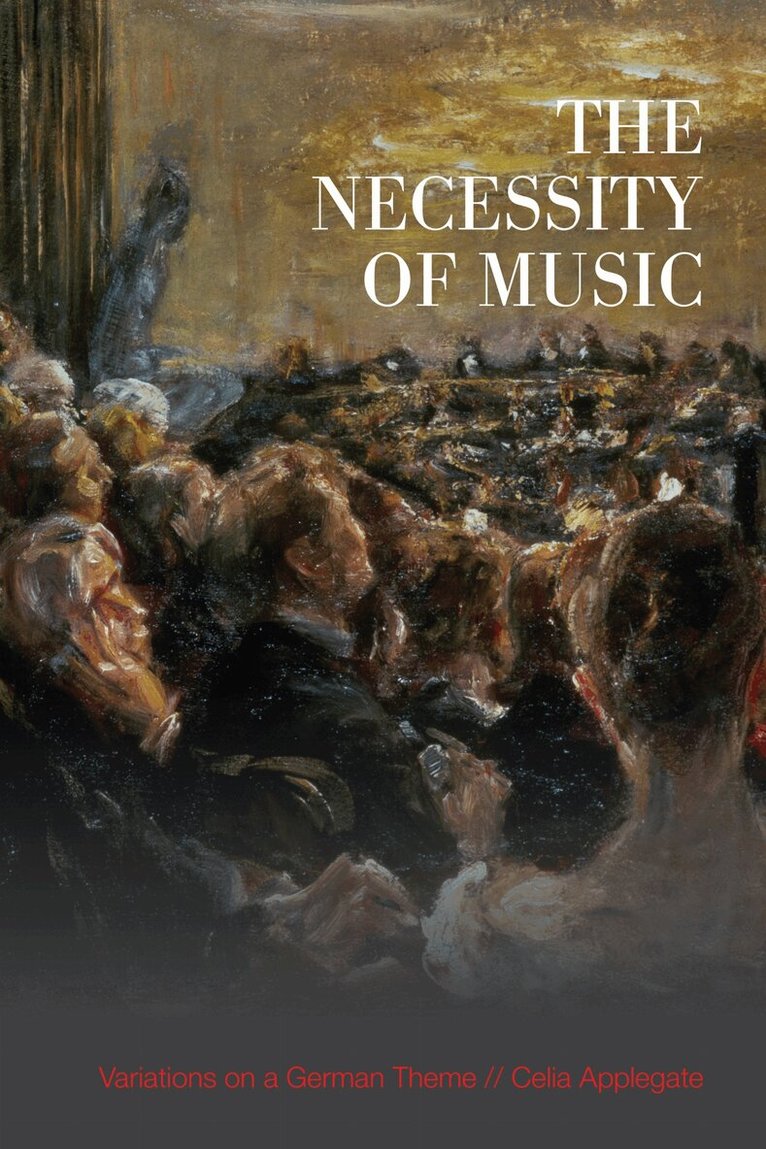
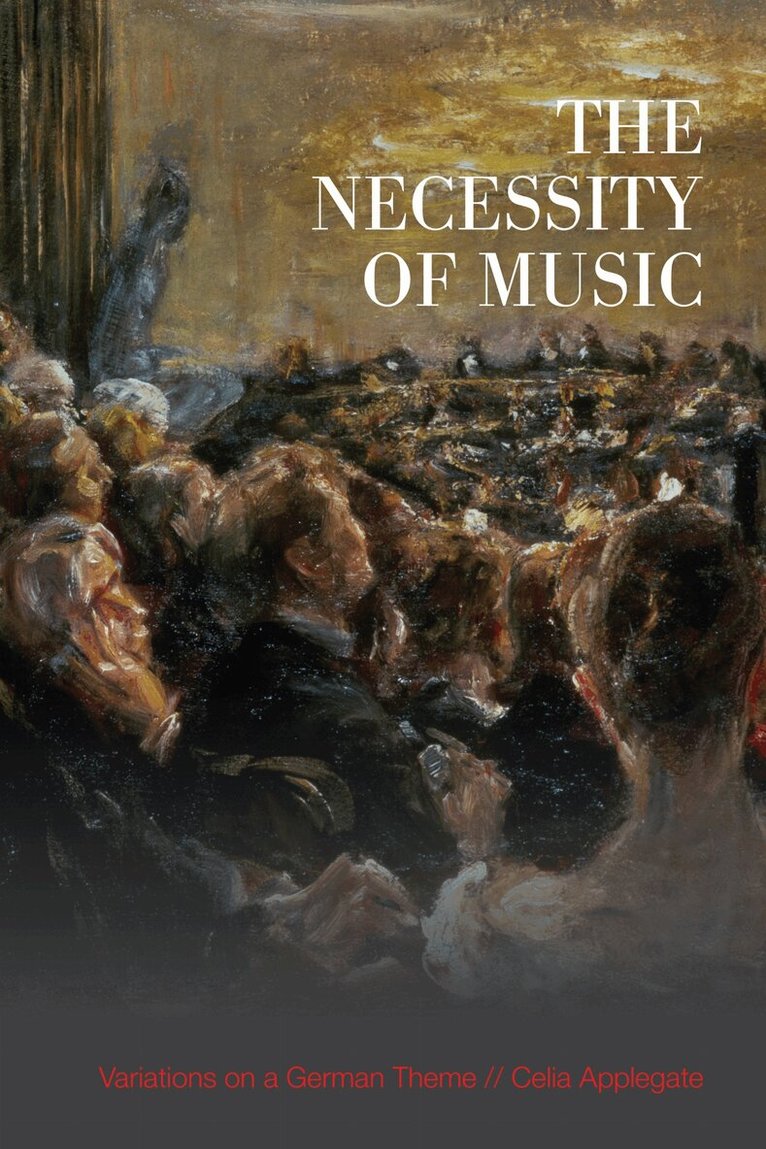
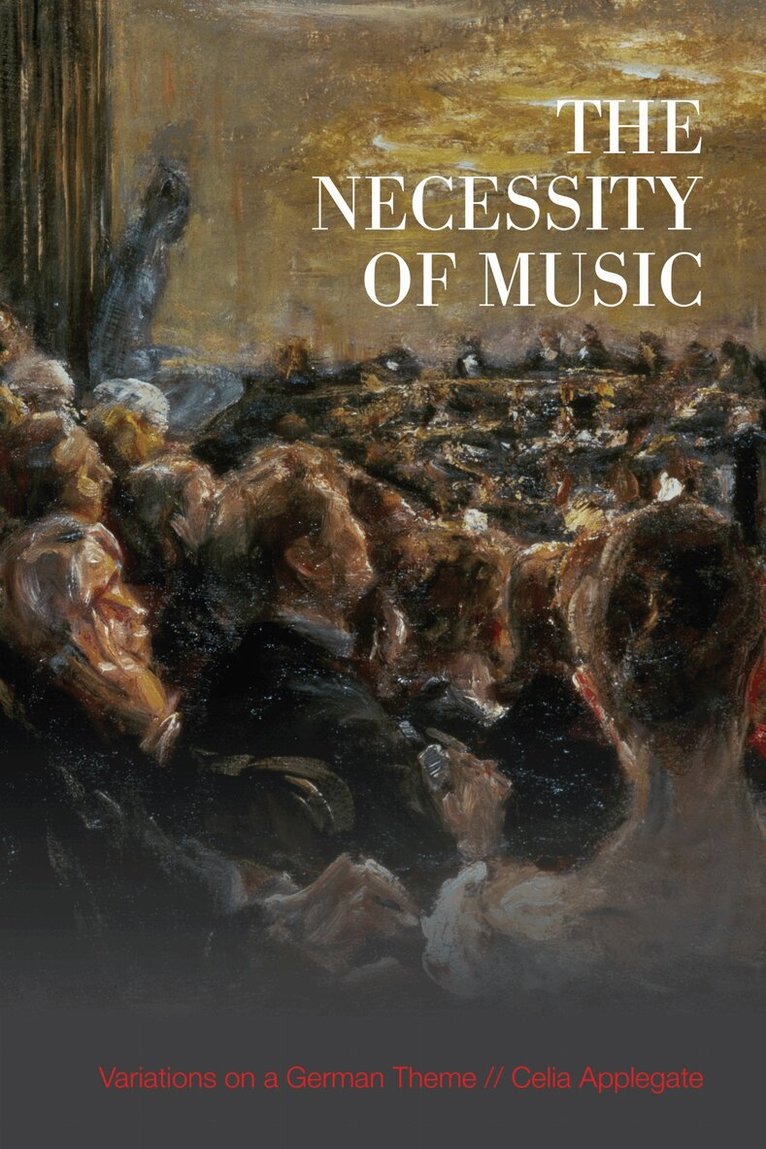
In The Necessity of Music, Celia Applegate explores the many ways that Germans thought about and made music from the eighteenth- to twentieth-centuries. Rather than focus on familiar stories of composers and their work Applegate illuminates the myriad ways in which music is integral to German social life. Musical life reflected the polycentric nature of German social and political life, even while it provided many opportunities to experience what was common among Germans. Musical activities also allowed Germans, whether professional musicians, dedicated amateurs, or simply listeners, to participate in European culture. Applegate’s original and fascinating analysis of Mendelssohn, Schumann, Brahms, Wagner, and military music enables the reader to understand music through the experiences of listeners, performers, and institutions. The Necessity of Music demonstrates that playing, experiencing, and interpreting music was a powerful factor that shaped German collective life.
444 kr
Skickas inom 10-15 vardagar
In The Necessity of Music, Celia Applegate explores the many ways that Germans thought about and made music from the eighteenth- to twentieth-centuries. Rather than focus on familiar stories of composers and their work Applegate illuminates the myriad ways in which music is integral to German social life. Musical life reflected the polycentric nature of German social and political life, even while it provided many opportunities to experience what was common among Germans. Musical activities also allowed Germans, whether professional musicians, dedicated amateurs, or simply listeners, to participate in European culture. Applegate’s original and fascinating analysis of Mendelssohn, Schumann, Brahms, Wagner, and military music enables the reader to understand music through the experiences of listeners, performers, and institutions. The Necessity of Music demonstrates that playing, experiencing, and interpreting music was a powerful factor that shaped German collective life.