Celia Oyler - Böcker
Visar alla böcker från författaren Celia Oyler. Handla med fri frakt och snabb leverans.
6 produkter
6 produkter
2 224 kr
Skickas inom 10-15 vardagar
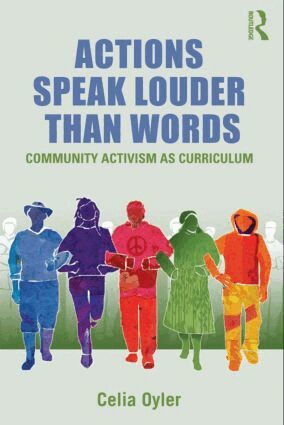
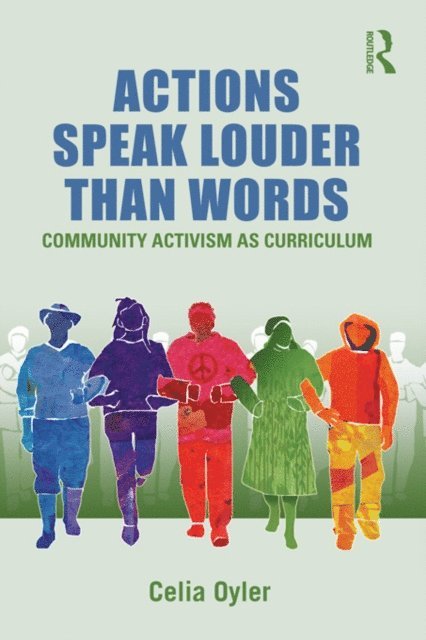
How do educators engage students in community action projects without telling them what to think, how to think, or what to do? Is it possible to integrate social justice organizing into the curriculum without imposing one’s political views on students? In Actions Speak Louder than Words, longtime activist and teacher educator Celia Oyler delves into such questions through firsthand accounts of social action projects. By moving beyond charity work or volunteerism, she shows how community activism projects offer fertile ground for practicing democratic engagement as part of classroom work.Actions Speak Louder than Words is a systematic, qualitative study offering in-depth and detailed portraits of teachers who design social action projects as part of the regular classroom curriculum. Each case forms a chapter organized as a narrative that includes excerpts from classroom dialogues, and interviews with students, teachers, and parents describing their social action projects with sufficient detail to give educators guidance for designing such projects for their own classrooms. The final chapter examines power, pedagogy, and learning outcomes across the cases, providing specific guidance to educators wishing to take up such projects and offering instructional and procedural advice as well as cautions. A fresh new example of taking up the challenge to teach toward equity and social justice, Actions Speak Louder than Words is an invaluable resource for educators who are passionate about the possibility of integrating activism and advocacy into curriculum as a means to engage in strong democracy.
705 kr
Skickas inom 10-15 vardagar
How do educators engage students in community action projects without telling them what to think, how to think, or what to do? Is it possible to integrate social justice organizing into the curriculum without imposing one’s political views on students? In Actions Speak Louder than Words, longtime activist and teacher educator Celia Oyler delves into such questions through firsthand accounts of social action projects. By moving beyond charity work or volunteerism, she shows how community activism projects offer fertile ground for practicing democratic engagement as part of classroom work.Actions Speak Louder than Words is a systematic, qualitative study offering in-depth and detailed portraits of teachers who design social action projects as part of the regular classroom curriculum. Each case forms a chapter organized as a narrative that includes excerpts from classroom dialogues, and interviews with students, teachers, and parents describing their social action projects with sufficient detail to give educators guidance for designing such projects for their own classrooms. The final chapter examines power, pedagogy, and learning outcomes across the cases, providing specific guidance to educators wishing to take up such projects and offering instructional and procedural advice as well as cautions. A fresh new example of taking up the challenge to teach toward equity and social justice, Actions Speak Louder than Words is an invaluable resource for educators who are passionate about the possibility of integrating activism and advocacy into curriculum as a means to engage in strong democracy.
2 029 kr
Skickas inom 10-15 vardagar
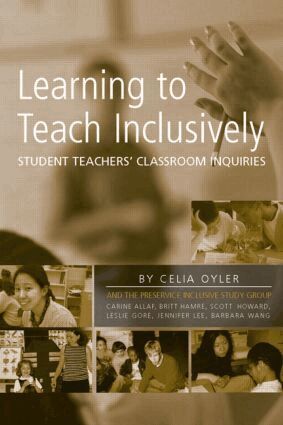
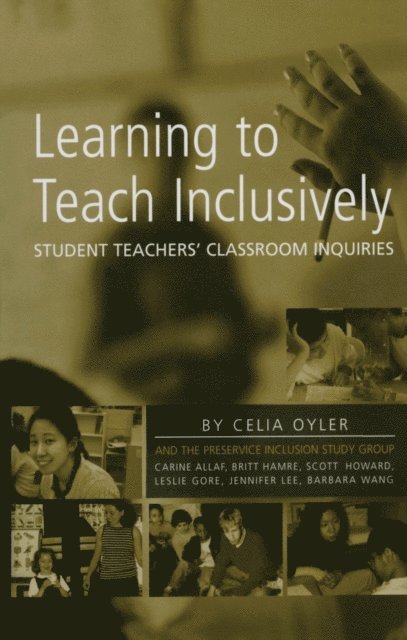
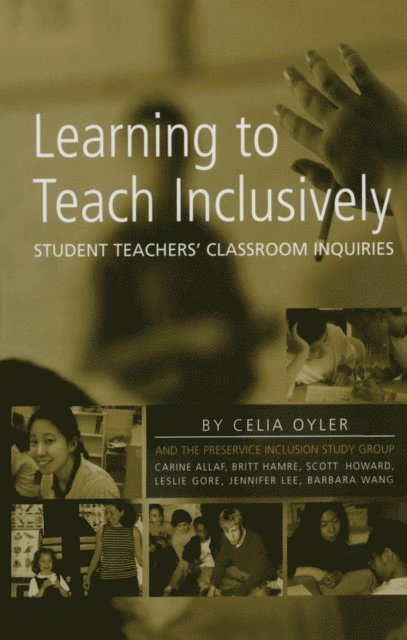
This book—co-authored by a teacher educator, a diverse group of five pre-service student teachers, and their student teaching supervisor—takes a unique, illuminating look at the experience of student teaching from the perspective of student teachers. It is premised on learning to teach as an inquiry process enriched by collaborative conversations. Readers are invited into student teachers’ dilemmas and decisions as they negotiate between their public school placements and their university-based coursework. Throughout the year of student teaching, the authors document their discussions and reflections about teaching in inclusive classrooms that shed light on the complex process of learning to teach and also offer insights into issues of teaching for equity.Each of the central chapters is written by an individual student teacher and tracks a specific question over the course of two semesters. Topics include: *contrasting models of inclusion and teachers’ differing orientations toward issues of community, difference, and normalcy;*how teachers foster peer relationships;*classroom management and discipline; *heterogeneous instruction; and*school-wide culture and systems that promote or mitigate against inclusion.A new perspective on what can be learned from student teaching is provided by the student teachers’ supervisor. In the concluding chapter, the teacher educators address the connections among the student teachers’ inquiries and offer an analysis from a disability studies/disability rights perspective on how inclusion fits into a social (rather than a medical) model of disability. All of the authors of this book seek to contribute to conversations that place advocacy, inquiry, contestation, and challenge at the center of the teacher’s role. This volume is their invitation to readers to join in a larger conversation about the challenges of, and necessity for, becoming inclusive teachers. Learning to Teach Inclusively is intended for inservice and preservice courses in elementary education, inclusion, and teacher research, and for field experience seminars. It is also suitable for graduate courses in teacher research, supervision, and research in teacher education.
520 kr
Skickas inom 10-15 vardagar
This book—co-authored by a teacher educator, a diverse group of five pre-service student teachers, and their student teaching supervisor—takes a unique, illuminating look at the experience of student teaching from the perspective of student teachers. It is premised on learning to teach as an inquiry process enriched by collaborative conversations. Readers are invited into student teachers’ dilemmas and decisions as they negotiate between their public school placements and their university-based coursework. Throughout the year of student teaching, the authors document their discussions and reflections about teaching in inclusive classrooms that shed light on the complex process of learning to teach and also offer insights into issues of teaching for equity.Each of the central chapters is written by an individual student teacher and tracks a specific question over the course of two semesters. Topics include: *contrasting models of inclusion and teachers’ differing orientations toward issues of community, difference, and normalcy;*how teachers foster peer relationships;*classroom management and discipline; *heterogeneous instruction; and*school-wide culture and systems that promote or mitigate against inclusion.A new perspective on what can be learned from student teaching is provided by the student teachers’ supervisor. In the concluding chapter, the teacher educators address the connections among the student teachers’ inquiries and offer an analysis from a disability studies/disability rights perspective on how inclusion fits into a social (rather than a medical) model of disability. All of the authors of this book seek to contribute to conversations that place advocacy, inquiry, contestation, and challenge at the center of the teacher’s role. This volume is their invitation to readers to join in a larger conversation about the challenges of, and necessity for, becoming inclusive teachers. Learning to Teach Inclusively is intended for inservice and preservice courses in elementary education, inclusion, and teacher research, and for field experience seminars. It is also suitable for graduate courses in teacher research, supervision, and research in teacher education.
416 kr
Skickas inom 7-10 vardagar
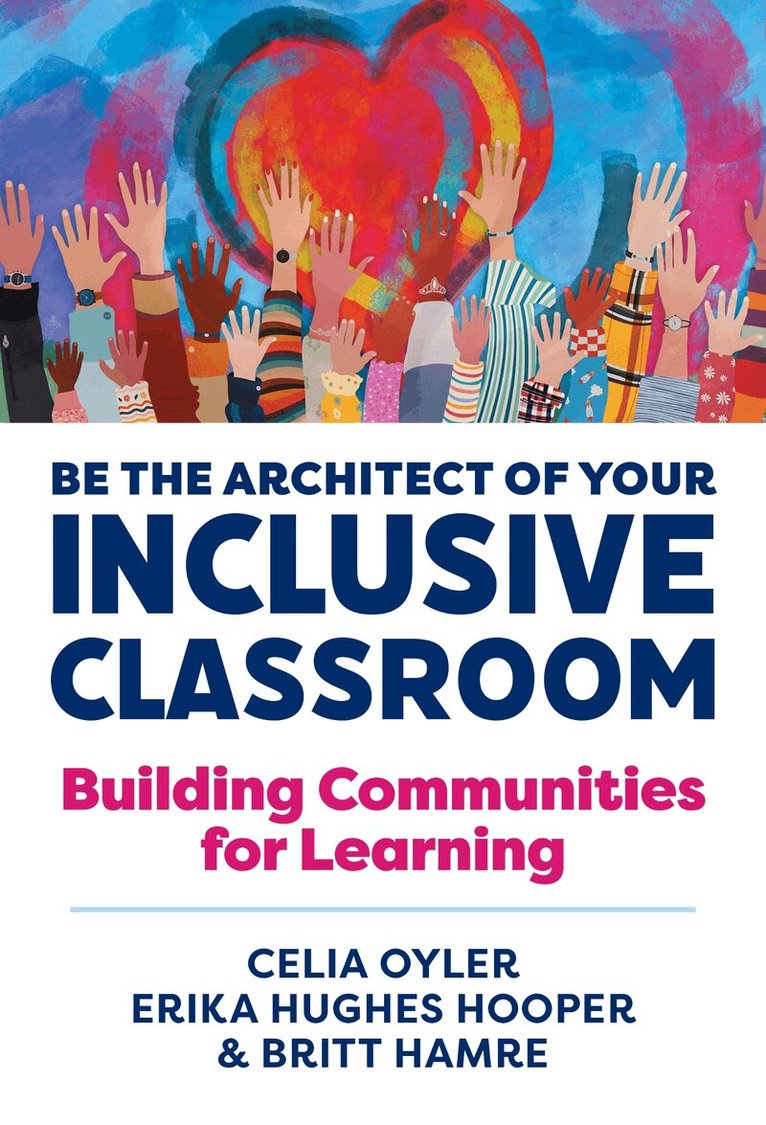
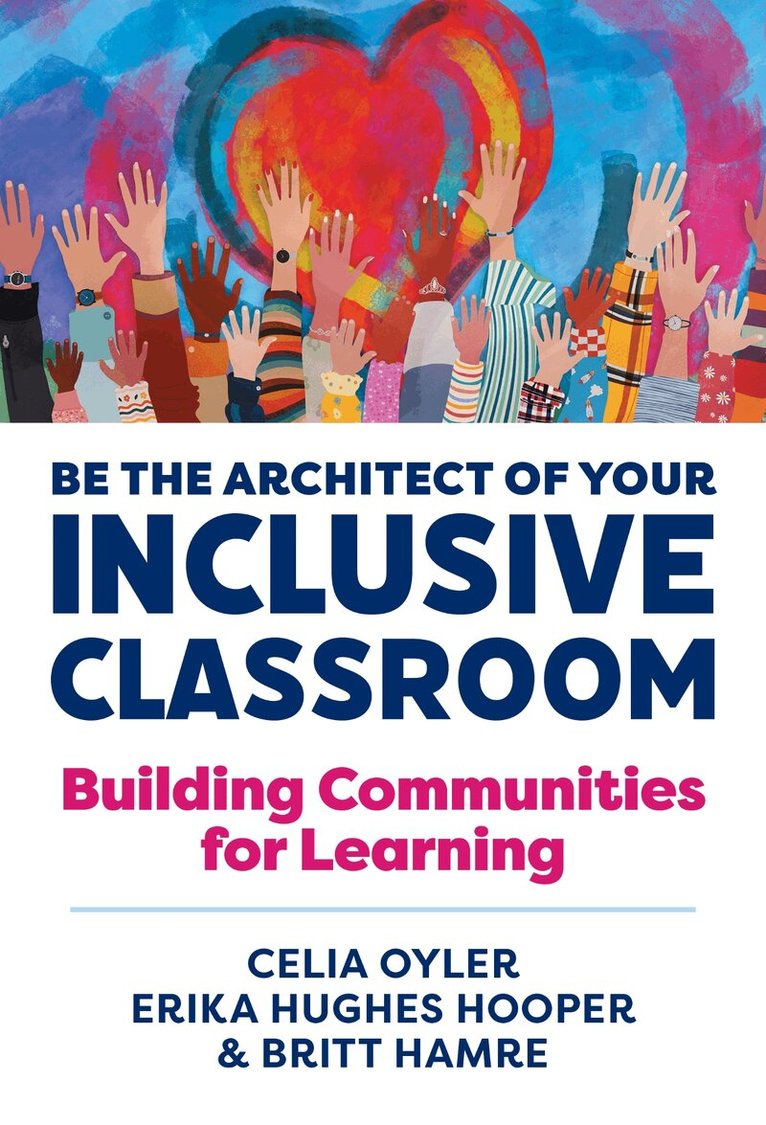
This practical book shows today's educators how to design a sustainable classroom architecture that maximizes student engagement, learning, and belonging.Based on the authors' collaborative work with K– 2 public school teachers, this practical book offers an invitation to create dynamic learning opportunities in classrooms designed to challenge and support all learners. Because teaching contexts are always unique and shifting, we cannot rely primarily upon scripts, recipes, "best practices," and prescribed curriculum. Rather, based on teachers' analysis of their own contexts, the authors describe and show how today's educators can curate strategies, curriculum, and methods to design a sustainable classroom architecture that maximizes student engagement, learning, and belonging. Attending to principles of culturally sustaining pedagogy, Universal Design for Learning, and "backwards design," Be the Architect of Your Inclusive Classroom focuses on curriculum design, classroom behavior, and building relationships with students, colleagues, families, and communities. Readers will come to understand why this kind of teaching is both complex and inherently rewarding.Book Features: Provides actionable tools to create classroom curriculum and practice that will improve learning and equity outcomes for all students.Stimulates collaborative dialogue through Fearless Inventories that invite teachers to examine their own practices that promote belonging and student success.Uses a lens of critical inclusivity, offering a bottom-up and collegial approach to designing instruction. Focuses on learning rather than compliance and belonging rather than ranking and sorting learners. Includes numerous examples of teachers creating inclusive classrooms as central teaching points.
Be the Architect of Your Inclusive Classroom
Building Communities for Learning
Inbunden, Engelska, 2025
1 208 kr
Skickas inom 7-10 vardagar
This practical book shows today's educators how to design a sustainable classroom architecture that maximizes student engagement, learning, and belonging.Based on the authors' collaborative work with K– 2 public school teachers, this practical book offers an invitation to create dynamic learning opportunities in classrooms designed to challenge and support all learners. Because teaching contexts are always unique and shifting, we cannot rely primarily upon scripts, recipes, "best practices," and prescribed curriculum. Rather, based on teachers' analysis of their own contexts, the authors describe and show how today's educators can curate strategies, curriculum, and methods to design a sustainable classroom architecture that maximizes student engagement, learning, and belonging. Attending to principles of culturally sustaining pedagogy, Universal Design for Learning, and "backwards design," Be the Architect of Your Inclusive Classroom focuses on curriculum design, classroom behavior, and building relationships with students, colleagues, families, and communities. Readers will come to understand why this kind of teaching is both complex and inherently rewarding.Book Features: Provides actionable tools to create classroom curriculum and practice that will improve learning and equity outcomes for all students.Stimulates collaborative dialogue through Fearless Inventories that invite teachers to examine their own practices that promote belonging and student success.Uses a lens of critical inclusivity, offering a bottom-up and collegial approach to designing instruction. Focuses on learning rather than compliance and belonging rather than ranking and sorting learners. Includes numerous examples of teachers creating inclusive classrooms as central teaching points.