Cento G. Veljanovski - Böcker
Visar alla böcker från författaren Cento G. Veljanovski. Handla med fri frakt och snabb leverans.
4 produkter
4 produkter
212 kr
Tillfälligt slut
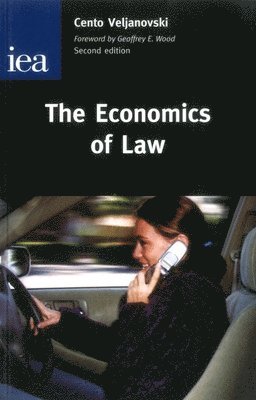
Economic analysis is increasingly being applied beyond its traditional precincts of the marketplace and the economy. One area where this has happened is in the economic approach to law: the application of economic theory (mostly price theory) and statistical methods to examine the formation, structure, processes and impact of the law and legal institutions. In this new and revised edition of "The Economics of Law", Cento Veljanovski provides an introduction to, and overview of, the economic analysis of law. This book shows the importance of economic analysis to legal theory and practice, and provides a reliable introduction to property rights, cost-benefit analysis, public choice theory and other economic approaches, set in the context of the study of the law. "The Economics of Law" will be essential reading for scholars and students in law and economics as well as related disciplines.
Del 3 - Readings in Political Economy
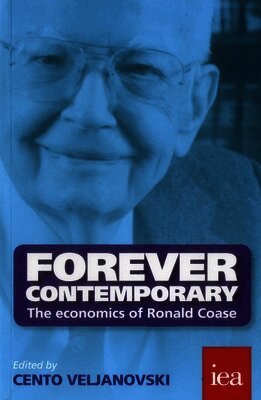
Forever Contemporary
The Economics of Ronald Coase
Häftad, Engelska, 2015
281 kr
Skickas inom 5-8 vardagar
Ronald Coase is one of the most important economists of the twentieth century. Amongst other great achievements, Coase taught us why firms exist and how we can better understand how to solve environmental problems. He also made a profound contribution to our understanding of the provision of so-called "public goods" and helped join the often distinct intellectual fields of law and economics. Coase coined the phrase "blackboard economics" to describe an approach to economics that involved ignoring what happens in practice and, instead, led the profession to obsess with theory. He once said: 'If economists wished to study the horse, they wouldn't go and look at horses. They'd sit in their studies and say to themselves, "what would I do if I were a horse?"'There is much that students, teachers, policymakers and regulators can learn from the economics of Ronald Coase, and he will, no doubt, provide a rich seam of material for decades to come. The authors of this short book have taken up the challenge.They apply Coase's ideas to a number of different areas of economics and, in doing so, provide a practical and very readable introduction to a number of topics that have direct relevance for regulation and for public policy.
505 kr
Skickas inom 7-10 vardagar
Economic Principles of Law, first published in 2007, applies economics to the doctrines, rules and remedies of the common law. In plain English and using non-technical analysis, it offers an introduction and exposition of the 'economic approach' to law - one of the most exciting and vibrant fields of legal scholarship and applied economics. Beginning with a brief history of the field, it sets out the basic economic concepts useful to lawyers, and applies these to assess the core areas of the common law - property, contract, tort and crime - with particular emphasis on their doctrinal structure and remedies. This is done using leading cases drawn from the birthplace of the common law (England & Wales) and other common law jurisdictions. The book serves as a primer to the wider use of economics which has become increasingly important for law students, lawyers, legislators, regulators and those concerned with our legal system generally.
1 157 kr
Skickas inom 7-10 vardagar
Economic Principles of Law, first published in 2007, applies economics to the doctrines, rules and remedies of the common law. In plain English and using non-technical analysis, it offers an introduction and exposition of the 'economic approach' to law - one of the most exciting and vibrant fields of legal scholarship and applied economics. Beginning with a brief history of the field, it sets out the basic economic concepts useful to lawyers, and applies these to assess the core areas of the common law - property, contract, tort and crime - with particular emphasis on their doctrinal structure and remedies. This is done using leading cases drawn from the birthplace of the common law (England & Wales) and other common law jurisdictions. The book serves as a primer to the wider use of economics which has become increasingly important for law students, lawyers, legislators, regulators and those concerned with our legal system generally.