César J. Ayala - Böcker
Visar alla böcker från författaren César J. Ayala. Handla med fri frakt och snabb leverans.
2 produkter
2 produkter
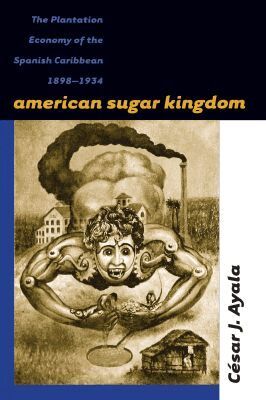
American Sugar Kingdom
The Plantation Economy of the Spanish Caribbean, 1898-1934
Häftad, Engelska, 1999
530 kr
Skickas inom 10-15 vardagar
Engaging conventional arguments that the persistence of plantations is the cause of economic underdevelopment in the Caribbean, this book focuses on the discontinuities in the development of plantation economies in Cuba, Puerto Rico, and the Dominican Republic in the early twentieth century. Cesar Ayala analyzes and compares the explosive growth of sugar production in the three nations following the War of 1898--when the U.S. acquired Cuba and Puerto Rico--to show how closely the development of the Spanish Caribbean's modern economic and social class systems is linked to the history of the U.S. sugar industry during its greatest period of expansion and consolidation. Ayala examines patterns of investment and principal groups of investors, interactions between U.S. capitalists and native planters, contrasts between new and old regions of sugar monoculture, the historical formation of the working class on sugar plantations, and patterns of labor migration. In contrast to most studies of the Spanish Caribbean, which focus on only one country, his account places the history of U.S. colonialism in the region, and the history of plantation agriculture across the region, in comparative perspective. |This comparative study of the development of plantation economies in Cuba, Puerto Rico, and the Dominican Republic in the early 20th century shows how their economic and social class systems were shaped by the explosive growth of American sugar companies.
1 282 kr
Skickas inom 7-10 vardagar
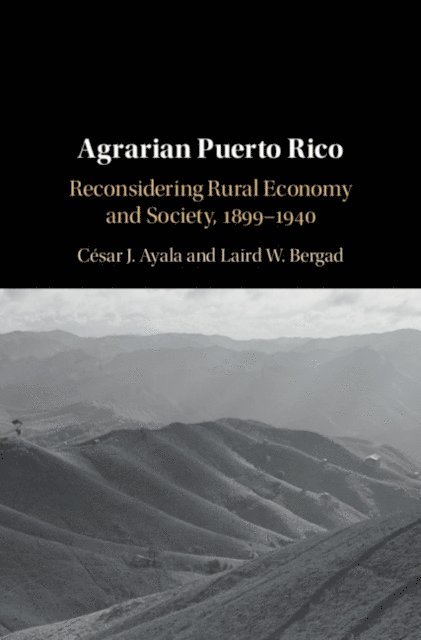
Fundamental tenets of colonial historiography are challenged by showing that US capital investment into this colony did not lead to the disappearance of the small farmer. Contrary to well-established narratives, quantitative data show that the increasing integration of rural producers within the US market led to differential outcomes, depending on pre-existing land tenure structures, capital requirements to initiate production, and demographics. These new data suggest that the colonial economy was not polarized into landless Puerto Rican rural workers on one side and corporate US capitalists on the other. The persistence of Puerto Rican small farmers in some regions and the expansion of local property ownership and production disprove this socioeconomic model. Other aspects of extant Puerto Rican historiography are confronted in order to make room for thorough analyses and new conclusions on the economy of colonial Puerto Rico during the early twentieth century.