Cezar-I. Trifu - Böcker
Visar alla böcker från författaren Cezar-I. Trifu. Handla med fri frakt och snabb leverans.
2 produkter
2 produkter
1 061 kr
Skickas inom 10-15 vardagar
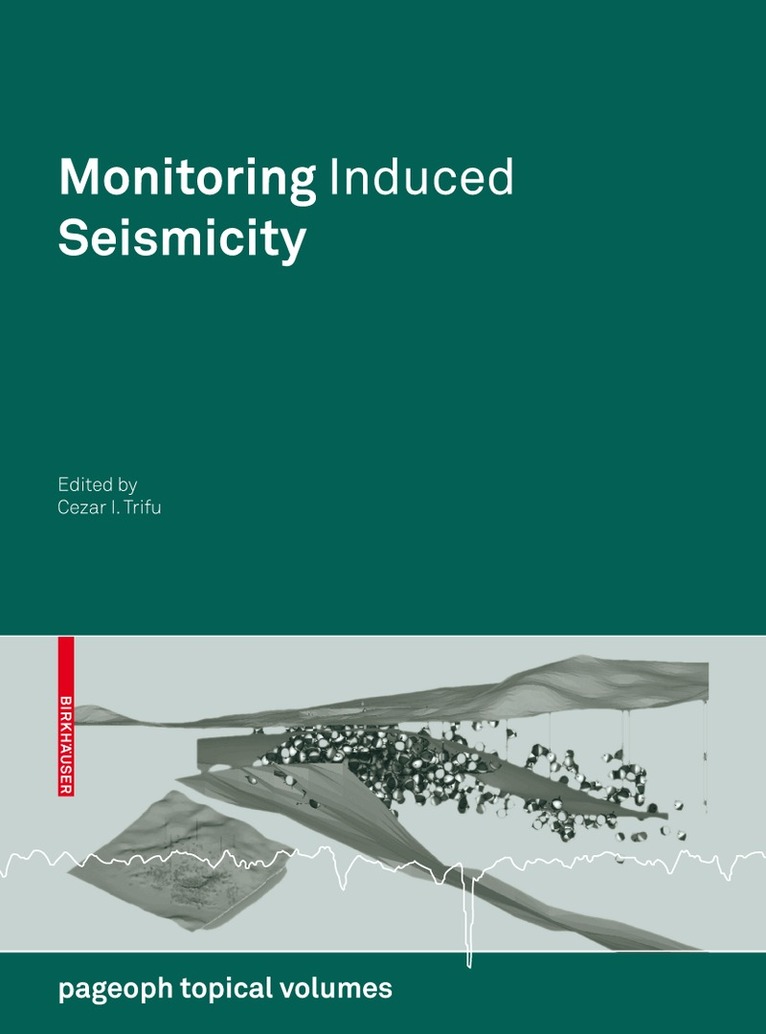
Stress re-distribution as a result of exploitation of mineral, hydrocarbon, geothermal, and water resources cannot be eliminated. The effort must be directed to a better understanding of the underlying processes for the management of the hazard and risk associated with these operations. The study of induced seismicity has continually evolved over the past couple of decades, as underlined by both the number and complexity of applied studies required to satisfy the increased economic demands, assure the safety of the workforce and equipment, and protect the environment.A considerable effort has been put into the development of passive monitoring technology, specialized products and services being available for a wide range of applications. The recording of substantial high quality seismic data has stimulated the work on theoretical and practical aspects related to these applications, involving not only seismological knowledge, but also elements of rock mechanics, and an understanding of mining, geotechnical, and petroleum engineering. Pure and Applied Geophysics has largely contributed to raising the profile of induced seismicity research and its credibility.The range of specific analyses included in the present collection of studies expresses how powerful and resourceful passive seismic monitoring has become to so many applications. Seismic data are routinely evaluated for a series of development activities specific to each application. Engineering practice is continually improved based on trials and analyses of the ground response and stress levels, confirmed through the monitoring of seismicity. We are better equipped than ever to provide management decisions based on formalized, quantitative, and thus objective assessment.
1 061 kr
Skickas inom 10-15 vardagar
Vol. t59. 2002 J damaged zone on the rock mass. Collins el al. examine the benefits of employing small-scale microseismic and acoustic emission systems to investigate the temporal fracture mechanics of microcrack formation associated with a tunnel sealing experiment at the Underground Research Laboratory nuclear waste test site in Canada. They associate microseismic events with clusters of acoustic emissions and outline that both types of sources are generally characterized by deviatoric failure components. Using the same experimental setup, Hazzard el al. employed a bonded- particle model to simulate shear microfraclures induced by the lunnel excavation. Comparing Ihe modeling results with information provided by the moniloring of microseismicity and acoustic emissions, the authors identify similarities in both the presence of foreshocks associated with macro-slip events, and the pallerns of energy release during loading. Hildyard and Young allempt to model the seismic wave interaction with fractured rock surrounding underground openings, through exper- iments such as a rockbursl simulation, in situ events generating acoustic emissions, and laboratory fractures.Their results highlight that realistic wave modeling around openings requires the presence of a stress-dependent fracture stiffness coupling the surfaces of the fracture. Ultrasonic attenuation tomography and enhanced velocity tomography were studied by D~bski and Young for an earlier laboratory experiment of thennally induced fractures in granite.