Chadwick Allen - Böcker
Visar alla böcker från författaren Chadwick Allen. Handla med fri frakt och snabb leverans.
6 produkter
6 produkter
1 383 kr
Kommande
How an ancient Indigenous earthwork traveled from Ohio to Washington state in the mid-1970s. In Transit, Chadwick Allen chronicles the surprising history of how the ancient snake effigy known as Serpent Mound, located in what is now southern Ohio, traveled to Seattle, Washington in the 1970s, at the height of American Indian activism associated with the Red Power movement. Allen considers Indigenous earthworks built for thousands of years across the eastern half of the North American continent, questioning what it would mean if they were understood not as static entities fixed in space and time, but as animate forces with the ability to travel. Allen also looks at the origins of the “modern” effigy in the nineteenth century, when archaeologists reconstructed Serpent Mound’s deteriorating form to create a static icon suitable for touristic display within the confines of a settler state memorial. Drawing from archival research, interviews, and site-specific encounters, Transit meditates on the significance of building an earthen effigy in the Pacific Northwest, as part of what became the Daybreak Star Indian Cultural Center, and on the complexity of the mound’s generative contexts. Allen’s research intersects the mid-twentieth century, when artist Robert Smithson created his iconic Spiral Jetty earth sculpture and when the Muscogee (Creek) Nation designed its innovative Mound Building. The story remains ongoing in the twenty-first century, as new mounds are rising in Oklahoma and artists, activists, and intellectuals are again asserting the power of Indigenous design.
277 kr
Kommande
How an ancient Indigenous earthwork traveled from Ohio to Washington state in the mid-1970s. In Transit, Chadwick Allen chronicles the surprising history of how the ancient snake effigy known as Serpent Mound, located in what is now southern Ohio, traveled to Seattle, Washington in the 1970s, at the height of American Indian activism associated with the Red Power movement. Allen considers Indigenous earthworks built for thousands of years across the eastern half of the North American continent, questioning what it would mean if they were understood not as static entities fixed in space and time, but as animate forces with the ability to travel. Allen also looks at the origins of the “modern” effigy in the nineteenth century, when archaeologists reconstructed Serpent Mound’s deteriorating form to create a static icon suitable for touristic display within the confines of a settler state memorial. Drawing from archival research, interviews, and site-specific encounters, Transit meditates on the significance of building an earthen effigy in the Pacific Northwest, as part of what became the Daybreak Star Indian Cultural Center, and on the complexity of the mound’s generative contexts. Allen’s research intersects the mid-twentieth century, when artist Robert Smithson created his iconic Spiral Jetty earth sculpture and when the Muscogee (Creek) Nation designed its innovative Mound Building. The story remains ongoing in the twenty-first century, as new mounds are rising in Oklahoma and artists, activists, and intellectuals are again asserting the power of Indigenous design.
319 kr
Skickas inom 7-10 vardagar
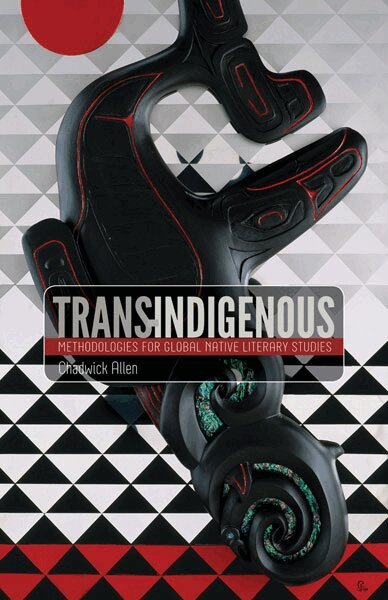
What might be gained from reading Native literatures from global rather than exclusively local perspectives of Indigenous struggle? In Trans-Indigenous, Chadwick Allen proposes methodologies for a global Native literary studies based on focused comparisons of diverse texts, contexts, and traditions in order to foreground the richness of Indigenous self-representation and the complexity of Indigenous agency.Through demonstrations of distinct forms of juxtaposition-across historical periods and geographical borders, across tribes and nations, across the Indigenous–settler binary, across genre and media-Allen reclaims aspects of the Indigenous archive from North America, Hawaii, Aotearoa New Zealand, and Australia that have been largely left out of the scholarly conversation. He engages systems of Indigenous aesthetics-such as the pictographic discourse of Plains Indian winter counts, the semiotics of Navajo weaving, and Maori carving traditions, as well as Indigenous technologies like large-scale North American earthworks and Polynesian ocean-voyaging waka-for the interpretation of contemporary Indigenous texts. The result is a provocative reorienting of the call for Native intellectual, artistic, and literary sovereignty that fully prioritizes the global Indigenous.
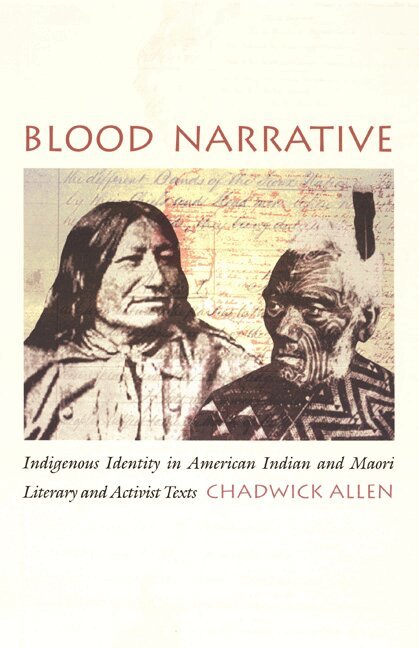
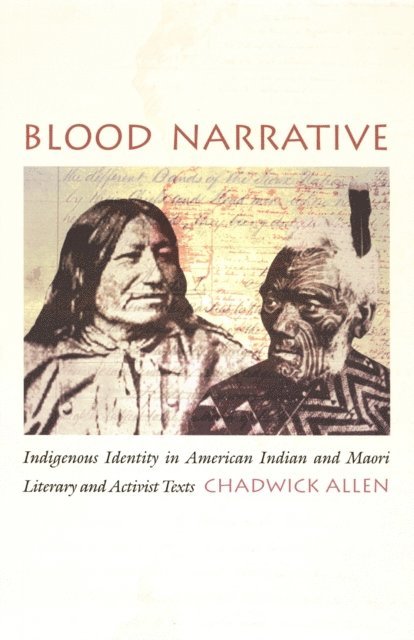
Blood Narrative
Indigenous Identity in American Indian and Maori Literary and Activist Texts
Häftad, Engelska, 2002
621 kr
Skickas inom 3-6 vardagar
Blood Narrative is a comparative literary and cultural study of post-World War II literary and activist texts by New Zealand Maori and American Indians-groups who share much in their responses to European settler colonialism. Chadwick Allen reveals the complex narrative tactics employed by writers and activists in these societies that enabled them to realize unprecedented practical power in making both their voices and their own sense of indigeneity heard.Allen shows how both Maori and Native Americans resisted the assimilationist tide rising out of World War II and how, in the 1960s and 1970s, they each experienced a renaissance of political and cultural activism and literary production that culminated in the formation of the first general assembly of the World Council of Indigenous Peoples. He focuses his comparison on two fronts: first, the blood/land/memory complex that refers to these groups' struggles to define indigeneity and to be freed from the definitions of authenticity imposed by dominant settler cultures. Allen's second focus is on the discourse of treaties between American Indians and the U.S. government and between Maori and Great Britain, which he contends offers strong legal and moral bases from which these indigenous minorities can argue land and resource rights as well as cultural and identity politics.With its implicit critique of multiculturalism and of postcolonial studies that have tended to neglect the colonized status of indigenous First World minorities, Blood Narrative will appeal to students and scholars of literature, American and European history, multiculturalism, postcolonialism, and comparative cultural studies.
1 686 kr
Skickas inom 7-10 vardagar
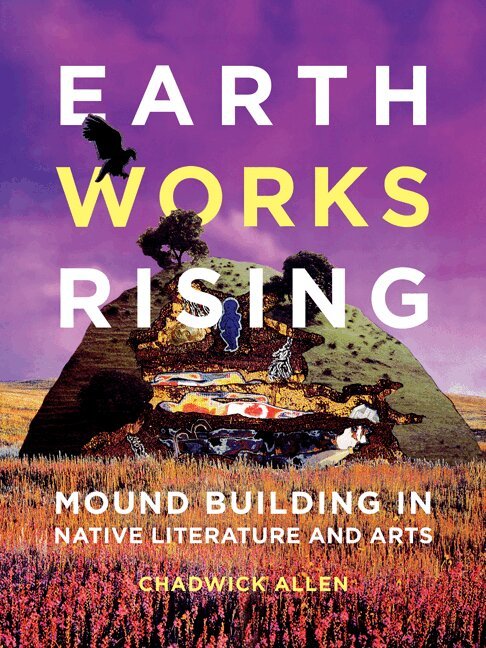
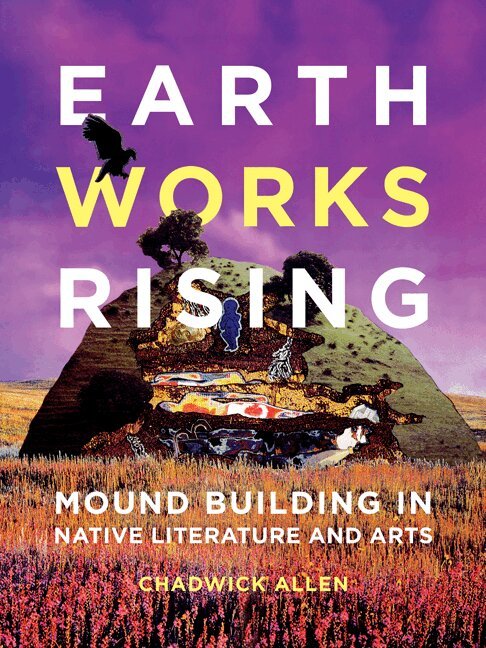
A necessary reexamination of Indigenous mounds, demonstrating their sustained vitality and vibrant futurity by centering Native voices Typically represented as unsolved mysteries or ruins of a tragic past, Indigenous mounds have long been marginalized and misunderstood. In Earthworks Rising, Chadwick Allen issues a compelling corrective, revealing a countertradition based in Indigenous worldviews. Alongside twentieth- and twenty-first-century Native writers, artists, and intellectuals, Allen rebuts colonial discourses and examines the multiple ways these remarkable structures continue to hold ancient knowledge and make new meaning-in the present and for the future.Earthworks Rising is organized to align with key functional categories for mounds (effigies, platforms, and burials) and with key concepts within mound-building cultures. From the Great Serpent Mound in Ohio to the mound metropolis Cahokia in Illinois to the generative Mother Mound in Mississippi, Allen takes readers deep into some of the most renowned earthworks. He draws on the insights of poets Allison Hedge Coke and Margaret Noodin, novelists LeAnne Howe and Phillip Carroll Morgan, and artists Monique Mojica and Alyssa Hinton, weaving in a personal history of earthwork encounters and productive conversation with fellow researchers.Spanning literature, art, performance, and built environments, Earthworks Rising engages Indigenous mounds as forms of “land-writing” and as conduits for connections across worlds and generations. Clear and compelling, it provokes greater understanding of the remarkable accomplishments of North America’s diverse mound-building cultures over thousands of years and brings attention to new earthworks rising in the twenty-first century.
416 kr
Skickas inom 7-10 vardagar
A necessary reexamination of Indigenous mounds, demonstrating their sustained vitality and vibrant futurity by centering Native voices Typically represented as unsolved mysteries or ruins of a tragic past, Indigenous mounds have long been marginalized and misunderstood. In Earthworks Rising, Chadwick Allen issues a compelling corrective, revealing a countertradition based in Indigenous worldviews. Alongside twentieth- and twenty-first-century Native writers, artists, and intellectuals, Allen rebuts colonial discourses and examines the multiple ways these remarkable structures continue to hold ancient knowledge and make new meaning-in the present and for the future.Earthworks Rising is organized to align with key functional categories for mounds (effigies, platforms, and burials) and with key concepts within mound-building cultures. From the Great Serpent Mound in Ohio to the mound metropolis Cahokia in Illinois to the generative Mother Mound in Mississippi, Allen takes readers deep into some of the most renowned earthworks. He draws on the insights of poets Allison Hedge Coke and Margaret Noodin, novelists LeAnne Howe and Phillip Carroll Morgan, and artists Monique Mojica and Alyssa Hinton, weaving in a personal history of earthwork encounters and productive conversation with fellow researchers.Spanning literature, art, performance, and built environments, Earthworks Rising engages Indigenous mounds as forms of “land-writing” and as conduits for connections across worlds and generations. Clear and compelling, it provokes greater understanding of the remarkable accomplishments of North America’s diverse mound-building cultures over thousands of years and brings attention to new earthworks rising in the twenty-first century.