Charles B. Hersch - Böcker
Visar alla böcker från författaren Charles B. Hersch. Handla med fri frakt och snabb leverans.
4 produkter
4 produkter
463 kr
Tillfälligt slut
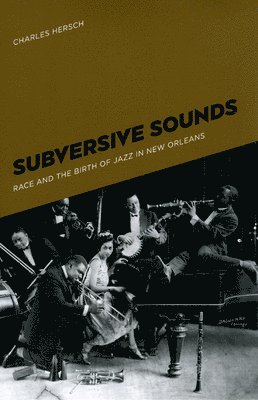
"Subversive Sounds" probes New Orleans' history, uncovering a web of racial interconnections and animosities that was instrumental to the creation of a vital American art form - jazz. Drawing on oral histories, police reports, newspaper accounts, and vintage recordings, Charles Hersch brings to vivid life the neighborhoods and nightspots where jazz was born. This volume shows how musicians such as Jelly Roll Morton, Nick La Rocca, and Louis Armstrong negotiated New Orleans' complex racial rules to pursue their craft and how, in order to widen their audiences, they became fluent in a variety of musical traditions from diverse ethnic sources. These encounters with other music and races subverted their own racial identities and changed the way they played - a musical miscegenation that, in the shadow of Jim Crow, undermined the pursuit of racial purity and indelibly transformed American culture.
274 kr
Skickas inom 7-10 vardagar
"Subversive Sounds" probes New Orleans' history, uncovering a web of racial interconnections and animosities that was instrumental to the creation of a vital American art form - jazz. Drawing on oral histories, police reports, newspaper accounts, and vintage recordings, Charles Hersch brings to vivid life the neighborhoods and nightspots where jazz was born. This volume shows how musicians such as Jelly Roll Morton, Nick La Rocca, and Louis Armstrong negotiated New Orleans' complex racial rules to pursue their craft and how, in order to widen their audiences, they became fluent in a variety of musical traditions from diverse ethnic sources. These encounters with other music and races subverted their own racial identities and changed the way they played - a musical miscegenation that, in the shadow of Jim Crow, undermined the pursuit of racial purity and indelibly transformed American culture.
2 371 kr
Skickas inom 10-15 vardagar
Jews and Jazz: Improvising Ethnicity explores the meaning of Jewish involvement in the world of American jazz. It focuses on the ways prominent jazz musicians like Stan Getz, Benny Goodman, Artie Shaw, Lee Konitz, Dave Liebman, Michael Brecker, and Red Rodney have engaged with jazz in order to explore and construct ethnic identities. The author looks at Jewish identity through jazz in the context of the surrounding American culture, believing that American Jews have used jazz to construct three kinds of identities: to become more American, to emphasize their minority outsider status, and to become more Jewish. From the beginning, Jewish musicians have used jazz for all three of these purposes, but the emphasis has shifted over time. In the 1920s and 1930s, when Jews were seen as foreign, Jews used jazz to make a more inclusive America, for themselves and for blacks, establishing their American identity. Beginning in the 1940s, as Jews became more accepted into the mainstream, they used jazz to "re-minoritize" and avoid over-assimilation through identification with African Americans. Finally, starting in the 1960s as ethnic assertion became more predominant in America, Jews have used jazz to explore and advance their identities as Jews in a multicultural society.
702 kr
Skickas inom 10-15 vardagar
Jews and Jazz: Improvising Ethnicity explores the meaning of Jewish involvement in the world of American jazz. It focuses on the ways prominent jazz musicians like Stan Getz, Benny Goodman, Artie Shaw, Lee Konitz, Dave Liebman, Michael Brecker, and Red Rodney have engaged with jazz in order to explore and construct ethnic identities. The author looks at Jewish identity through jazz in the context of the surrounding American culture, believing that American Jews have used jazz to construct three kinds of identities: to become more American, to emphasize their minority outsider status, and to become more Jewish. From the beginning, Jewish musicians have used jazz for all three of these purposes, but the emphasis has shifted over time. In the 1920s and 1930s, when Jews were seen as foreign, Jews used jazz to make a more inclusive America, for themselves and for blacks, establishing their American identity. Beginning in the 1940s, as Jews became more accepted into the mainstream, they used jazz to "re-minoritize" and avoid over-assimilation through identification with African Americans. Finally, starting in the 1960s as ethnic assertion became more predominant in America, Jews have used jazz to explore and advance their identities as Jews in a multicultural society.