Charles Brittain - Böcker
Visar alla böcker från författaren Charles Brittain. Handla med fri frakt och snabb leverans.
7 produkter
7 produkter
2 890 kr
Skickas inom 5-8 vardagar
This is the first book-length study of Philo of Larissa. Philo (159-84 BC) was the leader of the Platonic Academy in its final period as an Athenian institution, and also the principal philosophical teacher of Cicero. Dr Brittain charts Philo's gradual rejection of the radical scepticism of Carneades (concluding with his notorious 'Roman Books' of 89 BC), and offers philosophical justifications for his initial position of modified scepticism and final advocacy of a fallibilist empiricism. Philo's controversial epistemological views are constructed through their historical context in the late Hellenistic Academy, his wider thought on the history of philosophy, ethics and rhetoric, and his controversies with his pupils Antiochus and Aenesidemus. The appendix contains full testimonia and 'fragments' of Philo.
1 390 kr
Skickas inom 7-10 vardagar
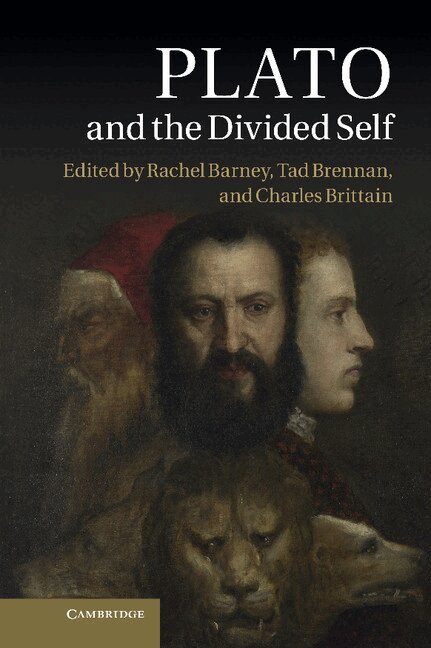
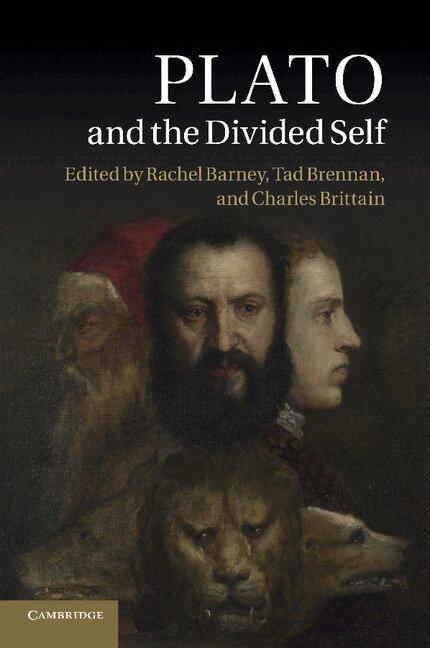
Plato's account of the tripartite soul is a memorable feature of dialogues like the Republic, Phaedrus and Timaeus: it is one of his most famous and influential yet least understood theories. It presents human nature as both essentially multiple and diverse - and yet somehow also one - divided into a fully human 'rational' part, a lion-like 'spirited part' and an 'appetitive' part likened to a many-headed beast. How these parts interact, how exactly each shapes our agency and how they are affected by phenomena like erôs and education is complicated and controversial. The essays in this book investigate how the theory evolves over the whole of Plato's work, including the Republic, Phaedrus and Timaeus, and how it was developed further by important Platonists such as Galen, Plutarch and Plotinus. They will be of interest to a wide audience in philosophy and classics.
1 258 kr
Skickas inom 7-10 vardagar
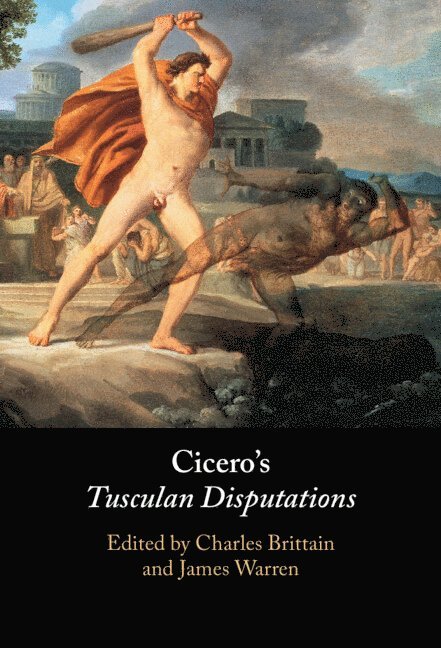
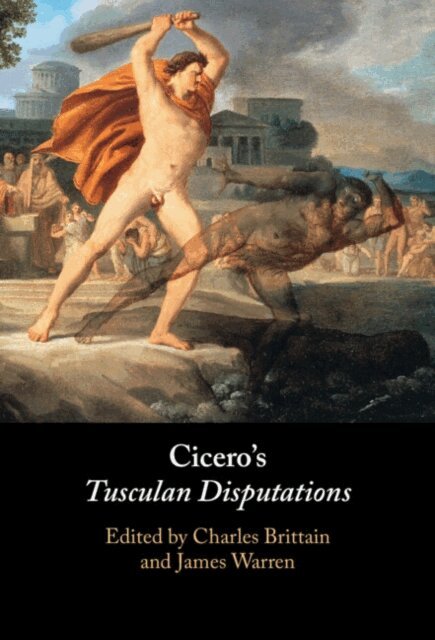
Cicero composed the Tusculan Disputations in the summer of 45 BC at a time of great personal and political turmoil. He was grieving for the death of his daughter Tullia earlier that year, while Caesar's defeat of Pompey's forces at Munda and return to Rome as dictator was causing him great fears and concerns for himself, his friends and the Republic itself. This collection of new essays offers a holistic critical commentary on this important work. World-leading experts consider its historical and philosophical context and the central arguments and themes of each of the five books, which include the treatment of the fear of death, the value of pain, the Stoic account of the emotions and the thesis that virtue is sufficient for happiness. Each chapter pays close attention to Cicero's own method of philosophy, and the role of rhetoric and persuasion in pursuing his inquiries.
626 kr
Skickas inom 7-10 vardagar
Plato's account of the tripartite soul is a memorable feature of dialogues like the Republic, Phaedrus and Timaeus: it is one of his most famous and influential yet least understood theories. It presents human nature as both essentially multiple and diverse - and yet somehow also one - divided into a fully human 'rational' part, a lion-like 'spirited part' and an 'appetitive' part likened to a many-headed beast. How these parts interact, how exactly each shapes our agency and how they are affected by phenomena like erôs and education is complicated and controversial. The essays in this book investigate how the theory evolves over the whole of Plato's work, including the Republic, Phaedrus and Timaeus, and how it was developed further by important Platonists such as Galen, Plutarch and Plotinus. They will be of interest to a wide audience in philosophy and classics.
607 kr
Skickas inom 10-15 vardagar
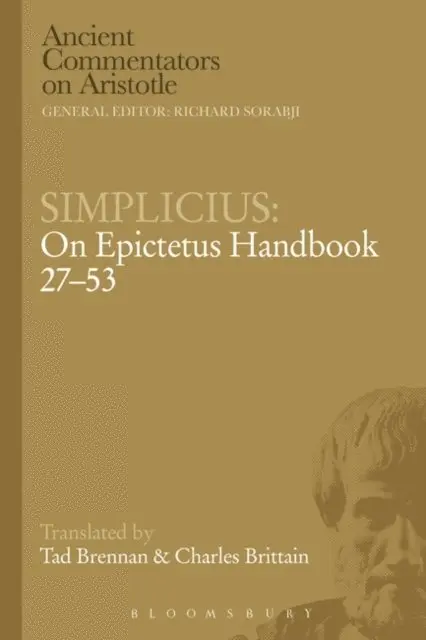
The Enchiridion or Handbook of the first-century AD Stoic Epictetus was used as an ethical treatise both in Christian monasteries and by the sixth-century pagan Neoplatonist Simplicius. Simplicius chose it for beginners, rather than Aristotle's Ethics, because it presupposed no knowledge of logic. We thus get a fascinating chance to see how a pagan Neoplatonist transformed Stoic ideas. The text was relevant to Simplicius because he too, like Epictetus, was teaching beginners how to take the first steps towards eradicating emotion, although he is unlike Epictetus in thinking that they should give up public life rather than acquiesce, if public office is denied them. Simplicius starts from a Platonic definition of the person as rational soul, not body, ignoring Epictetus' further whittling down of himself to just his will or policy decisions. He selects certain topics for special attention in chapters 1, 8, 27 and 31. Things are up to us, despite Fate. Our sufferings are not evil, but providential attempts to turn us from the body. Evil is found only in the human soul. But evil is parasitic (Proclus' term) on good. The gods exist, are provident, and cannot be bought off.With nearly all of this the Stoics would agree, but for quite different reasons, and their own distinctions and definitions are to a large extent ignored. This translation of the Handbook is published in two volumes. This is the second volume, covering chapters 27-53; the first covers chapters 1-26.
499 kr
Skickas inom 10-15 vardagar
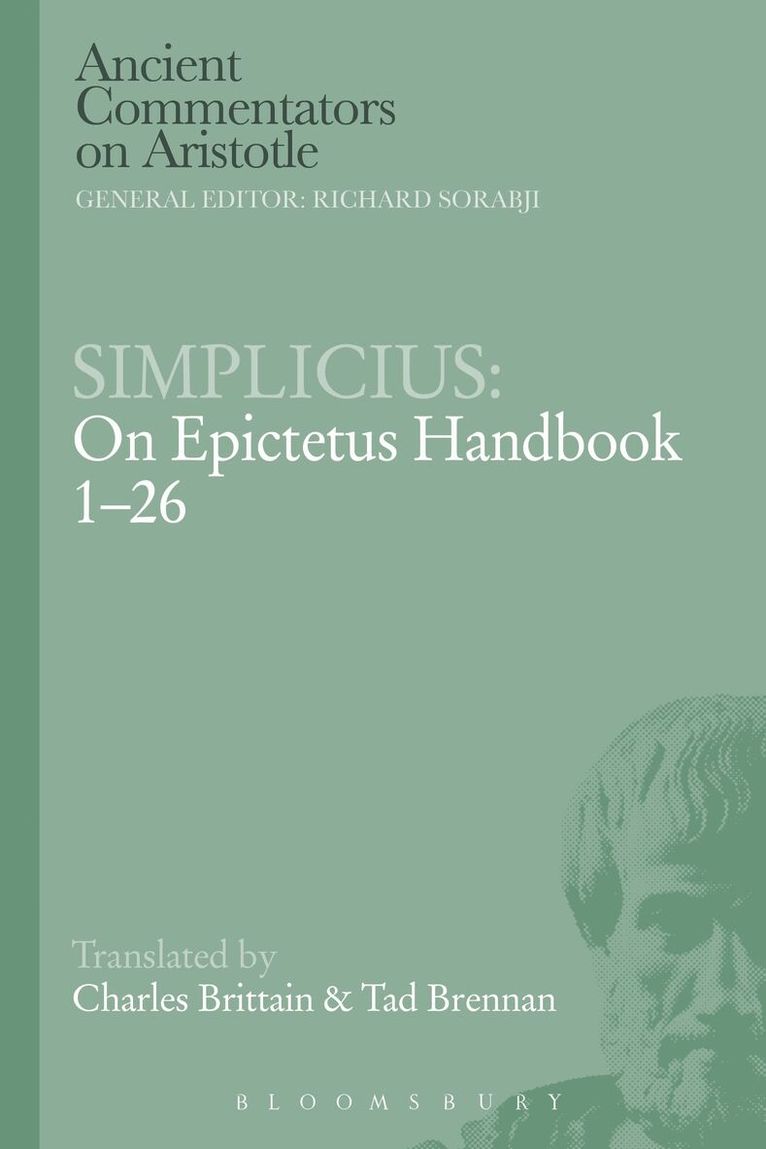
'[Simplicius'] moral interpretation of Epictetus is preserved in the library of nations, as a classic book, most excellently adapted to direct the will, to purify the heart, and to confirm the understanding, by a just confidence in the nature both of God and man.'Edward Gibbon'This book, written by a "pagan" philosopher, makes the most Christian impression conceivable. The betrayal of all reality through morality is here present in its fullest splendour - pitiful psychology, the philosopher is reduced to a country parson. And Plato is to blame for all of it! He remains Europe's greatest misfortune!'Fredrich Nietzsche Of these two rival reactions the favourable one was most common. Epictetus' Handbook on ethics was used in Christian monasteries, and Simplicius' commentary on it was widely available up to the nineteenth century. The commentary gives us a fascinating chance to see how a pagan Neoplatonist transformed Stoic ideas, adding Neoplatonist accounts of theology, theodicy, providence, free will and the problem of evil. This translation of the Commentary on the Handbook is published in two volumes. This is the first, covering chapters 1-26; the second covers chapters 27-53.
622 kr
Skickas inom 10-15 vardagar
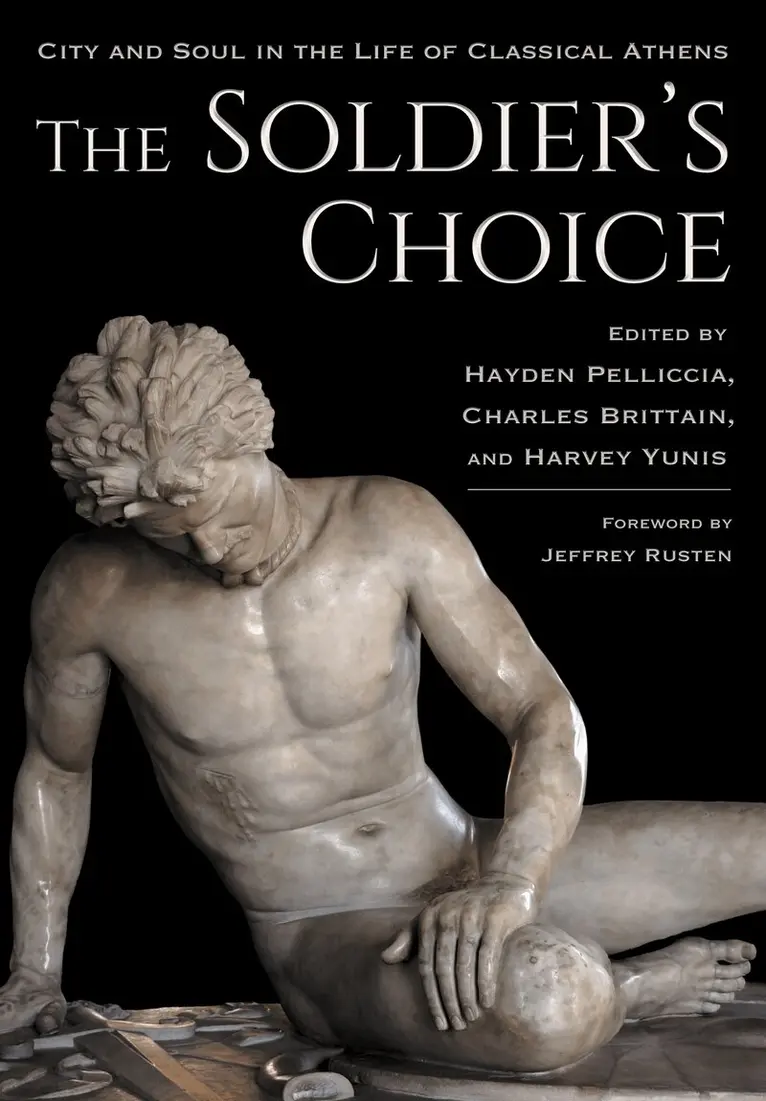
In the pitch of battle, according to Pericles, the Athenian citizen-soldier chooses to die rather than leave undefended the democratic principles that Athens embodies: this defines The Soldier's Choice. The great war between Sparta and Athens dominated the Greek world for twenty-seven years (431–404 BCE) and shaped much of the culture it bequeathed to posterity.The Sparta of that era did not produce writers, but Athens did: Thucydides, an unsuccessful general in the war, became its first historian; Aristophanes, Greece's greatest comic poet, devoted the first quarter century of his career to plays about the war; the foundational figure of Western philosophy, Plato, grew up in its shadow and populated his works with men of the war generation. Because their writings belong to different genres, these three seminal figures have rarely been treated together, an oversight The Soldier's Choice decisively corrects. As prominent members of a small intellectual community, each of the three wrote in profound engagement with the currents represented by the others. The contributors to this volume, experts in the relevant genres, reveal and explore these long-neglected interactions.Contributors: Sara Forsdyke, Edith Foster, Terence Irwin, Richard Kraut, Mary Margaret McCabe, Heinz-Günther Nesselrath, Hunter R. Rawlings III, Ralph M. Rosen, Jeffrey Rusten, Victoria Wohl, Nancy Worman, Harvey Yunis