Charles C. Bolton - Böcker
Visar alla böcker från författaren Charles C. Bolton. Handla med fri frakt och snabb leverans.
6 produkter
6 produkter
328 kr
Skickas inom 5-8 vardagar
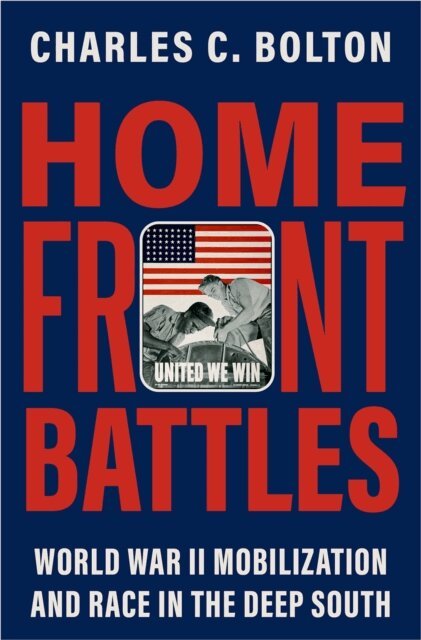
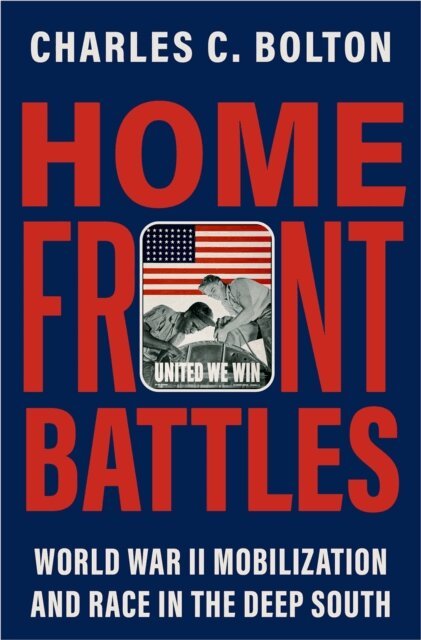
Mobilization for World War II disrupted life in the Deep South of the United States, sparking new-and, in some cases, reigniting old-battles across the home front. Rural migrants flocked to towns and cities, hoping to take advantage of new war-related job opportunities. Wealthy landowners attempted to wield their enormous power to keep farm workers on the land, especially Black tenants and wage hands who provided much of the essential labor. Towns that attracted wartime industries, such as Pascagoula, Mississippi, which exploded with new demand for its shipbuilding industry, grew exponentially and quickly, making the men who owned these shipyards powerful millionaires and laying the foundation for economic concerns that continued well beyond the postwar years. The areas around southern military installations were transformed and experienced heightened racial tensions. Home Front Battles examines the many effects of World War II economic and military mobilization on the Deep South, including the federal government's attempts to solve some of the social problems that arose from a massive influx of migrants who were unfamiliar with a new world of work. It also underscores one of the primary home front battles, which began with the passage of the Selective Training and Service Act in 1940 and the creation of the Fair Employment Practices Committee in 1941, banning discriminatory military training and employment practices and making it clear that the federal government would be promoting the ideal of nondiscrimination as part of its wartime mobilization efforts. In the Deep South, where race relations were already tense, these directives and southern tradition clashed. White politicians-ranging from the liberal Georgia governor Ellis Arnall to Theodore Bilbo, the reactionary U.S. senator from Mississippi-disagreed about the long-term impact of wartime mobilization. At the same time, the fight for African American rights culminated with the elections of 1946, when Blacks in the Deep South tried to vote on a scale unprecedented in the twentieth century and white Southerners closed ranks to beat back their efforts-using tactics that ranged from social intimidation to outright violence.
451 kr
Skickas inom 5-8 vardagar
This compelling collection of original documents and current scholarship sheds considerable light on the underside of the poor white experience in the antebellum South. In 1859, the Georgian Edward Isham, convicted in North Carolina of murdering a Piedmont farmer, dictated his life story to his court-appointed defense attorney. The autobiography left behind provides a rare look at the world of poor whites from the viewpoint of a member of this most elusive of the Old South's social groups. A selection of essays accompanying the autobiography examines the meaning of the document from a variety of perspectives: crime, frontier life, gender relations, labor, and the genre of nineteenth-century confessional literature.
300 kr
Skickas inom 7-10 vardagar
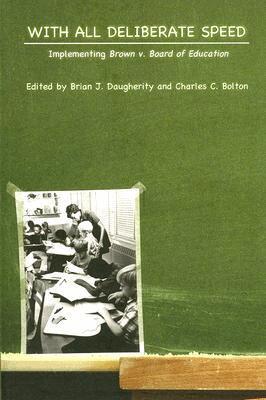
This is the first effort to provide a broad assessment of how well the Brown v. Board of Education decision that declared an end to segregated schools in the United States was implemented. Written by a distinguished group of historians, the twelve essays in this collection examine how African Americans and their supporters in twelve states - Arkansas, North Carolina, Virginia, South Carolina, Georgia, Mississippi, Florida, Delaware, Missouri, Indiana, Nevada, and Wisconsin - dealt with the Court's mandate to desegregate "with all deliberate speed". The process followed many diverse paths.Some of the common themes in these efforts were the importance of black activism, especially the crucial role played by the NAACP; entrenched white opposition to school integration, which wasn't just a southern state issue, as is shown in Delaware, Wisconsin, and Indiana; and the role of the federal government, a sometimes inconstant and sometimes reluctant source of support for implementing Brown.
241 kr
Skickas inom 10-15 vardagar
Updated through the 1996 elections to reflect current historical thinking, the 8th edition A Synopsis of American History continues to provide a chronological summary of major political, economic, and diplomatic developments in American history, but it also analyzes the social, cultural, and intellectual currents of American life with attention to gender, minority, urban and industrial history.
282 kr
Skickas inom 10-15 vardagar
Updated through the 1996 elections to reflect current historical thinking, the 8th edition A Synopsis of American History continues to provide a chronological summary of major political, economic, and diplomatic developments in American history, but it also analyzes the social, cultural, and intellectual currents of American life with attention to gender, minority, urban and industrial history.
Hardest Deal of All
The Battle Over School Integration in Mississippi, 1870-1980
Häftad, Engelska, 2007
377 kr
Skickas inom 10-15 vardagar
Race has shaped public education in the Magnolia State, from Reconstruction through the Carter Administration. For The Hardest Deal of All: The Battle Over School Integration in Mississippi, 1870-1980 Charles C. Bolton mines newspaper accounts, interviews, journals, archival records, legal and financial documents, and other sources to uncover the complex story of one of Mississippi's most significant and vexing issues. This history closely examines specific events--the after-math of the Brown v. Board of Education decision, the 1966 protests and counter-demonstrations in Grenada, and the efforts of particular organizations--and carefully considers the broader picture. Despite a ""separate but equal"" doctrine established in the late nineteenth century, the state's racially divided school systems quickly developed vast differences in terms of financing, academic resources, teacher salaries, and quality of education. As one of the nation's poorest states, Mississippi could not afford to finance one school system adequately, much less two. For much of the twentieth century, whites fought hard to preserve the dual school system, in which the maintenance of one-race schools became the most important measure of educational quality. Blacks fought equally hard to end segregated schooling, realizing that their schools would remain underfunded and understaffed as long as they were not integrated. Charles C. Bolton is professor and chair of history and co-director of the Center for Oral History and Cultural Heritage at the University of Southern Mississippi in Hattiesburg. He is the coauthor of Mississippi: An Illustrated History and coeditor of The Confessions of Edward Isham: A Poor White Life of the Old South. Bolton's work has also appeared in the Journal of Southern History, Journal of Mississippi History, and Mississippi Folklife.