Charles Darwent – författare
Visar alla böcker från författaren Charles Darwent. Handla med fri frakt och snabb leverans.
4 produkter
4 produkter
241 kr
Skickas inom 7-10 vardagar
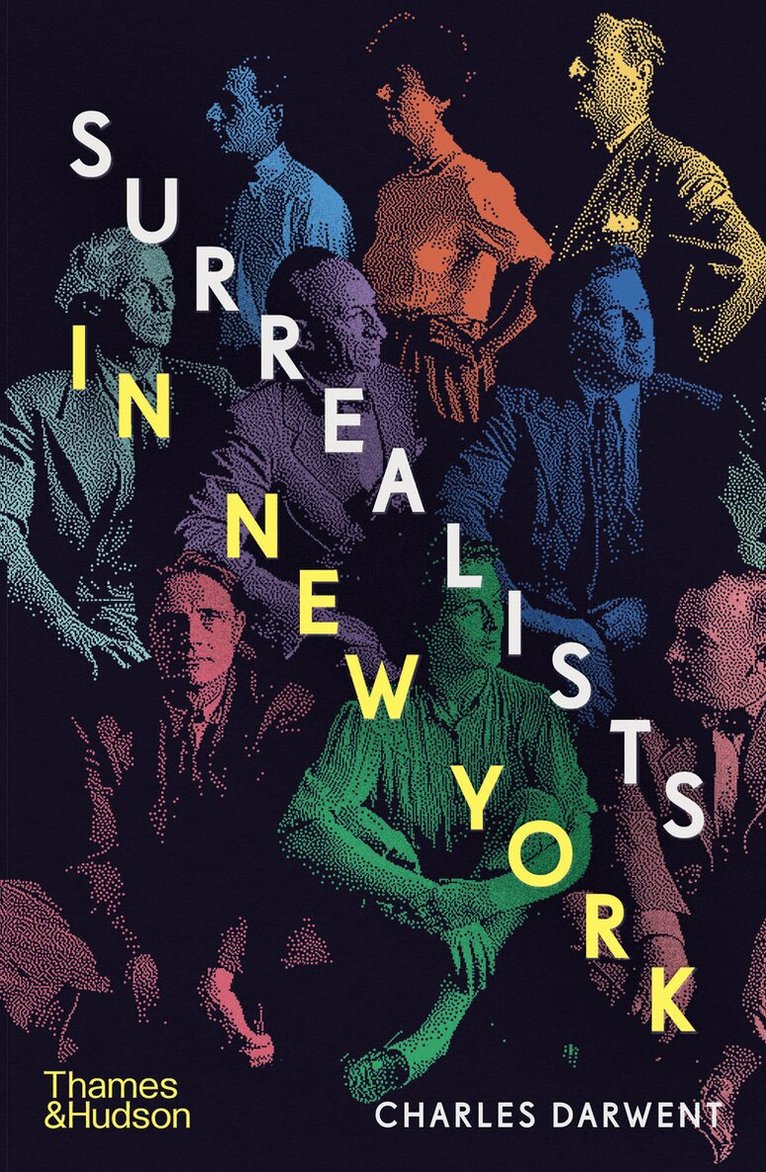
An absorbing group biography revealing how exiles from war-torn France brought Surrealism to America, helping to shift the centre of the art world from Paris to New York and spark the movement that became Abstract Expressionism. In 1957 the American artist Robert Motherwell made an unexpected claim: ‘I have only known two painting milieus well … the Parisian Surrealists, with whom I began painting seriously in New York in 1940, and the native movement that has come to be known as “abstract expressionism”, but which genetically would have been more properly called “abstract surrealism”.’ Motherwell’s bold assertion, that Abstract Expressionism was neither new nor local, but born of a brief liaison between America and France, verged on the controversial. Surrealists in New York tells the story of this ‘liaison’ and the European exiles who bought Surrealism with them – an artistic exchange between the Old World and the New – centring on taciturn printmaker Stanley William Hayter and the legendary Atelier 17 print studio he founded. Here artists’ experiments literally pushed the boundaries of modern art. It was in Hayter’s studio that Jackson Pollock found the balance of freedom and control that would culminate in his distinctive drip paintings. The impact of Max Ernst, André Masson, Louise Bourgeois and other noted émigrés on the work of Motherwell, Pollock, Mark Rothko and the American avant-garde has for too long been quietly written out of art history. Drawing on first-hand documents, interviews and archive materials, Charles Darwent brings to life the events and personalities from this crucial encounter. In so doing, he reveals a fascinating new perspective on the history of the art of the twentieth century.
274 kr
Skickas
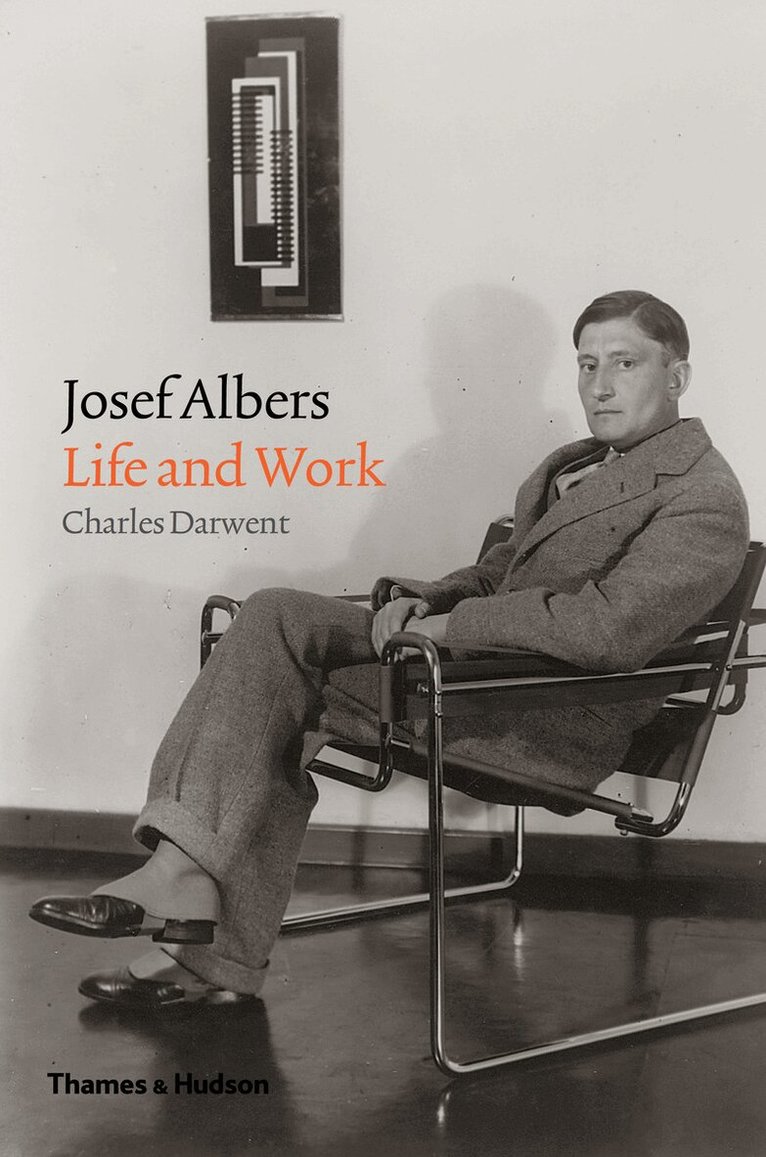
While Josef Albers’ Bauhaus colleagues Klee and Kandinsky are household names, Albers himself has remained inscrutable. He is best known as the painter of the Homages to the Square, a series of over 2,000 seemingly tightly controlled experiments in the interaction of colour. Yet he did not begin these pictures until he was in his sixties, already several decades into his career as an artist, maker and theorist, much of it pursued in the United States following the Nazi dissolution of the Bauhaus in 1933.Misunderstanding of the Homages reflects a wider misreading of Albers’ life and work. Married to the textile artist Anni Albers, his papers include letters from fellow artists John Cage, Robert Rauschenberg, Richard Serra and Eva Hesse; colleagues such as Buckminster Fuller and Philip Johnson; and fans and collectors ranging from the composer Virgil Thomson to the cartoonist Saul Steinberg. If his network of influence was surprisingly wide, so, too, were his interests. Albers started life at the Bauhaus as a glassmaker, ran their renowned wallpaper workshop, and designed furniture that is still in production eighty years later. He pioneered the study of colour at Black Mountain College, organized its famed ‘Summer Sessions’ with guest tutors from Willem de Kooning to Merce Cunningham, and went on to head the design department at Yale. Drawing on extensive unpublished writings, documents and illustrations, Darwent offers a broad view of not only the artistic and political currents, but also the friendships and rivalries that formed the backdrop to Albers’ creative output.
293 kr
Skickas inom 7-10 vardagar
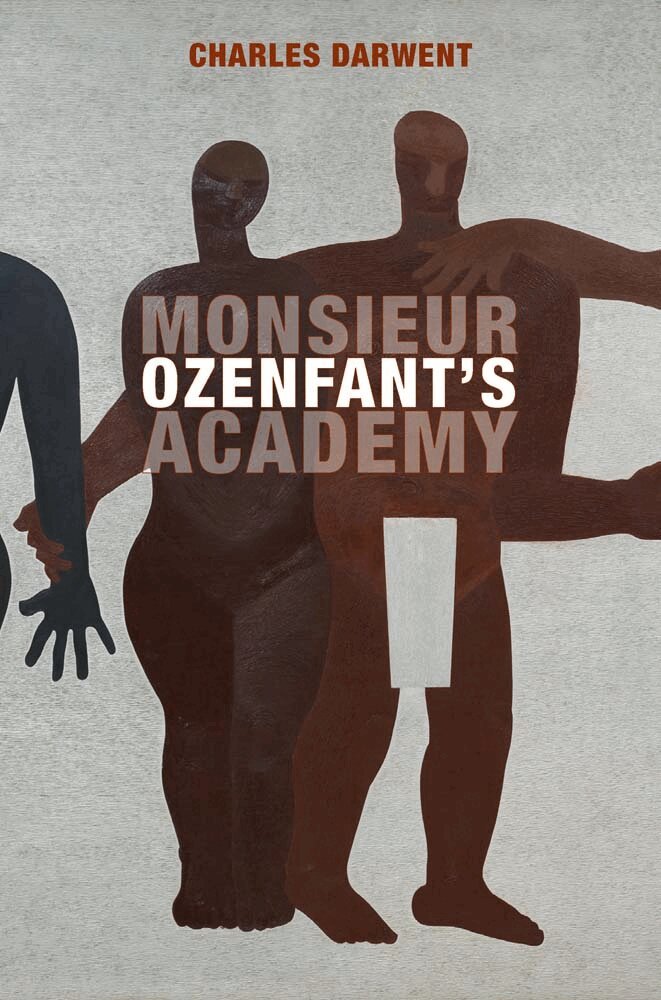
Before the Second World War, an art school stood in a pair of mews houses off Kensington High Street in London. Although the school was small and short-lived, it would be linked to an extraordinary range of talent. Leonora Carrington was one of its students; Henry Moore taught there; Francis Bacon and Eduardo Paolozzi both cited its creator as the reason they had become artists. The school bore his name: the Amédée Ozenfant Academy of Fine Arts. Ozenfant and his school are largely forgotten, yet in the 1920s the man who, with Le Corbusier, invented the style they called Purism, was as well known as Picasso. His academy was a solitary outpost of the Parisian avant-garde in London; Ozenfant was, said France’s education minister, “the man who represented French art in Britain”. As war drew nearer, this lent him an importance that was not just cultural but political. Charles Darwent’s book quietly redraws the history of Anglo-French relations in the late 1930s. Distributed for Art Publishing Inc.
198 kr
Tillfälligt slut
German artist Lother Götz (b. 1963 in Gunzburg, Germany) completed an MA at the Royal College of Art in 1998, after studying in Germany at Aachen, Düsseldorf and Wuppertal. He has exhibited widely in the UK and abroad, with solo shows at galleries such as Gasworks (London), the Chisenhale (London), Mappin Art Gallery (Sheffield), Museum Goch (Germany), David Risley Gallery (Copenhagen) and the Petra Rinck Gallery (Dusseldorf), and has been included in group exhibitions in Amsterdam, Dublin, Hamburg, Hanover, Salamanca, Wilhelmshaven and Wuppertal.Perhaps best known for his large-scale wall paintings and installations, Götz’s drawings lie at the centre of his practice.Brought together in dense compositions on painted card and board, Götz’s thin pencil lines explore the impact of using varying colours and intensities on the work’s surface. Referencing and expanding upon the abstract language of Suprematism and the Bauhaus, the colours appear to oscillate in front of the viewer to immerse them in the surrounding space.Alongside over 40 colour illustrations, an essay by Charles Darwent explores the range of influences on Götz's recent body of work.To commemorate the publication, Götz created a limited-edition lithograph, Correction (2015), in collaboration with Hole Editions. Each edition is hand-finished by the artist and contained within a custom-made slipcase.