Charles E. Stroud - Böcker
Visar alla böcker från författaren Charles E. Stroud. Handla med fri frakt och snabb leverans.
3 produkter
3 produkter
763 kr
Skickas inom 7-10 vardagar
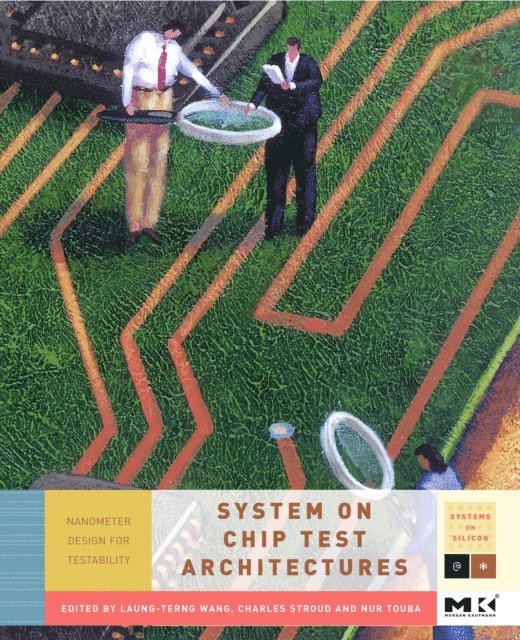
Modern electronics testing has a legacy of more than 40 years. The introduction of new technologies, especially nanometer technologies with 90nm or smaller geometry, has allowed the semiconductor industry to keep pace with the increased performance-capacity demands from consumers. As a result, semiconductor test costs have been growing steadily and typically amount to 40% of today's overall product cost. This book is a comprehensive guide to new VLSI Testing and Design-for-Testability techniques that will allow students, researchers, DFT practitioners, and VLSI designers to master quickly System-on-Chip Test architectures, for test debug and diagnosis of digital, memory, and analog/mixed-signal designs. Emphasizes VLSI Test principles and Design for Testability architectures, with numerous illustrations/examples. Most up-to-date coverage available, including Fault Tolerance, Low-Power Testing, Defect and Error Tolerance, Network-on-Chip (NOC) Testing, Software-Based Self-Testing, FPGA Testing, MEMS Testing, and System-In-Package (SIP) Testing, which are not yet available in any testing book. Covers the entire spectrum of VLSI testing and DFT architectures, from digital and analog, to memory circuits, and fault diagnosis and self-repair from digital to memory circuits. Discusses future nanotechnology test trends and challenges facing the nanometer design era; promising nanotechnology test techniques, including Quantum-Dots, Cellular Automata, Carbon-Nanotubes, and Hybrid Semiconductor/Nanowire/Molecular Computing. Practical problems at the end of each chapter for students.
2 100 kr
Skickas inom 10-15 vardagar
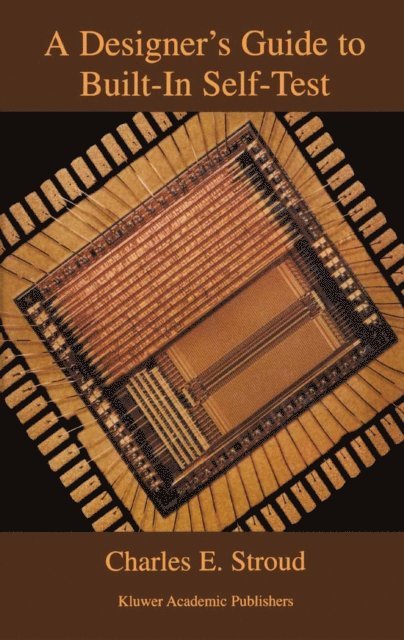
A recent technological advance is the art of designing circuits to test themselves, referred to as a Built-In Self-Test (BIST). This idea was first proposed around 1980 and has grown to become one of the most important testing techniques at the current time, as well as for the future. This book is written from a designer's perspective and describes the major BIST approaches that have been proposed and implemented since 1980, along with their advantages and limitations. The BIST approaches include the Built-In Logic Block Observer, pseudo-exhaustive BIST techniques, Circular BIST, scan-based BIST, BIST for regular structures, BIST for FPGAs and CPLDs, mixed-signal BIST, and the integration of BIST with concurrent fault detection techniques for on-line testing. Particular attention is paid to system-level use of BIST in order to maximize the benefits of BIST through reduced testing time and cost as well as high diagnostic resolution. The author spent 15 years as a designer at Bell Labs where he designed over 20 production VLSI devices and 3 production circuit boards. Sixteen of the VLSI devices contained BIST of various types for regular structures and general sequential logic, including the first BIST for Random Access Memories (RAMs), the first completely self-testing integrated circuit, and the first BIST for mixed-signal systems at Bell Labs. He has spent the past 10 years in academia where his research and development continues to focus on BIST, including the first BIST for FPGAs and CPLDs along with continued work in the area of BIST for general sequential logic and mixed-signal systems. He holds 10 US patents (with 5 more pending) for various types of BIST approaches. Therefore, the author brings a unique blend of knowledge and experience to this practical guide for designers, test engineers, product engineers, system diagnosticians, and managers.
2 100 kr
Skickas inom 10-15 vardagar
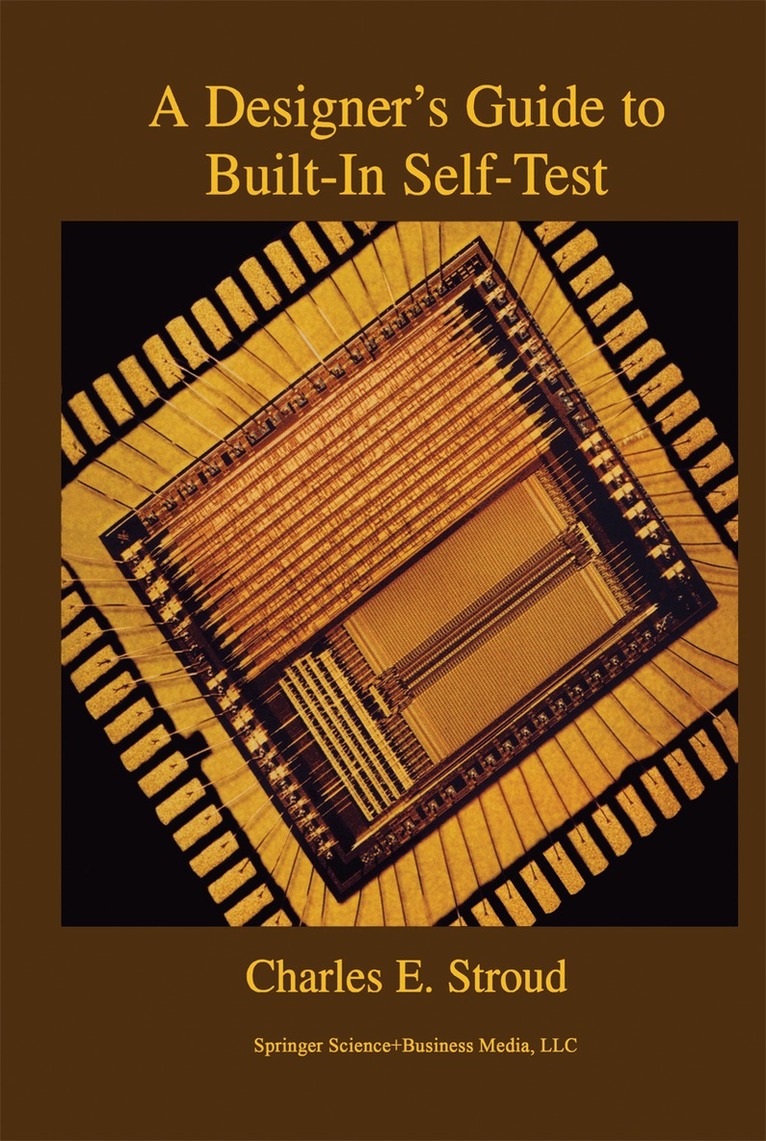
A recent technological advance is the art of designing circuits to test themselves, referred to as a Built-In Self-Test (BIST). This idea was first proposed around 1980 and has grown to become one of the most important testing techniques at the current time, as well as for the future. This book is written from a designer's perspective and describes the major BIST approaches that have been proposed and implemented since 1980, along with their advantages and limitations. The BIST approaches include the Built-In Logic Block Observer, pseudo-exhaustive BIST techniques, Circular BIST, scan-based BIST, BIST for regular structures, BIST for FPGAs and CPLDs, mixed-signal BIST, and the integration of BIST with concurrent fault detection techniques for on-line testing. Particular attention is paid to system-level use of BIST in order to maximize the benefits of BIST through reduced testing time and cost as well as high diagnostic resolution. The author spent 15 years as a designer at Bell Labs where he designed over 20 production VLSI devices and 3 production circuit boards. Sixteen of the VLSI devices contained BIST of various types for regular structures and general sequential logic, including the first BIST for Random Access Memories (RAMs), the first completely self-testing integrated circuit, and the first BIST for mixed-signal systems at Bell Labs. He has spent the past 10 years in academia where his research and development continues to focus on BIST, including the first BIST for FPGAs and CPLDs along with continued work in the area of BIST for general sequential logic and mixed-signal systems. He holds 10 US patents (with 5 more pending) for various types of BIST approaches. Therefore, the author brings a unique blend of knowledge and experience to this practical guide for designers, test engineers, product engineers, system diagnosticians, and managers.