Charles Jelavich - Böcker
Visar alla böcker från författaren Charles Jelavich. Handla med fri frakt och snabb leverans.
6 produkter
6 produkter
588 kr
Skickas inom 7-10 vardagar
This highly readable and thoroughly researched volume offers an excellent account of the development of seven Balkan peoples during the nineteenth and the first part of the twentieth centuries. Professors Charles and Barbara Jelavich have brought their rich knowledge of the Albanians, Bulgarians, Croatians, Greeks, Romanians, Serbians, and Slovenes to bear on every aspect of the area’s history--political, diplomatic, economic, social and cultural.It took more than a century after the first Balkan uprising, that of the Serbians in 1804, for the Balkan people to free themselves from Ottoman and Habsburg rule. The Serbians and the Greeks were the first to do so; the Albanians, the Croatians, and the Slovenes the last. For each people the national revival took its own form and independence was achieved in its own way. The authors explore the contrasts and similarities among the peoples, within the context of the Ottoman Empire and Europe.
1 071 kr
Skickas inom 10-15 vardagar
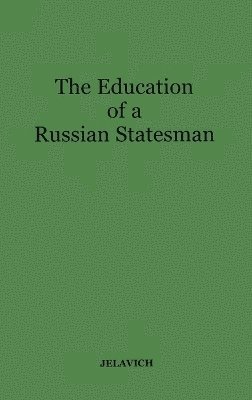
These are the memoirs of Nicholas Karlovich Giers written between 1873 and 1875. They provide a sample of the thinking of a Russian foreign minister and a description of life in Russia and the Danubian principalities at the time.
665 kr
Skickas inom 3-6 vardagar
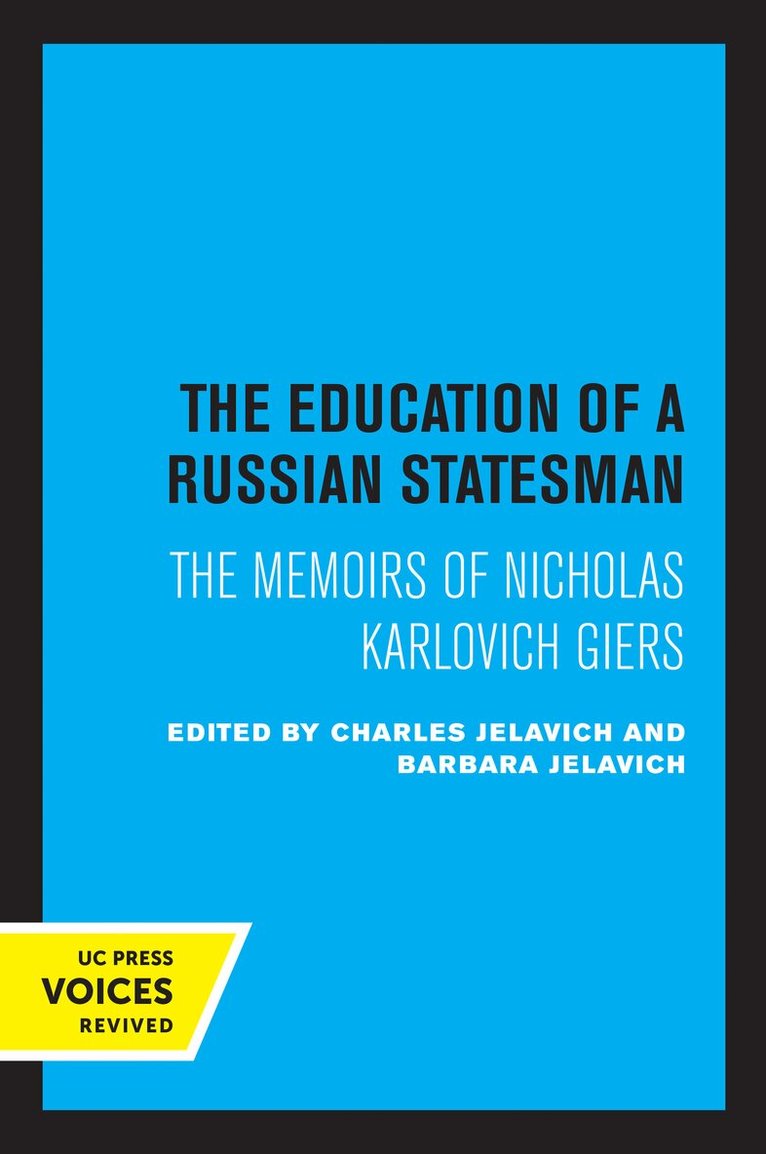
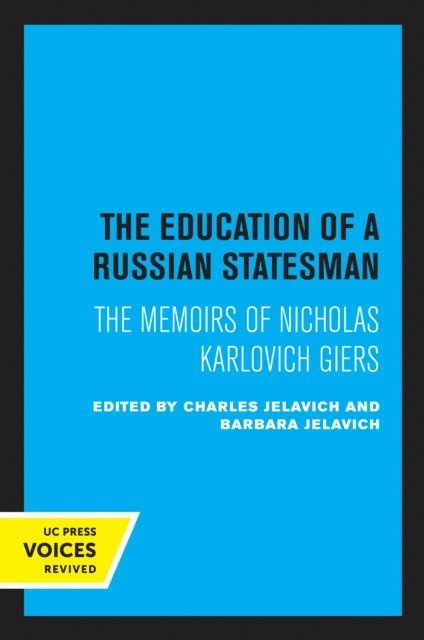
The Education of a Russian Statesman: The Memoirs of Nicholas Karlovich Giers offers a fascinating glimpse into the life and career of one of Russia's most influential diplomats. Written by Giers himself, the memoirs cover his early childhood, education in St. Petersburg, and his initial years in the Russian Foreign Ministry, providing a detailed account of the path that led him to become the Foreign Minister under Tsars Alexander II and Alexander III. The memoirs shed light on Giers's personal struggles with his foreign roots, his slow rise through the ranks, and his role as a diplomatic secretary, rather than a policy-maker. His dedication, diligence, and moderation are evident throughout the work, as Giers sought to steer Russia away from foreign entanglements and instead focus on internal reforms. His personal relationships and connections, particularly through his marriage to Olga Cantacuzino, niece of the Russian foreign minister, played a pivotal role in his career, and the memoirs offer a unique perspective on the Russian elite’s complex social and political dynamics during the 19th century.In addition to his personal narrative, Giers offers rich historical insights into the political environment of the time, including his experiences in Moldavia, which was under Russian protection. His account paints a vivid picture of the power struggles among local elites, the role of Russian consuls, and the corruption that plagued the region. Giers also provides a candid view of his thoughts on various nationalities and cultures, including his anti-Semitic views, which reflect the prevalent attitudes of his era. The Education of a Russian Statesman not only serves as a memoir of Giers's life but also as a valuable historical document that illuminates Russia's foreign policy, its domestic politics, and the personal dynamics that shaped the country's international standing during the mid-19th century.This title is part of UC Press's Voices Revived program, which commemorates University of California Press’s mission to seek out and cultivate the brightest minds and give them voice, reach, and impact. Drawing on a backlist dating to 1893, Voices Revived makes high-quality, peer-reviewed scholarship accessible once again using print-on-demand technology. This title was originally published in 1962.

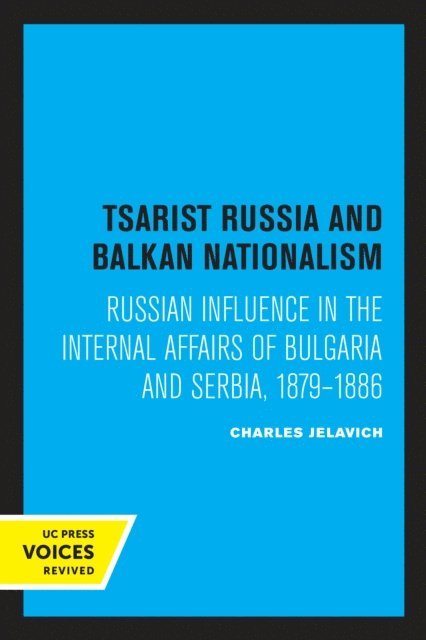
Tsarist Russia and Balkan Nationalism
Russian Influence in the Internal Affairs of Bulgaria and Serbia, 1879-1886
Häftad, Engelska, 2022
835 kr
Skickas inom 3-6 vardagar
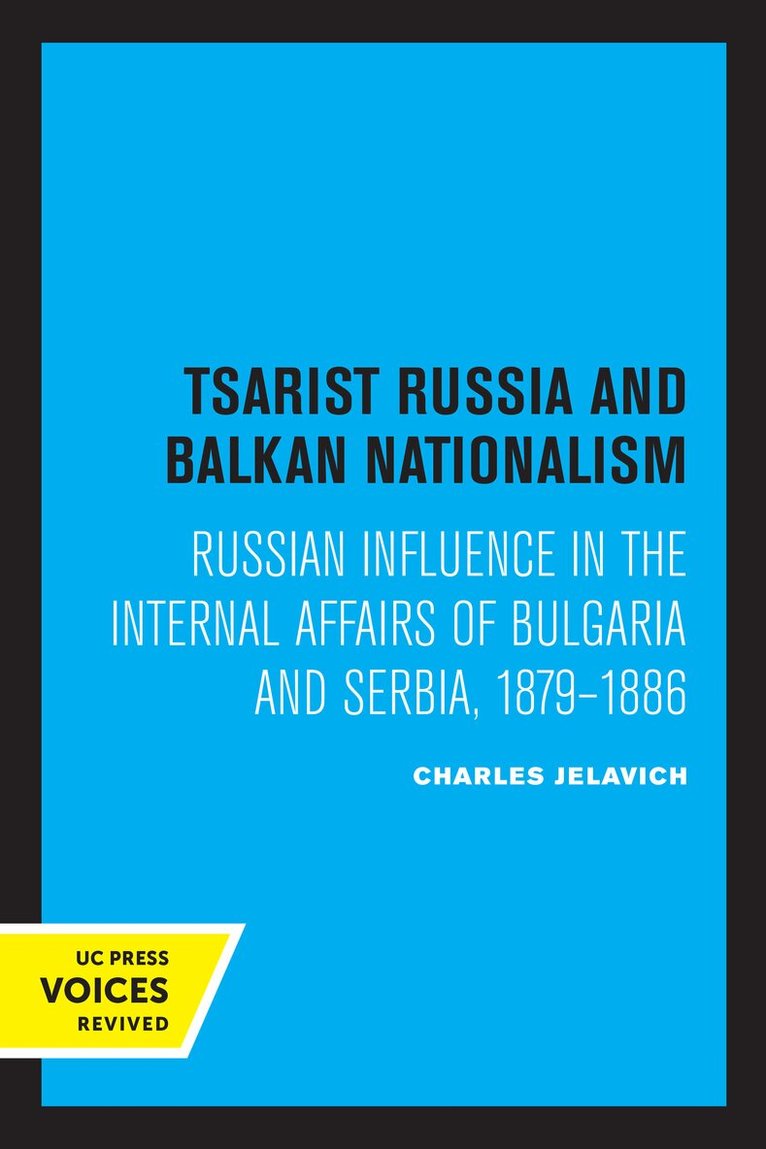
Tsarist Russia and Balkan Nationalism: Russian Influence in the Internal Affairs of Bulgaria and Serbia, 1879–1886 by Charles Jelavich examines the volatile relationship between Russian imperial policy and the rising nationalist movements of the Balkans in the wake of the Congress of Berlin. Anchored in the sharp observation of Bulgarian writer Liuben Karavelov—that liberators would be embraced but rulers opposed—Jelavich traces how Russian ambitions for influence repeatedly clashed with Bulgarian independence, while winning more consistent sympathy in Serbia, where hostility toward Austria-Hungary created openings for Russian diplomacy. The book reveals how tsarist officials navigated a region rife with intrigue, competing great-power interests, and nationalist resistance, and how Russia’s strategies in the Balkans were shaped less by Slavic solidarity than by the hard calculations of great-power politics.Drawing on extensive unpublished archival sources from Britain and Austria as well as the private correspondence of Russian foreign minister N. K. Giers, Jelavich reconstructs in detail the tense negotiations, shifting alliances, and moments of open crisis that defined Russo-Balkan relations in the 1880s. He situates events such as the drafting of the Bulgarian constitution, the Serbo-Bulgarian War, and the abduction of Prince Alexander of Battenberg within a wider European context, where the limits of Russian power were set as much by the resistance of small nations as by the vigilance of rival empires. At once a tightly focused study of Balkan diplomacy and a broader meditation on the dynamics of empire and nationalism, Tsarist Russia and Balkan Nationalism illuminates how fragile alliances, competing identities, and external pressures created enduring patterns in Eastern European politics. This book will appeal to historians of Russia, the Balkans, and international relations seeking to understand how nineteenth-century struggles over influence continue to shape the region’s political landscape.This title is part of UC Press's Voices Revived program, which commemorates University of California Press’s mission to seek out and cultivate the brightest minds and give them voice, reach, and impact. Drawing on a backlist dating to 1893, Voices Revived makes high-quality, peer-reviewed scholarship accessible once again using print-on-demand technology. This title was originally published in 1958.
1 469 kr
Skickas inom 3-6 vardagar
The Education of a Russian Statesman: The Memoirs of Nicholas Karlovich Giers offers a fascinating glimpse into the life and career of one of Russia's most influential diplomats. Written by Giers himself, the memoirs cover his early childhood, education in St. Petersburg, and his initial years in the Russian Foreign Ministry, providing a detailed account of the path that led him to become the Foreign Minister under Tsars Alexander II and Alexander III. The memoirs shed light on Giers's personal struggles with his foreign roots, his slow rise through the ranks, and his role as a diplomatic secretary, rather than a policy-maker. His dedication, diligence, and moderation are evident throughout the work, as Giers sought to steer Russia away from foreign entanglements and instead focus on internal reforms. His personal relationships and connections, particularly through his marriage to Olga Cantacuzino, niece of the Russian foreign minister, played a pivotal role in his career, and the memoirs offer a unique perspective on the Russian elite’s complex social and political dynamics during the 19th century.In addition to his personal narrative, Giers offers rich historical insights into the political environment of the time, including his experiences in Moldavia, which was under Russian protection. His account paints a vivid picture of the power struggles among local elites, the role of Russian consuls, and the corruption that plagued the region. Giers also provides a candid view of his thoughts on various nationalities and cultures, including his anti-Semitic views, which reflect the prevalent attitudes of his era. The Education of a Russian Statesman not only serves as a memoir of Giers's life but also as a valuable historical document that illuminates Russia's foreign policy, its domestic politics, and the personal dynamics that shaped the country's international standing during the mid-19th century.This title is part of UC Press's Voices Revived program, which commemorates University of California Press’s mission to seek out and cultivate the brightest minds and give them voice, reach, and impact. Drawing on a backlist dating to 1893, Voices Revived makes high-quality, peer-reviewed scholarship accessible once again using print-on-demand technology. This title was originally published in 1962.

Tsarist Russia and Balkan Nationalism
Russian Influence in the Internal Affairs of Bulgaria and Serbia, 1879-1886
Inbunden, Engelska, 2022
1 513 kr
Skickas inom 3-6 vardagar
Tsarist Russia and Balkan Nationalism: Russian Influence in the Internal Affairs of Bulgaria and Serbia, 1879–1886 by Charles Jelavich examines the volatile relationship between Russian imperial policy and the rising nationalist movements of the Balkans in the wake of the Congress of Berlin. Anchored in the sharp observation of Bulgarian writer Liuben Karavelov—that liberators would be embraced but rulers opposed—Jelavich traces how Russian ambitions for influence repeatedly clashed with Bulgarian independence, while winning more consistent sympathy in Serbia, where hostility toward Austria-Hungary created openings for Russian diplomacy. The book reveals how tsarist officials navigated a region rife with intrigue, competing great-power interests, and nationalist resistance, and how Russia’s strategies in the Balkans were shaped less by Slavic solidarity than by the hard calculations of great-power politics.Drawing on extensive unpublished archival sources from Britain and Austria as well as the private correspondence of Russian foreign minister N. K. Giers, Jelavich reconstructs in detail the tense negotiations, shifting alliances, and moments of open crisis that defined Russo-Balkan relations in the 1880s. He situates events such as the drafting of the Bulgarian constitution, the Serbo-Bulgarian War, and the abduction of Prince Alexander of Battenberg within a wider European context, where the limits of Russian power were set as much by the resistance of small nations as by the vigilance of rival empires. At once a tightly focused study of Balkan diplomacy and a broader meditation on the dynamics of empire and nationalism, Tsarist Russia and Balkan Nationalism illuminates how fragile alliances, competing identities, and external pressures created enduring patterns in Eastern European politics. This book will appeal to historians of Russia, the Balkans, and international relations seeking to understand how nineteenth-century struggles over influence continue to shape the region’s political landscape.This title is part of UC Press's Voices Revived program, which commemorates University of California Press’s mission to seek out and cultivate the brightest minds and give them voice, reach, and impact. Drawing on a backlist dating to 1893, Voices Revived makes high-quality, peer-reviewed scholarship accessible once again using print-on-demand technology. This title was originally published in 1958.