Charles L Griswold - Böcker
Visar alla böcker från författaren Charles L Griswold. Handla med fri frakt och snabb leverans.
3 produkter
3 produkter
712 kr
Skickas inom 10-15 vardagar
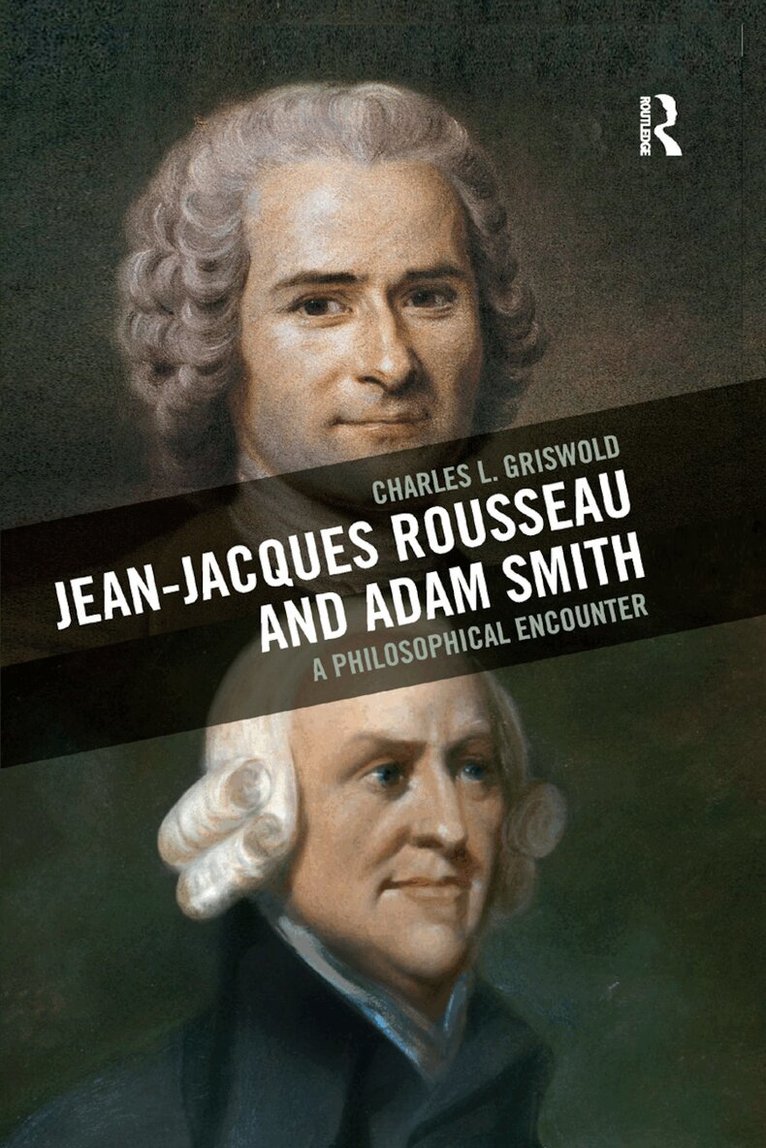
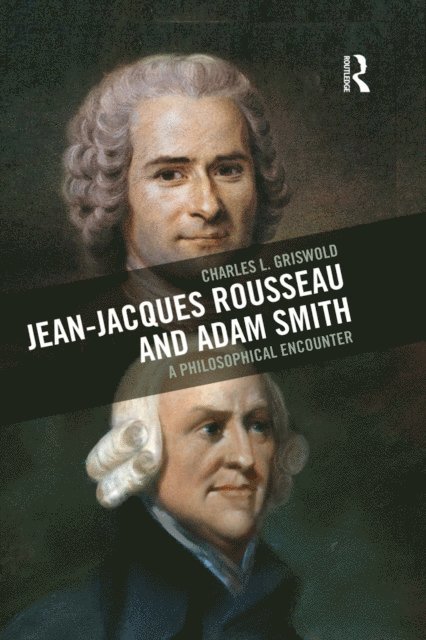
Jean-Jacques Rousseau and Adam Smith are giants of eighteenth century thought. The heated controversy provoked by their competing visions of human nature and society still resonates today. Smith himself reviewed Rousseau's Discourse on Inequality, and his perceptive remarks raise an intriguing question: what would a conversation between these two great thinkers look like?In this outstanding book Charles Griswold analyzes, compares and evaluates some of the key ways in which Rousseau and Smith address what could be termed "the question of the self". Both thinkers discuss what we are by nature (in particular, whether we are sociable or not), who we have become, whether we can know ourselves or each other, how best to articulate the human condition, what it would mean to be free, and whether there is anything that can be done to remedy our deeply imperfect condition. In the course of examining their rich and contrasting views, Griswold puts Rousseau and Smith in dialogue by imagining what they might say in reply to one another. Griswold’s wide-ranging exploration includes discussion of issues such as narcissism, self-falsification, sympathy, the scope of philosophy, and the relation between liberty, religion and civic order.A superb exploration of two major philosophers, Jean-Jacques Rousseau and Adam Smith: A Philosophical Encounter is essential reading for students and scholars of these two figures, eighteenth century philosophy, the Enlightenment, moral philosophy, and the history of ideas. It will also be of interest to those in related disciplines such as political theory, economics, and religion.
1 258 kr
Skickas inom 7-10 vardagar
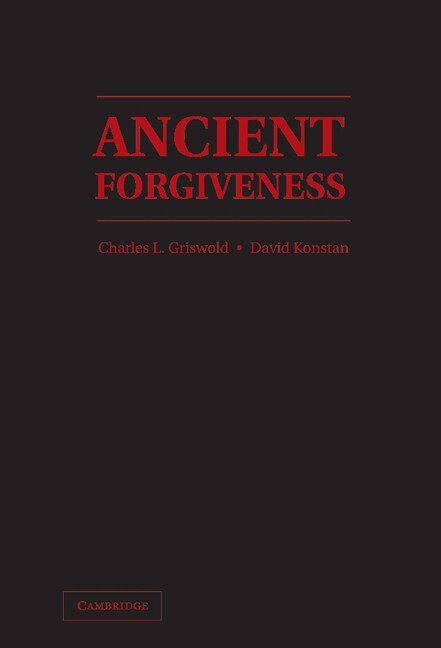
In this book, eminent scholars of classical antiquity and ancient and medieval Judaism and Christianity explore the nature and place of forgiveness in the pre-modern Western world. They discuss whether the concept of forgiveness, as it is often understood today, was absent, or at all events more restricted in scope than has been commonly supposed, and what related ideas (such as clemency or reconciliation) may have taken the place of forgiveness. An introductory chapter reviews the conceptual territory of forgiveness and illuminates the potential breadth of the idea, enumerating the important questions a theory of the subject should explore. The following chapters examine forgiveness in the contexts of classical Greece and Rome; the Hebrew Bible, the Talmud, and Moses Maimonides; and the New Testament, the Church Fathers, and Thomas Aquinas.
2 300 kr
Skickas inom 10-15 vardagar
Jean-Jacques Rousseau and Adam Smith are giants of eighteenth century thought. The heated controversy provoked by their competing visions of human nature and society still resonates today. Smith himself reviewed Rousseau's Discourse on Inequality, and his perceptive remarks raise an intriguing question: what would a conversation between these two great thinkers look like?In this outstanding book Charles Griswold analyzes, compares and evaluates some of the key ways in which Rousseau and Smith address what could be termed "the question of the self". Both thinkers discuss what we are by nature (in particular, whether we are sociable or not), who we have become, whether we can know ourselves or each other, how best to articulate the human condition, what it would mean to be free, and whether there is anything that can be done to remedy our deeply imperfect condition. In the course of examining their rich and contrasting views, Griswold puts Rousseau and Smith in dialogue by imagining what they might say in reply to one another. Griswold’s wide-ranging exploration includes discussion of issues such as narcissism, self-falsification, sympathy, the scope of philosophy, and the relation between liberty, religion and civic order.A superb exploration of two major philosophers, Jean-Jacques Rousseau and Adam Smith: A Philosophical Encounter is essential reading for students and scholars of these two figures, eighteenth century philosophy, the Enlightenment, moral philosophy, and the history of ideas. It will also be of interest to those in related disciplines such as political theory, economics, and religion.