Charles L. Zelden - Böcker
Visar alla böcker från författaren Charles L. Zelden. Handla med fri frakt och snabb leverans.
11 produkter
11 produkter
99 kr
Skickas inom 5-8 vardagar
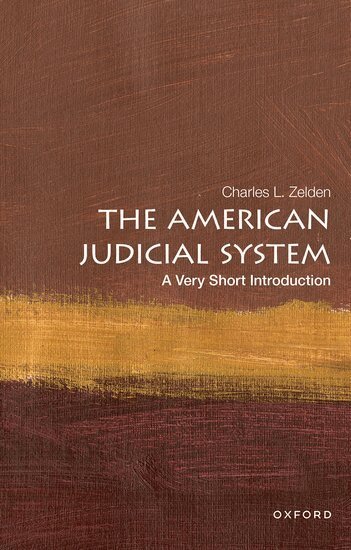
At some point, everyone living in the United States has some type of interaction with the American judicial system. For most, this contact is relatively minor: contesting a traffic ticket, suing or being sued in civil court, being a witness in a civil or criminal trial, or serving on a jury. Others are caught up in the criminal justice system - as defendants, as victims, as witnesses, as jurors, or as relatives of a victim or a defendant. For still others, contact comes via an important policy issue affecting their lives in the hands of judges and justices sitting in judgment in marble temples to the law. Yet whatever the level of contact, the American judicial system affects peoples' lives. What courts and judges do matters.This book provides a very short, but complete introduction to the institutions and people, the rules and processes, that make up the American judicial system. Jargon free and aimed at a general reader, this Very Short Introduction explains the 'where,' 'when,' and 'who' of American courts. It also makes clear the 'how' and 'why' behind the law as it affects everyday people. It is, in a word, a starting place to understanding the third branch of American government at both the state and federal levels; a guide to those wishing to know the basics of the American judicial system; and a cogent synthesis of how the various elements that make up the law and legal institutions fit together.
2 216 kr
Skickas inom 10-15 vardagar
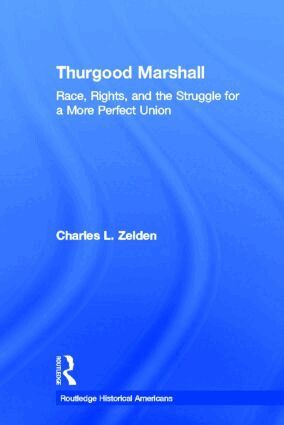
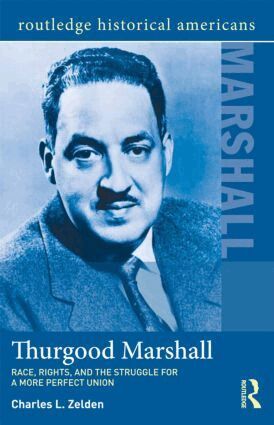
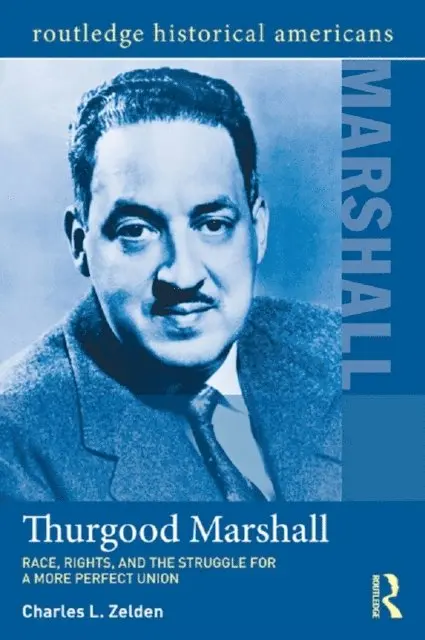
Thurgood Marshall was an Associate Justice of the US Supreme Court from 1967 to 1991. He was the first African American to hold that position, and was one of the most influential legal actors of his time. Before being appointed to the Supreme Court by President Lyndon Johnson, Marshall was a lawyer for the National Association for the Advancement of Colored People (NAACP), Federal Judge (1961-1965), and Solicitor General of the United States (1965-1966). Marshall won twenty-nine of thirty-two cases before the Supreme Court – most notably the landmark case of Brown v. Board of Education, which held segregated public schools unconstitutional. Marshall spent his career fighting racial segregation and legal inequality, and his time on the court establishing a record for supporting the "voiceless American." He left a legacy of change that still affects American society today.Through this concise biography, accompanied by primary sources that present Marshall in his own words, students will learn what Marshall did (and did not do) during his life, why those actions were important, and what effects his efforts had on the larger course of American history.
612 kr
Skickas inom 10-15 vardagar
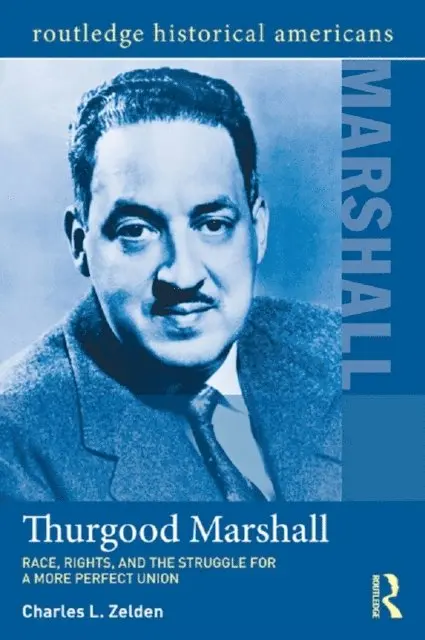
Thurgood Marshall was an Associate Justice of the US Supreme Court from 1967 to 1991. He was the first African American to hold that position, and was one of the most influential legal actors of his time. Before being appointed to the Supreme Court by President Lyndon Johnson, Marshall was a lawyer for the National Association for the Advancement of Colored People (NAACP), Federal Judge (1961-1965), and Solicitor General of the United States (1965-1966). Marshall won twenty-nine of thirty-two cases before the Supreme Court – most notably the landmark case of Brown v. Board of Education, which held segregated public schools unconstitutional. Marshall spent his career fighting racial segregation and legal inequality, and his time on the court establishing a record for supporting the "voiceless American." He left a legacy of change that still affects American society today.Through this concise biography, accompanied by primary sources that present Marshall in his own words, students will learn what Marshall did (and did not do) during his life, why those actions were important, and what effects his efforts had on the larger course of American history.
346 kr
Skickas inom 7-10 vardagar
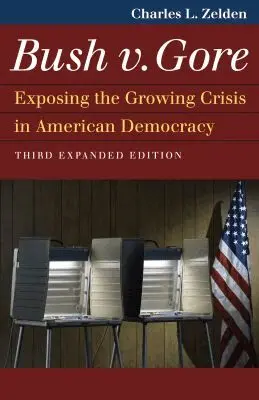
Who could forget the Supreme Court's controversial 5-4 decision in Bush v. Gore or the 2000 presidential campaign and election that preceded it? Hanging chads, butterfly ballots, endless recounts, raucous allegations, and a constitutional crisis were all roiled into a confusing and potentially dangerous mix--until the Supreme Court decision allowed George W. Bush to become the 43rd President of the United States, despite losing the popular vote to Al Gore.Praised by scholars and political pundits alike, the original edition of Charles Zelden's book set a new standard for our understanding of that monumental decision. A probing chronicle and critique of the vexing and acrimonious affair, it offered the most accurate and up-to-date analysis of a remarkable episode in American politics. Highly readable, its comprehensive coverage, depth of documentation and detail, and analytic insights remain unrivaled on the subject.In this third expanded edition Zelden offers a powerful history of voting rights and elections in America since 2000. Bush v. Gore exposes the growing crisis by detailing the numerous ways in which the unlearned and wrongly learned "lessons of 2000" have impacted American election law through the growth of voter suppression via legislation and administrative rulings, and, provides a clear warning of how unchecked partisanship arising out of Bush v. Gore threatens to undermine American democracy in general and the 2020 election in particular.
2 201 kr
Skickas inom 3-6 vardagar
Voting is simple in the United States, right? The process of voting (organizing, running and tabulating the results of a popular election) is, in fact, a highly contested act whose forms, meanings, and practical boundaries are open to widely differing interpretations. From questions of who can vote to the tricky problem of accurately counting the votes, popular democracy is still a work in progress in the United States. Add in the complexities of politics and the picture becomes even more complicated. Taking a chronological approach to the topic, The Supreme Court and Elections explores the ways that the Court has struggled with these questions. From the earliest days of the Union when the Supreme Court refused to address the topic, to the early struggles with the Fourteenth Amendment’s impact on the question of who can vote, to the rise and fall of race-based disenfranchisement, to our recent issues of proper districting, campaign finance reform and the struggle to find a workable voting technology, the essay and documents in this reference illuminate the multifaceted nature of voting and election laws. At the same time, this title provides in-depth analysis of the impact of the Court in shaping this ongoing history. Topics addressed in The Supreme Court and Elections include the following: The Nature of Election Law/VotingRights and the Impact of the CourtImpact of the Civil Rights Amendments Voting in the late 19th And early 20th centuriesDisenfranchisement and the CourtRedistricting casesMajority-Minority districtsCampaign finance reformBush v. Gore and beyondThis title also interweaves select sections of primary source documents in an easy-to-follow format: The U.S. ConstitutionThe Voting Rights Act (1965) and the later Amendment (1982)Excerpts from Federal Voting StatutesSupreme Court casesPresident Lyndon Baines Johnson excerptsContemporaneous news articlesCourt BriefsFocusing on the practical problems of U.S. voting and its complex development within the framework of the political branches of the government, students and researchers will benefit from the clear picture painted by the author of the current elective structure. Essay and document based, The Supreme Court and Elections is the definitive reference on the application of U.S. law on Americans right to vote and the resulting participatory democracy.
675 kr
Skickas inom 10-15 vardagar
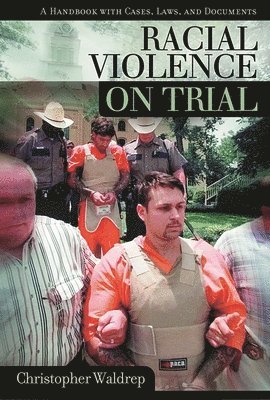
An examination of the historical experience of African Americans as a case study of America's legacy of racial violence.In this comprehensive overview of how the law has been used to combat racism, author Christopher Waldrep points out that the U.S. government has often promoted discrimination. A veritable history of civil rights, the story is told primarily through a discussion of key legal cases.Racial Violence on Trial also presents 11 key documents gathered together for the first time, from the Supreme court's opinion in Brown v. Mississippi to a 1941 newspaper account entitled The South Kills Another Negro, to a 1947 New Yorker piece, Opera in Greenville, about a crowd of taxi drivers who killed a black man. Also included are a listing of key people, laws, and concepts; a chronology; a table of cases; and an annotated bibliography.Four narrative chapters examine the history of black–white relations since America was foundedA–Z entries cover important people, laws, events, and concepts and a special documents section includes court decisions, magazine stories, and personal accounts
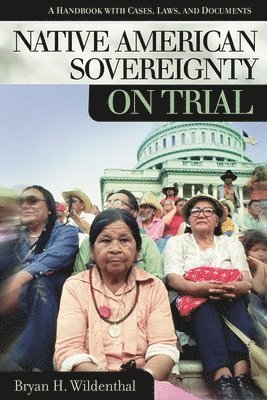
Native American Sovereignty on Trial
A Handbook with Cases, Laws, and Documents
Inbunden, Engelska, 2003
682 kr
Skickas inom 10-15 vardagar
A survey of Native American tribal law and its place within the framework of the U.S. Constitution from colonial times to today's headlines.Using five major court cases, Native American Sovereignty on Trial examines American Indian tribal governments and how they relate to federal and state governments under the U.S. Constitution. From the foundational U.S. Supreme Court opinions of the 1830s, to the California State Gaming Propositions of 1998 and 2000, the impact and legacy of these court cases are fully explored.The actual text of key treaties, court decisions, and other legal documents pertaining to the five tribal controversies are featured and analyzed. Clearly presented, this in depth review of essential legal issues makes even the most difficult and complex judicial doctrines easy to understand by students and nonlawyers. This concise volume tracing the evolution of Native American sovereignty will supplement coursework in law, political science, U.S. history, and American Indian studies.
805 kr
Skickas inom 10-15 vardagar
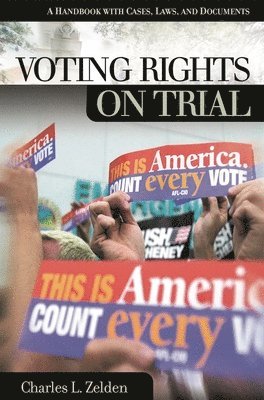
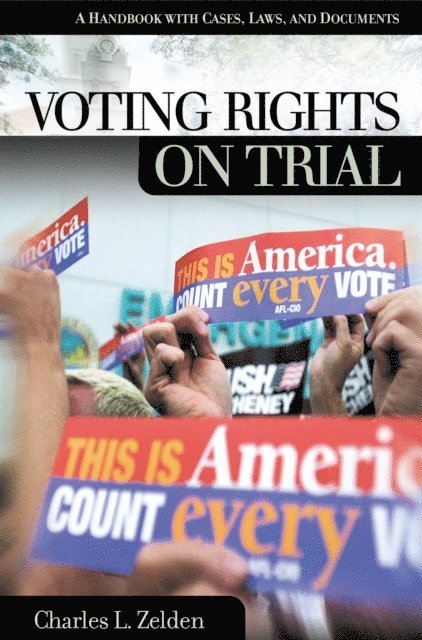
Explores and documents the causes and effects of the long history of vote denial on American politics, culture, law, and society.The debate over who can and cannot vote has been "on trial" since the American Revolution. Throughout U.S. history, the franchise has been awarded and denied on the basis of wealth, status, gender, ethnicity, and race. Featuring a unique mix of analysis and documentation, Voting Rights on Trial illuminates the long, slow, and convoluted path by which vote denial and dilution were first addressed, and then defeated, in the courts.Four narrative chapters survey voting rights from colonial times to the 2000 presidential election, focus on key court cases, and examine the current voting climate. The volume includes analysis of voting rights in the new century and their implications for future electoral contests. The coverage concludes with selections of documents from cases discussed, relevant statutes and amendments, and other primary sources.A timeline giving the history of voting rights from 1619, when Virginia planters voted for the first time, to 2000, when the Supreme Court invalidated Florida's recount process, which ultimately determined the outcome of the electionExcerpts of key legal documents including Reynolds v. Sims (one person, one vote) and Bush v. Gore (debate over nationalization of voting rights)
805 kr
Skickas inom 10-15 vardagar
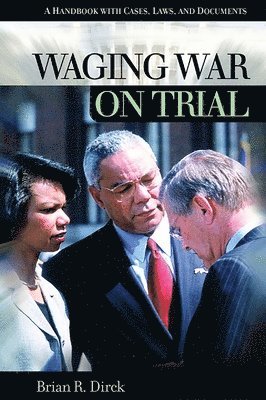
A thought-provoking and engaging guide to the legal, moral, and political issues that arise when the United States goes to war.From the American Revolution to the Bush administration's new type of war on terror, Waging War on Trial views warfare from a legal, social, cultural, and political standpoint. Included are homefront debates during major hostilities, "brushfire" incidents, and how the events of September 11th have shaped our domestic wartime policy.The battle continues today as the President and Congress debate over who begins and ends military operations. Concerns about civil liberties, the draft, and internal security are as relevant today as during the Civil War. Questions arise on how dissenters and minorities are treated and if America can legally control the behavior of our soldiers. It's an intricate interplay between war and America's institutions.A–Z entries on key people such as Oliver Wendell Holmes and Senator Lee Overman, court decisions such as Abrams v. United States and Schenck v. United States, events such as the Gulf War, and issues such as the suspension of the writ of habeas corpusA chronology spanning the history of waging war from 1792, which saw the formation of the Society of Cincinnatus, through 2002, with the United States contemplating war with Iraq
675 kr
Skickas inom 10-15 vardagar
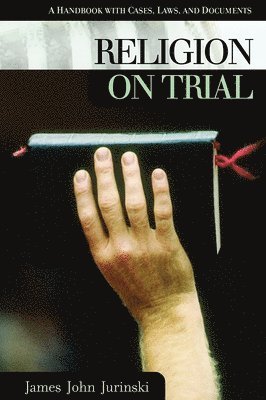
From colonial times to the present, an insightful examination of how courts have determined the extent to which religion is accommodated in American public life.From the internationally renowned Scopes "Monkey Trial" of 1925, which pitted a public school teacher arrested for teaching evolution against the state of Tennessee, Religion on Trial chronicles key court cases that have shaped the tumultuous relationship between church and state throughout U.S. history.This volume chronicles such groundbreaking cases as the 1991 decision ordering blood transfusions for children of Christian Scientists in Norwood Hospital v. Munoz and the infamous case, Engel v. Vitale, that banned prayer in schools and ignited calls for Chief Justice Earl Warren's impeachment. The work addresses such inflammatory contemporary disputes as prayer in schools, allegiance to the flag, and the display of religious symbols on public property, and the impact they have had on American society.A–Z entries cover people, laws, events, and concepts that have shaped the legal debate over religion in the United StatesA chronology begins in colonial times and extends through the present, with a special focus on important court cases of the 20th century
928 kr
Skickas inom 10-15 vardagar
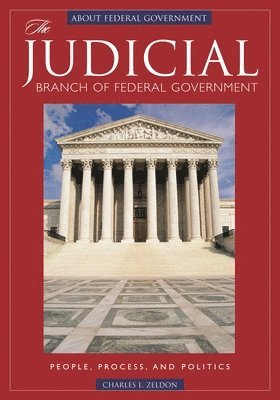
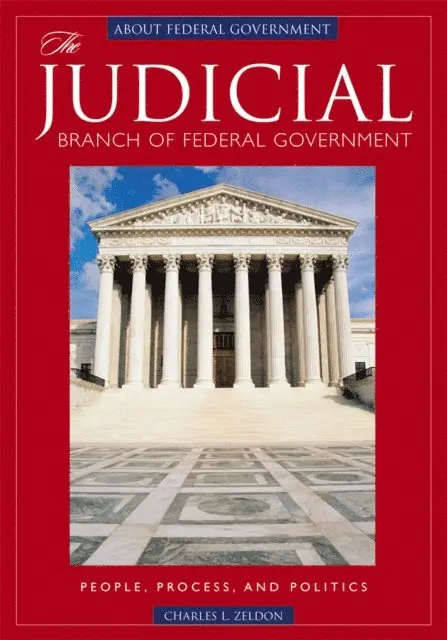
This volume in ABC-CLIO's About Federal Government set looks at the history and daily operations of the federal judiciary, from district courts, to courts of appeal, to the Supreme Court.The Judicial Branch of Federal Government: People, Process, and Politics shows how the federal courts act as interpreters of the law, definers of rules, and shapers of policy, covering the judiciary throughout U.S. history and as it functions today.In one concise yet comprehensive resource, The Judicial Branch of Federal Government describes the constitutionally ascribed roles and structures of the courts. It looks at the men and women who serve on the federal bench (who they are and how they are appointed), as well as the fascinating relationship of the federal courts with the legislative and executive branches and with the 50 state court systems.Provides a detailed timeline of the legislative history of the federal courts, from the Supreme Court to the district courts by statePrimary sources include Article III of the U.S. Constitution, the Judiciary Acts of 1789 and 1801, the Evarts Act of 1891 (creation of Circuit Courts of Appeals), the Judiciary Act of 1911 (disbanding the old Circuit Courts), landmark cases such as Marbury v. Madison (judicial review) and a complete listing of all who served as federal judges by name and by the court they served in