Charles McNelis - Böcker
Visar alla böcker från författaren Charles McNelis. Handla med fri frakt och snabb leverans.
4 produkter
4 produkter
3 447 kr
Skickas inom 3-6 vardagar
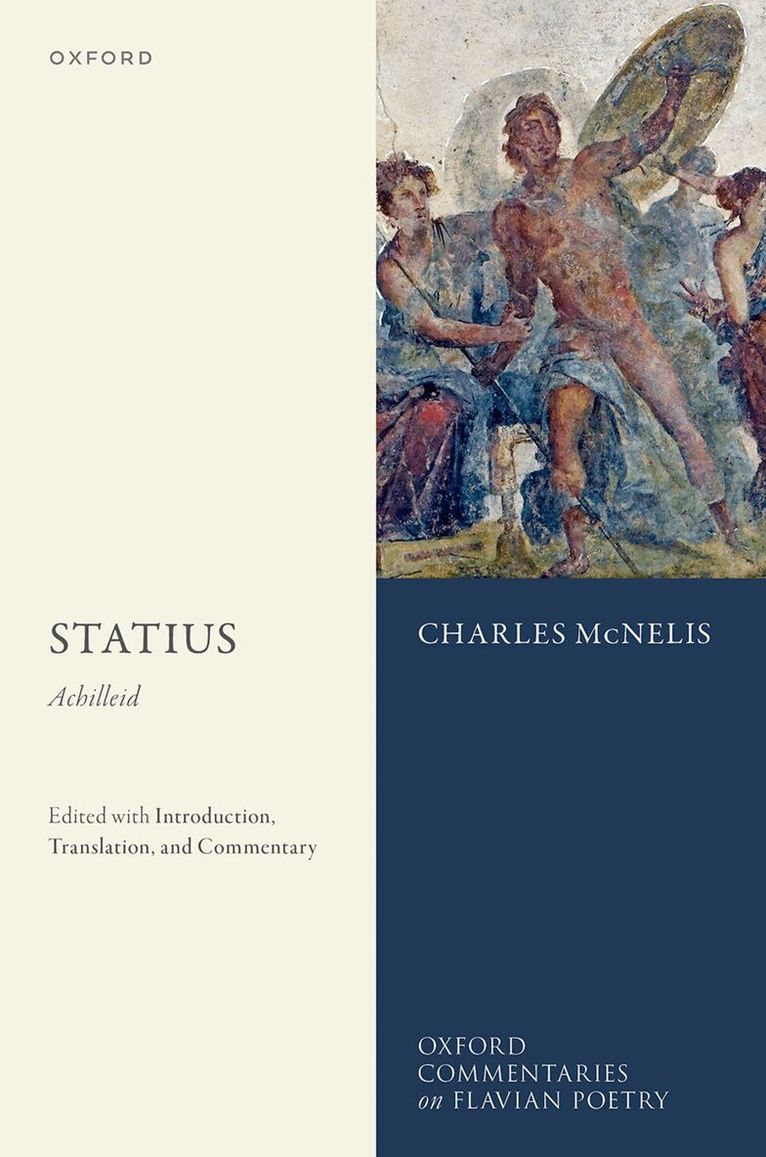
Statius' Achilleid is the most extensive treatment of the myth of Achilles hiding disguised as a girl on the island of Scyros. In the Achilleid, the hero, who had been trained to be an outstanding warrior by the centaur Chiron, complies with a scheme devised by his divine mother, Thetis, who does not want him to sail to Troy since her son is fated to die there. She proposes that he dress as a girl in order to hide himself from the Greeks who wish to enlist him in the martial expedition; despite his inclinations developed by Chiron, Achilles acquiesces, but only in order to pursue his desire for the princess Deidamia. Odysseus and Diomedes, sent by the Greek army, come to Scyros to reclaim Achilles, and the poem depicts the struggles faced by Deidamia and Achilles' future comrades as they coax him in opposite directions. While Achilles tries to sort out his desires, he reflects upon love, family, social obligations, and the lessons that have been imparted to him. Throughout the Middle Ages and up to the current day, Statius' depiction of the great Greek hero has attracted artistic and scholarly attention for its treatment of themes such as education, heroism, fate, and gender and sexuality. Statius' poem, written at the end of the first century CE, also engages deeply with the entirety of the Greek and Roman literary traditions--in particular, epic poems such as the Iliad, the Odyssey, Vergil's Aeneid, and Ovid's Metamorphoses. The Achilleid's reworking of these earlier poems amounts to a tour-de-force reconsideration of the entire genre of epic poetry. This new edition of the Achilleid contains an extensive introduction (encompassing mythological background, details about Statius' language and meter, and a survey of the reception of the poem since late antiquity), a Latin text (based upon recent scholarship) with facing-page English translation, and the first full-scale commentary in English in nearly 70 years.
1 942 kr
Skickas inom 3-6 vardagar
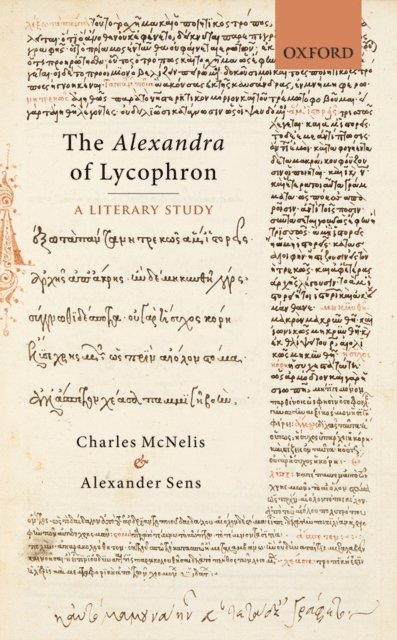
This monograph is a literary study of Lycophron's Alexandra, whose obscurity, a quality notorious already in antiquity, has long hampered holistic approaches. Through a series of distinct but closely integrated literary studies of major aspects of the poem, including its style, its engagement with the traditions of epic and tragedy, and it's treatment of heroism and of the gods, the book explores the way the Alexandra reconfigures Greek mythology. In particular, as it is presented in Homeric epic and Athenian tragedy, in order to cast the Romans and their restoration of Trojan glory as the ultimate telos of history. In this sense, the poem emerges as an important intermediary between Homeric epic and Latin poetry, particularly Vergil's Aeneid. By rewriting specific features of the epic and tragic traditions, the Alexandra denies to Greek heroes the glory that was the traditional compensation for their suffering, while at the same time attributing to Cassandra's Trojan family honours framed in the traditional language of Greek heroism. In this sense, the figure of Cassandra, a prophetess traditionally gifted with the power of foresight but denied credibility, self-reflexively serves as a vehicle for exploring the potentials and limitations of poetry.
614 kr
Skickas inom 7-10 vardagar
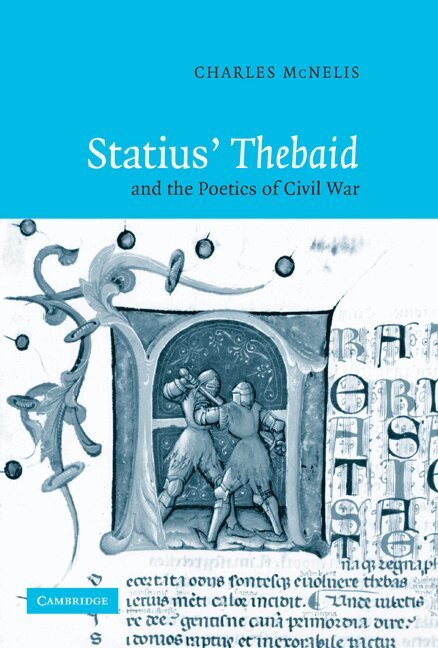
This study focuses on ways in which Statius' epic Thebaid, a poem about the civil war between Oedipus' sons Eteocles and Polynices, reflects the theme of internal discord in its narrative strategies. At the same time that Statius reworks the Homeric and Virgilian epic traditions, he engages with Hellenistic poetic ideals as exemplified by Callimachus and the Roman Callimachean poets, especially Ovid. The result is a tension between the impulse towards the generic expectations of warfare and the desire for delay and postponement of such conflict. Ultimately, Statius adheres to the mythic paradigm of the mutual fratricide, but he continues to employ competing strategies that call attention to the fictive nature of any project of closure and conciliation. In the process, the poem offers a new mode of epic closure that emphasises individual means of resolution.
1 371 kr
Skickas inom 7-10 vardagar
This study focuses on ways in which Statius' epic Thebaid, a poem about the civil war between Oedipus' sons Eteocles and Polynices, reflects the theme of internal discord in its narrative strategies. At the same time that Statius reworks the Homeric and Virgilian epic traditions, he engages with Hellenistic poetic ideals as exemplified by Callimachus and the Roman Callimachean poets, especially Ovid. The result is a tension between the impulse towards the generic expectations of warfare and the desire for delay and postponement of such conflict. Ultimately, Statius adheres to the mythic paradigm of the mutual fratricide, but he continues to employ competing strategies that call attention to the fictive nature of any project of closure and conciliation. In the process, the poem offers a new mode of epic closure that emphasises individual means of resolution.