
Charles Palermo - Böcker
Visar alla böcker från författaren Charles Palermo. Handla med fri frakt och snabb leverans.
2 produkter
2 produkter
654 kr
Skickas inom 11-20 vardagar
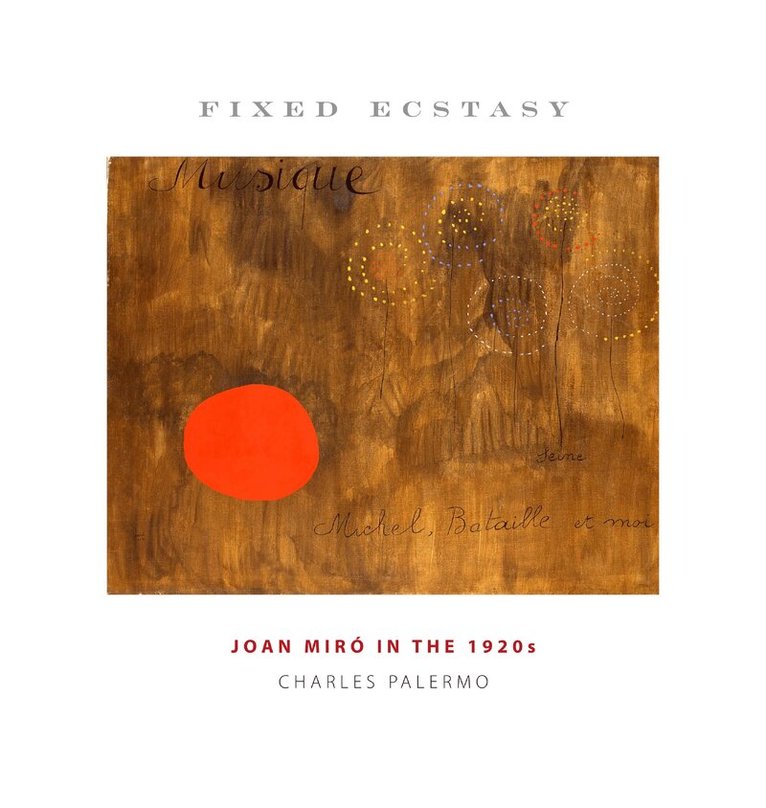
Fixed Ecstasy advances a fundamentally new understanding of Miró’s enterprise in the 1920s and of the most important works of his career. Without a doubt, Joan Miró (1893–1983) is one of the leading artists of the early twentieth century, to be ranked alongside such artists as Picasso, Matisse, Mondrian, and Pollock in his contributions to modernist painting. Still, Miró’s work has eluded easy classification. He is best known as a Surrealist, but, as Charles Palermo demonstrates, Miró’s early years in Barcelona and Paris require a revisionist account of Miró’s development and his place in modernism.Palermo’s arguments are based on new research into Miró’s relations with the rue Blomet group of writers and artists, as well as on close readings of the techniques and formal structures of Miró’s early drawings and paintings. Chapter by chapter, Palermo unfolds a narrative that makes a cogent argument for freeing Miró from long-standing dependence on Surrealism, with its strong emphasis on dreams and the unconscious. Miró, along with associates such as Georges Bataille, Carl Einstein, and Michel Leiris, pressed representation to its limit at the verge of an ecstatic identification with the world.
493 kr
Skickas inom 7-10 vardagar
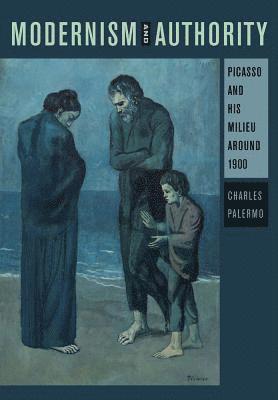
Modernism and Authority presents a provocative new take on the early paintings of Pablo Picasso and the writings of Guillaume Apollinaire. Charles Palermo argues that references to theology and traditional Christian iconography in the works of Picasso and Apollinaire are not mere symbolic gestures; rather, they are complex responses to the symbolist art and poetry of figures important to them, including Paul Gauguin, Charles Morice, and Santiago Rusinol. The young Picasso and his contemporaries experienced the challenges of modernity as an attempt to reflect on the lost relation to authority. For the symbolists, art held authority by revealing something compelling something to which audiences must respond lest they lose claim to their own moral authority. Instead of the total transformation of the reader or viewer that symbolist creators envision, Picasso and Apollinaire imagine a divided self, responding only partially or ambivalently to the work of art's call.Navigating these problems of symbolist art and poetry entails considering the nature of the work of art and of one's response to it, the modern subject's place in history, and the relevance of historical truth to our methodological choices in the present.