Charles Pinnegar - Böcker
Visar alla böcker från författaren Charles Pinnegar. Handla med fri frakt och snabb leverans.
2 produkter
2 produkter
1 355 kr
Skickas inom 10-15 vardagar
Historians have labeled John Buchanan Floyd a traitor and a coward for his actions during the Civil War, and this view has persisted largely unchallenged. This study reopens the case of this reform-minded Virginia governor and one-time Secretary of War to examine all aspects of Floyd's career. Pinnegar contends that partisan congressional investigations and wild newspaper claims branded Floyd as a traitor to the Union, and that the historical profession's tendency to focus solely on his connections to the Civil War era have ensured that Floyd's reputation was never leavened by the successes of his first fifty years. Pinnegar hopes to demonstrate that charges of malfeasance in office were exaggerated, while prevailing administrative routines were ignored, tactics that result in an unfair portrait of Floyd.Although he was a Unionist, Floyd did consider secession a viable option given the right conditions. This view earned him the label of the most hated southerner in the North. Most of Floyd's personal papers were destroyed in a Union cavalry raid in 1864, making a complete reassessment of his reputation difficult. Pinnegar places Floyd's life in context, explaining the circumstances surrounding the scandals during his years as Secretary of War and chronicling the hardships, successes, and failures of his army command. While Floyd was certainly no saint, this challenge to accepted dogma looks beyond the labels to take the reader closer to the real Floyd.
589 kr
Skickas inom 5-8 vardagar
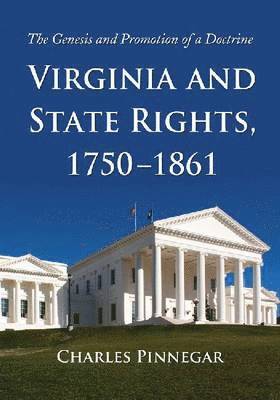
While most historical studies merely scratch the surface of antebellum state rights and treat the doctrine as just one of many differences between the North and South, this book focuses exclusively on state rights from colonial to Civil War times. It looks particularly at Virginia, examining how the concept of state rights became the backbone of the Old Dominion's understanding of the Union for at least seven decades.Part One looks at Virginia's ideological attitudes toward state rights, revealing how and why state rights Antifederalists recoiled from the expansive tendencies of central government power during the Constitutional debate and the Virginia ratification convention. Part Two examines the methodologies employed to maintain the currency of state rights in the face of nationalist threats to a southern interpretation of liberty by examining documents and essays by luminaries such as James Madison, Thomas Jefferson, Spencer Roane, Abel Upshur, and Littleton Tazewell.