Charles R. Hale - Böcker
Visar alla böcker från författaren Charles R. Hale. Handla med fri frakt och snabb leverans.
7 produkter
7 produkter
632 kr
Skickas inom 3-6 vardagar
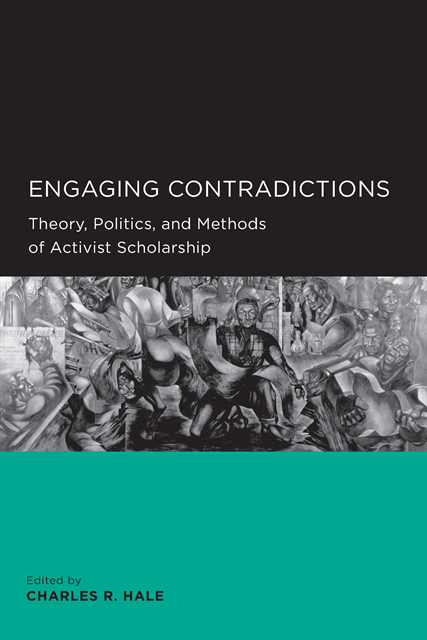
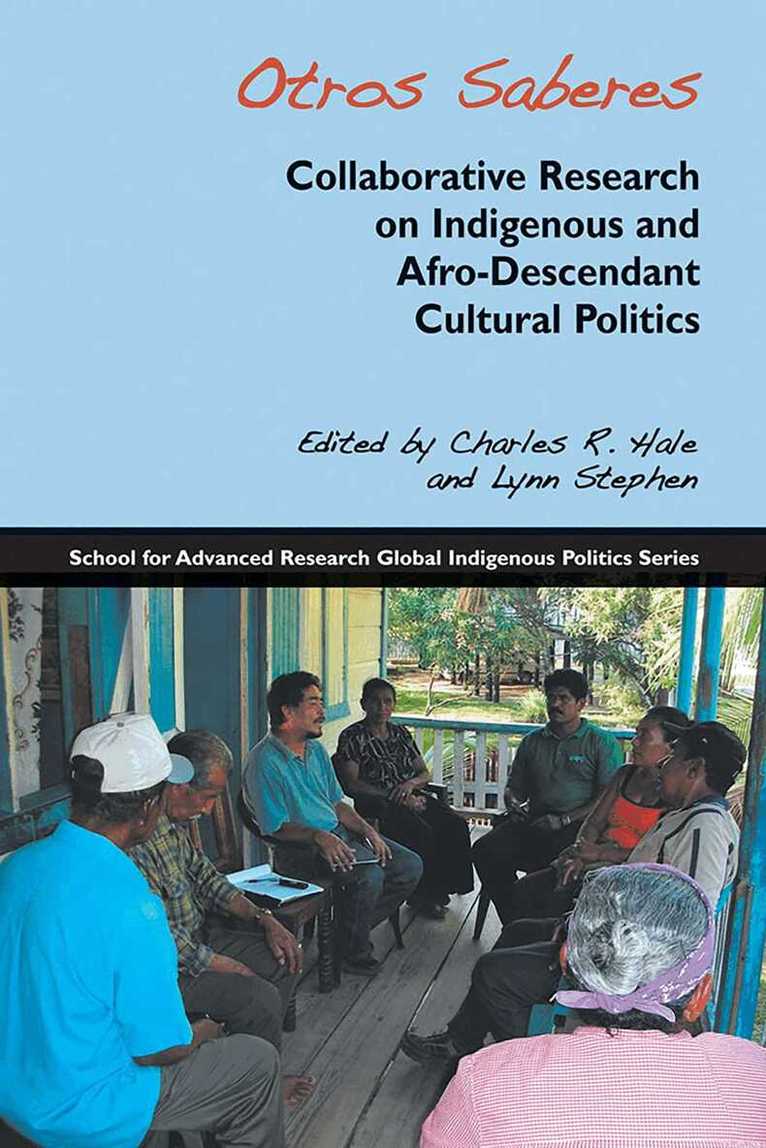
Scholars in many fields increasingly find themselves caught between the academy, with its demands for rigor and objectivity, and direct engagement in social activism. Some advocate on behalf of the communities they study; others incorporate the knowledge and leadership of their informants directly into the process of knowledge production. What ethical, political, and practical tensions arise in the course of such work? In this wide-ranging and multidisciplinary volume, leading scholar-activists map the terrain on which political engagement and academic rigor meet. The contributors are: Ruth Wilson Gilmore, Edmund T. Gordon, Davydd Greenwood, Joy James, Peter Nien-chu Kiang, George Lipsitz, Samuel Martinez, Jennifer Bickham Mendez, Dani Nabudere, Jessica Gordon Nembhard, Jemima Pierre, Laura Pulido, Shannon Speed, Shirley Suet-ling Tang, and Joao Vargas.
Resistance and Contradiction
Miskitu Indians and the Nicaraguan State, 1894-1987
Inbunden, Engelska, 1994
1 623 kr
Skickas inom 7-10 vardagar
A mere eighteen months after the Sandinistas came to power in Nicaragua in 1979, Miskitu Indians engaged in a widespread and militant anti-government mobilization. In late 1984, after more than three years of intense conflict, a negotiated transition to peace and autonomy began. This study analyzes these contrasting moments in Nicaraguan ethnic politics, drawing on four years of field research in a remote Miskitu community and in the central town of Bluefields. Fieldwork on both sides of the conflict allows the author to juxtapose Miskitu and Sandinista perspectives, to show how actors on each side understood the same events in radically different ways and how they moved gradually toward reconciliation.Since 1894, Miskitu people have faced an expansionist nation-state and have participated as well in a U.S.-controlled enclave economy and a civil society dominated by U.S. missionaries. The cultural logic of contemporary ethnic conflict, the book argues, can be found in the legacy of Miskitu responses to this dual subordination. While resisting the Nicaraguan state, Miskitu people drew closer to the Anglo-American institutions and worldview. These inherited premises of "Anglo affinity," combined with militant ethnic demands, motivated the post-revolutionary mobilization. Sadinista revolutionary nationalism, in turn, had little tolerance for ethnic militancy, and even less for Anglo affinity. Only with autonomy negotiations did both sides begin to address these underlying causes of the conflict. Though portraying autonomy as a major step toward peaceful conflict resolution and more egalitarian ethnic relations, the nook concludes that this new political arrangement did not, and perhaps could not, fully overcome the contradictions from which it arose.The book offers a critique of existing approaches to ethnic mobilization and to revolutionary nationalism in Central America, putting forward an alternative framework grounded in Gramscian culture theory. This permits a grasp of the combined presence of ethnic militancy and Anglo affinity in the Miskitu people's consciousness, a previously unexamined key to Miskitu collective action. The same notion of "contradictory consciousness" illuminates the Sadinistas' thought and practice: They too espoused a determined political militancy fused with assimilationist premises toward Indians, which created contradictions at the core of their egalitarian revolutionary vision.
Resistance and Contradiction
Miskitu Indians and the Nicaraguan State, 1894-1987
Häftad, Engelska, 1996
398 kr
Skickas inom 7-10 vardagar
A mere eighteen months after the Sandinistas came to power in Nicaragua in 1979, Miskitu Indians engaged in a widespread and militant anti-government mobilization. In late 1984, after more than three years of intense conflict, a negotiated transition to peace and autonomy began. This study analyzes these contrasting moments in Nicaraguan ethnic politics, drawing on four years of field research in a remote Miskitu community and in the central town of Bluefields. Fieldwork on both sides of the conflict allows the author to juxtapose Miskitu and Sandinista perspectives, to show how actors on each side understood the same events in radically different ways and how they moved gradually toward reconciliation.Since 1894, Miskitu people have faced an expansionist nation-state and have participated as well in a U.S.-controlled enclave economy and a civil society dominated by U.S. missionaries. The cultural logic of contemporary ethnic conflict, the book argues, can be found in the legacy of Miskitu responses to this dual subordination. While resisting the Nicaraguan state, Miskitu people drew closer to the Anglo-American institutions and worldview. These inherited premises of "Anglo affinity," combined with militant ethnic demands, motivated the post-revolutionary mobilization. Sadinista revolutionary nationalism, in turn, had little tolerance for ethnic militancy, and even less for Anglo affinity. Only with autonomy negotiations did both sides begin to address these underlying causes of the conflict. Though portraying autonomy as a major step toward peaceful conflict resolution and more egalitarian ethnic relations, the nook concludes that this new political arrangement did not, and perhaps could not, fully overcome the contradictions from which it arose.The book offers a critique of existing approaches to ethnic mobilization and to revolutionary nationalism in Central America, putting forward an alternative framework grounded in Gramscian culture theory. This permits a grasp of the combined presence of ethnic militancy and Anglo affinity in the Miskitu people's consciousness, a previously unexamined key to Miskitu collective action. The same notion of "contradictory consciousness" illuminates the Sadinistas' thought and practice: They too espoused a determined political militancy fused with assimilationist premises toward Indians, which created contradictions at the core of their egalitarian revolutionary vision.
326 kr
Skickas inom 5-8 vardagar
163 kr
Skickas inom 5-8 vardagar
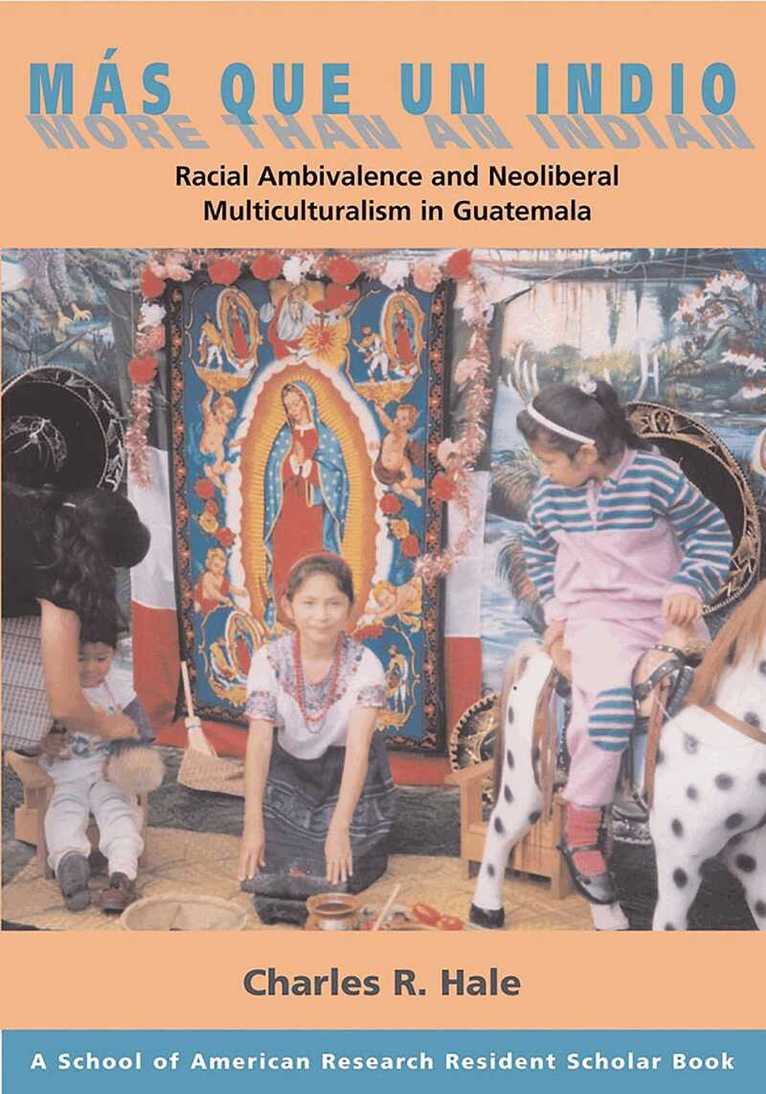
Más Que Un Indio (More Than an Indian)
Racial Ambivalence and Neoliberal Multiculturalism in Guatemala
Häftad, Engelska, 2006
372 kr
Skickas inom 3-6 vardagar
Mas que un indio: "More than an Indian." Two decades ago, the phrase expressed a common-sense prescription for upward mobility in a racist society: to better themselves, Indians had to abandon their culture and identity. Ironically, today it captures the predicament of ladinos, members of Guatemala's dominant culture. In the 1990s, Maya people organized in diverse ways to challenge racism and achieve basic rights.They achieved a broad recognition of their cultural rights during the same time that neoliberal economic reforms carried the day.The resulting "neoliberal multiculturalism" has opened important spaces for indigenous empowerment while recreating Guatemala's racial hierarchy. The author examines this paradox through the eyes of provincial ladinos, who show growing respect for indigenous culture and support for equality while harboring deep anxieties about the prospect of Maya ascendancy. Their racial ambivalence embodies a desire to be free of racism without ceasing to benefit from ingrained racial privilege, epitomized by the belief that ladinos are "mas que un indio."This deeply researched and sensitively rendered study raises troubling questions about the contradictions of anti-racist politics and the limits of multiculturalism in Guatemala and, by implication, other countries in the midst of similar reform projects.
239 kr
Skickas inom 5-8 vardagar