Charles S. Bullock - Böcker
Visar alla böcker från författaren Charles S. Bullock. Handla med fri frakt och snabb leverans.
5 produkter
5 produkter
1 694 kr
Skickas
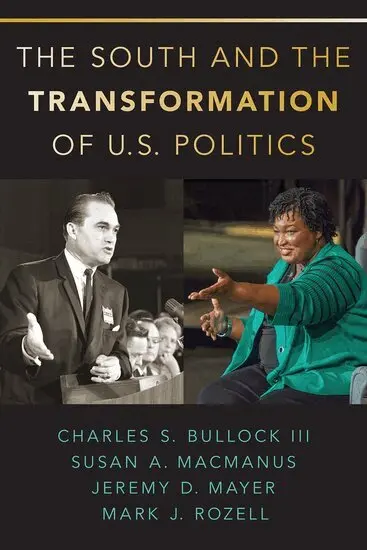
A strong case can be made that the South has had the greatest impact of any region on the transformation of U.S. politics and government. Since 1968, we have seen the demise of the "solid (Democratic) South" and the rise of the Republican-dominated South; the rise of the largely southern white evangelical religious right movement; and demographic changes that have vastly altered the political landscape of the region and national politics. Overriding all of these changes is the major constant of southern politics: race. Since the 1990s, the Republican Party has dominated politics in the Southern United States. Race relations were a large factor in this shift that began about a half century ago, but nonetheless, race and demographic change are once again realigning party politics in the region, this time back toward an emergent Democratic Party. Membership in the Southern Democratic Party is majority African American, Latino, and Asian, and rapidly expanding with an influx of immigrants, primarily Latino. While race continues to shape politics in the region, population growth is, as this book argues, the major factor affecting politics in the South. In fact, the populations of Georgia, North Carolina, South Carolina, and Virginia have grown more rapidly than the population of the nation as a whole over the past half century--and each of these states has gained at least one seat in Congress. These growth states are the ones in which populations are diversifying, economies are surging, and Democrats are making headway. They, along with Florida and Texas, are also among the most competitive states with the largest numbers of Electoral College votes in the region. It is likely, therefore, that among the key battlegrounds for determining the presidency will be the southern states with the fastest growing populations. This will especially be the case once the Latino population in Texas mobilizes. This book describes and analyzes the ways in which demographic change has shaped politics in the South since the late 1960s and may enable the Democratic Party in the future to re-take politics in the region, and even shut out Republicans from the nation's highest office.
328 kr
Skickas inom 5-8 vardagar
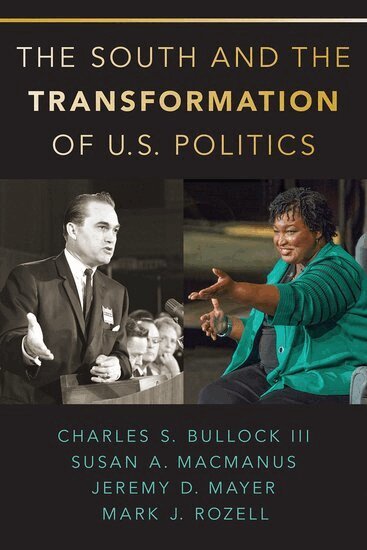
A strong case can be made that the South has had the greatest impact of any region on the transformation of U.S. politics and government. Since 1968, we have seen the demise of the "solid (Democratic) South" and the rise of the Republican-dominated South; the rise of the largely southern white evangelical religious right movement; and demographic changes that have vastly altered the political landscape of the region and national politics. Overriding all of these changes is the major constant of southern politics: race. Since the 1990s, the Republican Party has dominated politics in the Southern United States. Race relations were a large factor in this shift that began about a half century ago, but nonetheless, race and demographic change are once again realigning party politics in the region, this time back toward an emergent Democratic Party. Membership in the Southern Democratic Party is majority African American, Latino, and Asian, and rapidly expanding with an influx of immigrants, primarily Latino. While race continues to shape politics in the region, population growth is, as this book argues, the major factor affecting politics in the South. In fact, the populations of Georgia, North Carolina, South Carolina, and Virginia have grown more rapidly than the population of the nation as a whole over the past half century--and each of these states has gained at least one seat in Congress. These growth states are the ones in which populations are diversifying, economies are surging, and Democrats are making headway. They, along with Florida and Texas, are also among the most competitive states with the largest numbers of Electoral College votes in the region. It is likely, therefore, that among the key battlegrounds for determining the presidency will be the southern states with the fastest growing populations. This will especially be the case once the Latino population in Texas mobilizes. This book describes and analyzes the ways in which demographic change has shaped politics in the South since the late 1960s and may enable the Democratic Party in the future to re-take politics in the region, and even shut out Republicans from the nation's highest office.
1 105 kr
Skickas inom 5-8 vardagar
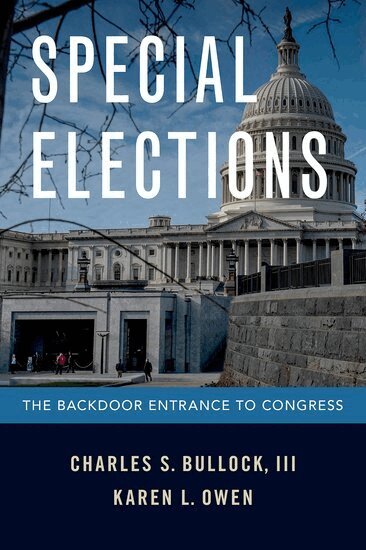
Most members of Congress begin their careers through regularly scheduled elections, but terms may be cut short due to death, scandal, or different career opportunities. In these cases, special elections are held to fill vacancies. In fact, a number of prominent political figures, including Lyndon Johnson, Nancy Pelosi, and John Dingell, began their long and distinguished careers through special election to Congress. While the media often look to special elections as a way of measuring public sentiment on presidential performance, even though voter turnout tends to be significantly lower than in regular elections, these events have rarely attracted academic attention. Oftentimes, studies of these contests lead to generalizations about how a party should proceed if it hopes to wrest a seat away from the opposition in a special election.This book is the first large-scale scholarly treatment of special elections: both in terms of explaining what factors influence outcomes and in determining whether special elections are bellwethers for general elections. Charles S. Bullock, III and Karen L. Owen argue that special elections offer parties a testing ground for messaging and strategies for mobilizing voters in anticipation of general elections. Moreover, these elections provide opportunities for diversification of Congress as reduced commitment to resources for campaigning has led more women and candidates of color to compete in them--and win. Based on 75 years of data, the authors closely examine several competitive special elections during the first two years of the Trump era and quantitatively assess the almost 300 House special elections held since World War II.
337 kr
Skickas inom 10-15 vardagar
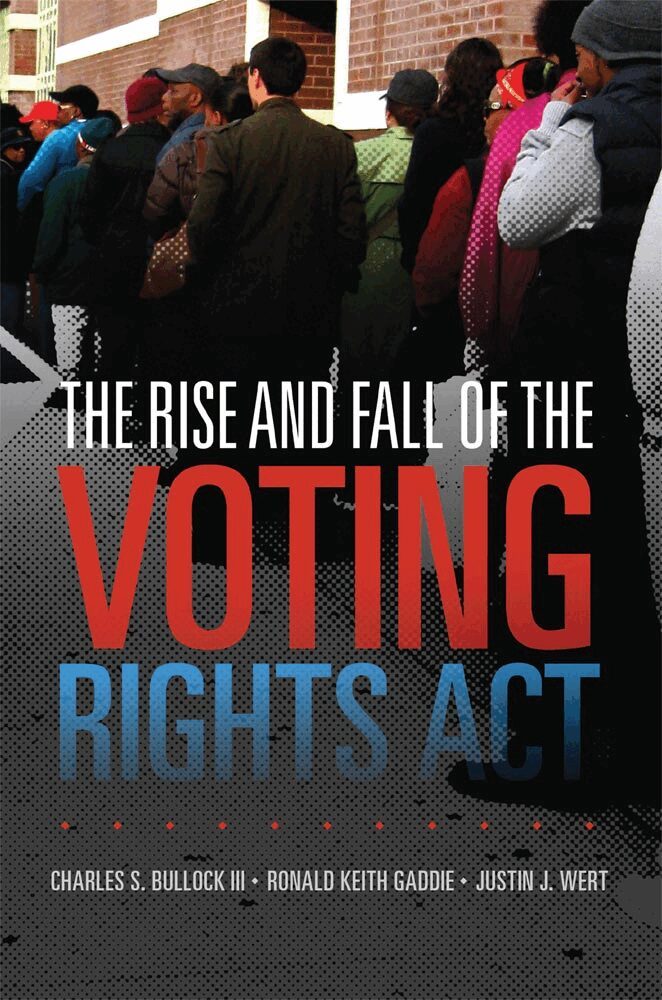
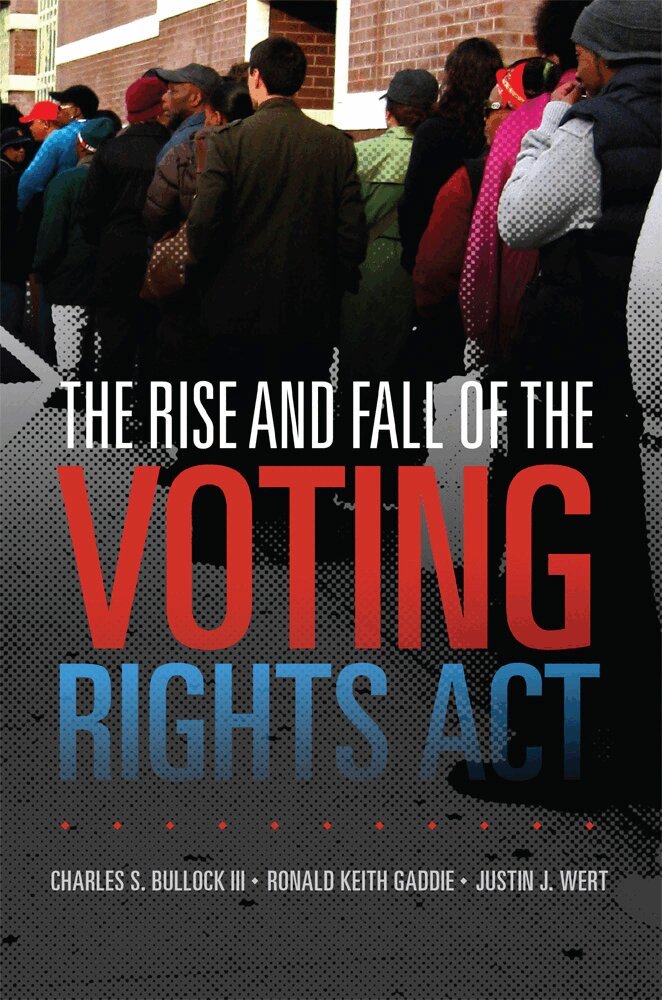
On June 25, 2013, the U.S. Supreme Court handed down its decision in Shelby County v. Holder, invalidating a key provision of voting rights law. The decision - the culmination of an eight-year battle over the power of Congress to regulate state conduct of elections - marked the closing of a chapter in American politics. That chapter had opened a century earlier in the case of Guinn v. United States, which ushered in national efforts to knock down racial barriers to the ballot. A detailed and timely history, The Rise and Fall of the Voting Rights Act analyzes changing legislation and the future of voting rights in the United States.In tracing the development of the Voting Rights Act from its inception, Charles S. Bullock III, Ronald Keith Gaddie, and Justin J. Wert begin by exploring the political and legal aspects of the Jim Crow electoral regime. Detailing both the subsequent struggle to enact the law and its impact, they explain why the Voting Rights Act was necessary. The authors draw on court cases and election data to bring their discussion to the present with an examination of the 2006 revision and renewal of the act, and its role in shaping the southern political environment in the 2008 and 2012 presidential elections, when Barack Obama was chosen. Bullock, Gaddie, and Wert go on to closely evaluate the 2013 Shelby County decision, describing how the ideological makeup of the Supreme Court created an appellate environment that made the act ripe for a challenge.Rigorous in its scholarship and thoroughly readable, this book goes beyond history and analysis to provide compelling and much-needed insight into the ways voting rights legislation has shaped the United States. The Rise and Fall of the Voting Rights Act illuminates the historical roots - and the human consequences - of a critical chapter in U.S. legal history.
240 kr
Skickas inom 10-15 vardagar
On June 25, 2013, the U.S. Supreme Court handed down its decision in Shelby County v. Holder, invalidating a key provision of voting rights law. The decision - the culmination of an eight-year battle over the power of Congress to regulate state conduct of elections - marked the closing of a chapter in American politics. That chapter had opened a century earlier in the case of Guinn v. United States, which ushered in national efforts to knock down racial barriers to the ballot. A detailed and timely history, The Rise and Fall of the Voting Rights Act analyzes changing legislation and the future of voting rights in the United States.In tracing the development of the Voting Rights Act from its inception, Charles S. Bullock III, Ronald Keith Gaddie, and Justin J. Wert begin by exploring the political and legal aspects of the Jim Crow electoral regime. Detailing both the subsequent struggle to enact the law and its impact, they explain why the Voting Rights Act was necessary. The authors draw on court cases and election data to bring their discussion to the present with an examination of the 2006 revision and renewal of the act, and its role in shaping the southern political environment in the 2008 and 2012 presidential elections, when Barack Obama was chosen. Bullock, Gaddie, and Wert go on to closely evaluate the 2013 Shelby County decision, describing how the ideological makeup of the Supreme Court created an appellate environment that made the act ripe for a challenge.Rigorous in its scholarship and thoroughly readable, this book goes beyond history and analysis to provide compelling and much-needed insight into the ways voting rights legislation has shaped the United States. The Rise and Fall of the Voting Rights Act illuminates the historical roots - and the human consequences - of a critical chapter in U.S. legal history.