Charles W. Mills - Böcker
Visar alla böcker från författaren Charles W. Mills. Handla med fri frakt och snabb leverans.
10 produkter
10 produkter
257 kr
Skickas inom 7-10 vardagar
The Racial Contract puts classic Western social contract theory, deadpan, to extraordinary radical use. With a sweeping look at the European expansionism and racism of the last five hundred years, Charles W. Mills demonstrates how this peculiar and unacknowledged "contract" has shaped a system of global European domination: how it brings into existence "whites" and "non-whites," full persons and sub-persons, how it influences white moral theory and moral psychology; and how this system is imposed on non-whites through ideological conditioning and violence. The Racial Contract argues that the society we live in is a continuing white supremacist state.As this 25th anniversary edition-featuring a foreword by Tommy Shelbie and a new preface by the author-makes clear, the still-urgent The Racial Contract continues to inspire, provoke, and influence thinking about the intersection of the racist underpinnings of political philosophy.
1 670 kr
Skickas inom 5-8 vardagar
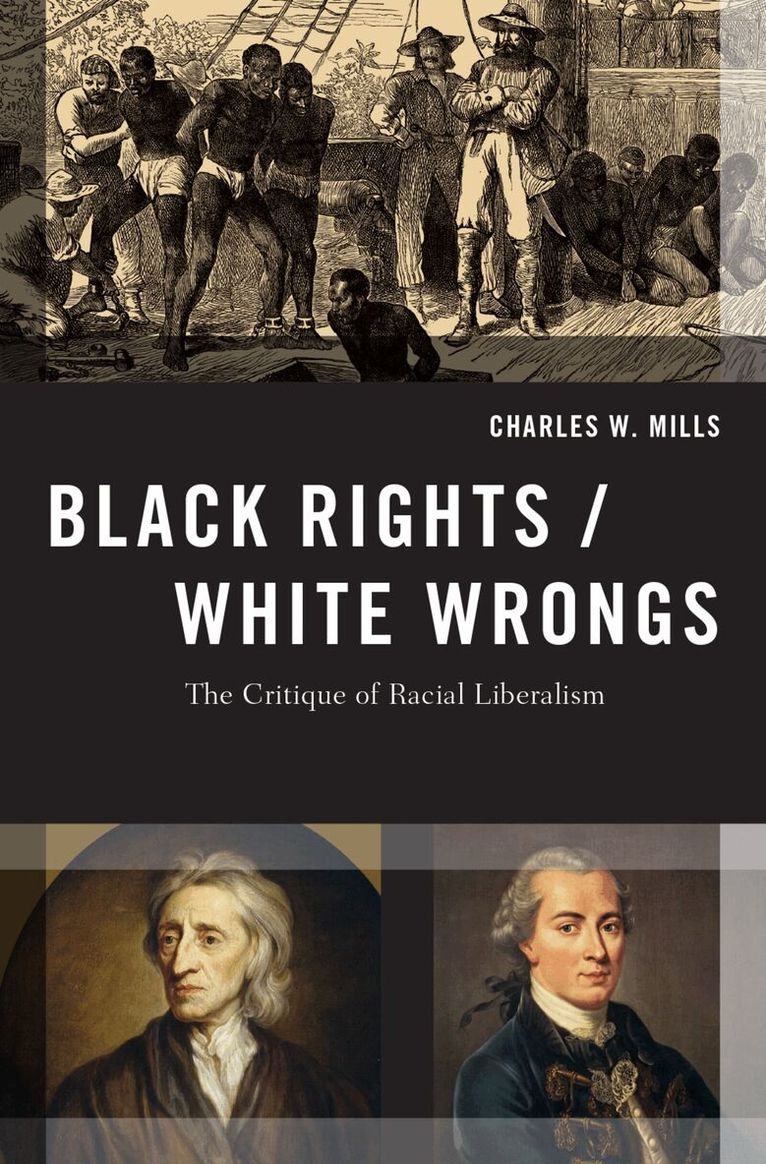
Liberalism is the political philosophy of equal persons - yet liberalism has denied equality to those it saw as sub-persons. Liberalism is the creed of fairness - yet liberalism has been complicit with European imperialism and African slavery. Liberalism is the classic ideology of Enlightenment and political transparency - yet liberalism has cast a dark veil over its actual racist past and present. In sum, liberalism's promise of equal rights has historically been denied to blacks and other people of color. In Black Rights/White Wrongs: The Critique of Racial Liberalism, political philosopher Charles Mills challenges mainstream accounts that ignore this history and its current legacy in self-conceivedly liberal polities today. Mills argues that rather than bracket as an anomaly the role of racism in the development of liberal theory, we should see it as shaping that theory in fundamental ways. As feminists have urged us to see the dominant form of liberalism as a patriarchal liberalism, so too Mills suggests we should see it as a racialized liberalism. It is unsurprising, then, if contemporary liberalism has yet to deliver on the recognition of black rights and the correction of white wrongs. These essays look at racial liberalism, past and present: "white ignorance" as a guilty ignoring of social reality that facilitates white racial domination; Immanuel Kant's role as the most important liberal theorist of both personhood and sub-personhood; the centrality of racial exploitation in the United States; and the evasion of white supremacy in John Rawls's "ideal theory" framing of social justice and in the work of most other contemporary white political philosophers. Nonetheless, Mills still believes that a deracialized liberalism is both possible and desirable. He concludes by calling on progressives to "Occupy liberalism!" and develop accordingly a radical liberalism aimed at achieving racial justice.
433 kr
Skickas inom 5-8 vardagar
Liberalism is the political philosophy of equal persons - yet liberalism has denied equality to those it saw as sub-persons. Liberalism is the creed of fairness - yet liberalism has been complicit with European imperialism and African slavery. Liberalism is the classic ideology of Enlightenment and political transparency - yet liberalism has cast a dark veil over its actual racist past and present. In sum, liberalism's promise of equal rights has historically been denied to blacks and other people of color. In Black Rights/White Wrongs: The Critique of Racial Liberalism, political philosopher Charles Mills challenges mainstream accounts that ignore this history and its current legacy in self-conceivedly liberal polities today. Mills argues that rather than bracket as an anomaly the role of racism in the development of liberal theory, we should see it as shaping that theory in fundamental ways. As feminists have urged us to see the dominant form of liberalism as a patriarchal liberalism, so too Mills suggests we should see it as a racialized liberalism. It is unsurprising, then, if contemporary liberalism has yet to deliver on the recognition of black rights and the correction of white wrongs. These essays look at racial liberalism, past and present: "white ignorance" as a guilty ignoring of social reality that facilitates white racial domination; Immanuel Kant's role as the most important liberal theorist of both personhood and sub-personhood; the centrality of racial exploitation in the United States; and the evasion of white supremacy in John Rawls's "ideal theory" framing of social justice and in the work of most other contemporary white political philosophers. Nonetheless, Mills still believes that a deracialized liberalism is both possible and desirable. He concludes by calling on progressives to "Occupy liberalism!" and develop accordingly a radical liberalism aimed at achieving racial justice.
308 kr
Skickas inom 5-8 vardagar
In his last major work, prominent critical race theorist Charles W. Mills offers a searing analysis of the shortcomings of liberal political ideology. With a focus on John Rawls, the pre-eminent liberal political philosopher of the last 50 years, Mills critiques the faults, failures, and inadequacies of liberalism, highlighting its fundamental inability to address white supremacy on a global scale. Along with his intellectual respondents in the volume, Mills asserts the limits of Rawls' class-based principles, particularly within systemically racist societies like the United States, with unprecedented clarity. Through an intersectional exploration of contemporary culture and politics, Mills and the contributors instead emphasize the necessity of a historically corrective racial analysis in the pursuit of true social justice, urging readers to move not only beyond Rawls, but liberalism at large.
1 529 kr
Skickas inom 10-15 vardagar
"This is an important collection. Its organizing theme is that by analyzing the metaphysics of race-creating we can understand the importance of political analyses of the racial state. This claim is vital not only for understanding of contemporary racial problems, but also for enriching our understanding of philosophical anthropology."―Lewis R. Gordon, Brown UniversityCharles Mills makes visible in the world of mainstream philosophy some of the crucial issues of the black experience. Ralph Ellison's metaphor of black invisibility has special relevance to philosophy, whose demographic and conceptual "whiteness" has long been a source of wonder and complaint to racial minorities. Mills points out the absence of any philosophical narrative theorizing and detailing race's centrality to the recent history of the West, such as feminists have articulated for gender domination. European expansionism in its various forms, Mills contends, generates a social ontology of race that warrants philosophical attention. Through expropriation, settlement, slavery, and colonialism, race comes into existence as simultaneously real and unreal: ontological without being biological, metaphysical without being physical, existential without being essential, shaping one's being without being in one's shape.His essays explore the contrasting sums of a white and black modernity, examine standpoint epistemology and the metaphysics of racial identity, look at black-Jewish relations and racial conspiracy theories, map the workings of a white-supremacist polity and the contours of a racist moral consciousness, and analyze the presuppositions of Frederick Douglass's famous July 4 prognosis for black political inclusion. Collectively they demonstrate what exciting new philosophical terrain can be opened up once the color line in western philosophy is made visible and addressed.
264 kr
Skickas inom 10-15 vardagar
"This is an important collection. Its organizing theme is that by analyzing the metaphysics of race-creating we can understand the importance of political analyses of the racial state. This claim is vital not only for understanding of contemporary racial problems, but also for enriching our understanding of philosophical anthropology."―Lewis R. Gordon, Brown UniversityCharles Mills makes visible in the world of mainstream philosophy some of the crucial issues of the black experience. Ralph Ellison's metaphor of black invisibility has special relevance to philosophy, whose demographic and conceptual "whiteness" has long been a source of wonder and complaint to racial minorities. Mills points out the absence of any philosophical narrative theorizing and detailing race's centrality to the recent history of the West, such as feminists have articulated for gender domination. European expansionism in its various forms, Mills contends, generates a social ontology of race that warrants philosophical attention. Through expropriation, settlement, slavery, and colonialism, race comes into existence as simultaneously real and unreal: ontological without being biological, metaphysical without being physical, existential without being essential, shaping one's being without being in one's shape.His essays explore the contrasting sums of a white and black modernity, examine standpoint epistemology and the metaphysics of racial identity, look at black-Jewish relations and racial conspiracy theories, map the workings of a white-supremacist polity and the contours of a racist moral consciousness, and analyze the presuppositions of Frederick Douglass's famous July 4 prognosis for black political inclusion. Collectively they demonstrate what exciting new philosophical terrain can be opened up once the color line in western philosophy is made visible and addressed.
493 kr
Skickas inom 7-10 vardagar
Philosophy: The Big Questions occupies a unique position among introductory texts in philosophy. Designed for a single-semester introductory course in philosophy, it includes both classic readings in philosophy and newer articles. Presents, in one volume, canonical and contemporary works in ethics, metaphysics, philosophy of religion, and epistemology. Topics discussed include knowledge, religion, freedom, morality, and the meaning of life. Serves as a comprehensive and compelling introduction to philosophy. Together with traditional readings it also presents non-traditional, feminist eadings from a continental perspectives.
1 673 kr
Skickas inom 7-10 vardagar
Philosophy: The Big Questions occupies a unique position among introductory texts in philosophy. Designed for a single-semester introductory course in philosophy, it includes both classic readings in philosophy and newer articles. Presents, in one volume, canonical and contemporary works in ethics, metaphysics, philosophy of religion, and epistemology. Topics discussed include knowledge, religion, freedom, morality, and the meaning of life. Serves as a comprehensive and compelling introduction to philosophy. Together with traditional readings it also presents non-traditional, feminist eadings from a continental perspectives.
1 518 kr
Skickas inom 10-15 vardagar
The Racial Contract puts classic Western social contract theory, deadpan, to extraordinary radical use. With a sweeping look at the European expansionism and racism of the last five hundred years, Charles W. Mills demonstrates how this peculiar and unacknowledged "contract" has shaped a system of global European domination: how it brings into existence "whites" and "non-whites," full persons and sub-persons, how it influences white moral theory and moral psychology; and how this system is imposed on non-whites through ideological conditioning and violence. The Racial Contract argues that the society we live in is a continuing white supremacist state.As this 25th anniversary edition-featuring a foreword by Tommy Shelbie and a new preface by the author-makes clear, the still-urgent The Racial Contract continues to inspire, provoke, and influence thinking about the intersection of the racist underpinnings of political philosophy.
424 kr
Skickas inom 10-15 vardagar
This work is a collection of articles written over many years as well as unpublished new scholarship that explores the common themes of race and class in the Caribbean and overcoming social domination. The essays consider abstract political theory (Marxism and critical and race theory) and also focus on specific Caribbean issues and events such as the portrayals of the Jamaican left, the collapse of the Grenada Revolution and the significance of the affirmation of personhood in a racist society, but all share a concern with overcoming of social domination and are 'radically' oriented. The title has a double meaning insofar as it signifies both the application of radical theory to the Caribbean reality, and the way in which that reality has too often collided with the theory, revealing its inadequacies. As Mills explains, 'The overall aim is to elucidate some classic subjects and themes in radical theory, both generally and with local Caribbean application, and to map in the process a trajectory of intellectual development not peculiar to my own history but traced by many others of my generation also'.