Charlie Louth - Böcker
Visar alla böcker från författaren Charlie Louth. Handla med fri frakt och snabb leverans.
12 produkter
12 produkter
125 kr
Skickas
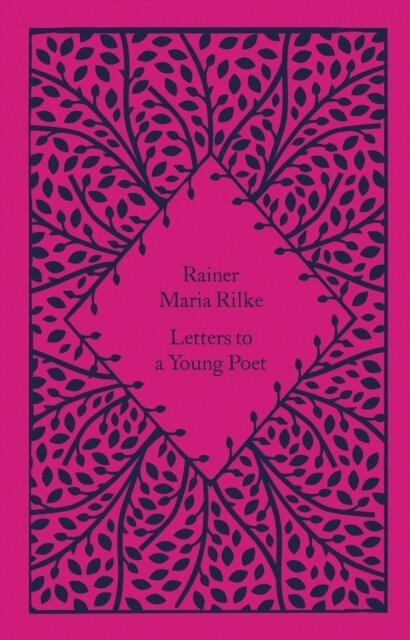
Introducing Little Clothbound Classics: irresistible, mini editions of short stories, novellas and essays from the world's greatest writers, designed by the award-winning Coralie Bickford-Smith.Celebrating the range and diversity of Penguin Classics, they take us from snowy Japan to springtime Vienna, from haunted New England to a sun-drenched Mediterranean island, and from a game of chess on the ocean to a love story on the moon. Beautifully designed and printed, these collectible editions are bound in colourful, tactile cloth and stamped with foil.Over the course of six years, Maria Rilke wrote a series of letters to a young officer cadet, advising him on writing, love, suffering and the nature of advice itself; these profound and lyrical letters have since become hugely influential for writers and artists of all kinds. This volume also contains the 'Letter from a Young Worker', a striking polemic against Christianity written too in letter form.
168 kr
Skickas
One of Germany's greatest poets, Johann Christian Friedrich Hölderlin (1770-1843) was also a prose writer of intense feeling, intelligence and perception. This new translation of selected letters and essays traces the life and thoughts of this extraordinary writer. Hölderlin's letters to friends and fellow writers such as Hegel, Schiller and Goethe describe his development as a poet, while those written to his family speak with great passion of his beliefs and aspirations, as well as revealing money worries and, finally, the tragic unravelling of his sanity. These works examine Hölderlin's great preoccupations - the unity of existence, the relationship between art and nature and, above all, the spirit of the writer.
112 kr
Skickas
At the start of the twentieth century, Rainer Maria Rilke wrote a series of letters to a young officer cadet, advising him on writing, love, sex, suffering and the nature of advice itself; these profound and lyrical letters have since become hugely influential for writers and artists of all kinds. This book also contains the 'Letter from a Young Worker', a striking polemic against Christianity written in letter-form, near the end of Rilke's life. In Lewis Hyde's introduction, he explores the context in which these letters were written and how the author embraced his isolation as a creative force. Charlie Louth's afterword discusses the similarities and contrasts of the two works, and Rilke's religious and sexual wordplay. This edition also contains a chronology, notes, and suggested further reading.
1 878 kr
Skickas inom 5-8 vardagar
The life of Rilke's work is in its words, and this book attends closely to the development of that life as it unfolds over Rilke's career. What is a poem, and how does it act upon us when we read? This is a question of the greatest interest to Rilke, who addresses it in several poems and for whom the experience of reading affords an interaction with the world, a recalibration of our ways of attending to it, which set it apart from other kinds of experience. Rilke's work is often approached in periods--he is the author of the Neue Gedichte, or of Malte, or of the Duino Elegies, or of the Sonette an Orpheus--as if the different phases of his work had little to do with one another, but in fact it is a concentrated and evolving exploration of the possibilities of poetic language, a working of the life of words into precise and exacting forms in dialogue with the texture of the world. This book traces that trajectory in a series of close readings that do not neglect the lesser-known, uncollected poems and the poems in French, as well as Rilke's activity as a translator of Michelangelo, Shakespeare, Barrett Browning, Mallarmé, and Valéry, among many others. These encounters were part of Rilke's engagement with the world, his way of extending the reach of his language to get it ever closer to the ungraspable movements, the risk and promise, of life itself. One of his best-known poems ends with the words 'You must change your life', an injunction that can be seen to animate the whole of his work.
499 kr
Skickas inom 7-10 vardagar
The life of Rilke’s work is in its words, and this book attends closely to the life unfolding in Rilke’s words over the course of his career. What is a poem, and how does it act upon us as we read? What does reading involve? These are questions of the greatest interest to Rilke, who addresses them in several poems and for whom the experience of reading affords an interaction with the world—a recalibration of our ways of attending to it—which sets it apart from other kinds of experience. Rilke’s work is often approached in periods—he is the author of the New Poems, or of Malte, or of the Duino Elegies, or of the Sonnets to Orpheus—as if its different phases had little to do with one another, but in fact his writing is a concentrated and evolving exploration of the possibilities of poetic language, a working of the life of words into precise and exacting forms in dialogue with the texture of the world.The Life of the Work traces that trajectory in a series of close readings that do not neglect the lesser-known, uncollected verse and the poems in French, as well as Rilke’s activity as a translator of Michelangelo, Shakespeare, Barrett Browning, Mallarmé, and Valéry, among many others. These encounters were part of Rilke’s engagement with the world, his way of extending the reach of his language to get it ever closer to the ungraspable movements, the risk and promise, of life itself. One of his best-known poems ends with the words ‘You must change your life’, an injunction that animates the whole of his work.
1 442 kr
Skickas inom 5-8 vardagar
213 kr
Skickas inom 5-8 vardagar
1 531 kr
Skickas inom 5-8 vardagar
409 kr
Skickas inom 5-8 vardagar
1 606 kr
Skickas inom 3-6 vardagar
1 268 kr
Skickas inom 10-15 vardagar
Friedrich Holderlin's translations have long been seen as some of the most fascinating ever made, so radical and unconventional that they have altered our ideas of what translation is. Based on a close study of the versions of Pindar and Sophocles, and placing Holderlin's practice in its 18th-century context, this book explores the meaning of translation for Holderlin's work as a whole, devoting particular attention to the poetry. The author draws links between translations, individual poems, essays and Holderlin'a working techniques, and suggests that translation, both as figure and practice, is at the centre of Holderlin's imaginative world.
1 475 kr
Skickas
The first English translation of Hölderlin's complete correspondence, with a full introduction and notes.Friedrich Hölderlin (1770–1843) is widely acknowledged to be one of the most significant European poets and thinkers. His poems fascinate and compel; his role in the development of German Idealism is well-known; and his writings continue to shape philosophical reflections on subjectivity and the place of poetry in the world. Hölderlin's correspondence is indispensable for anyone wanting to come to terms with his work, yet until now only selections have been available in English. This new and complete edition, which also includes all the surviving letters to Hölderlin, ranges from early letters written while he was still at school, via letters responding to the French Revolution and its consequences in Germany, relaying to Hegel his arguments with Fichte's lectures, or setting out his poetic thinking, to the final letters written in his madness to his mother. The chief source of what we know of Hölderlin’s biography, this correspondence vitally illuminates his poetry and thought at every point.