Charlotte Riddell – författare
219 kr
Skickas
229 kr
Skickas
Into the London Fog
Eerie Tales from the Weird City
133 kr
Skickas
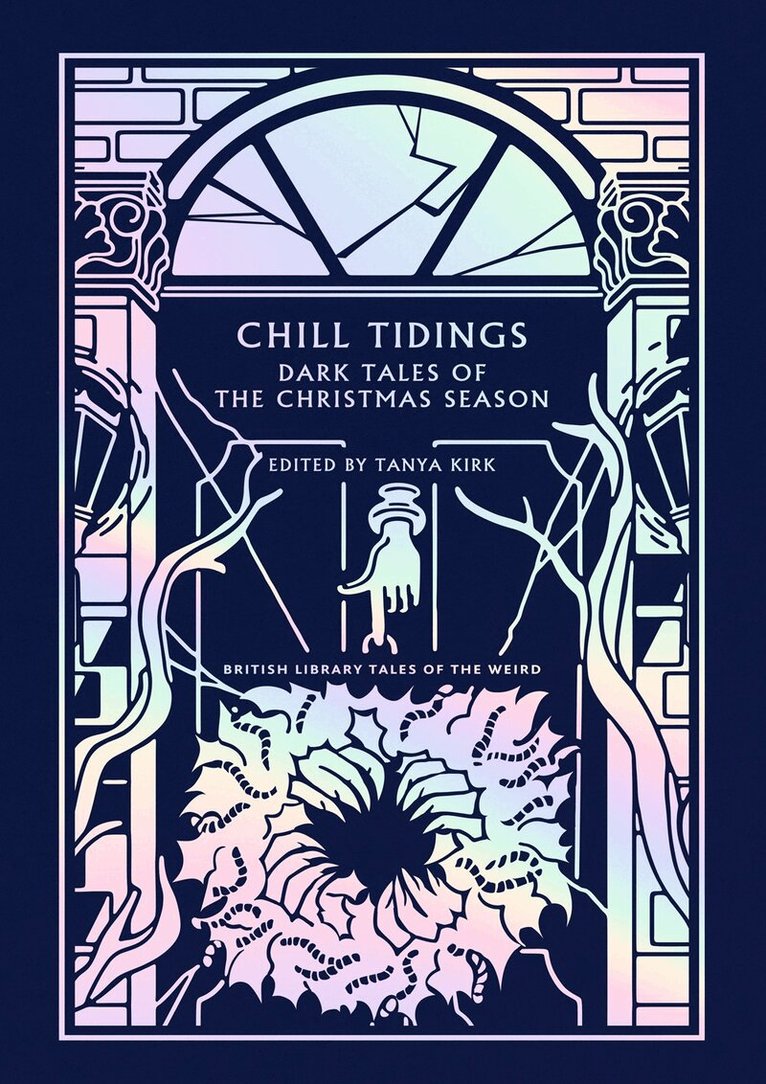
Chill Tidings
Dark Tales of the Christmas Season
179 kr
Kommande
153 kr
Skickas inom 5-8 vardagar
257 kr
Skickas inom 3-6 vardagar
381 kr
Skickas inom 3-6 vardagar
158 kr
Skickas inom 5-8 vardagar
313 kr
Skickas inom 3-6 vardagar
512 kr
Skickas inom 3-6 vardagar
272 kr
Skickas inom 5-8 vardagar
22 kr
Läs direkt efter köp
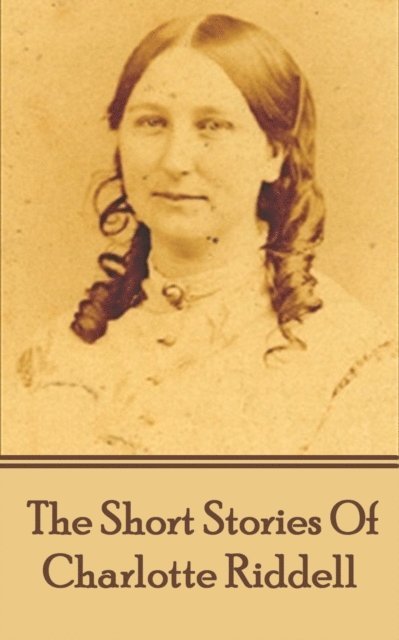
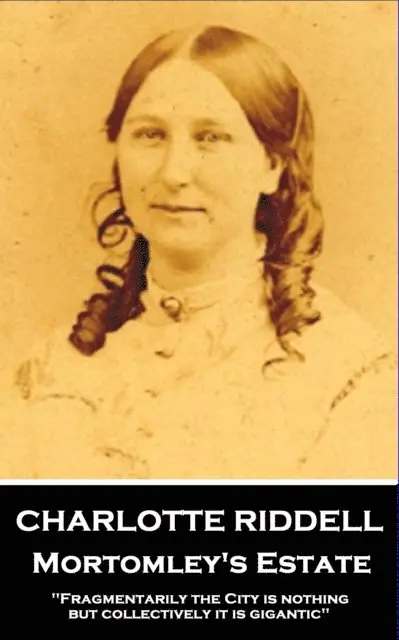
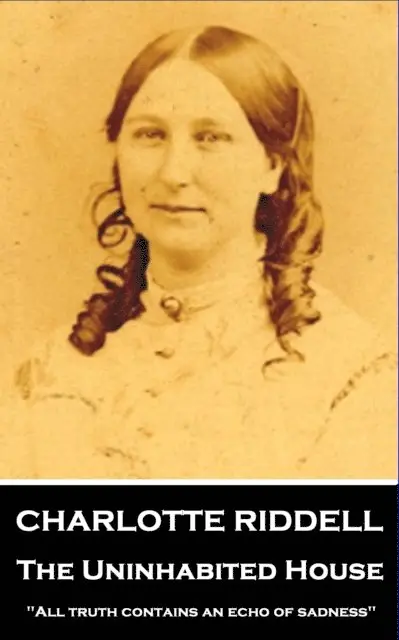
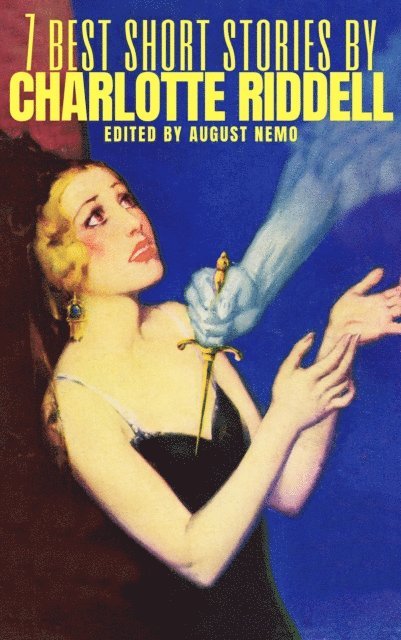
Charlotte Riddell aka Mrs J.H. Riddell was born Charlotte Eliza Lawson Cowan on September 30th 1832 in Carrickfergus, County Antrim, Ireland. Charlotte married Joseph Hadley Riddell in 1857 and moved to London. The following year her first novel, The Moors and the Fens, appeared issued under the pseudonym of F. G. Trafford, a name she kept until 1864. She was a prolific writer, authoring 56 books, novels and short stories. From 1867, she was the co-proprietor and editor of the prestigious St. James''s Magazine and also edited a magazine called Home, and wrote short tales for the Society for the Promotion of Christian Knowledge and Routledge''s Christmas annuals. Charlotte was also considered a prominent writer of ghost stories and several of her novels, Fairy Water, The Uninhabited House, The Haunted River, The Disappearance of Mr. Jeremiah Redworth and The Nun''s Curse are based on supernatural occurrences. Joseph died in 1880 and brought 23 years of a happy but childless marriage to an end. From 1886, she lived in seclusion at Upper Halliford, Middlesex. She was the first pensioner of the Society of Authors, receiving a pension of £60 a year in May 1901. Charlotte died from cancer in Ashford, Kent, England on 24 September 1906.
65 kr
Läs direkt efter köp
A wise man once said ‘The safest place for a child is in the arms of his mother’s voice’. This is a perfect place to start our anthology of female short stories.
Some of our earliest memories are of our mothers telling us bedtime stories. This is not to demote the value of fathers but more to promote the often-overshadowed talents of the gentler sex.
Perhaps ‘gentler’ is a word that we should re-evaluate. In the course of literary history it is men who dominated by opportunity and with their stranglehold on the resources, both financial and technological, who brought their words to a wider audience. Men often placed women on a pedestal from where their talented words would not threaten their own.
In these stories we begin with the original disrupter and renegade author Aphra Behn. A peek at her c.v. shows an astounding capacity and leaves us wondering at just how she did all that.
In those less modern days to be a woman, even ennobled, was to be seen as second class. You literally were chattel and had almost no rights in marriage. As Charlotte Smith famously said your role as wife was little more than ‘legal prostitute’. From such a despicable place these authors have used their talents and ideas and helped redress that situation.
Slowly at first. Privately printed, often anonymously or under the cloak of a male pseudonym their words spread. Their stories admired and, usually, their role still obscured from rightful acknowledgement.
Aided by more advanced technology, the 1700’s began to see a steady stream of female writers until by the 1900’s mass market publishing saw short stories by female authors from all the strata of society being avidly read by everyone. Their names are a rollcall of talent and ‘can do’ spirit and society is richer for their works.
In literature at least women are now acknowledged as equals, true behind the scenes little has changed but if (and to mis-quote Jane Austen) there is one universal truth, it is that ideas change society. These women’s most certainly did and will continue to do so as they easily write across genres, from horror and ghost stories to tender tales of love and making your way in society’s often grueling rut. They will not be silenced, their ideas and passion move emotions, thoughts and perhaps more importantly our ingrained view of what every individual human being is capable of.
Within these stories you will also find very occasional examples of historical prejudice. A few words here and there which in today’s world some may find inappropriate or even offensive. It is not our intention to make anyone uncomfortable but to show that the world in order to change must reconcile itself to the actual truth rather than put it out of sight. Context is everything, both to understand and to illuminate the path forward. The author’s words are set, our reaction to them encourages our change.
It is because of their desire to speak out, their desire to add their talents to the bias around them that we perhaps live in more enlightened, almost equal, times.
Top 10 Short Stories - The Irish Women
The top 10 stories of all time written by Irish female authors
108 kr
Läs direkt efter köp
Short stories have always been a sort of instant access into an author’s brain, their soul and heart. A few pages can lift our lives into locations, people and experiences with a sweep of landscape, narration, feelings and emotions that is difficult to achieve elsewhere.
In this series we try to offer up tried and trusted ‘Top Tens’ across many different themes and authors. But any anthology will immediately throw up the questions – Why that story? Why that author?
The theme itself will form the boundaries for our stories which range from well-known classics, newly told, to stories that modern times have overlooked but perfectly exemplify the theme. Throughout the volume our authors whether of instant recognition or new to you are all leviathans of literature.
Some you may disagree with but they will get you thinking; about our choices and about those you would have made. If this volume takes you on a path to discover more of these miniature masterpieces then we have all gained something.
The Emerald Isle is home to literary talent on a grand scale. And amongst their ranks are women of quite extraordinary ability who refuse to take second place to the men. Their voice is strong, their words beguiling, entrancing but often with a will of iron as they create works of character, of narrative and of quite sumptuous literature. Genius has many names.
34 kr
Läs direkt efter köp
Charlotte Eliza Lawson Cowan was born in Carrickfergus, County Antrim, Ireland, on 30th September 1832, the youngest daughter of James Cowan, a High Sheriff for the County of Antrim, and Ellen Kilshaw from Liverpool, England.
In the winter of 1855, four years after her father''s death, she and her mother moved to London. Sadly, within the year, her mother also passed.
In 1857, she married Joseph Hadley Riddell, a civil engineer. The marriage was happy by all accounts but produced no children.
Her first novel, ‘The Moors and the Fens’, was published in 1858 under the pseudonym of F. G. Trafford, which she used until publishing under the moniker ‘Mrs Riddell’ from 1864.
Charlotte was a prolific, respected and popular author. In her literary career she published over 50 novels and short stories. The most notable is perhaps ‘George Geith of Fen Court’ (1864), for which she was paid £800. It was later dramatised in 1883 by Wybert Reeve.
From 1867, Charlotte ventured into new territory, becoming the co-proprietor and editor of the well-regarded St. James''s Magazine, which had begun publishing 1861. She also edited the magazine ‘Home in the Sixties’, and wrote short stories and tales for the Society for the Promotion of Christian Knowledge and Routledge''s Christmas annuals.
Charlotte was a prominent writer of ghost stories; ‘Fairy Water’, ‘The Uninhabited House’, ‘The Haunted River’, ‘The Disappearance of Mr Jeremiah Redworth’ and ‘The Nun''s Curse’, all deal with buildings occupied by supernatural phenomena. Charlotte also wrote several short ghost stories, such as ‘The Open Door’ and ‘Nut Bush Farm’, which are regularly anthologised.
In 1880 Joseph died. She now withdrew from society and became a recluse. From 1886 this was in Upper Halliford, Middlesex.
In 1901 Charlotte became the recipient of the first pension, £60 a year, from the Society of Authors.
Charlotte Riddell died from cancer in Ashford, Kent, on 24th September 1906.
34 kr
Skickas
Charlotte Eliza Lawson Cowan was born in Carrickfergus, County Antrim, Ireland, on 30th September 1832, the youngest daughter of James Cowan, a High Sheriff for the County of Antrim, and Ellen Kilshaw from Liverpool, England.
In the winter of 1855, four years after her father''s death, she and her mother moved to London. Sadly, within the year, her mother also passed.
In 1857, she married Joseph Hadley Riddell, a civil engineer. The marriage was happy by all accounts but produced no children.
Her first novel, ‘The Moors and the Fens’, was published in 1858 under the pseudonym of F. G. Trafford, which she used until publishing under the moniker ‘Mrs Riddell’ from 1864.
Charlotte was a prolific, respected and popular author. In her literary career she published over 50 novels and short stories. The most notable is perhaps ‘George Geith of Fen Court’ (1864), for which she was paid £800. It was later dramatised in 1883 by Wybert Reeve.
From 1867, Charlotte ventured into new territory, becoming the co-proprietor and editor of the well-regarded St. James''s Magazine, which had begun publishing 1861. She also edited the magazine ‘Home in the Sixties’, and wrote short stories and tales for the Society for the Promotion of Christian Knowledge and Routledge''s Christmas annuals.
Charlotte was a prominent writer of ghost stories; ‘Fairy Water’, ‘The Uninhabited House’, ‘The Haunted River’, ‘The Disappearance of Mr Jeremiah Redworth’ and ‘The Nun''s Curse’, all deal with buildings occupied by supernatural phenomena. Charlotte also wrote several short ghost stories, such as ‘The Open Door’ and ‘Nut Bush Farm’, which are regularly anthologised.
In 1880 Joseph died. She now withdrew from society and became a recluse. From 1886 this was in Upper Halliford, Middlesex.
In 1901 Charlotte became the recipient of the first pension, £60 a year, from the Society of Authors.
Charlotte Riddell died from cancer in Ashford, Kent, on 24th September 1906.
67 kr
Läs direkt efter köp
These British Isles, moored across from mainland Europe, are more often seen as a world unto themselves. Restless and creative, they often warred amongst themselves until they began a global push to forge a World Empire of territory, of trade and of language.
Here our ambitions are only of the literary kind. These shores have mustered many masters of literature. So this anthology’s boundaries includes only those authors who were born in the British Isles - which as a geographical definition is the UK mainland and the island of Ireland - and wrote in a familiar form of English.
Whilst Daniel Defoe is the normal starting point we begin a little earlier with Aphra Behn, an equally colourful character as well as an astonishing playwright and poet. And this is how we begin to differentiate our offering; both in scope, in breadth and in depth. These islands have raised and nurtured female authors of the highest order and rank and more often than not they have been sidelined or ignored in favour of that other gender which usually gets the plaudits and the royalties.
Way back when it was almost immoral that a woman should write. A few pages of verse might be tolerated but anything else brought ridicule and shame. That seems unfathomable now but centuries ago women really were chattel, with marriage being, as the Victorian author Charlotte Smith boldly stated ‘legal prostitution’. Some of course did find a way through - Jane Austen, the Brontes and Virginia Woolf but for many others only by changing their names to that of men was it possible to get their book to publication and into a readers hands. Here we include George Eliot and other examples.
We add further depth with many stories by authors who were famed and fawned over in their day. Some wrote only a hidden gem or two before succumbing to poverty and death. There was no second career as a game show guest, reality TV contestant or youtuber. They remain almost forgotten outposts of talent who never prospered despite devoted hours of pen and brain.
Keeping to a chronological order helps us to highlight how authors through the ages played around with characters and narrative to achieve distinctive results across many scenarios, many styles and many genres. The short story became a sort of literary laboratory, an early disruptor, of how to present and how to appeal to a growing audience as a reflection of social and societal changes. Was this bound to happen or did a growing population that could read begin to influence rather than just accept?
Moving through the centuries we gather a groundswell of authors as we hit the Victorian Age - an age of physical mass communication albeit only on an actual printed page. An audience was offered a multitude of forms: novels (both whole and in serialised form) essays, short stories, poems all in weekly, monthly and quarterly form. Many of these periodicals were founded or edited by literary behemoths from Dickens and Thackeray through to Jerome K Jerome and, even some female editors including Ethel Colburn Mayne, Alice Meynell and Ella D’Arcy.
Now authors began to offer a wider, more diverse choice from social activism and justice – and injustice to cutting stories of manners and principles. From many forms of comedy to mental meltdowns, from science fiction to unrequited heartache. If you can imagine it an author probably wrote it.
At the end of the 19th Century bestseller lists and then prizes, such as the Nobel and Pulitzer, helped focus an audience’s attention to a books literary merit and sales worth. Previously coffeehouses, Imperial trade, unscrupulous overseas printers ignoring copyright restrictions, publishers with their book lists as an appendix and the gossip and interchange of polite society had been the main avenues to secure sales and profits.
Within these volumes are 151 authors and 161 miniature masterpieces of a few pages that contain story arcs, narratives, characters and happenings that pull you one way and push you another. Literature for the ears, the heart, the very soul. As the world changed and reshaped itself our species continued to generate words, phrases and stories in testament of the human condition.
This collection has a broad sweep and an inclusive nature and whilst you will find gems by D H Lawrence, G K Chesterton, Anthony Trollope, Oscar Wilde, Rudyard Kipling, Robert Louis Stevenson, Bram Stoker and many, many others you’ll also find oddballs such as Lewis Carroll and W S Gilbert. Take time to discover the black humour of Violet Hunt, the short story craft of Edith Nesbit and Amy Levy, and ask why you haven’t read enough of Ella D’Arcy, Mary Butts and Dorothy Edwards.
Track Listing of Volume 4: The Last of Squire Ennismore by Charlotte Riddell; Alexander the Ratcatcher by Richard Garnett; The Face in the Glass by Mary Elizabeth Braddon; The Astounding Adventure of Wheeler J Calamity, Related by Himself by W S Gilbert; The Story of the Rippling Train by Mary Louisa Molesworth; Fiddler of the Reels by Thomas Hardy; Mr Sprouts, His Opinions. A Night in Belgrave Square by Richard Whiteing; The Ghost at the Rath by Rosa Mulholland; The Papers of Basil Filimer by Harry Duff Traill; Many Waters To Quench by Louisa Baldwin; An Uuexpected Fare, A Tale in Five Chapters by Mary Tuttiett (writing as Maxwell Gray); The Burial of the Rats by Bram Stoker; A Queer Business by William Edward Norris; A Rainy Day by Mary Elizabeth Hawker (writing as Lanoe Faulkener) The Body Snatcher by Robert Louis Stevenson; The Only Son of Aoife. A chapter from ''Cuchulain of Muirthemne'' by Isabella Augusta, Lady Gregory
290 kr
Skickas inom 5-8 vardagar
526 kr
Skickas inom 5-8 vardagar
34 kr
Läs direkt efter köp
11 kr
Läs direkt efter köp
57 kr
Läs direkt efter köp
79 kr
Läs direkt efter köp
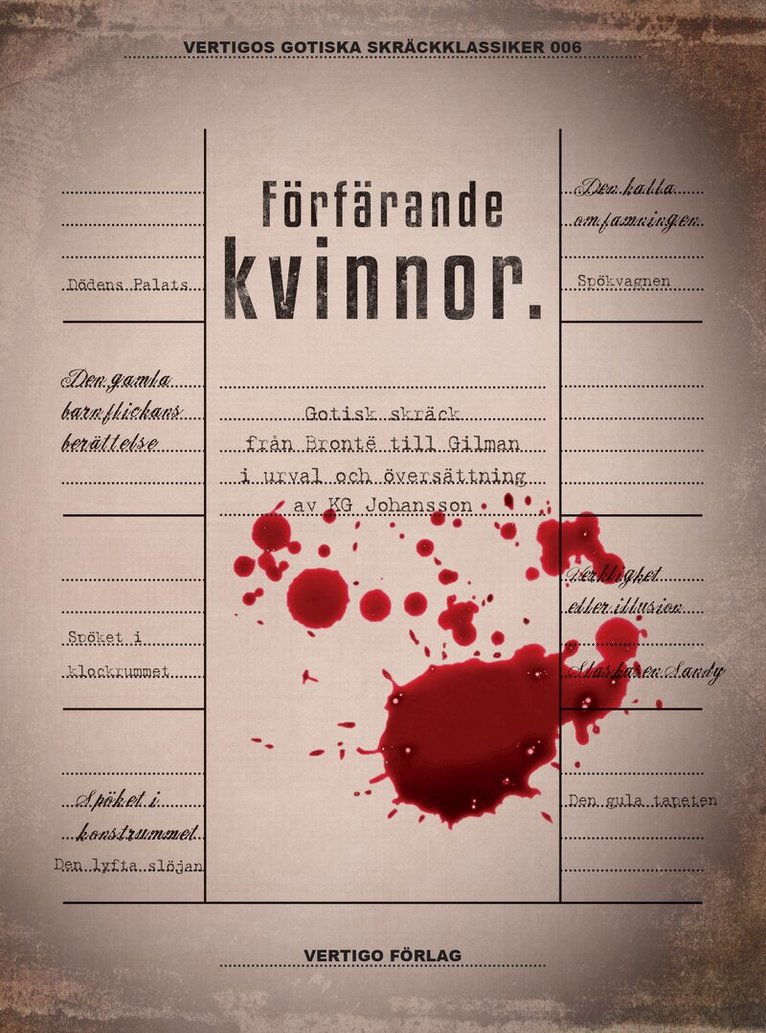
I början av 1800-talet blev romanläsandet en populär sysselsättning. Nya tryckmetoder och bättre kommunikationer spred den nya underhållningsformen. Tekniska och vetenskapliga framsteg som järnvägar och elektricitet, tillsammans med spiritism och andra flugor, förändrade världen. Horace Walpole hade skrivit sin skräckroman Borgen i Otranto några årtionden tidigare, och 1818 kom Mary Shelleys Frankenstein.
Sådana böcker blev början till en våg av gotisk skräck i framför allt Storbritannien – mer eller mindre övernaturliga berättelser i miljöer med vittrande slott, åskväder, sönderslitna moln och månsken över upprörda hav, alltsammans befolkat av hålögda adelsmän och bleka jungfrur.
Många av de som skrev gotisk skräck var kvinnor, och några av dem finns i den här samlingen. Inte bara deras noveller och romaner var förfärande och utmanande, utan kanske ännu mer deras sätt att leva: ogifta; boende ensamma; boende med gifta män; till och med boende med andra kvinnor!Novellerna i boken är skrivna mellan 1840- och 90-talen, av författare som systrarna Brontë, George Eliot och Charlotte Perkins Gilman, och förtjänar mycket väl att läsas än i dag.
723 kr
Lyssna direkt efter köp
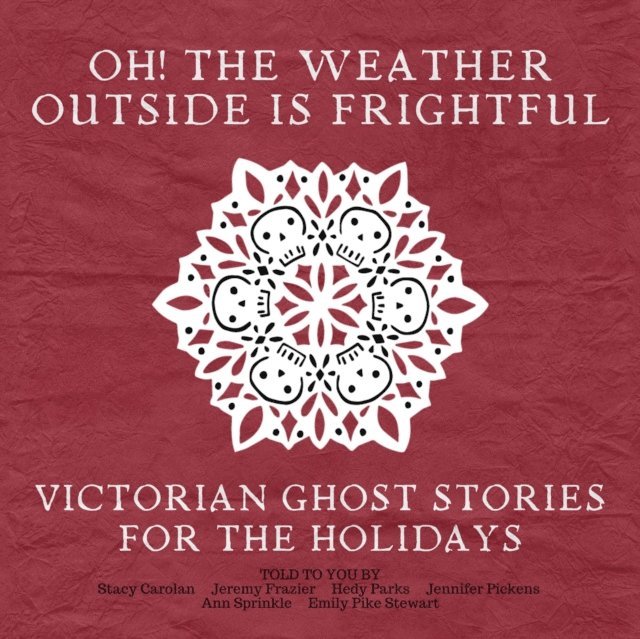
An audio anthology of Victorian ghost stories to chill you to the bone this holiday season.
“What Was It?” by Fitz-James O’Brien“The Blue Room” by Lettice Galbraith“Smee” by A.M. Burrage“Old Nurse’s Story” by Elizabeth Gaskell“A Strange Christmas Game” by Charlotte Riddell“Twin-Identity” by Edith Stewart Drewry“The Portent of the Shadow” by Edith Nesbit“The Kit Bag” by Algernon Blackwood
289 kr
Lyssna direkt efter köp
An audio anthology of Victorian ghost stories to chill you to the bone this holiday season.
“What Was It?” by Fitz-James O’Brien“The Blue Room” by Lettice Galbraith“Smee” by A.M. Burrage“Old Nurse’s Story” by Elizabeth Gaskell“A Strange Christmas Game” by Charlotte Riddell“Twin-Identity” by Edith Stewart Drewry“The Portent of the Shadow” by Edith Nesbit“The Kit Bag” by Algernon Blackwood
123 kr
Tillfälligt slut