Charmaine A. Nelson - Böcker
Visar alla böcker från författaren Charmaine A. Nelson. Handla med fri frakt och snabb leverans.
10 produkter
10 produkter
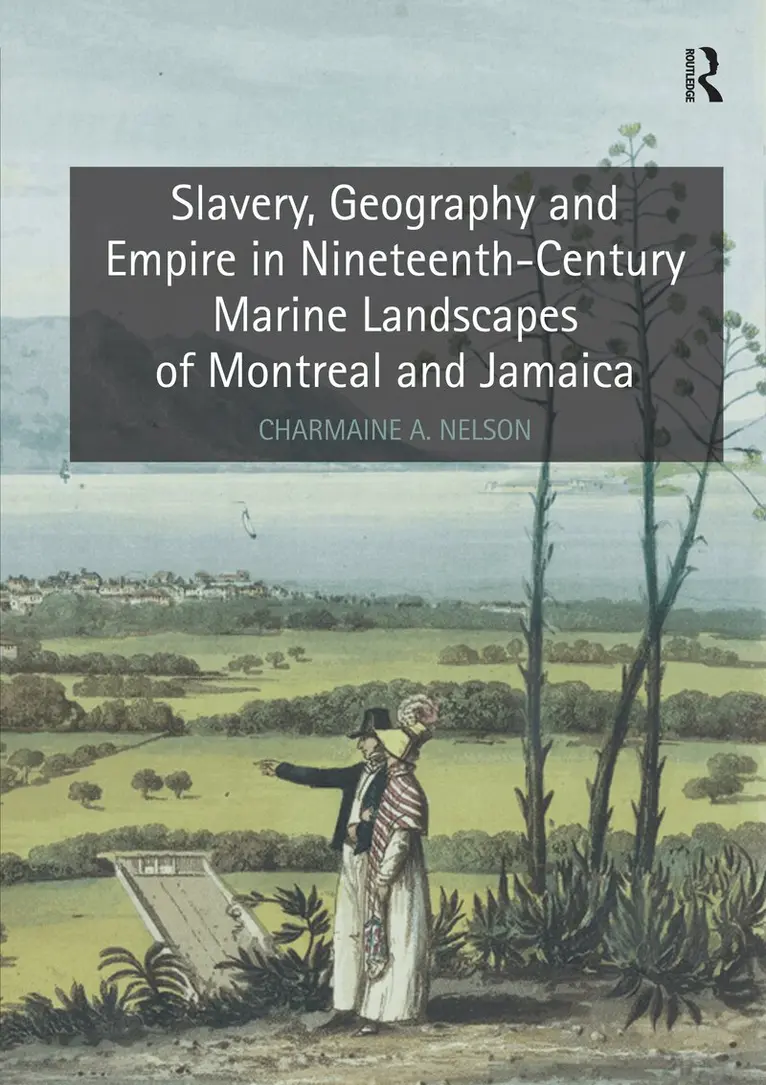
Slavery, Geography and Empire in Nineteenth-Century Marine Landscapes of Montreal and Jamaica
Häftad, Engelska, 2019
649 kr
Skickas inom 10-15 vardagar
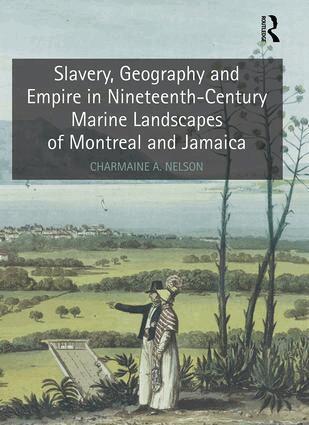
Slavery, Geography and Empire in Nineteenth-Century Marine Landscapes of Montreal and Jamaica is among the first Slavery Studies books - and the first in Art History - to juxtapose temperate and tropical slavery. Charmaine A. Nelson explores the central role of geography and its racialized representation as landscape art in imperial conquest. One could easily assume that nineteenth-century Montreal and Jamaica were worlds apart, but through her astute examination of marine landscape art, the author re-connects these two significant British island colonies, sites of colonial ports with profound economic and military value. Through an analysis of prints, illustrated travel books, and maps, the author exposes the fallacy of their disconnection, arguing instead that the separation of these colonies was a retroactive fabrication designed in part to rid Canada of its deeply colonial history as an integral part of Britain's global trading network which enriched the motherland through extensive trade in crops produced by enslaved workers on tropical plantations. The first study to explore James Hakewill's Jamaican landscapes and William Clark's Antiguan genre studies in depth, it also examines the Montreal landscapes of artists including Thomas Davies, Robert Sproule, George Heriot and James Duncan. Breaking new ground, Nelson reveals how gender and race mediated the aesthetic and scientific access of such - mainly white, male - artists. She analyzes this moment of deep political crisis for British slave owners (between the end of the slave trade in 1807 and complete abolition in 1833) who employed visual culture to imagine spaces free of conflict and to alleviate their pervasive anxiety about slave resistance. Nelson explores how vision and cartographic knowledge translated into authority, which allowed colonizers to 'civilize' the terrains of the so-called New World, while belying the oppression of slavery and indigenous displacement.
2 151 kr
Skickas inom 10-15 vardagar
This book offers the first concentrated examination of the representation of the black female subject in Western art through the lenses of race/color and sex/gender. Charmaine A. Nelson poses critical questions about the contexts of production, the problems of representation, the pathways of circulation and the consequences of consumption. She analyzes not only how, where, why and by whom black female subjects have been represented, but also what the social and cultural impacts of the colonial legacy of racialized western representation have been. Nelson also explores and problematizes the issue of the historically privileged white artistic access to black female bodies and the limits of representation for these subjects. This book not only reshapes our understanding of the black female representation in Western Art, but also furthers our knowledge about race and how and why it is (re)defined and (re)mobilized at specific times and places throughout history.
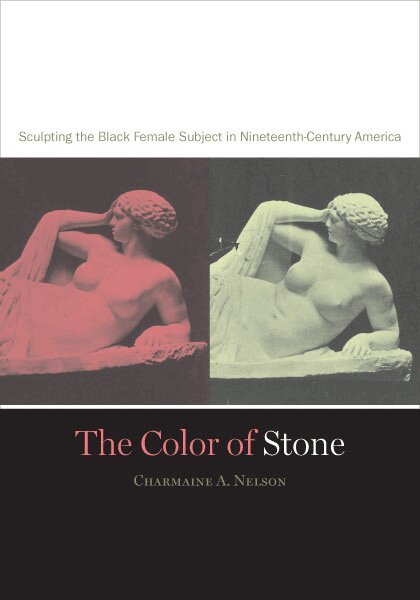
Color of Stone
Sculpting the Black Female Subject in Nineteenth-Century America
Häftad, Engelska, 2007
296 kr
Skickas inom 10-15 vardagar
Nineteenth-century neoclassical sculpture was a highly politicized international movement. Based in Rome, many expatriate American sculptors created works that represented black female subjects in compelling and problematic ways. Rejecting pigment as dangerous and sensual, adherence to white marble abandoned the racialization of the black body by skin color. In The Color of Stone, Charmaine A. Nelson brilliantly analyzes a key, but often neglected, aspect of neoclassical sculpture-color. Considering three major works-Hiram Powers’s Greek Slave, William Wetmore Story’s Cleopatra, and Edmonia Lewis’s Death of Cleopatra-she explores the intersection of race, sex, and class to reveal the meanings each work holds in terms of colonial histories of visual representation as well as issues of artistic production, identity, and subjectivity. She also juxtaposes these sculptures with other types of art to scrutinize prevalent racial discourses and to examine how the black female subject was made visible in high art. By establishing the centrality of race within the discussion of neoclassical sculpture, Nelson provides a model for a black feminist art history that at once questions and destabilizes canonical texts. Charmaine A. Nelson is assistant professor of art history at McGill University.
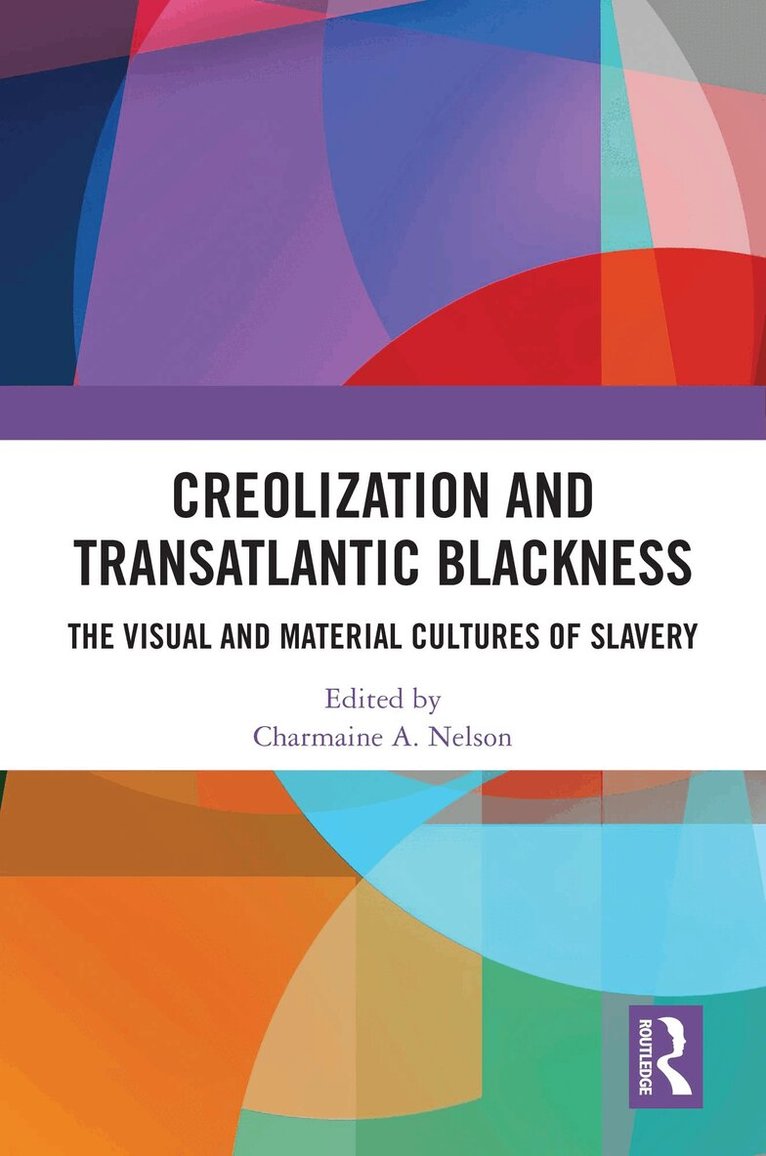
Creolization and Transatlantic Blackness
The Visual and Material Cultures of Slavery
Inbunden, Engelska, 2024
2 021 kr
Skickas inom 10-15 vardagar
Departing from more conscribed definitions, this book argues for an expansion of the concept of ‘Creolization’ in terms of duration, temporality, population, and importantly, in regional scope, which also impact climate and the practices of slavery that are typically included and excluded from consideration.Eschewing the normative focus on language and music, the authors instead center art and visual, and material cultures, as both outcomes and practices, in their explorations to consider the ways that cultural production in the period of slavery and its aftermath was irrevocably impacted by the collision of races and cultures in the Americas. The chapters probe how creolization unfolded for differently constituted individuals and populations, as well as how it came to be articulated both in the historical moments of its enactment and its retroactive cultural representations and production. In so doing, they seek to both expand the terrain (literally and figuratively) of the definition of creolization and to turn towards an examination of its relevance for art and visual, and material cultures of the Transatlantic world.The chapters in this book were originally published in African and Black Diaspora: An International Journal.
Creolization and Transatlantic Blackness
The Visual and Material Cultures of Slavery
Häftad, Engelska, 2026
695 kr
Kommande
Departing from more conscribed definitions, this book argues for an expansion of the concept of ‘Creolization’ in terms of duration, temporality, population, and importantly, in regional scope, which also impact climate and the practices of slavery that are typically included and excluded from consideration.Eschewing the normative focus on language and music, the authors instead center art and visual, and material cultures, as both outcomes and practices, in their explorations to consider the ways that cultural production in the period of slavery and its aftermath was irrevocably impacted by the collision of races and cultures in the Americas. The chapters probe how creolization unfolded for differently constituted individuals and populations, as well as how it came to be articulated both in the historical moments of its enactment and its retroactive cultural representations and production. In so doing, they seek to both expand the terrain (literally and figuratively) of the definition of creolization and to turn towards an examination of its relevance for art and visual, and material cultures of the Transatlantic world.The chapters in this book were originally published in African and Black Diaspora: An International Journal.
747 kr
Skickas inom 10-15 vardagar
This book offers the first concentrated examination of the representation of the black female subject in Western art through the lenses of race/color and sex/gender. Charmaine A. Nelson poses critical questions about the contexts of production, the problems of representation, the pathways of circulation and the consequences of consumption. She analyzes not only how, where, why and by whom black female subjects have been represented, but also what the social and cultural impacts of the colonial legacy of racialized western representation have been. Nelson also explores and problematizes the issue of the historically privileged white artistic access to black female bodies and the limits of representation for these subjects. This book not only reshapes our understanding of the black female representation in Western Art, but also furthers our knowledge about race and how and why it is (re)defined and (re)mobilized at specific times and places throughout history.
Slavery, Geography and Empire in Nineteenth-Century Marine Landscapes of Montreal and Jamaica
Inbunden, Engelska, 2016
2 427 kr
Skickas inom 10-15 vardagar
Slavery, Geography and Empire in Nineteenth-Century Marine Landscapes of Montreal and Jamaica is among the first Slavery Studies books - and the first in Art History - to juxtapose temperate and tropical slavery. Charmaine A. Nelson explores the central role of geography and its racialized representation as landscape art in imperial conquest. One could easily assume that nineteenth-century Montreal and Jamaica were worlds apart, but through her astute examination of marine landscape art, the author re-connects these two significant British island colonies, sites of colonial ports with profound economic and military value. Through an analysis of prints, illustrated travel books, and maps, the author exposes the fallacy of their disconnection, arguing instead that the separation of these colonies was a retroactive fabrication designed in part to rid Canada of its deeply colonial history as an integral part of Britain's global trading network which enriched the motherland through extensive trade in crops produced by enslaved workers on tropical plantations. The first study to explore James Hakewill's Jamaican landscapes and William Clark's Antiguan genre studies in depth, it also examines the Montreal landscapes of artists including Thomas Davies, Robert Sproule, George Heriot and James Duncan. Breaking new ground, Nelson reveals how gender and race mediated the aesthetic and scientific access of such - mainly white, male - artists. She analyzes this moment of deep political crisis for British slave owners (between the end of the slave trade in 1807 and complete abolition in 1833) who employed visual culture to imagine spaces free of conflict and to alleviate their pervasive anxiety about slave resistance. Nelson explores how vision and cartographic knowledge translated into authority, which allowed colonizers to 'civilize' the terrains of the so-called New World, while belying the oppression of slavery and indigenous displacement.
426 kr
Kommande
Joe the Pressman
The Incredible True Story of an Enslaved African Boy who Became a Heroic Freedom Fighter
Inbunden, Engelska, 2026
287 kr
Skickas inom 5-8 vardagar
Joe the Pressman
The Incredible True Story of an Enslaved African Boy who Became a Heroic Freedom Fighter
Häftad, Engelska, 2026
188 kr
Skickas inom 5-8 vardagar