Cheng-Chwee Kuik - Böcker
Visar alla böcker från författaren Cheng-Chwee Kuik. Handla med fri frakt och snabb leverans.
3 produkter
3 produkter
243 kr
Skickas inom 7-10 vardagar
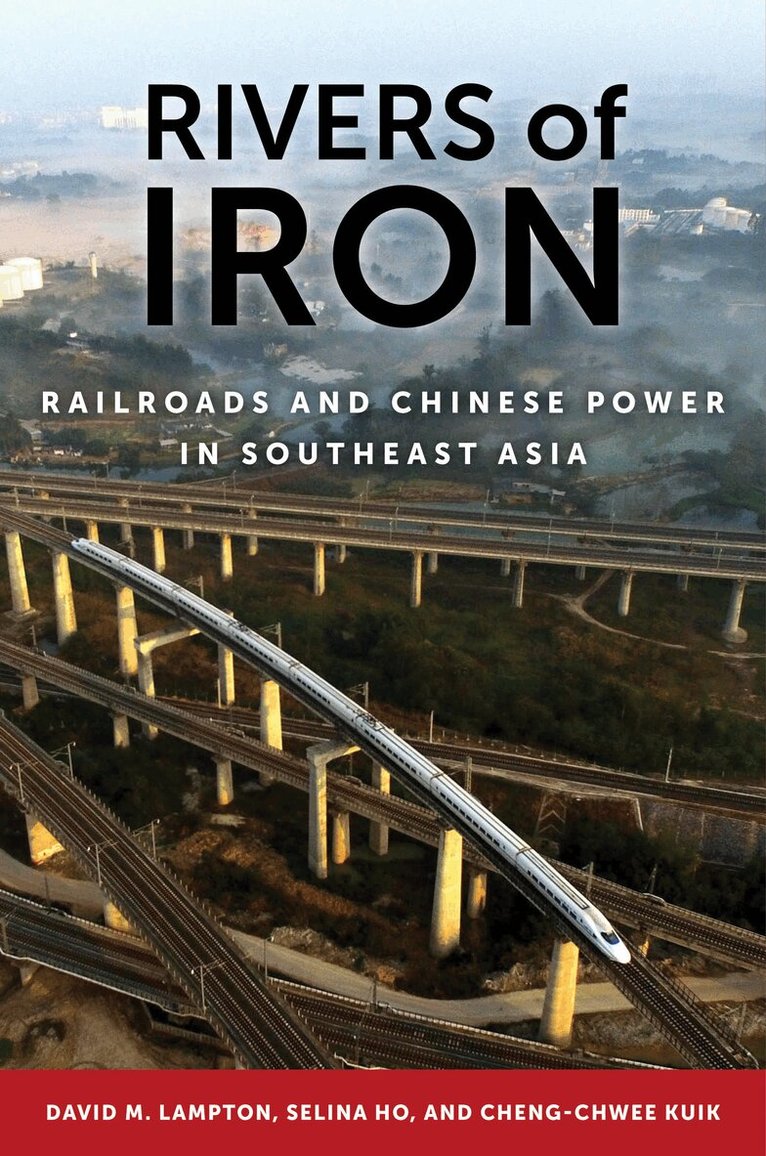
What China’s infamous railway initiative can teach us about global dominance.In 2013, Chinese President Xi Jinping unveiled what would come to be known as the Belt and Road Initiative (BRI)—a global development strategy involving infrastructure projects and associated financing throughout the world, including Asia, Africa, the Middle East, Europe, and the Americas. While the Chinese government has framed the plan as one promoting transnational connectivity, critics and security experts see it as part of a larger strategy to achieve global dominance. Rivers of Iron examines one aspect of President Xi Jinping’s “New Era”: China’s effort to create an intercountry railway system connecting China and its seven Southeast Asian neighbors (Cambodia, Laos, Malaysia, Myanmar, Singapore, Thailand, and Vietnam). This book illuminates the political strengths and weaknesses of the plan, as well as the capacity of the impacted countries to resist, shape, and even take advantage of China’s wide-reaching actions. Using frameworks from the fields of international relations and comparative politics, the authors of Rivers of Iron seek to explain how domestic politics in these eight Asian nations shaped their varying external responses and behaviors. How does China wield power using infrastructure? Do smaller states have agency? How should we understand the role of infrastructure in broader development? Does industrial policy work? And crucially, how should competing global powers respond?
747 kr
Skickas inom 10-15 vardagar
Institutional activities have remarkably transformed East Asia, a region once known for the absence of regionalism and regime-building efforts. Yet the dynamics of this Asian institutionalization have remained an understudied area of research. This book offers one of the first scholarly attempts to clarify what constitutes institutionalization in East Asia and to systematically trace the origins, discern the features, and analyze the prospects of ongoing institutionalization processes in the world’s most dynamic region. Institutionalizing East Asia comprises eight essays, grouped thematically into three sections. Part I considers East and Southeast Asia as focal points of inter-state exchanges and traces the institutionalization of inter-state cooperation first among the Southeast Asian states and then among those of the wider East Asia. Part II examines the institutionalization of regional collaboration in four domains: economy, security, natural disaster relief, and ethnic conflict management. Part III discusses the institutionalization dynamics at the sub-regional and inter-regional levels. The essays in this book offer a useful source of reference for scholars and researchers specializing in East Asia, regional architecture, and institution-building in international relations. They will also be of interest to postgraduate and research students interested in ASEAN, the drivers and limits of international cooperation, as well as the role of regional multilateralism in the Asia-Pacific region.
2 219 kr
Skickas inom 10-15 vardagar
Institutional activities have remarkably transformed East Asia, a region once known for the absence of regionalism and regime-building efforts. Yet the dynamics of this Asian institutionalization have remained an understudied area of research. This book offers one of the first scholarly attempts to clarify what constitutes institutionalization in East Asia and to systematically trace the origins, discern the features, and analyze the prospects of ongoing institutionalization processes in the world’s most dynamic region. Institutionalizing East Asia comprises eight essays, grouped thematically into three sections. Part I considers East and Southeast Asia as focal points of inter-state exchanges and traces the institutionalization of inter-state cooperation first among the Southeast Asian states and then among those of the wider East Asia. Part II examines the institutionalization of regional collaboration in four domains: economy, security, natural disaster relief, and ethnic conflict management. Part III discusses the institutionalization dynamics at the sub-regional and inter-regional levels. The essays in this book offer a useful source of reference for scholars and researchers specializing in East Asia, regional architecture, and institution-building in international relations. They will also be of interest to postgraduate and research students interested in ASEAN, the drivers and limits of international cooperation, as well as the role of regional multilateralism in the Asia-Pacific region.