Inbunden, Engelska, 2026
1 526 kr
Skickas inom 10-15 vardagar
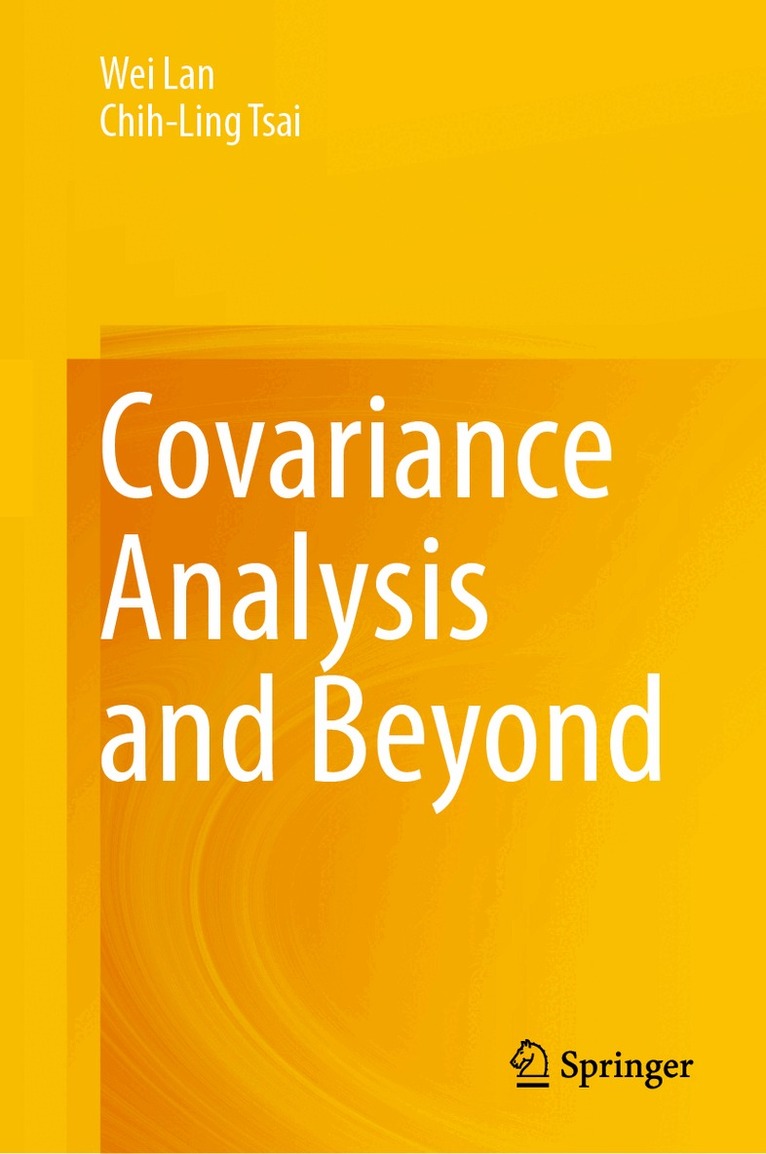
This book demonstrates the application of covariance matrices through cutting-edge models and practical applications, as well as extensions induced by multivariate data and other related subjects. In data analysis, when studying the relationships among a set of variables, the covariance matrix plays an important role. It has been commonly and widely used across many fields, including agriculture, biology, business, communications, economics, engineering, finance, marketing, mathematics, medicine, data science, and social science, regardless of whether the data is dense or sparse, low-dimension or high-dimension, time series or non-time series, structured or unstructured, fixed or random, and training (learning) data or testing data. The covariance matrix is fundamental for extracting valuable information from multivariate data, such that this classical tool can be influential in modern data science and innovative statistical models. Specifically, this book utilizes the covariance matrix to comprehensively unify classical multivariate methods (e.g., principal components and factor analysis) and innovative models and algorithms (e.g., spatial autoregressive and network autocorrelation models, matrix factor models, tensor covariance models, deep learning, and transfer learning). In so doing, it surveys statistical and data science techniques for estimation, selection, prediction, inference, and decision making. As a result, the book provides a unique approach for readers to understand how the traditional and modern techniques in data analysis, such as multivariate analysis and machine learning, can be unified with different features but the same foundation, which is the covariance matrix. This book is suitable for graduate students and researchers across various quantitative disciplines.